

Festive Saree Capsule 2026: 5 Sarees, Ganesh Chaturthi to Diwali

You do not need a new saree for every festival. Five will cover the entire 2026 season — Ganesh Chaturthi on 14 September, Navratri from 11 to 20 October, Dussehra on 20 October, Karva Chauth on 29 October, Diwali on 8 November and Bhai Dooj on 11 November. The trick is choosing five sarees that differ by weight and function, not by colour. Below is the exact capsule, with what each one is for and what it costs.
Why five, and why 2026 is different
2026 carries an Adhik Maas — an intercalary lunar month — which pushes almost every festival later than usual. Diwali lands on 8 November instead of late October. That single shift changes what you should buy. By the second week of November, evenings in Pune, Delhi and most of north India have genuinely cooled. A heavier silk that would have been punishing on a 32°C October night is comfortable on 8 November. So this year, front-load your light sarees into September and October, and save the weight for the very end.
Here is the practical constraint most guides skip: a woven Paithani with a full zari pallu weighs roughly 700–850g. A georgette of the same length weighs about 350–400g. You feel that difference after four hours of standing at a pandal or five hours of garba. Weight, not price, is what decides whether you enjoy an evening.
Saree 1 — The lightweight woven one (Ganesh Chaturthi, 14 September)
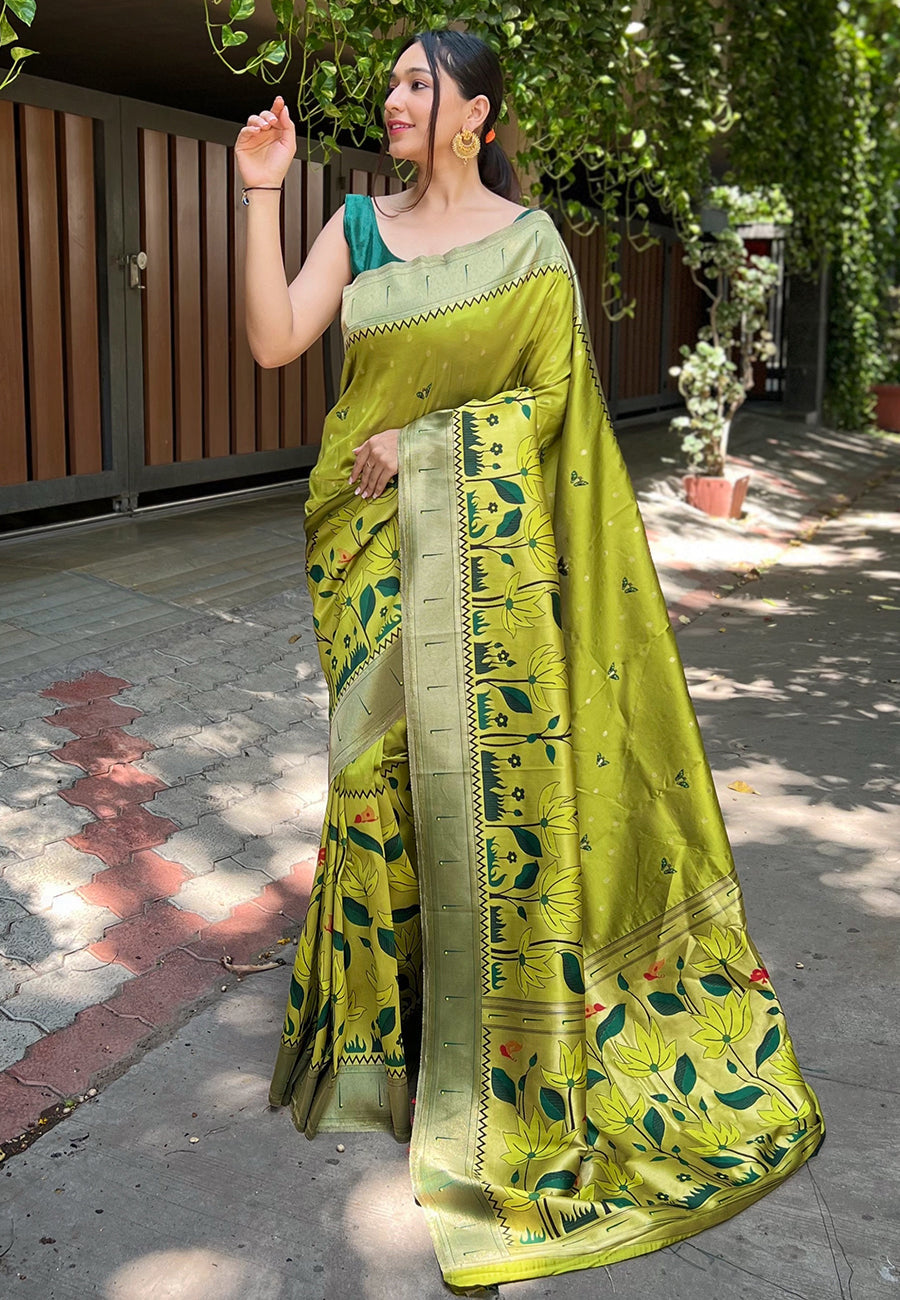
Ganesh Chaturthi is a sitting-on-the-floor, humid-September, all-day festival. You want a woven saree with visible craft that does not need a petticoat war to manage. Green is traditional for Gauri-Ganpati across Maharashtra.
Pick: the Sycamore Green Zari Woven Titli Royal Paithani Silk Saree at ₹5,999. The titli (butterfly) motif is one of the older Paithani vocabularies, alongside the peacock and the parrot. One genuine test worth knowing: real Paithani pallu weaving is a tapestry technique — the weft threads interlock rather than float — so the motif reads clean on the reverse side too. Flip a pallu over. If the back is a mess of loose threads, it is embroidery or a print, not tapestry weave.
Saree 2 — The one that moves (Navratri, 11–20 October)
Nine nights, and at least two of them involve dancing. A structured silk fights you here; the pleats collapse and the pallu slides. A woven georgette drapes close, moves with you, and does not crease into permanent lines when you sit in a car afterwards.
Pick: the Mineral Green Woven Georgette Silk Saree at ₹6,705. Pin the pallu at two points, not one — shoulder and hip — and it will survive a full garba round.
Saree 3 — The daytime shimmer (Dussehra, 20 October)
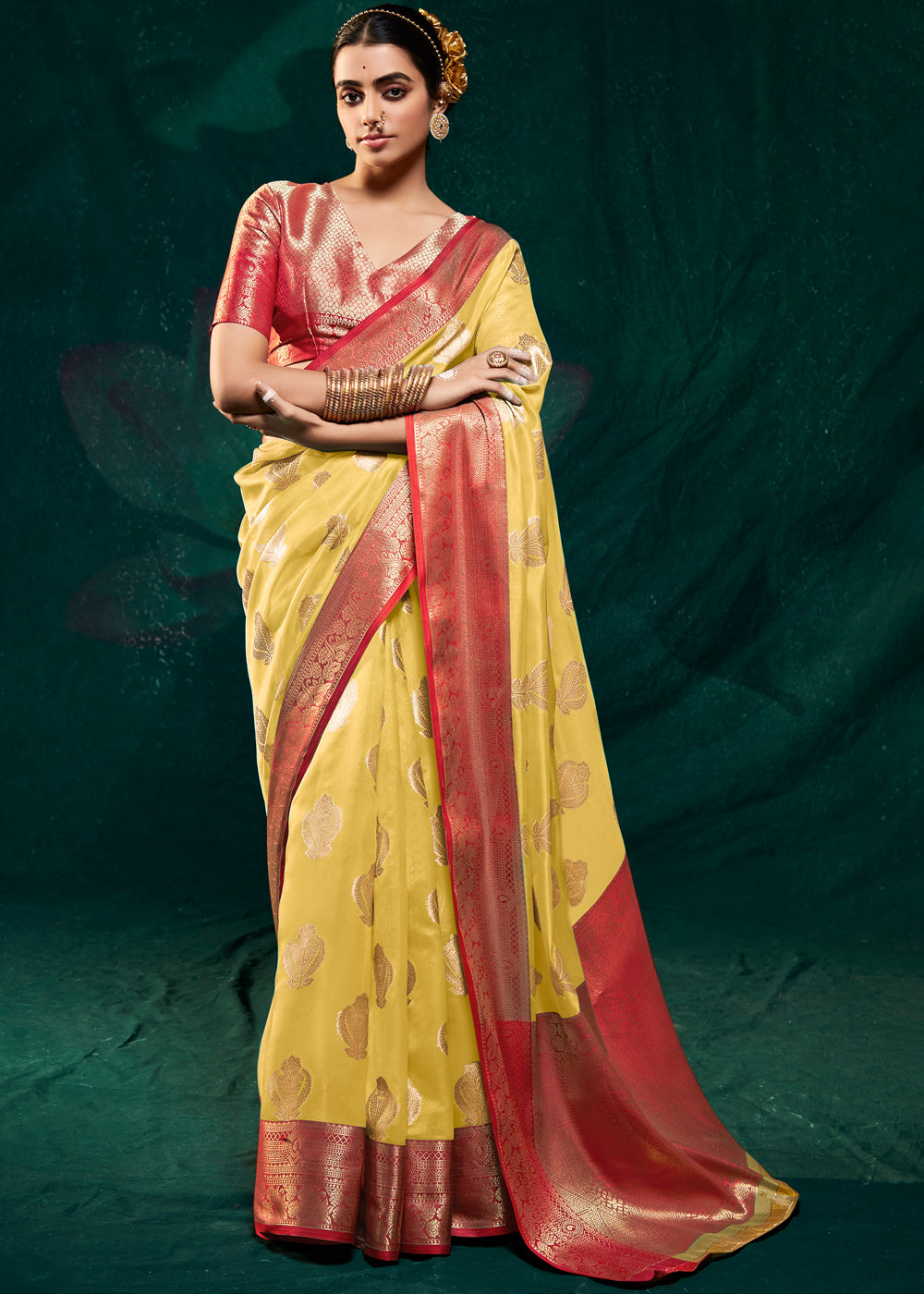
Dussehra, Ayudha Puja and the office Diwali lunch are all daylight events, and daylight is unforgiving to heavy zari. Organza with a woven Banarasi motif gives you shine without mass, and photographs beautifully in natural light because the sheer ground catches it instead of absorbing it.
Pick: the Equator Yellow Woven Banarasi Organza Silk Saree at ₹4,647. Yellow reads as auspicious across most of India and is the single most under-worn festive colour we see.
Saree 4 — The red one (Karva Chauth, 29 October)
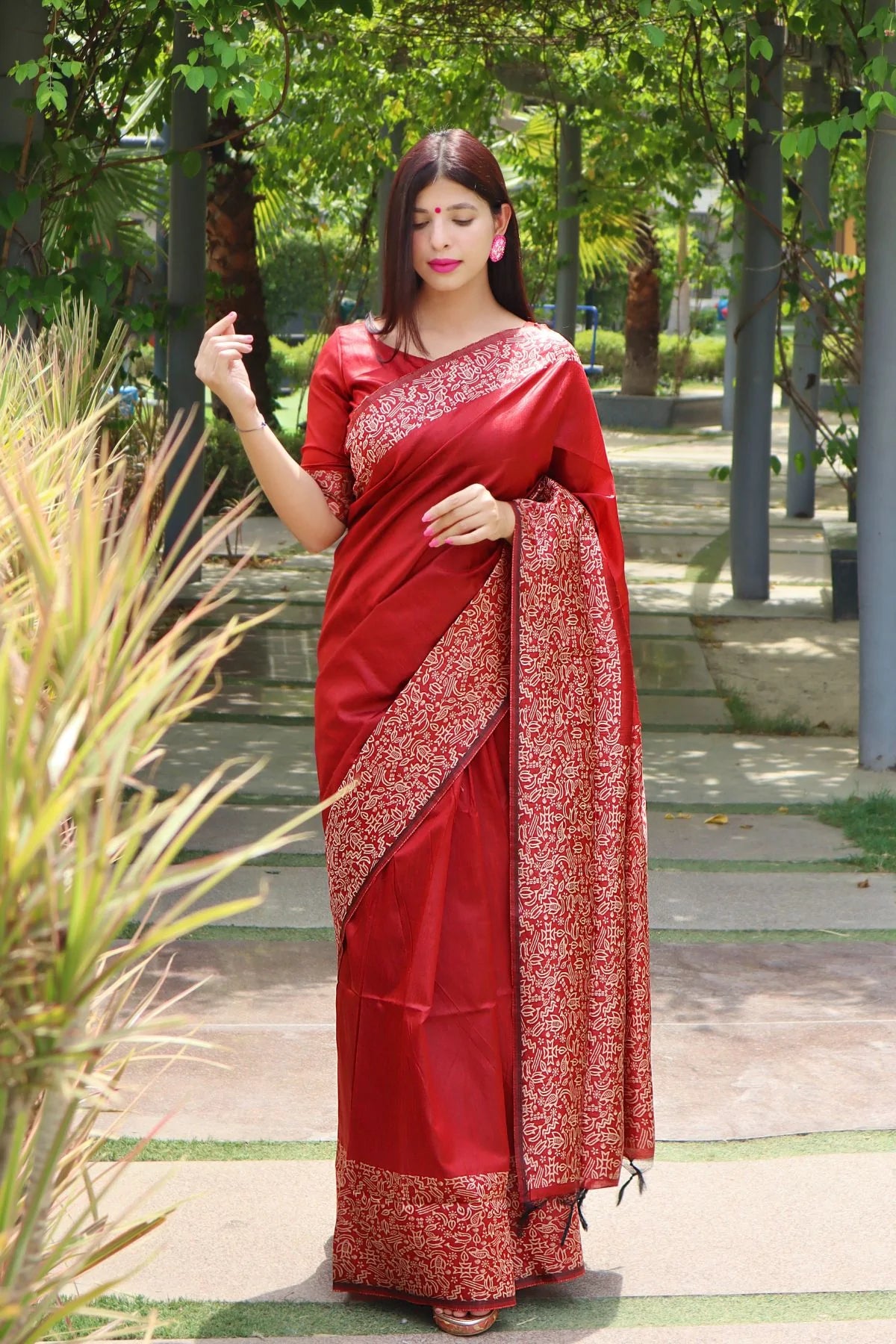
Karva Chauth has a real dress code and there is no point pretending otherwise: red, maroon or deep pink, worn from the morning sargi through to moonrise around 8pm. That is a thirteen-hour saree. It needs to be breathable and forgiving.
Pick: the Tamarillo Red Banarasi Raw Silk Saree at ₹3,820. Raw silk has a slubbed, matte texture that holds pleats without the slipperiness of satin — useful when you are on your feet all day and cannot keep re-tucking.
Saree 5 — The heavyweight (Diwali, 8 November, and Bhai Dooj, 11 November)
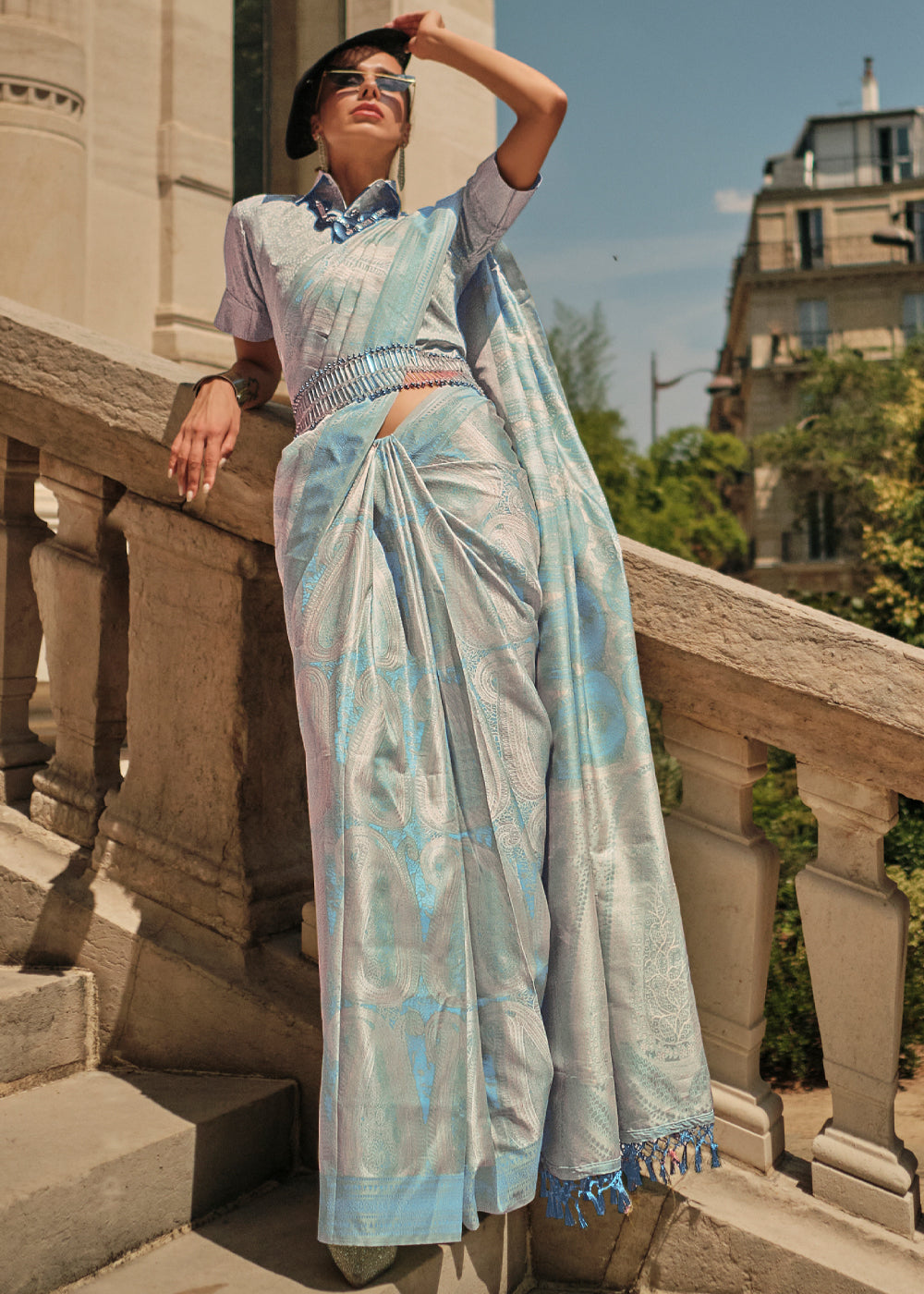
This is the one saree in the capsule you should genuinely invest in, because it also carries you through the December wedding invitations. Structured silk, real zari border, a colour that is not red — you already own red from Saree 4.
Pick: the Lynch Blue Woven Kanjivaram Satin Silk Saree at ₹5,655, or step up to the Limed Oak Brown Dual Tone Banarasi Silk Saree at ₹7,482 if you want the dual-tone shot effect that changes colour under lamp light.

The budget split — and the saree most people over-buy
Those five come to ₹26,826 at list price, and seasonal offers at checkout often bring these lower. A sensible split is roughly 35% on the heavyweight, 25% on the georgette, and the remaining 40% spread across the three lighter pieces.
Now the opinion, and we will take a real position on it: the most over-bought item in an Indian festive wardrobe is the second heavy silk, and the most under-bought is a light woven saree you can actually wear in daylight. We watch it happen every year — two Kanjivarams, three Banarasis, and nothing appropriate for an 11am puja in 30°C. If you already own one good heavy silk, skip Saree 5 entirely, buy Sarees 1 through 4, and put the difference into a well-fitted blouse for the silk you already have. A ₹2,000 tailored blouse improves an old Kanjivaram more than a ₹25,000 new one improves your wardrobe.
For market context: a handloom Paithani from the Yeola cluster typically starts around ₹25,000 and climbs past ₹1 lakh for a full-zari bridal piece, and a certified handloom Kanjivaram with a pure-zari border rarely starts below ₹30,000. Accessible woven silks like the ones above are a different category and are priced accordingly — worth knowing so nobody sells you a ₹6,000 saree as a handloom heirloom.
One care rule for the whole season
Do not re-fold a zari saree along the same crease twice in one season. Zari is metallic thread wound on a silk core, and it fractures at a repeated fold line — that is why old sarees split along the pallu fold and nowhere else. Refold along a different line each time, wrap in cotton muslin, and never in plastic. More on this in our monsoon silk saree care guide.
Shop the edit
- Sycamore Green Titli Paithani — ₹5,999 · Ganesh Chaturthi, day pujas
- Mineral Green Woven Georgette — ₹6,705 · Navratri nights
- Equator Yellow Banarasi Organza — ₹4,647 · Dussehra, daytime
- Tamarillo Red Banarasi Raw Silk — ₹3,820 · Karva Chauth
- Lynch Blue Kanjivaram Satin — ₹5,655 · Diwali, Bhai Dooj
- Limed Oak Brown Dual Tone Banarasi — ₹7,482 · the upgrade pick
Browse the full ranges: Paithani sarees, georgette sarees, organza sarees, Banarasi sarees and Kanjivaram sarees. If you are working to a number, the ₹3,000–₹5,000 range covers most of this capsule.
Not sure which weave suits which event? Our saree occasions guide maps weave to occasion in detail, the silk saree buying guide covers authenticity checks before you spend, and the complete Kanjivaram guide goes deep on the heavyweight slot.
Shop the capsule by colour
The capsule runs on four festive shades, and each has its own range on the site. Begin with green sarees for the traditional Gauri-Ganpati and Navratri slots, switch to yellow sarees for the under-worn daytime Dussehra shimmer, keep red sarees aside for the thirteen-hour Karva Chauth drape, and browse satin silk sarees for the structured lamp-light sheen that carries Diwali and Bhai Dooj.
Frequently asked questions
How many sarees do I actually need for the 2026 festive season?
Five is enough to cover Ganesh Chaturthi through Bhai Dooj without repeating a look at the same gathering. Choose them by weight and function — one lightweight woven, one that moves, one daytime sheer, one red, one heavyweight — rather than by colour. If you already own a good heavy silk, four is plenty.
Which saree should I wear for Diwali 2026?
Diwali falls on 8 November 2026, unusually late because of the Adhik Maas. By then most of north and west India has cooled, so a structured silk with a real zari border is comfortable rather than stifling. Choose a colour other than red if you are also wearing red for Karva Chauth on 29 October.
What is the difference between a georgette and an organza saree for festivals?
Georgette is soft, opaque and clings to the body — best when you will be moving or dancing, as at Navratri. Organza is crisp, sheer and holds its shape, which makes it flattering in daylight and better for seated daytime events. Georgette forgives creasing; organza does not.
Ready to build your capsule? Start with the full saree collection and work down the five slots above — the lightweight one first, since Ganesh Chaturthi is the earliest date on the calendar.


Leave a comment
This site is protected by hCaptcha and the hCaptcha Privacy Policy and Terms of Service apply.