
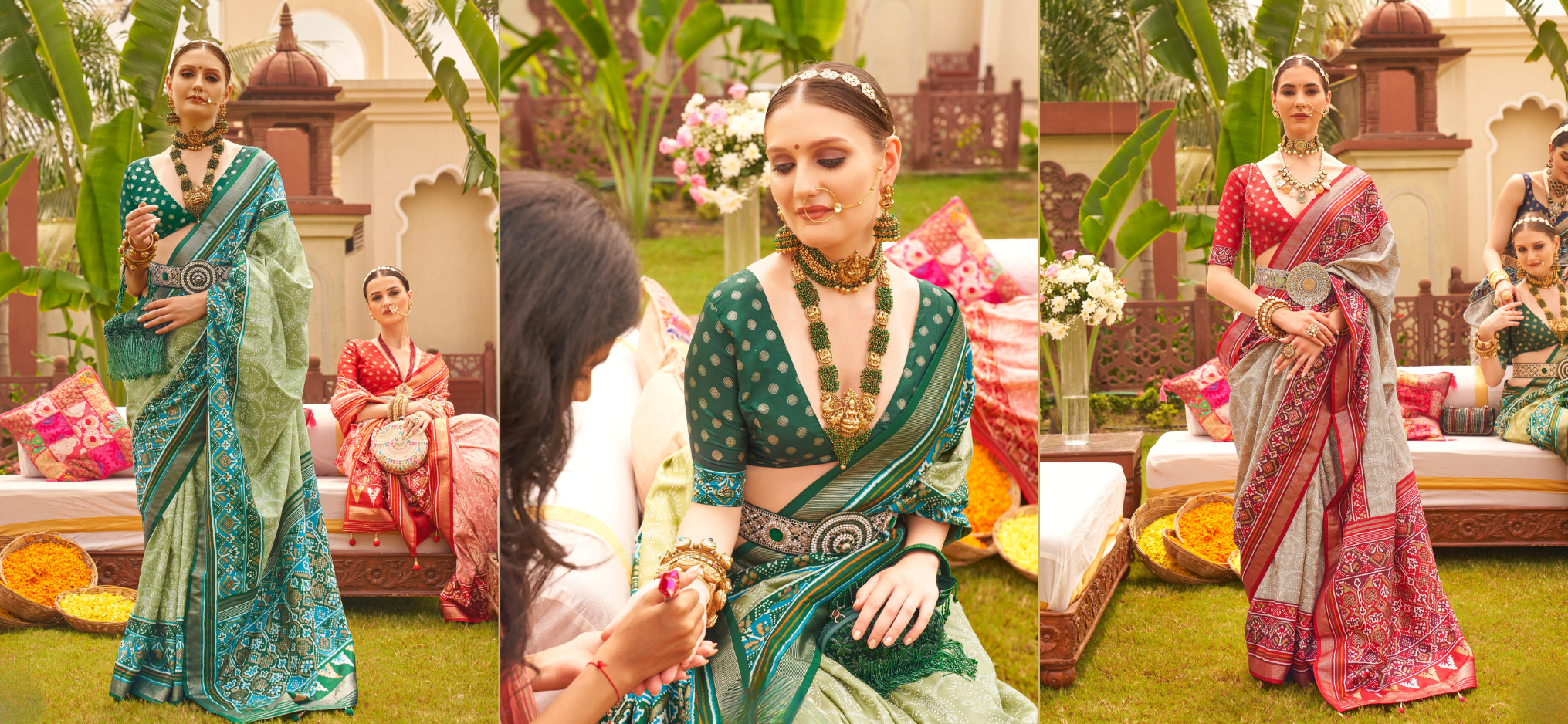
Flow with Grace: Saree Options to Slay Your Mehendi Look
The mehendi ceremony is one of the most photographed, most joyful, and most physically demanding events in an Indian wedding. You will be seated for two to four hours while the mehndi artist works, surrounded by family, laughter, and music. Your saree needs to be as beautiful as the occasion demands — and practical enough that you are not wrestling with your pallu every fifteen minutes. Here is everything you need to choose the perfect mehendi saree.
Why Fabric Choice Matters More at a Mehendi
Most wedding function sarees are chosen for appearance. A mehendi saree needs to earn its keep in comfort. You will be sitting cross-legged or with your legs extended for hours, so a stiff or heavy saree becomes a liability quickly. The best mehendi saree fabrics are lightweight, have a natural softness, and move well even while seated.
The colours that define a traditional mehendi are yellows, greens, oranges, and corals — the colours of turmeric, marigold, and henna itself. These shades are deeply auspicious and photograph beautifully in the warm, natural lighting of most mehendi venues. That said, modern brides and guests increasingly embrace pastels, whites, and even dusky pinks for the mehendi look.
The Best Saree Fabrics for Mehendi
Georgette: Lightweight, flowing, and forgiving — georgette drapes beautifully even when you shift your sitting position. It holds pleats loosely, which means you stay comfortable without the saree feeling constricting. A georgette saree with chikankari or gota patti work is a classic mehendi choice.
Chiffon: Even lighter than georgette, chiffon is ideal if your mehendi is outdoors in warm weather. The sheer, floaty quality photographs beautifully in natural light. Pair with a heavier blouse to add some structure to the overall look.
Organza: Organza offers the photogenic crispness of silk without the weight. A floral-printed or hand-painted organza in yellow or orange is increasingly popular for contemporary mehendi looks. It is semi-sheer and holds shape well, making it flattering from multiple angles.
Silk: Pure silk Paithani or Banarasi can work for a mehendi if you are the bride and want a statement look — but be prepared for the weight and warmth, especially for long ceremonies.
Practical Draping Tips for Mehendi
The way you drape your saree for a mehendi function is just as important as which saree you choose. These practical tips will save you from constant readjusting:
- Pre-pleat the saree before the function begins: Ask your dressmaker or a family member to help you pleat and pin the saree at home, using sharp safety pins through the petticoat at multiple points — at the waist tuck, at the pleat fan, and at the pallu shoulder. A pre-pleated, pre-pinned saree stays put even when you are seated for extended periods.
- Use safety pins generously: A minimum of 3–4 safety pins is recommended for a mehendi: one at the waist tuck on the right side, one securing the pleats to the petticoat at centre front, one at the pallu drape on the shoulder blouse, and one hidden at the pallu end if you prefer a neat finish. Use stainless steel pins — they will not rust if they catch perspiration.
- Keep the pallu lightweight and manageable: A heavily embellished pallu will slide off your shoulder repeatedly during the mehendi. For the ceremony itself, consider pinning the pallu securely or choosing a saree with a shorter, lighter pallu. You can always rearrange for post-ceremony photographs.
- Choose a comfortable petticoat: The petticoat is the foundation of your drape. For a mehendi, choose a cotton petticoat with a wide waistband that sits comfortably at your natural waist — not so tight that it becomes uncomfortable after two hours of sitting.
- Avoid heavy fabric at the back: If you are seated against a cushion or a decorated backdrop for the mehendi artist to work, a saree with a simple, flat back works better than a saree with a heavily embellished or stiff pallu that bunches behind you.
Price Guide by Fabric
Here is a transparent breakdown of what to expect at different budget points for a mehendi saree:
- Georgette and Chiffon: Rs 1,500–3,500. This range covers everything from plain georgette with simple embroidery to more elaborate chikankari or gota patti work on chiffon. At the lower end, expect lighter embellishment and machine embroidery; at the upper end, hand-embroidered pieces.
- Organza: Rs 2,000–5,000. Plain organza starts at Rs 2,000; hand-painted or printed organza in Rs 3,000–4,000 range; embroidered organza with mirror or cutdana work at Rs 4,000–5,000. Browse organza sarees.
- Silk: Rs 3,000–6,000 for lighter silks (Mysore silk, Bangalore silk); Rs 6,000 and above for pure Banarasi or Paithani. For the mehendi function, we recommend lighter silk variants unless you are specifically going for a traditional bridal look. Explore Banarasi sarees.
For an extended colour range in the traditional mehendi palette, our yellow saree collection and pink saree collection offer curated options across fabrics and budgets.
Blouse and Jewellery Guide for Mehendi
Your blouse and jewellery choices can make or break the mehendi look — and they need to be practical, not just beautiful.
Blouse: A deep-back or backless blouse is ideal for mehendi photography. The mehndi artist often photographs the bride's hands against her back, and a beautifully designed open back creates a stunning compositional backdrop. Consider an embroidered or mirror-work blouse that frames the mehendi on the hands. Avoid high-neck or heavily padded blouses — they add bulk and warmth unnecessarily.
Jewellery and mehendi hands: This is critical and often overlooked. Keep jewellery minimal on the mehendi hand and wrist. Rings and bangles will interfere with the mehndi application and may smudge freshly applied henna. Choose small stud earrings that will not tangle with your hair as you move. A maang tikka and simple gold chain are perfect mehendi jewellery — beautiful in photographs, not in the way of the artist.
Footwear: Choose flat footwear — juttis, kolhapuris, or embellished flats. You may need to sit on a low seat, cushion, or even the floor depending on your venue setup. Heels become a genuine inconvenience and a potential hazard when navigating low seating for hours.
Colour Pairing Ideas
The traditional mehendi colour palette photographs beautifully against the orange-brown tones of fresh henna. Here are tried-and-tested combinations:
- Yellow georgette with a deep green embroidered blouse — the complementary contrast is striking in photographs
- Coral organza with a gold mirror-work blouse — warm and celebratory
- Mint chiffon with a coral blouse — fresh and modern, popular for contemporary mehendi looks
- Mustard yellow with an orange border Banarasi — traditional and deeply photogenic in outdoor golden-hour light
For georgette sarees that combine lightness with festive elegance, our collection includes options across all mehendi-appropriate colour families.
FAQ
Can I wear white for mehendi?
White is traditionally avoided at Indian wedding functions, including mehendi, as it is associated with mourning in many communities. However, off-white, ivory, and cream are increasingly worn at modern mehendi ceremonies, particularly for those who prefer a minimalist aesthetic. If you are a guest rather than the bride, check with the family about their preferences before choosing a white or near-white saree.
What colour is traditional for mehendi?
Yellow is the most traditional mehendi colour, symbolising turmeric, fertility, and auspiciousness in Hindu wedding traditions. Green is also deeply traditional, representing prosperity and new beginnings. Marigold orange, coral, and saffron are strong traditional choices. These warm, earthy tones also happen to complement the orange-brown of fresh henna beautifully in photographs.
Is silk too heavy for a mehendi function?
Pure silk sarees — particularly heavy Kanjivaram or Paithani — can be genuinely uncomfortable for a two-to-four-hour seated function. If you love silk and want to wear it for mehendi, opt for lighter silk variants: Mysore silk (lighter weight, beautiful lustre), Bangalore silk, or organza (which is technically silk but weighs a fraction of woven silk). If you are set on Banarasi or Paithani, ensure your petticoat is cotton and your blouse is well-ventilated at the back to manage the warmth.
Shop Your Mehendi Saree
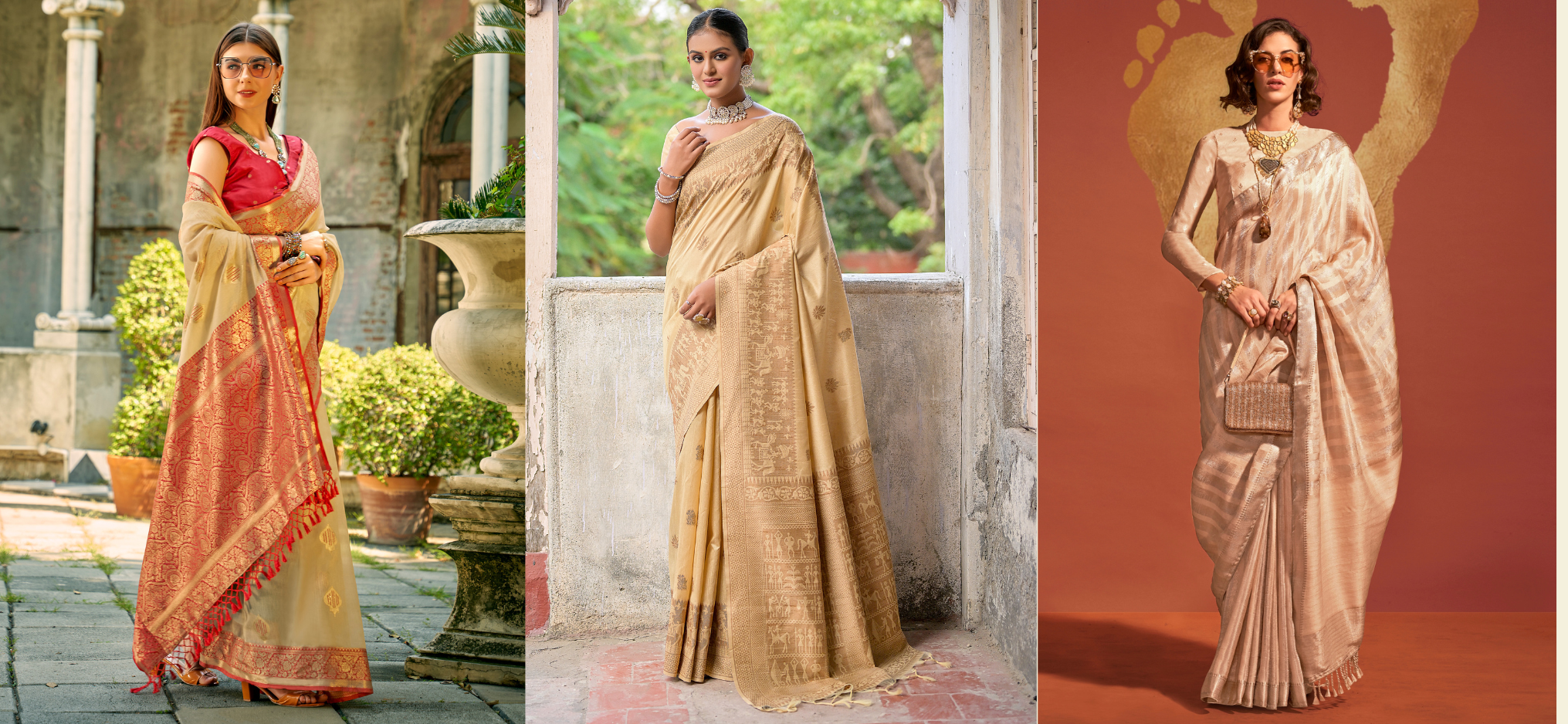
Build your mehendi look from the fabrics that actually stay put through a four-hour ceremony: browse flowing georgette sarees, crisp yet lightweight organza sarees, and the traditional turmeric-toned yellow saree collection — filter by price to match your budget.

Leave a comment
This site is protected by hCaptcha and the hCaptcha Privacy Policy and Terms of Service apply.