
Gujarati Saree: Styles, Fabrics & How to Drape the Gujarati Way
The Gujarati saree is one of India's most distinctive regional styles — recognised instantly by its front-pallu drape, rich embroidery traditions, and centuries-old weaving heritage. Whether you are shopping for a Gujarati wedding, a Navratri celebration, or simply want to explore India's most vibrant textile culture, this guide covers everything you need to know.
What Makes a Saree 'Gujarati'?
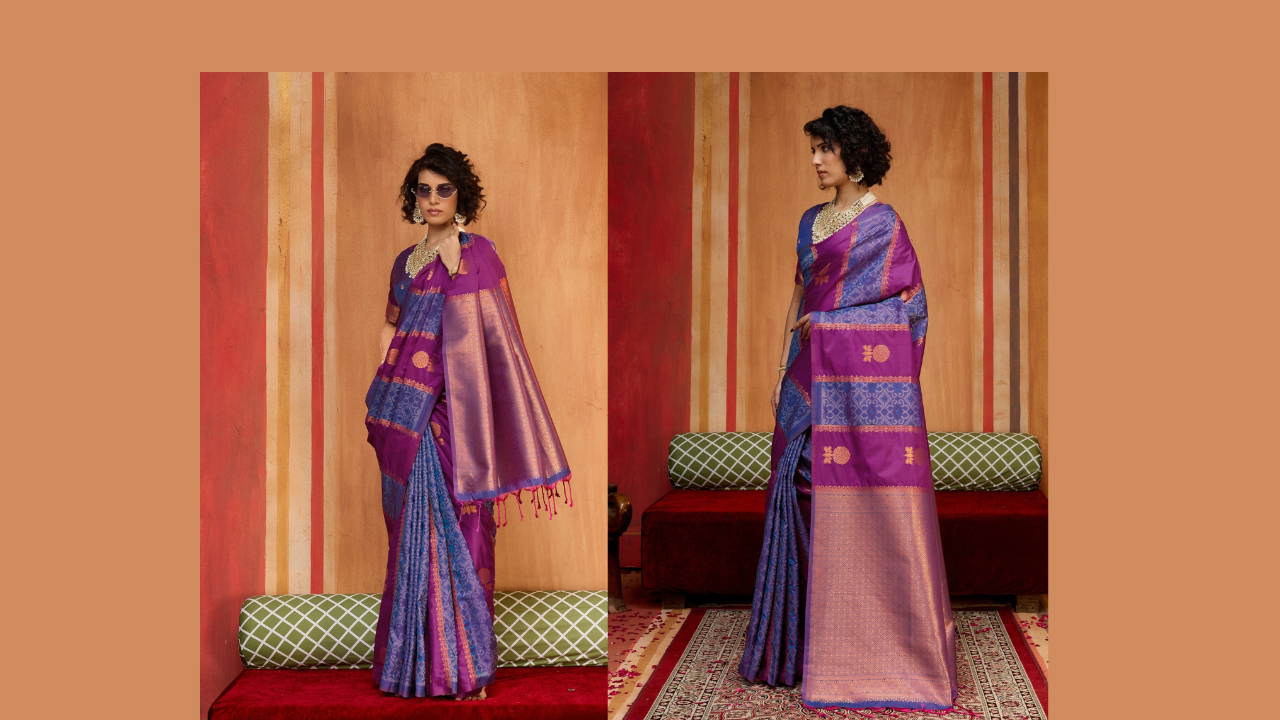
A Gujarati saree is defined less by a single fabric and more by two things: the draping style and the regional weaving traditions of Gujarat. The most recognisable feature is the seedha pallu drape — where the pallu is brought from the back, over the right shoulder, and pinned at the front. This is the reverse of the Nivi (Maharashtra/South India) drape, and it keeps the embellished pallu permanently visible, which is why Gujarati sarees tend to have especially elaborate pallu designs.

The 5 Main Types of Gujarati Sarees
1. Patola Sarees (Patan Patola)
The Patola is Gujarat's most prestigious weave — a double-ikat silk saree woven in Patan by just a handful of families (primarily the Salvi family) who have guarded the technique for over 700 years. In double-ikat, both warp and weft threads are resist-dyed before weaving so that the pattern emerges perfectly at the interlacing point. The result is a saree with identical patterns on both sides and no visible wrong side. A single authentic Patan Patola can take 6–12 months to weave and costs ₹1 lakh to ₹10 lakh. More accessible Rajkot Patola uses single-ikat technique and is available from ₹3,000.
2. Bandhani (Tie-Dye) Sarees
Bandhani — from the Sanskrit bandha (to tie) — is Gujarat's famous tie-dye tradition, centred in Jamnagar and Bhuj. Tiny dots of fabric are pinched and tied with thread before dyeing, creating intricate patterns of dots, flowers, and waves. A quality Bandhani saree has thousands of tiny, uniform ties; in fine pieces, the ties are so small they look like pinpoints. Bandhani on gaji silk (a locally woven silk-cotton blend) produces the most vibrant colour saturation. These are the quintessential Navratri sarees.

3. Gharchola Sarees
Gharchola is a bridal weave from Jamnagar, traditionally gifted to a bride by her in-laws on her wedding day. The name means 'home cloth' — it is woven in a checked pattern (usually red and gold) using real zari thread, with motifs of elephants, parrots, and human figures in the squares. Authentic Gharchola uses pure silk with real gold zari and starts at ₹15,000. It is considered inauspicious to wash the saree before wearing it for the first time.
4. Kutch Embroidery Sarees
The Kutch region of Gujarat is home to several distinct embroidery communities — Ahir, Rabari, Mutwa, and Suf — each with its own stitch vocabulary. Kutchi embroidery on sarees typically features mirror work (shisha), chain stitch, and satin stitch in bold primary colours on dark cotton or silk bases. These are among the most recognisable 'Gujarati sarees' to international buyers and are a staple at craft exhibitions and export orders.
5. Mashru Sarees
Mashru ('permitted' in Arabic) is a unique silk-cotton satin weave where the warp is silk and the weft is cotton — allowing the silk face to be worn against jewellery while the cotton back sits against the skin, satisfying religious restrictions on pure silk for some Muslim wearers. It is woven in Patan and Mandvi, and its striped, iridescent surface is unlike any other Indian textile. Mashru sarees are rare and highly collectible.

How to Drape a Gujarati Saree (Seedha Pallu Style)
The Gujarati drape differs from the standard Nivi style in one key step:
1. Tuck the plain end of the saree into the petticoat at the right hip and make the pleats as usual. 2. Instead of throwing the pallu over the left shoulder, bring it across the front of the body from left to right. 3. Pass it under the right arm and bring it up over the right shoulder. 4. Pin the pallu to the blouse at the right shoulder so it falls down the back. This keeps the decorated pallu face-forward at all times — ideal for heavily embellished or woven designs.
Best Occasions for Gujarati Sarees
Gujarati sarees are worn across a wide range of occasions. Bandhani in bright reds and greens is the go-to for Navratri garba. Gharchola and Patola are reserved for weddings and rituals. Kutch embroidery sarees work well for festive events and art exhibitions. Mashru and printed Gujarati cotton sarees are appropriate for everyday and office wear.

Frequently Asked Questions
What is a Gujarati saree called?
There is no single name — the most famous Gujarati sarees are the Patola (double-ikat silk), Bandhani (tie-dye), and Gharchola (bridal check weave). Each comes from a specific town and community within Gujarat.
How is a Gujarati saree different from a Maharashtrian saree?
The key difference is the drape. Gujarati style (seedha pallu) brings the pallu over the right shoulder so it faces forward. Maharashtrian Nauvari style is a 9-yard saree draped in a dhoti-like fashion. The weaving traditions are also completely distinct — Patola vs Paithani, for instance.
Where can I buy an authentic Gujarati saree online?
MySilkLove stocks a curated range of Gujarati-style sarees — from Patola-inspired designs to Bandhani prints — with detailed fabric descriptions and origin notes on each product page.
What is the price of a Gujarati Patola saree?
Authentic Patan Patola starts at ₹1 lakh. Rajkot Patola (single-ikat) is available from ₹3,000. Digital and screen-printed Patola-inspired sarees start from ₹999.
Browse our Gujarati Saree collection for the full range, or explore our Patola Sarees for Gujarat's most iconic weave.
Shop the Gujarati Weaves by Occasion
The occasions listed above split across four shelves, and these are the ones that serve each:
- Navratri garba — the tie-dye pieces this guide calls quintessential: browse our Bandhani tie-dye sarees.
- The bright greens the garba paragraph recommends alongside red: see our green sarees.
- Weddings and rituals — where Gharchola and Patola belong: our hand-picked wedding edit.
- Everyday and office wear — the Mashru and printed-cotton end of the list: explore our office wear sarees.

1 comment
What a fantastic and thorough guide! The front-facing Siddha Pallu and Rajrani drapes carry such timeless elegance, especially when paired with traditional Bandhani or Patola silks. Your styling tips make bringing authentic Gujarati heritage into modern festive wear effortless. Thanks for sharing such an inspiring fashion resource!
Threads WeRIndia
Leave a comment
This site is protected by hCaptcha and the hCaptcha Privacy Policy and Terms of Service apply.