

How to Drape a Gujarati Saree (Seedha Pallu): The Front-Pallu Style, Step by Step (2026)

The Gujarati saree drape, or seedha pallu, does one thing differently from every other style: it brings the pallu across the front of your body instead of letting it fall behind the left shoulder. You wrap the saree, make your pleats at the waist, then take the pallu right-to-left over the right shoulder and spread it across the chest so the border and motifs face the camera. That front-facing pallu is the whole point — it turns an ornate pallu into the centrepiece of the look.
What “Seedha Pallu” Actually Means
Seedha means “straight” or “front-facing.” In the standard Nivi drape (the one most of India wears), the pallu sits behind the shoulder and the border runs down your back. In the Gujarati style it is reversed: the pallu is pulled from back to front over the right shoulder and fanned out across the torso. This is why brides and their families in Gujarat and Rajasthan love it — a heavily worked pallu, a Bandhani bandhej, or a mirror-work border does all its talking from the front.
One practical thing nobody tells you: because the pallu now travels all the way across your chest, the seedha pallu eats up 1.5 to 2 feet more fabric than a Nivi drape. A tight 5.5-metre saree can end up with a stingy little pallu. If you can, drape this style with a 6 to 6.3-metre saree so the pallu spreads generously.

Before You Start: Pick the Right Saree
The seedha pallu lives or dies on how the front pallu sits, so fabric matters more here than in any other drape:
- Georgette and chiffon are the easy mode. They are feather-light, so the front pallu falls flat and flutters instead of standing away from the body. If it is your first attempt, start here.
- Bandhani and Ajrakh sarees are the traditional Gujarati choice — the tie-dye or block-print pattern reads beautifully across the front.
- A crisp woven silk (Banarasi, Patola) gives a regal, structured pallu, but a heavy pure-silk pallu will tug on your shoulder pin and slowly sag over an evening. Pin it in two places, not one.
Skip stiff, very starched sarees for a first try — they resist the front fold and bunch at the shoulder.
How to Drape a Gujarati Saree, Step by Step
- 1. Tuck the plain end. Start at your right hip and tuck the inner (non-pallu) end into your petticoat, moving anti-clockwise once fully around, so the saree wraps your lower body evenly. Keep the lower border just off the floor.
- 2. Bring the pallu up first. Unlike the Nivi drape, in seedha pallu you handle the pallu early. Take the decorated pallu end, pass it around your back, and bring it up over your right shoulder from behind so it drapes forward across your chest.
- 3. Spread and pin the pallu. Open the pallu out flat across the front so the border and motifs are fully visible, then pin it to your right shoulder of the blouse. Add a second discreet pin lower down if the fabric is heavy.
- 4. Make your pleats. Gather the remaining fabric at the waist into 5 to 7 even pleats. Tuck them into the petticoat slightly left of the navel and secure with a safety pin.
- 5. Set the fall. Tuck the lower edge of the pallu lightly into your left waist. This anchors the seedha shape and stops the front panel from swinging as you move. Adjust the spread so it frames — not covers — your blouse.
Give yourself 10 minutes the first time. The order feels backwards if you are used to the Nivi drape, but the pallu-first sequence is exactly what keeps the front panel clean.

Body-Type Tips
Here is my honest position: the seedha pallu is the most flattering drape for petite frames. The vertical band of pallu running down your front draws the eye up and adds height that the pleats-behind Nivi tends to hide. If you are short, this is your drape.
If you carry weight around the midriff, keep the front pallu slightly narrower and let it fall in a clean column rather than a wide fan — a column lengthens, a wide spread widens. Taller women can afford to fan the pallu out fully and show off the whole border.
Common Mistakes (and the Fix)
- Pinning the pallu too high. If the pallu sits up near your collarbone it chokes the neckline and hides the blouse. Pin it at the shoulder seam and let it drop from there.
- Too little fabric. A short saree gives a mean, half-covered front. Use 6 metres or more (see above).
- Uneven pleats. Because the front is busy, sloppy waist pleats show badly. Take the extra minute to line them up.
- Wrong shoulder. Seedha pallu goes over the right shoulder. Draping it over the left just gives you a lopsided Nivi.

Shop the Edit
Sarees that were made to be worn front-and-centre:
- Sandal Golden Georgette Partywear Saree — the beginner-friendly georgette above; light enough that the front pallu falls flawlessly. List price ₹8,570 (seasonal offers at checkout often bring these lower).
- Ruby Red Bandhani Fusion Ajrakh Pallu Mirror Work Saree — the classic Gujarati bandhej-and-mirror look, built for a front pallu. List price ₹3,720.
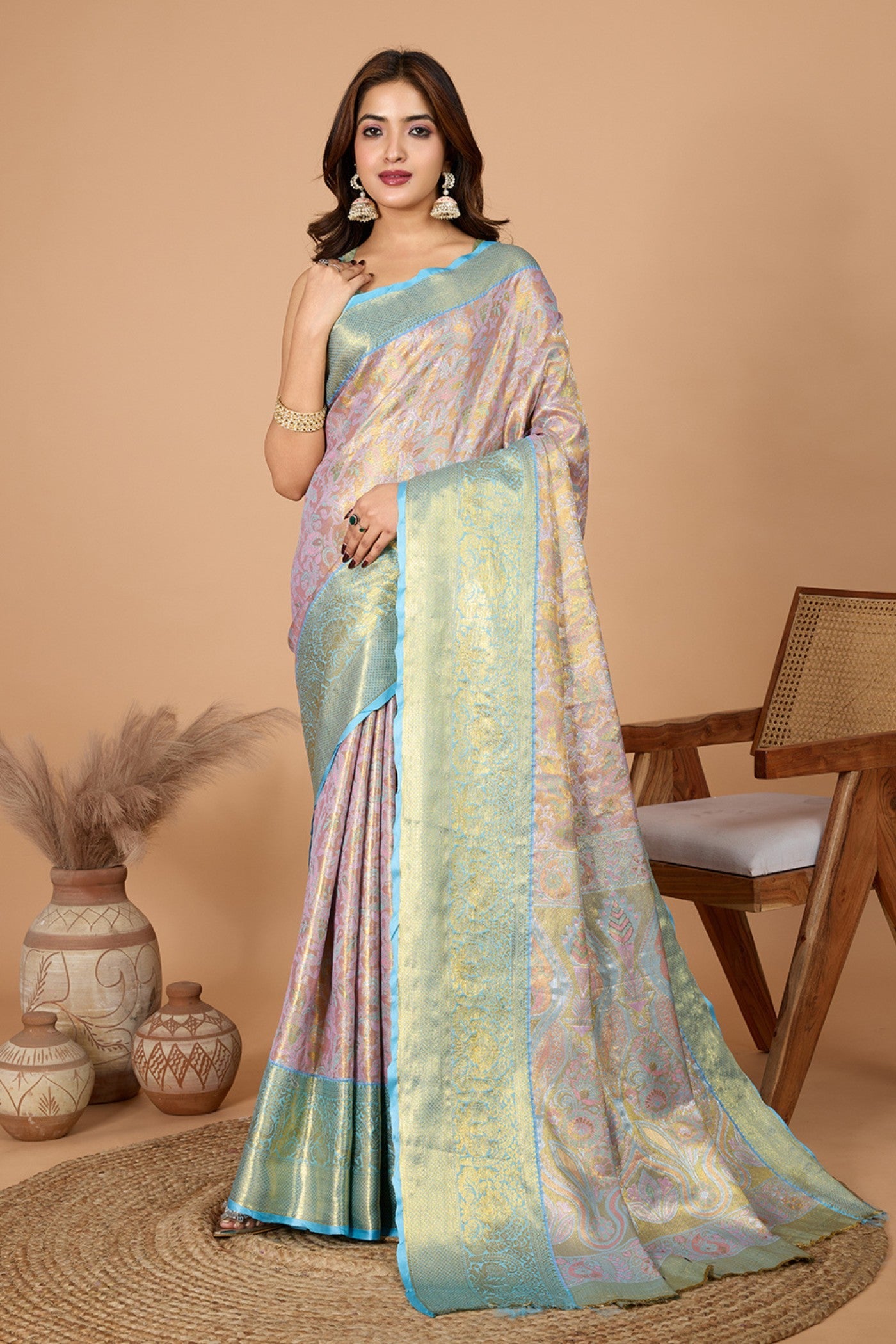
- Steel Green and Blue Woven Banarasi Saree — an ornate woven pallu to display across the front for weddings and receptions. List price ₹4,821.
Want more festive-print options that suit this drape? Browse our printed sarees and the full Banarasi collection. New to draping generally? Start with our complete how-to-drape-a-saree guide.
Frequently Asked Questions
What is the difference between seedha pallu and Nivi drape?
In the Nivi drape the pallu falls behind the left shoulder and the border runs down your back. In the Gujarati seedha pallu, the pallu comes over the right shoulder and spreads across the front of your body, showing the border and motifs from the front. Seedha pallu also needs slightly more fabric because the pallu travels across your chest.
Which saree fabric is best for a Gujarati drape?
Georgette and chiffon are the easiest because they are light and the front pallu falls flat without bunching. Bandhani and Ajrakh are the traditional Gujarati choices. Woven silks like Banarasi look regal but are heavier, so pin the pallu in two places to stop it sagging.
How many metres of saree do I need for seedha pallu?
Aim for a 6 to 6.3-metre saree. The front pallu uses roughly 1.5 to 2 feet more fabric than a Nivi drape, so a standard 5.5-metre saree can leave you with a short, half-covered pallu. Extra length lets you spread the pallu generously across the front.

Ready to try the front-pallu look? Explore the full MySilkLove saree collection and pick a pallu worth showing off.
Shop sarees made for the seedha pallu: start with light georgette sarees that fall flat across the front; choose the traditional Gujarati Bandhani sarees or a handwoven Patola saree; or browse festive printed sarees — each collection sortable by price.


Leave a comment
This site is protected by hCaptcha and the hCaptcha Privacy Policy and Terms of Service apply.