
Kanjivaram Sarees | Buy Pure Kanjivaram Silk Sarees Online
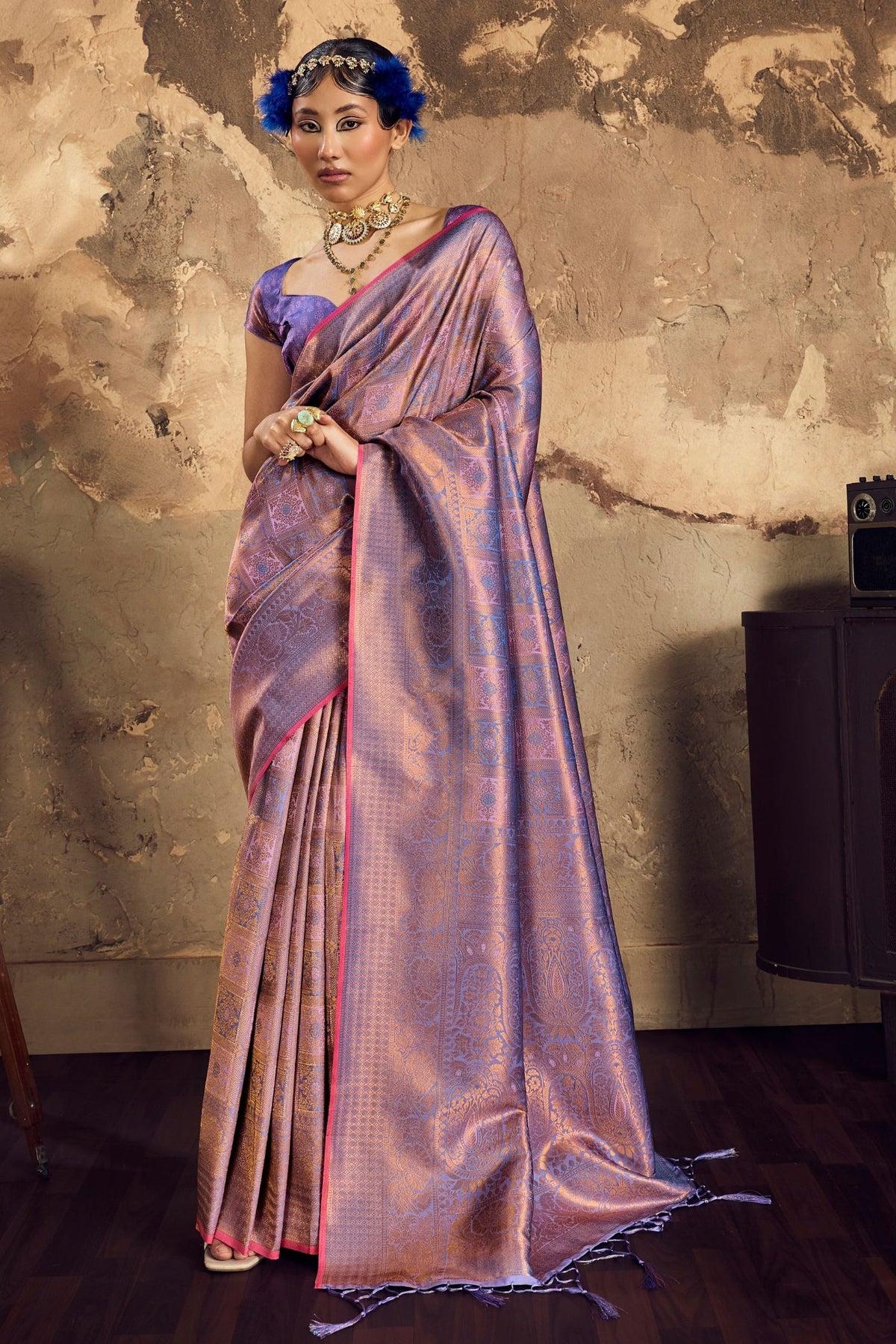
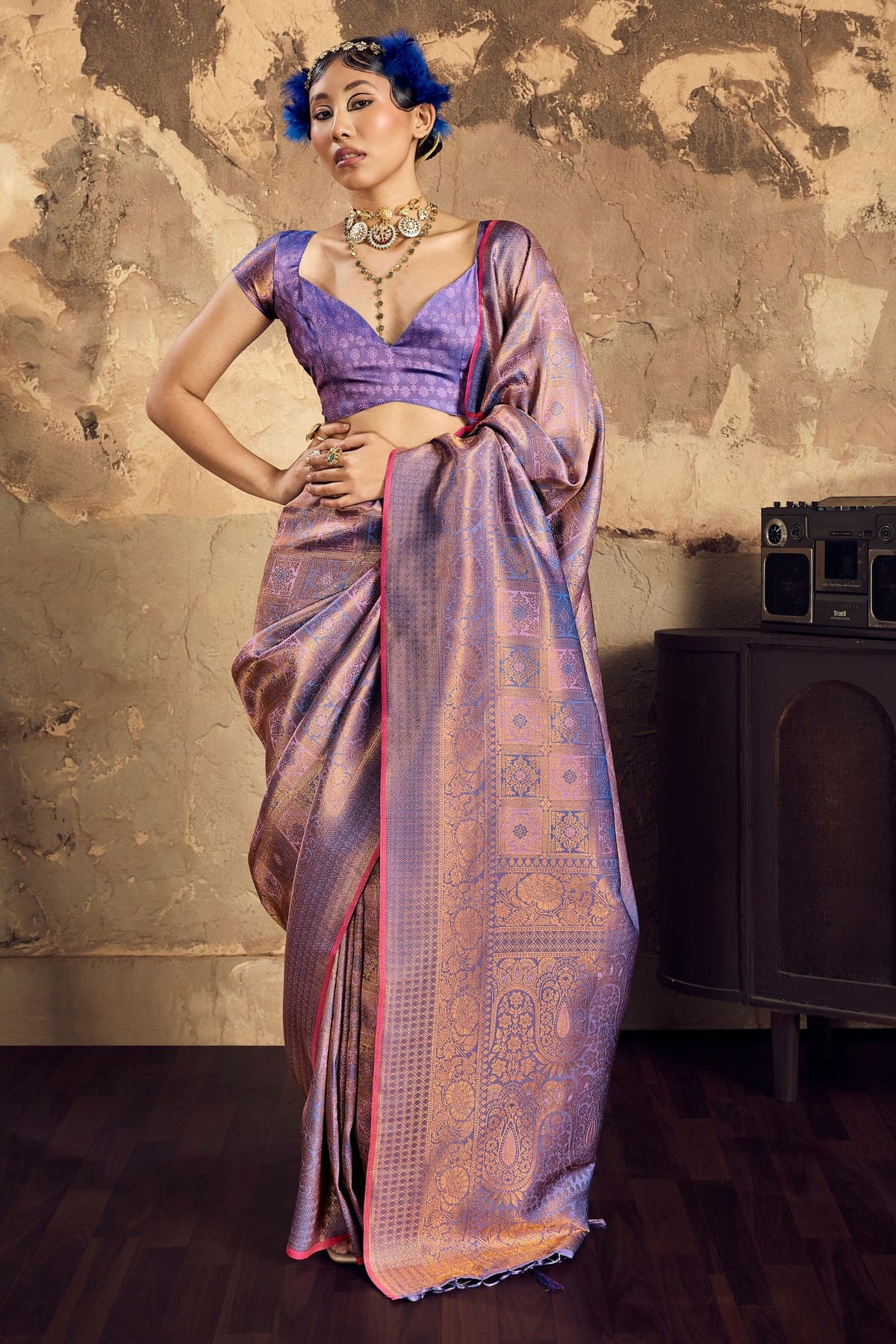
Jacaranda Purple Kanjivaram Handloom Saree
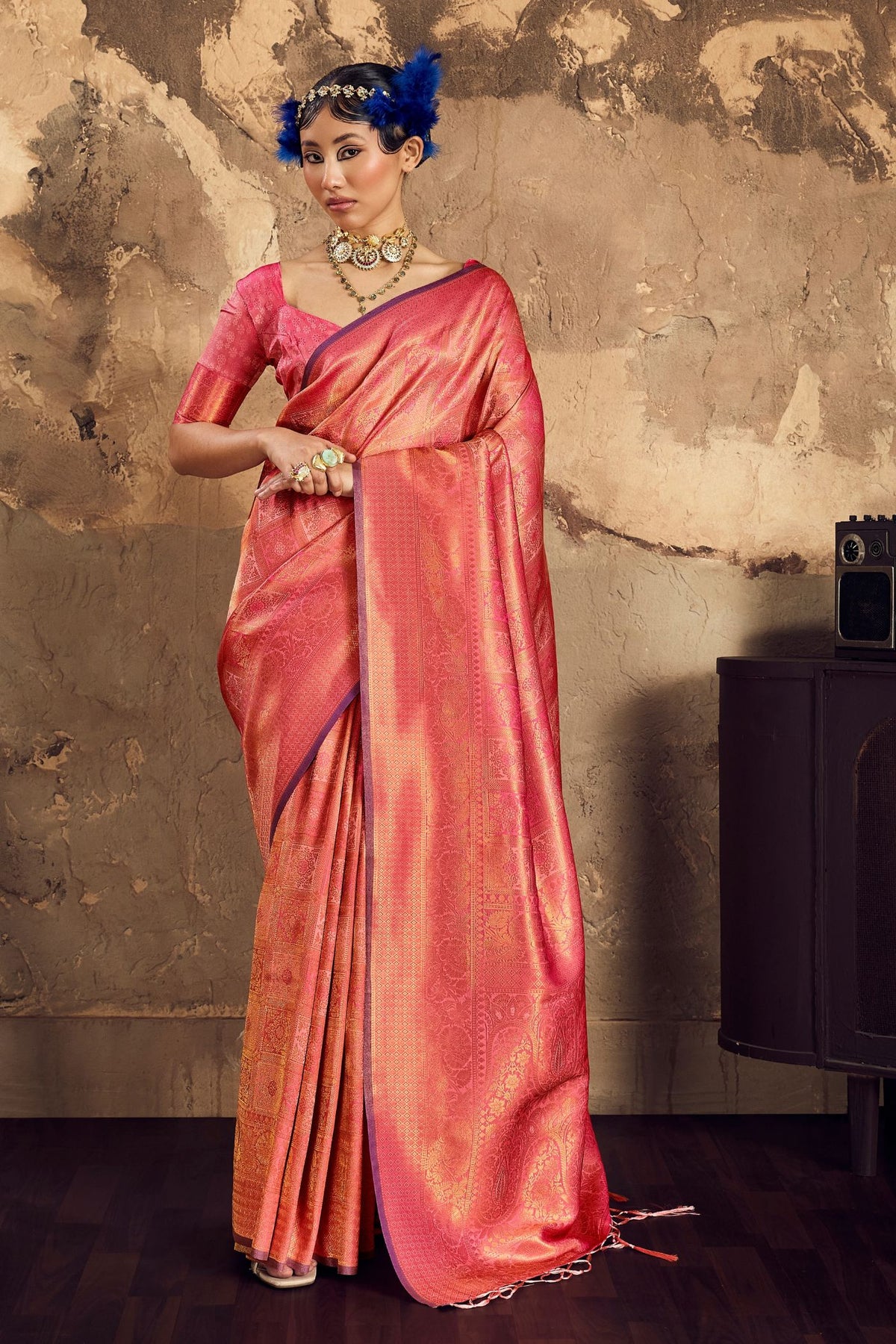
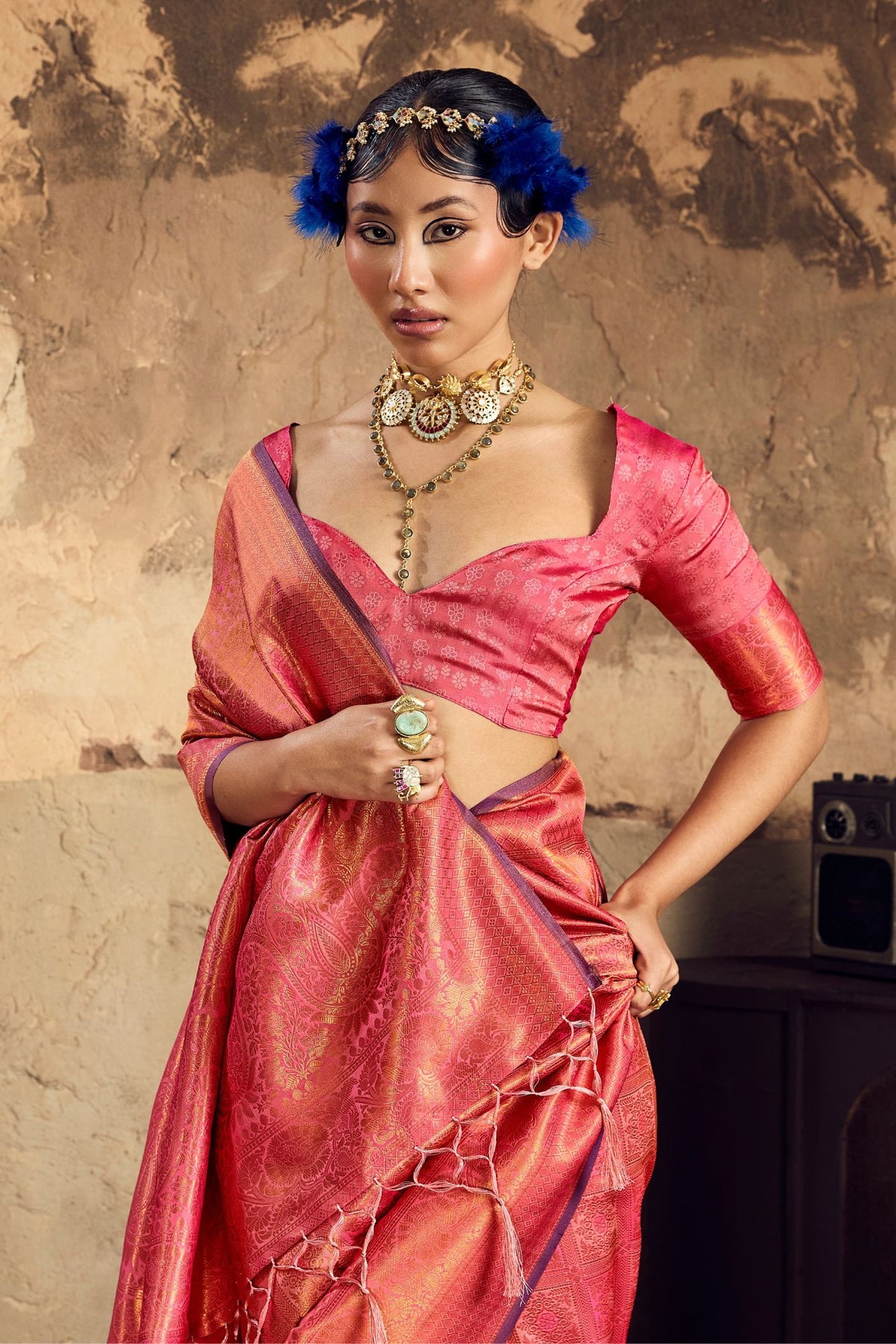
Nectarine Orange Kanjivaram Handloom Saree
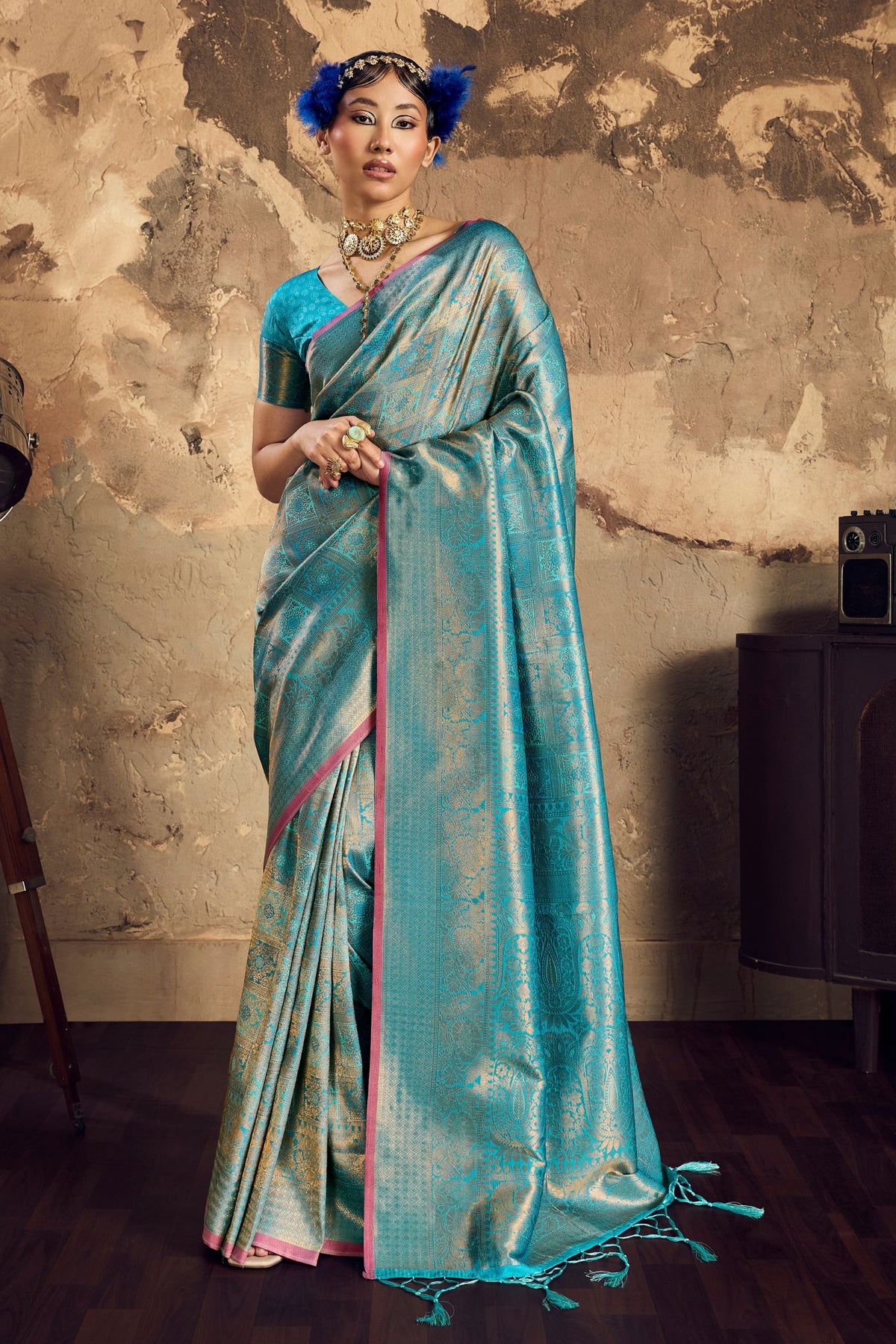
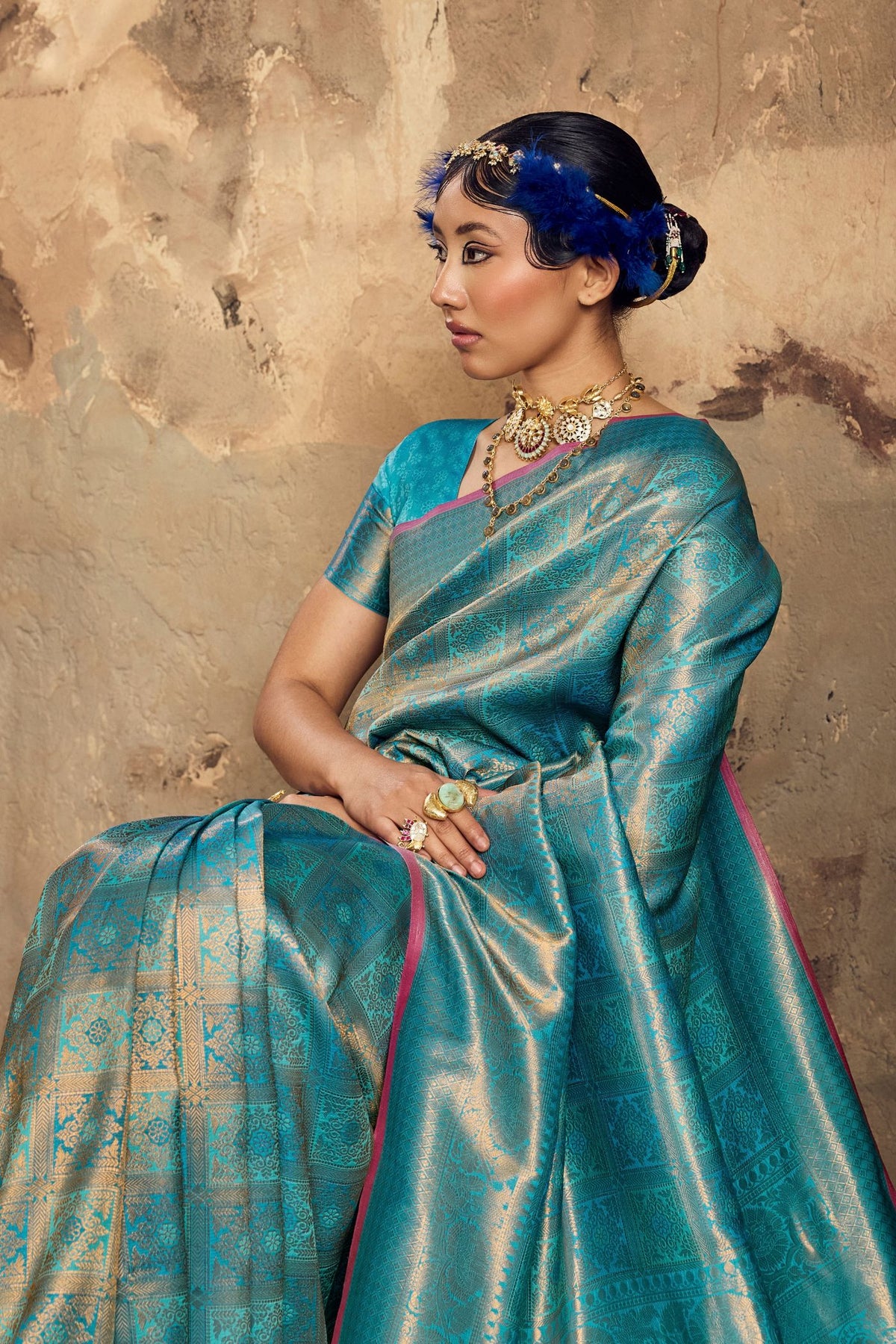
Cornflower Blue Kanjivaram Handloom Saree
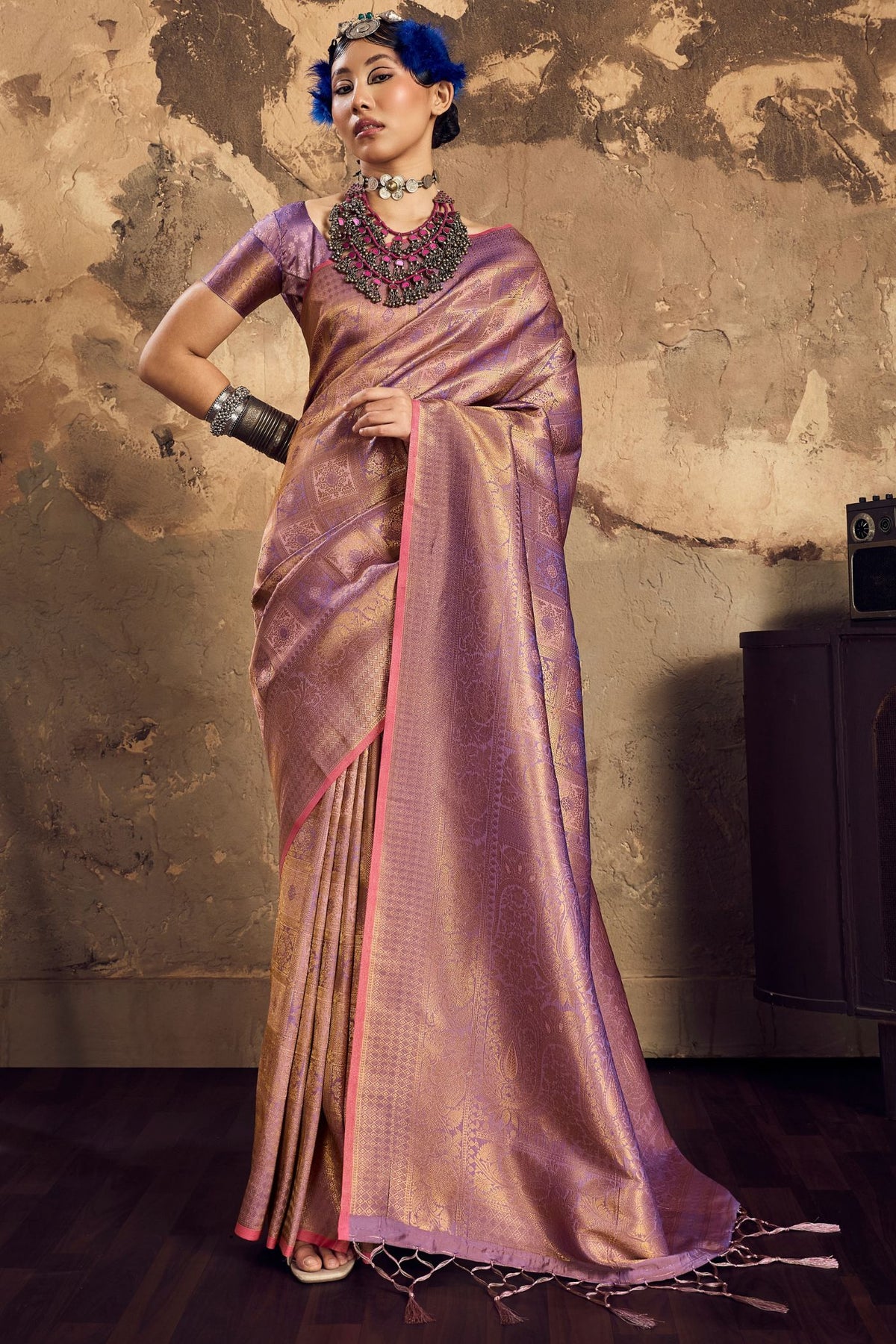
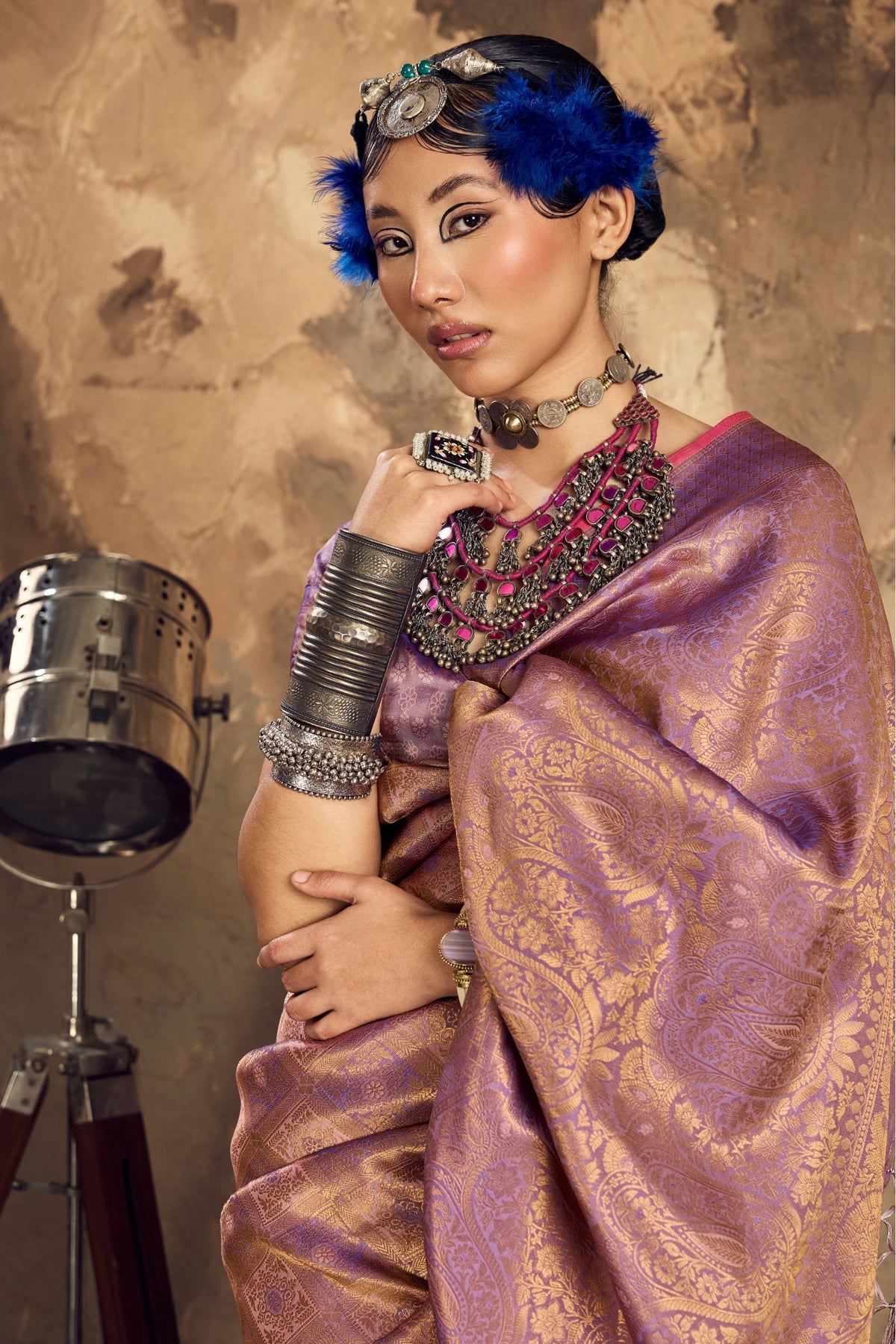
Petunia Purple Kanjivaram Handloom Saree
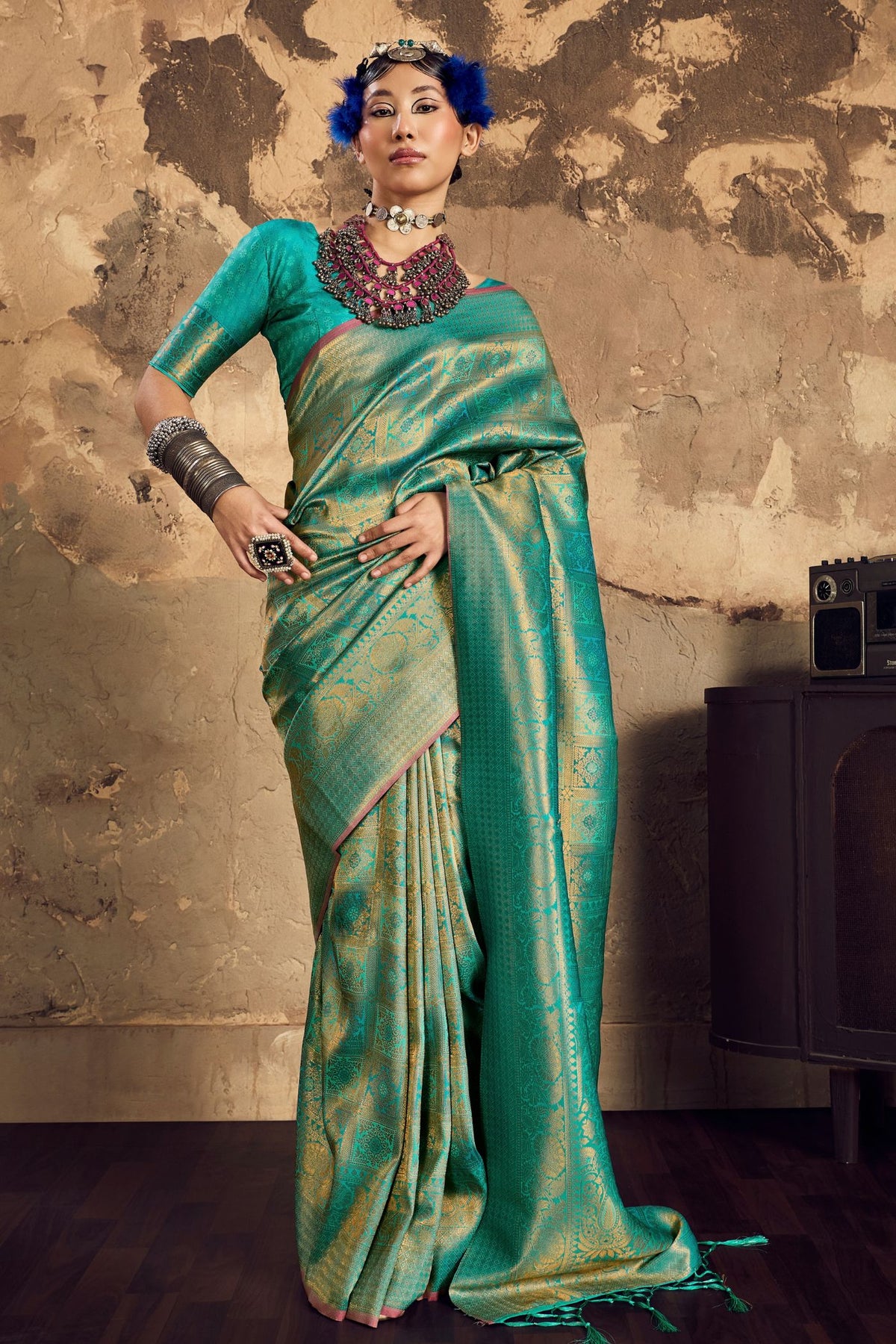
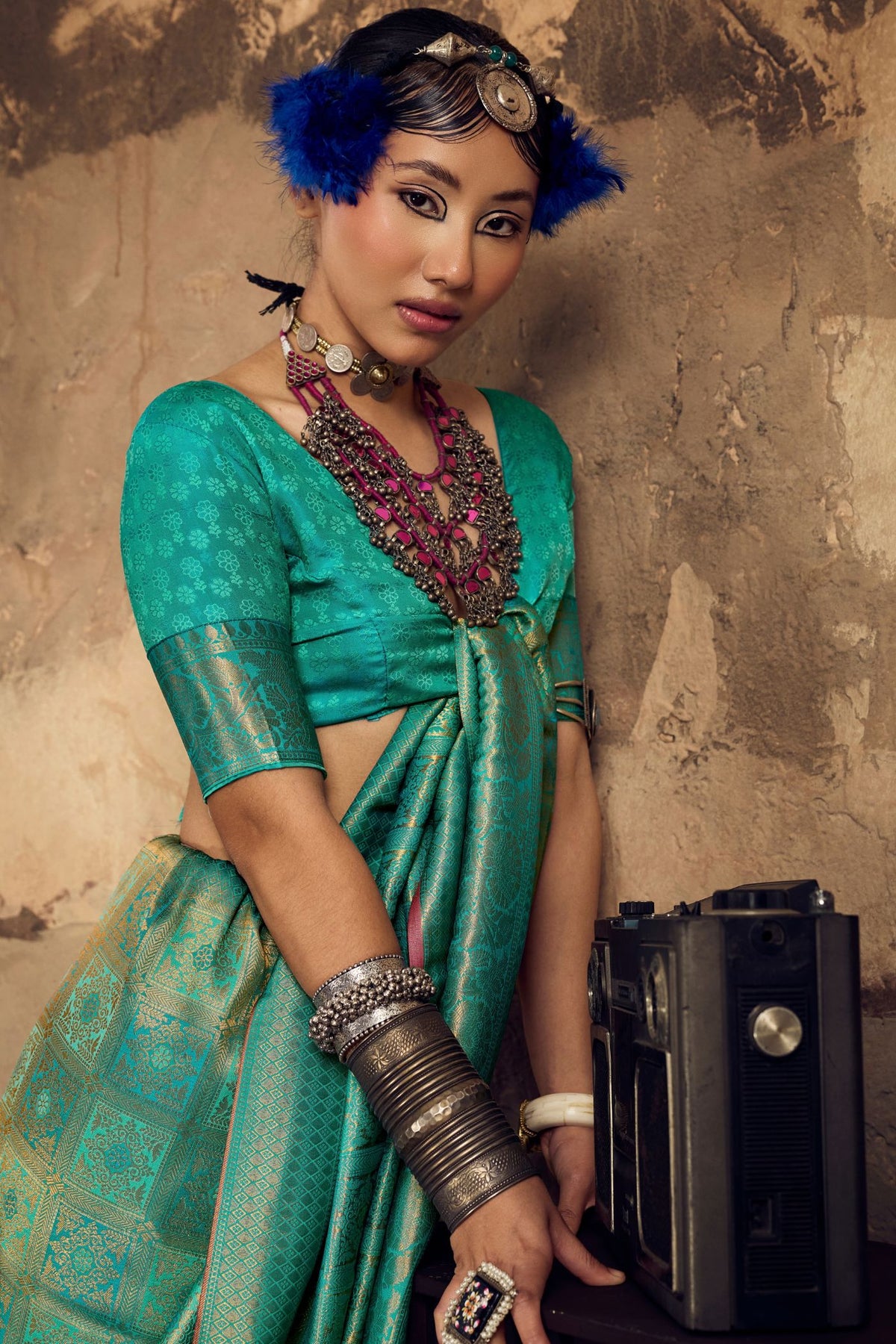
Hydrangea Green Kanjivaram Handloom Saree
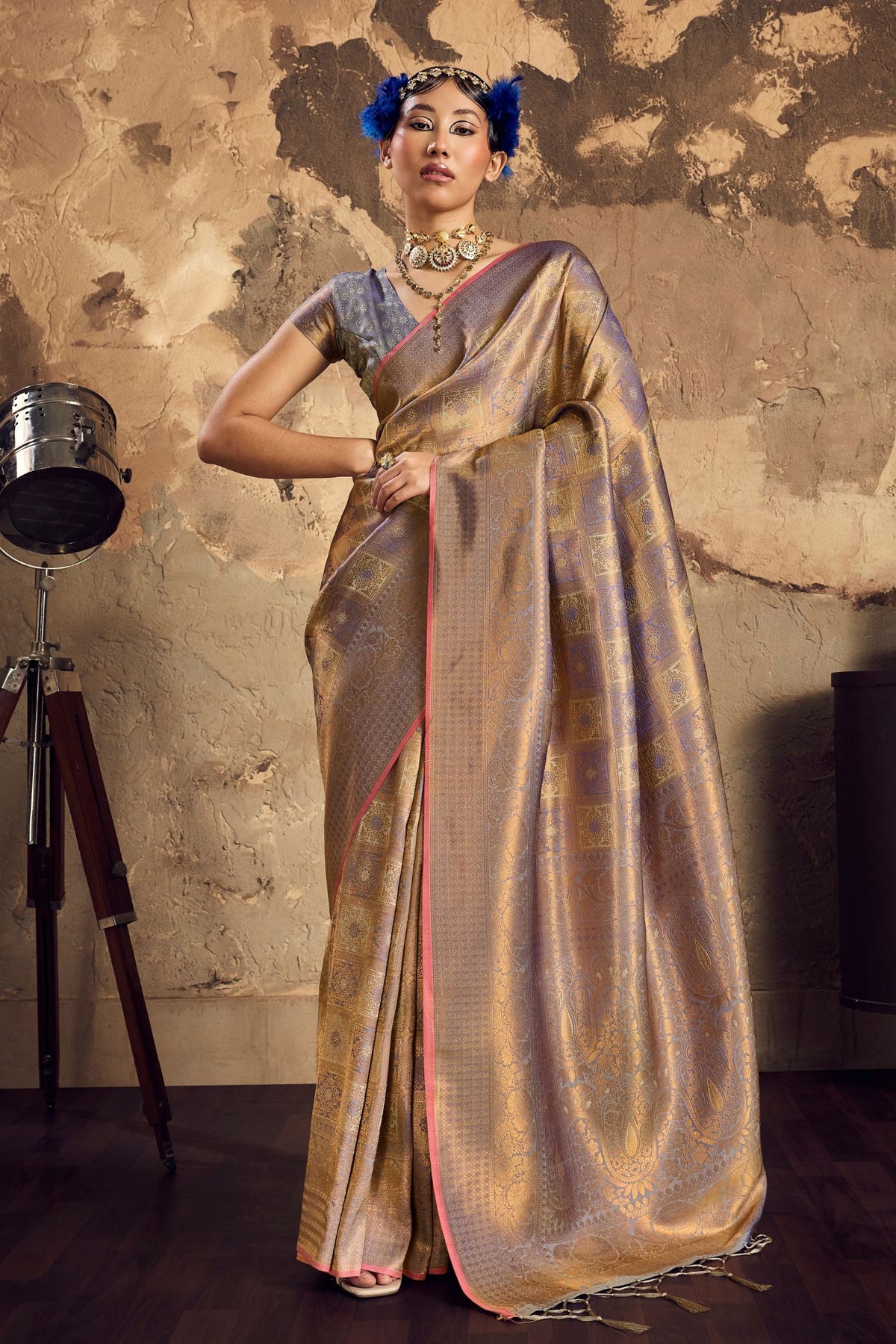
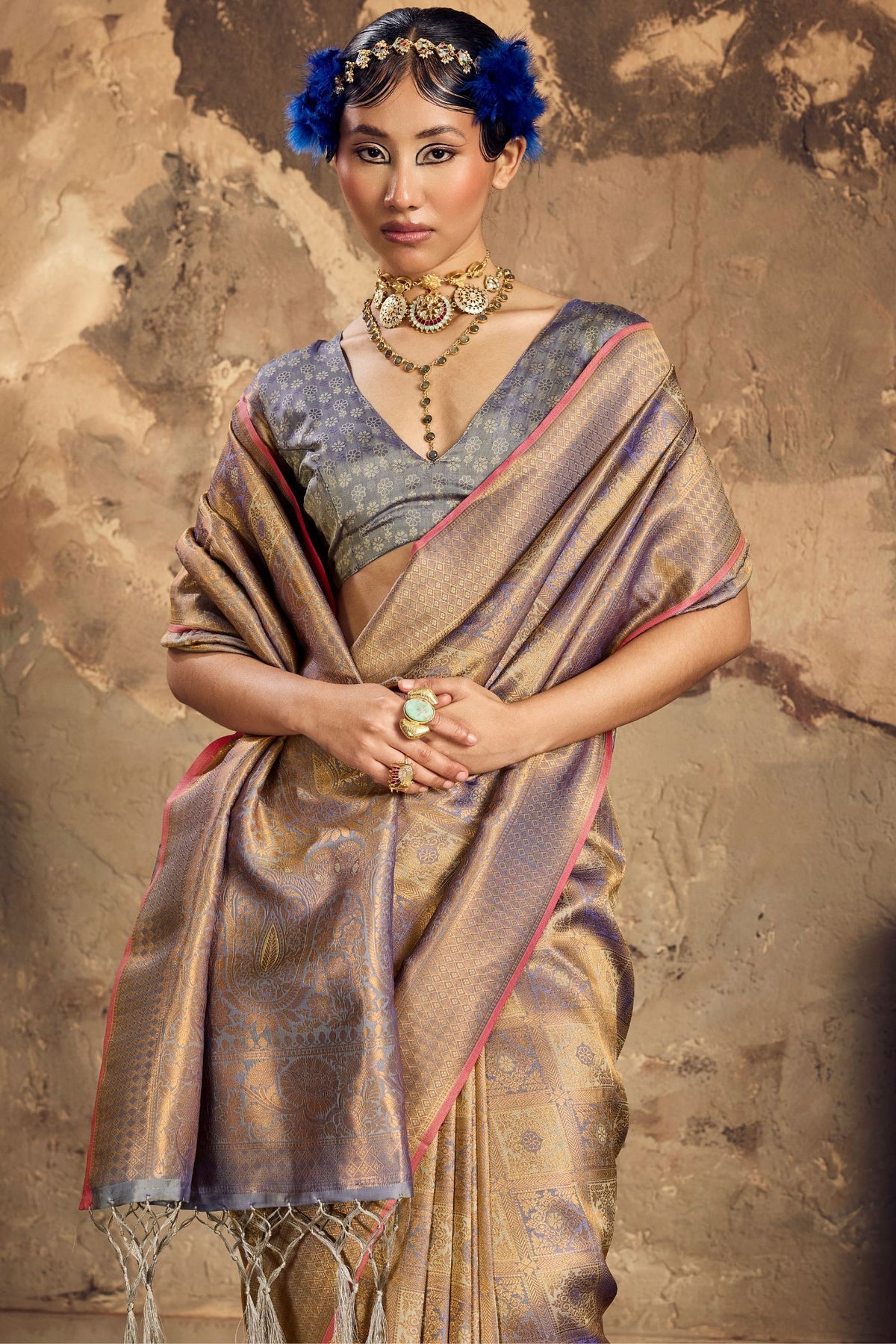
Wisteria Purple Kanjivaram Handloom Saree
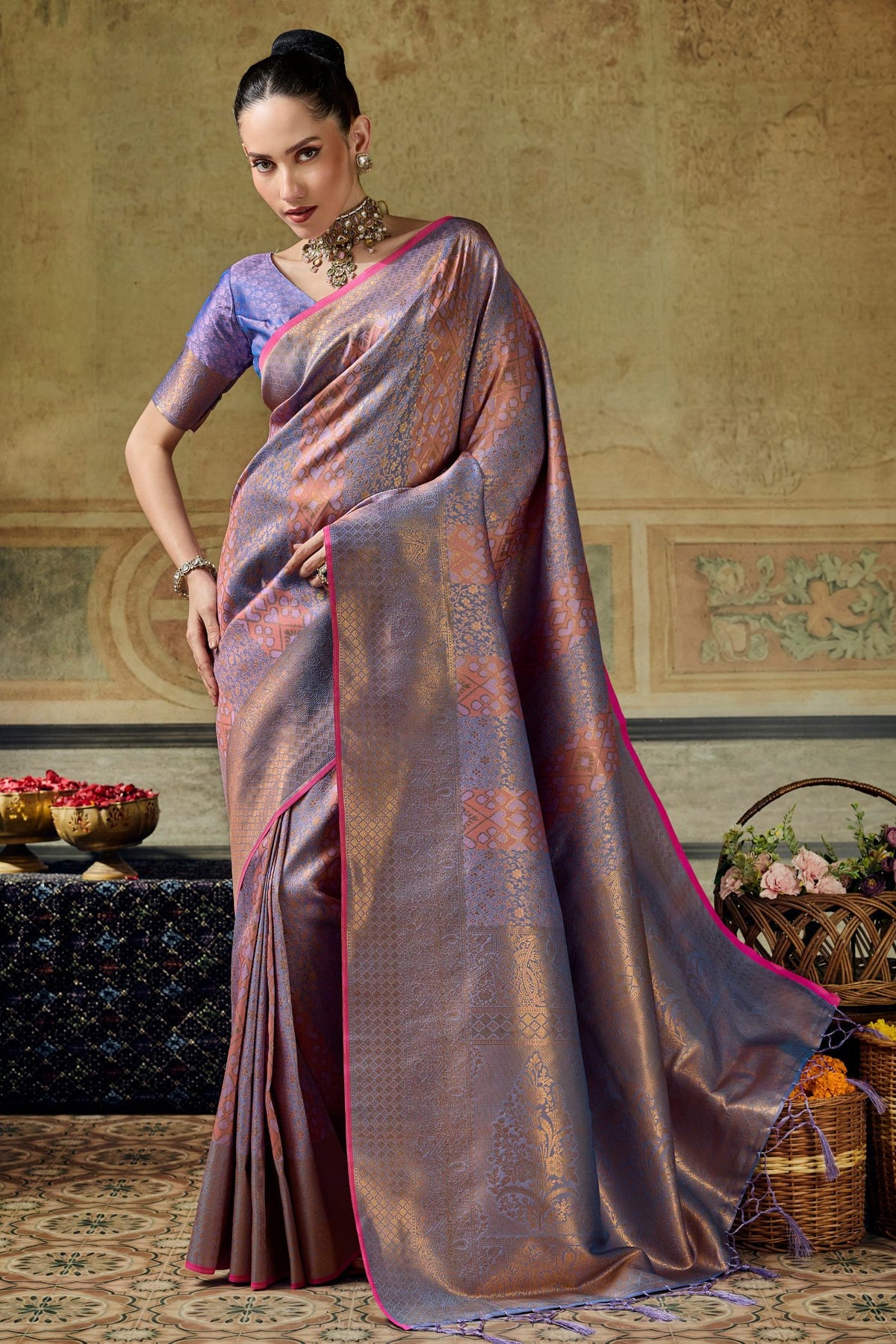
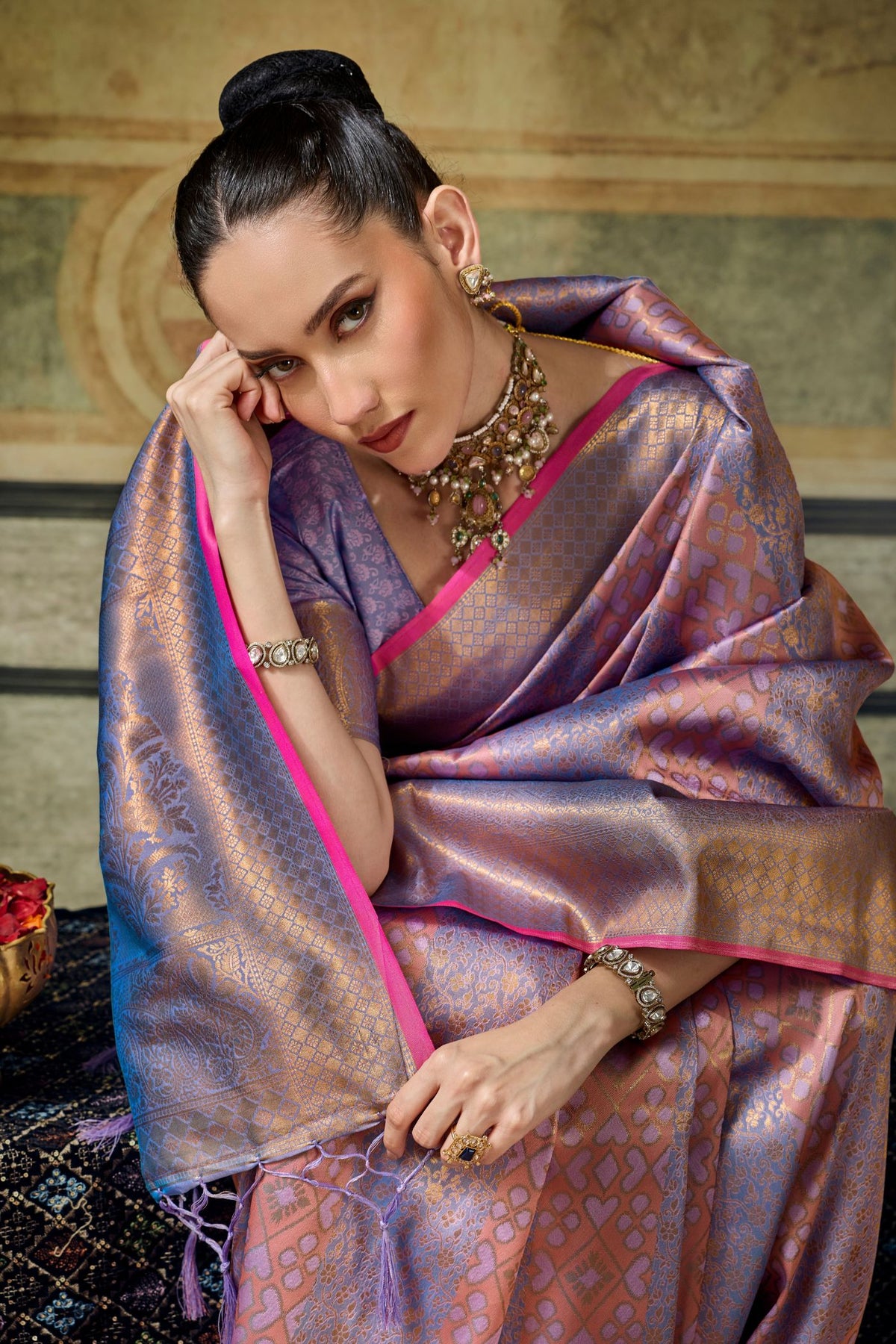
Grape Purple Kanjivaram Handloom Saree
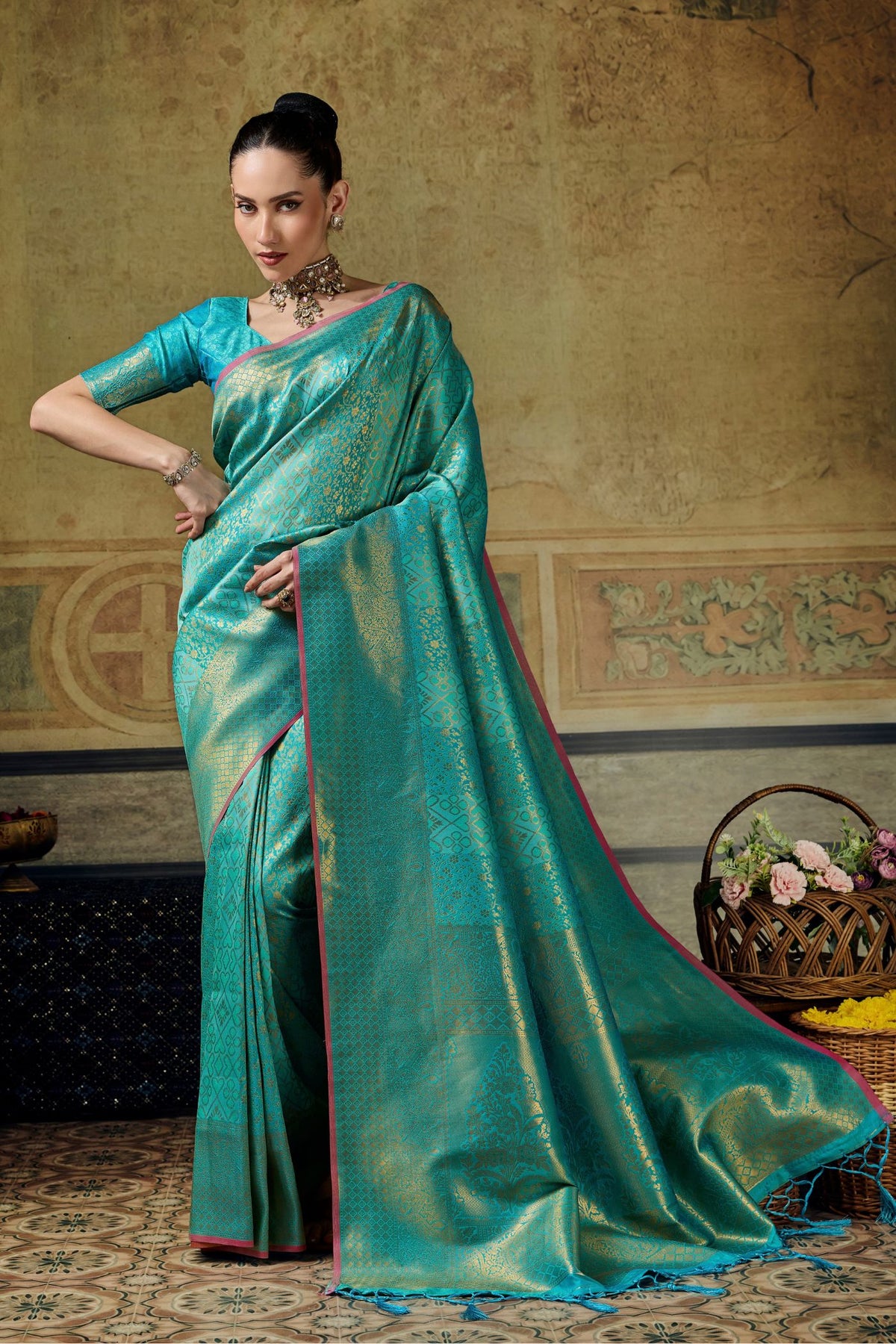
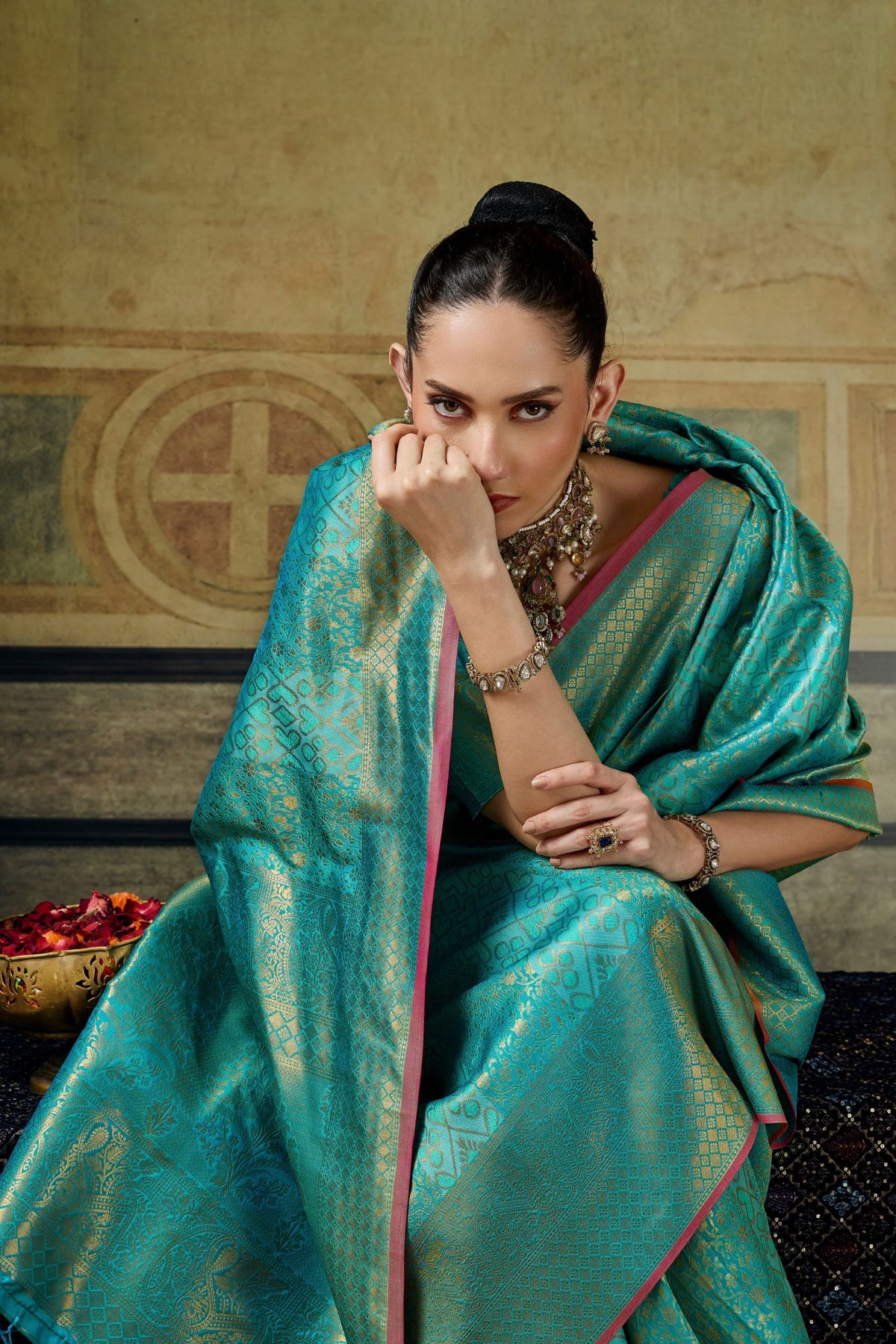
Teal Blue Kanjivaram Handloom Saree
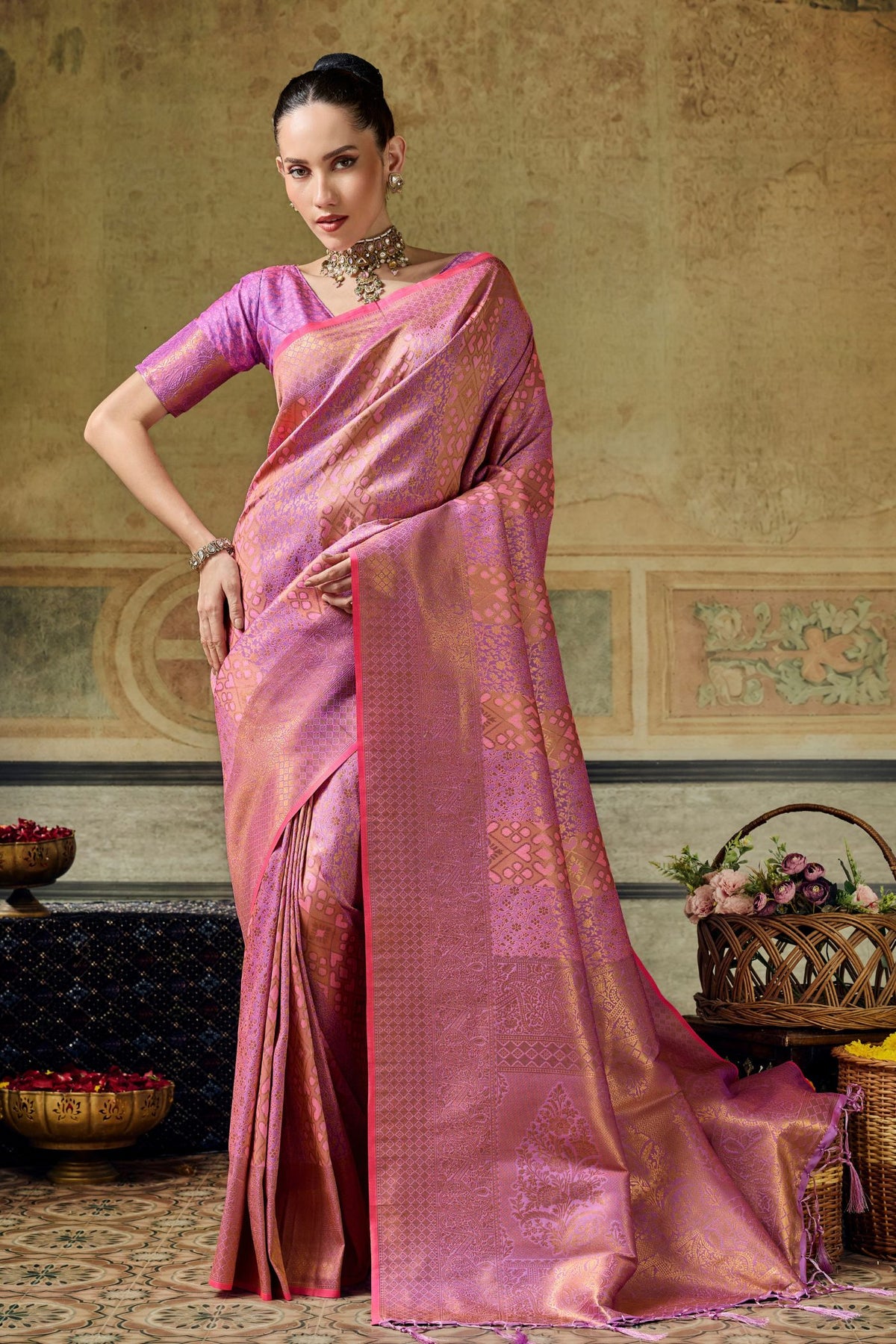
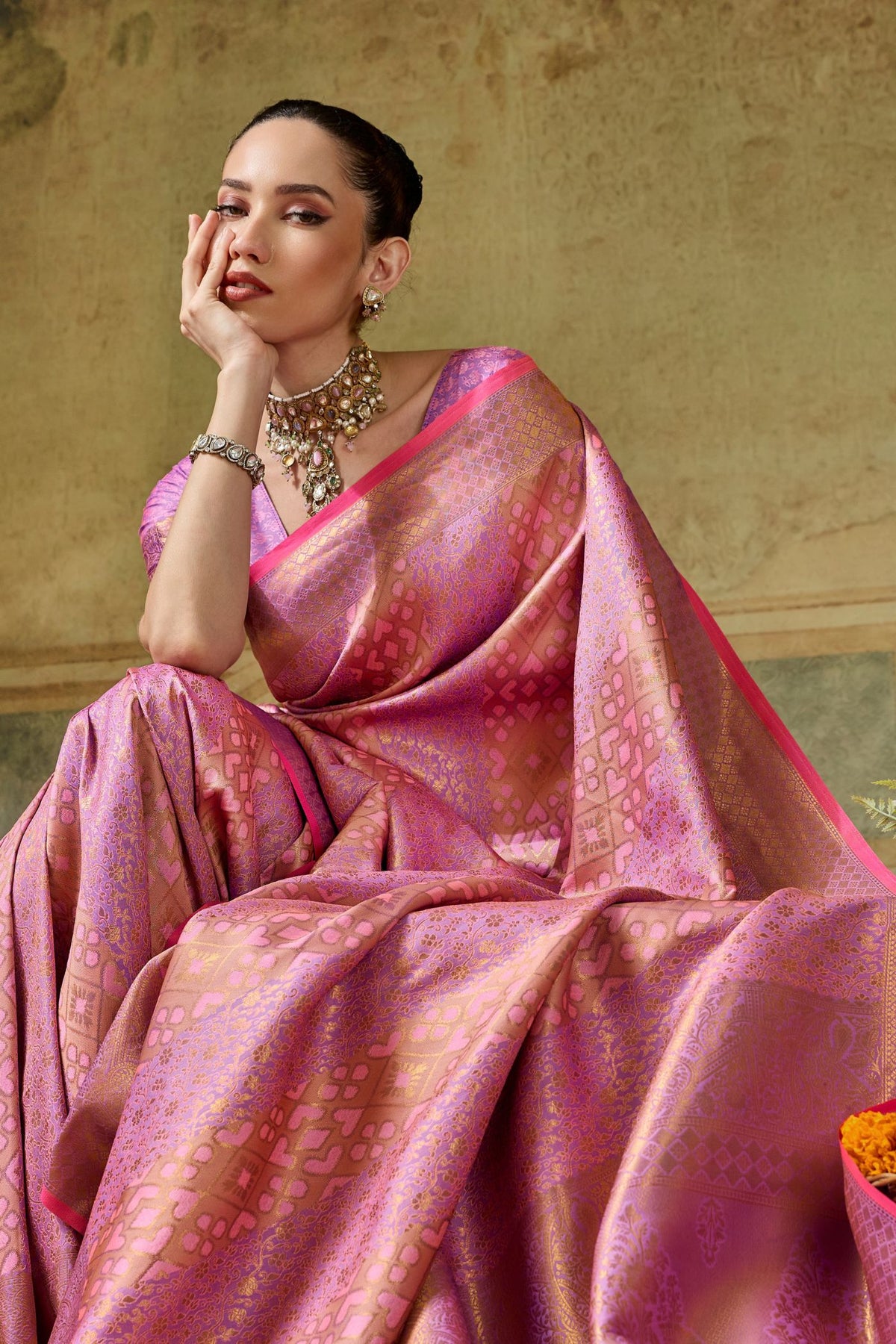
Raspberry Pink Kanjivaram Handloom Saree
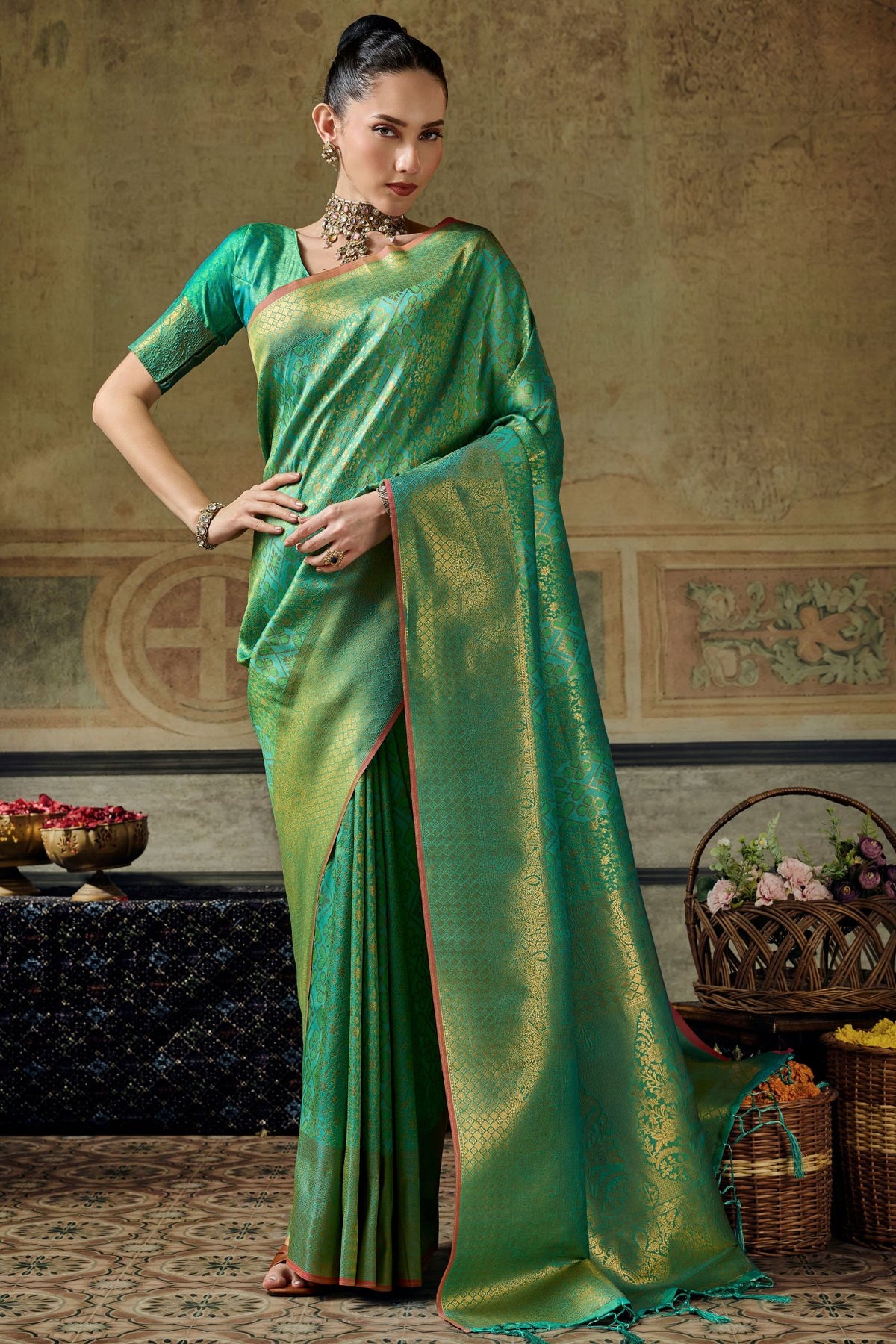

Leaf Green Kanjivaram Handloom Saree
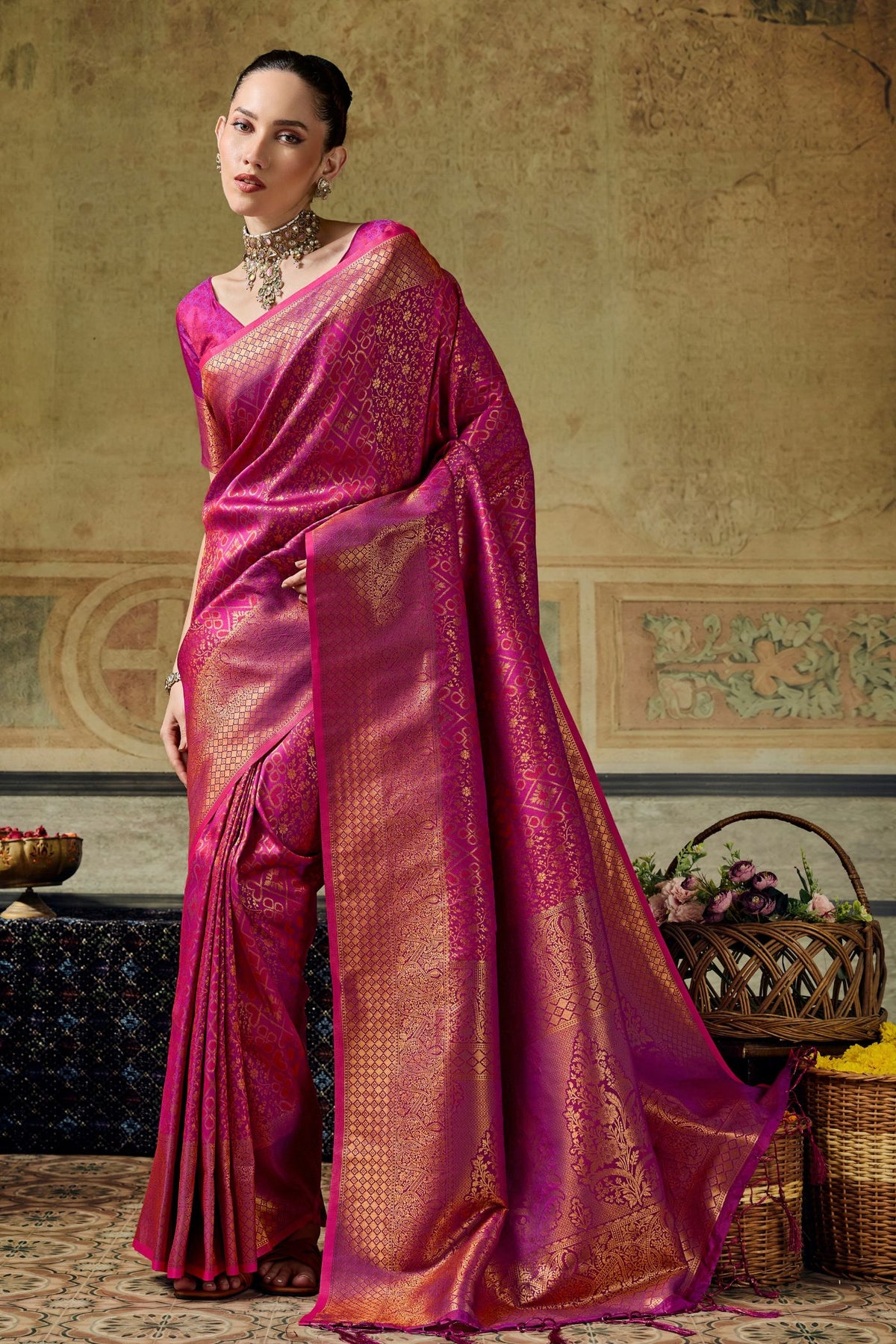
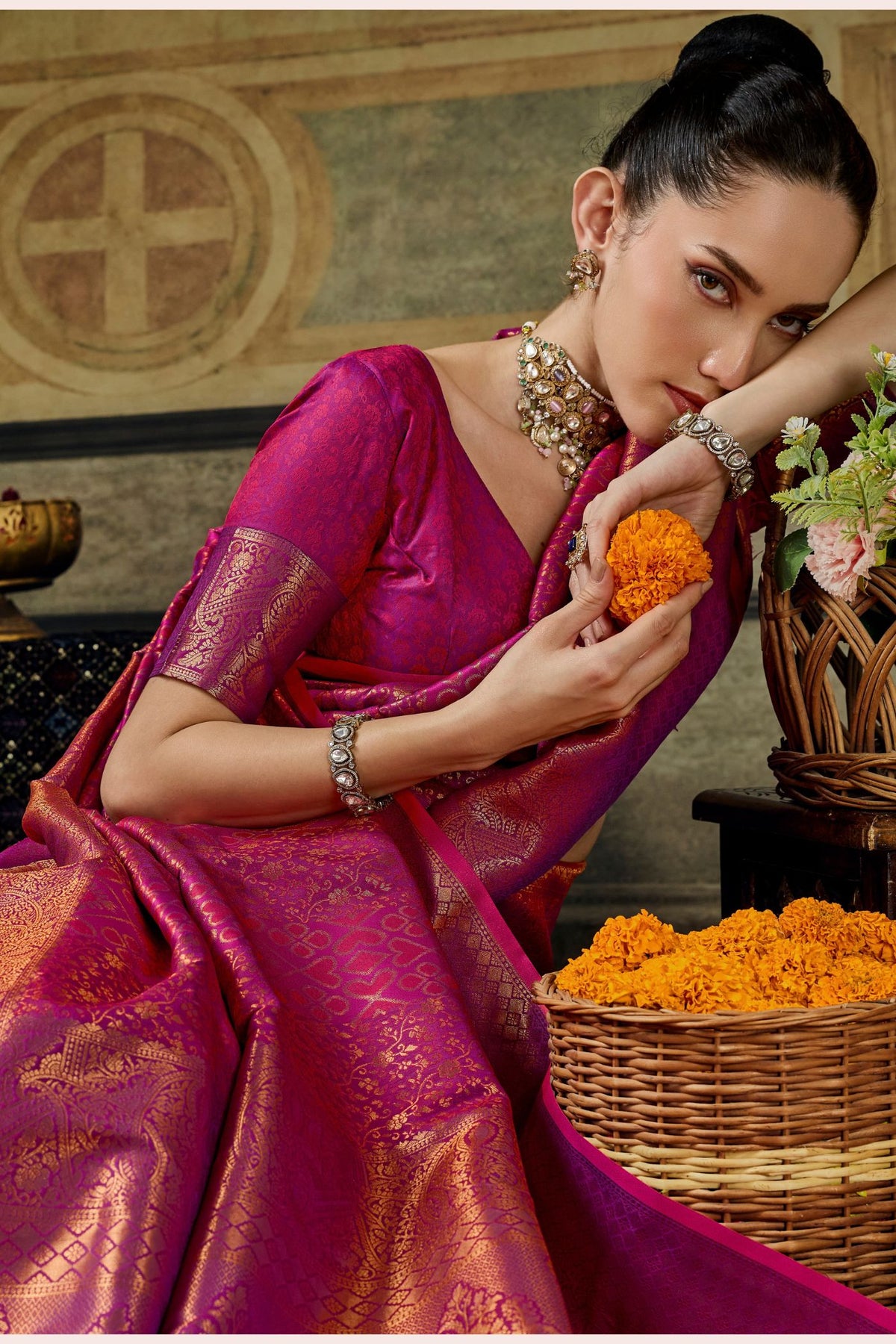
Berry Purple Kanjivaram Handloom Saree
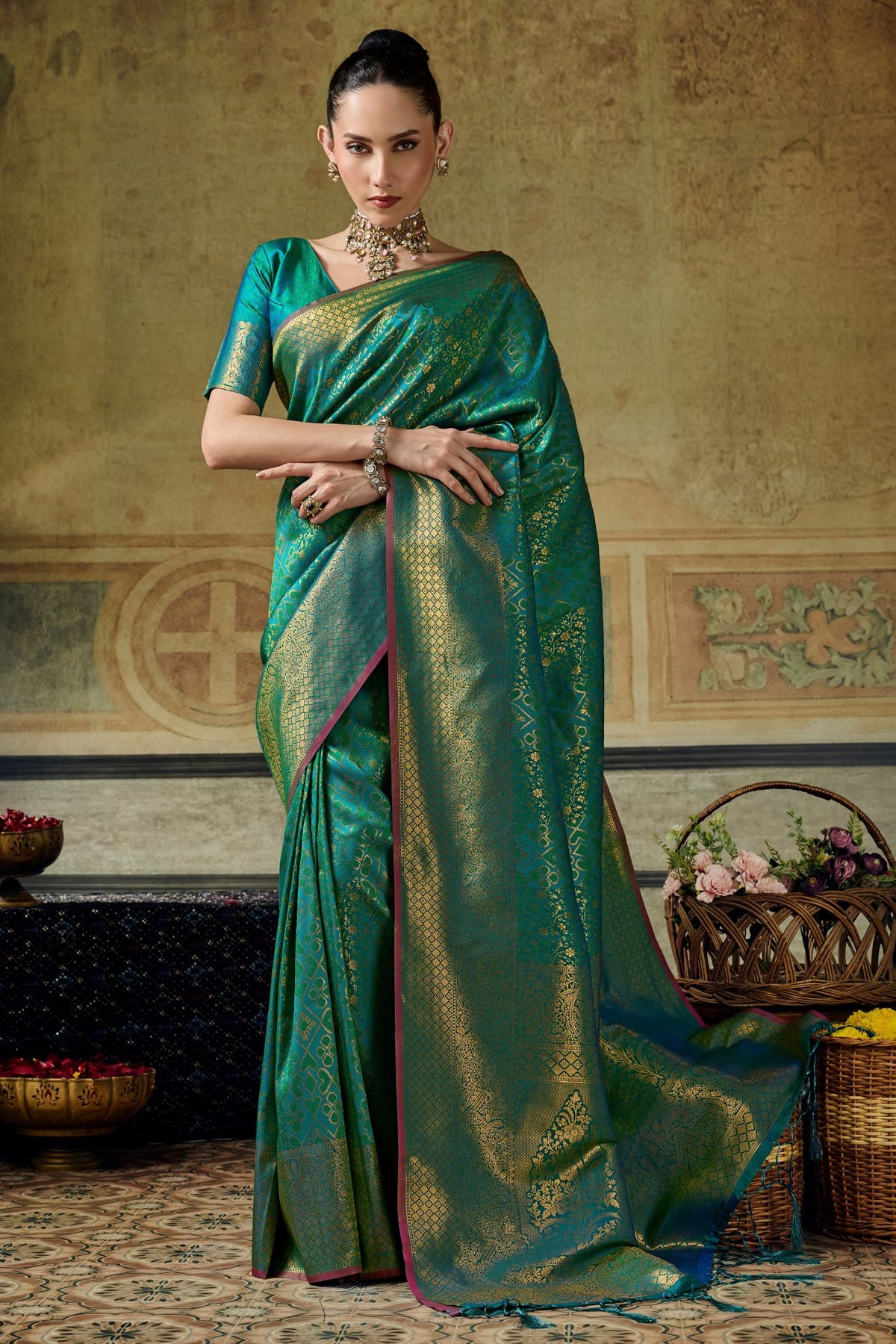
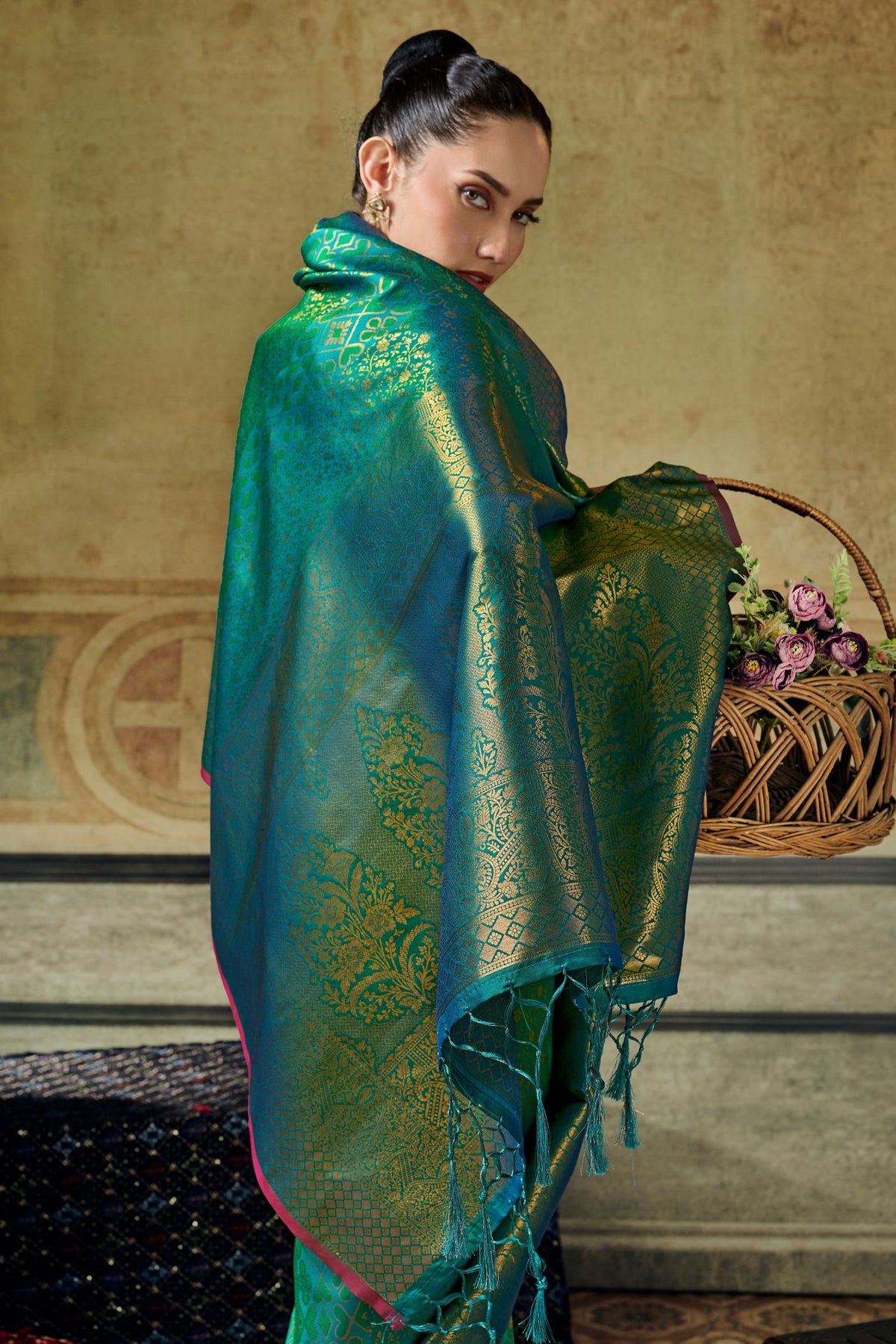
Forest Green Kanjivaram Handloom Saree
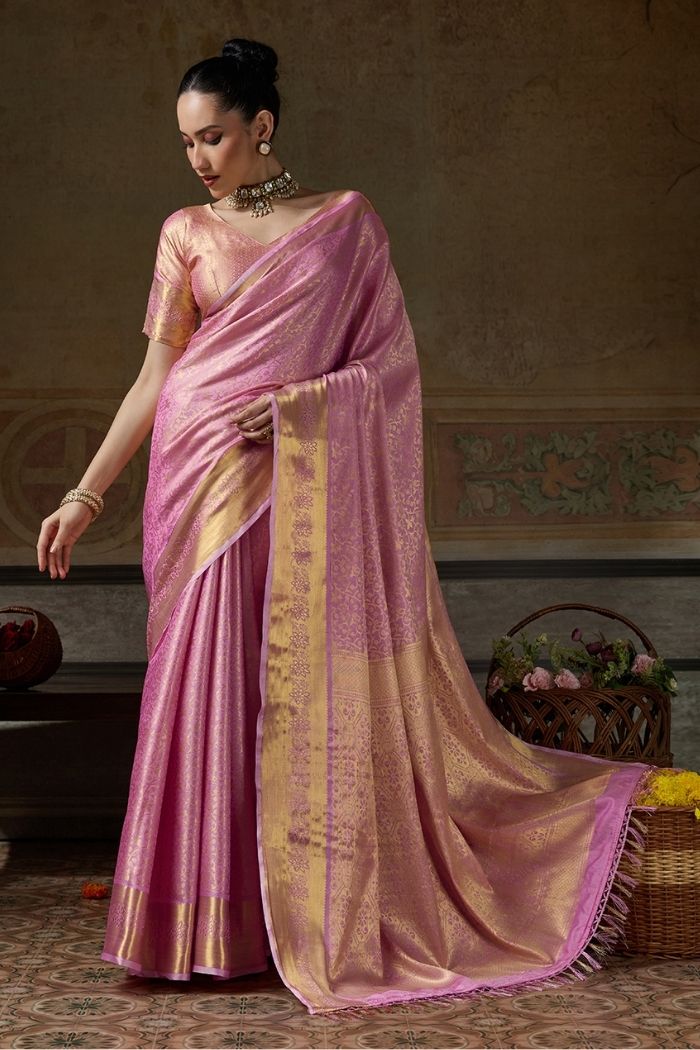
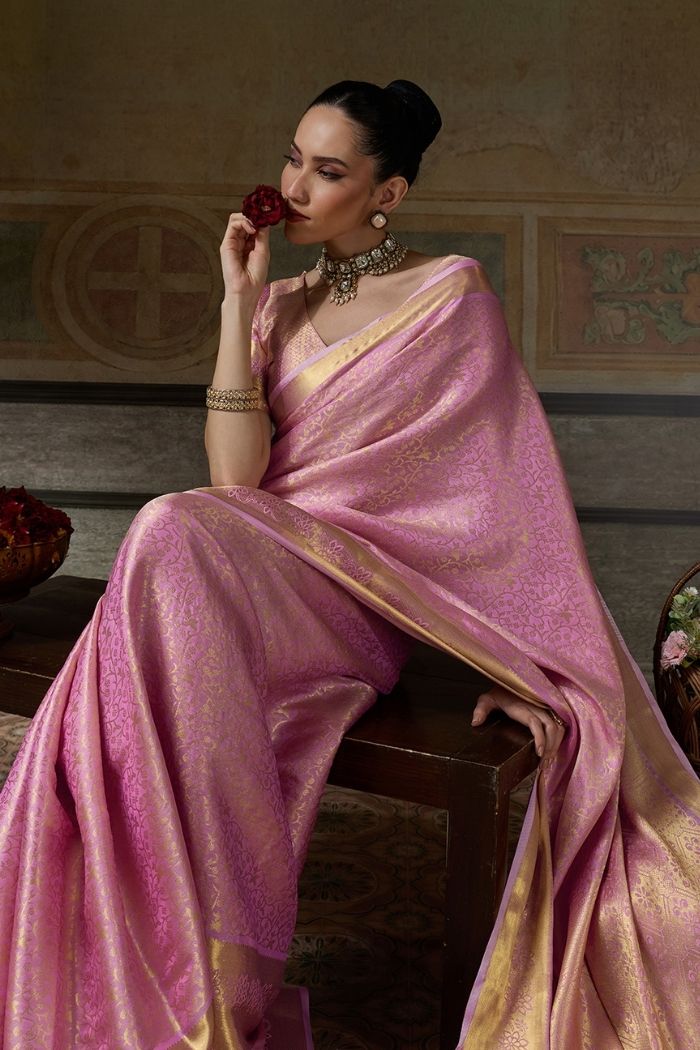
Dusty Rose Pink Woven Kanjivaram Saree
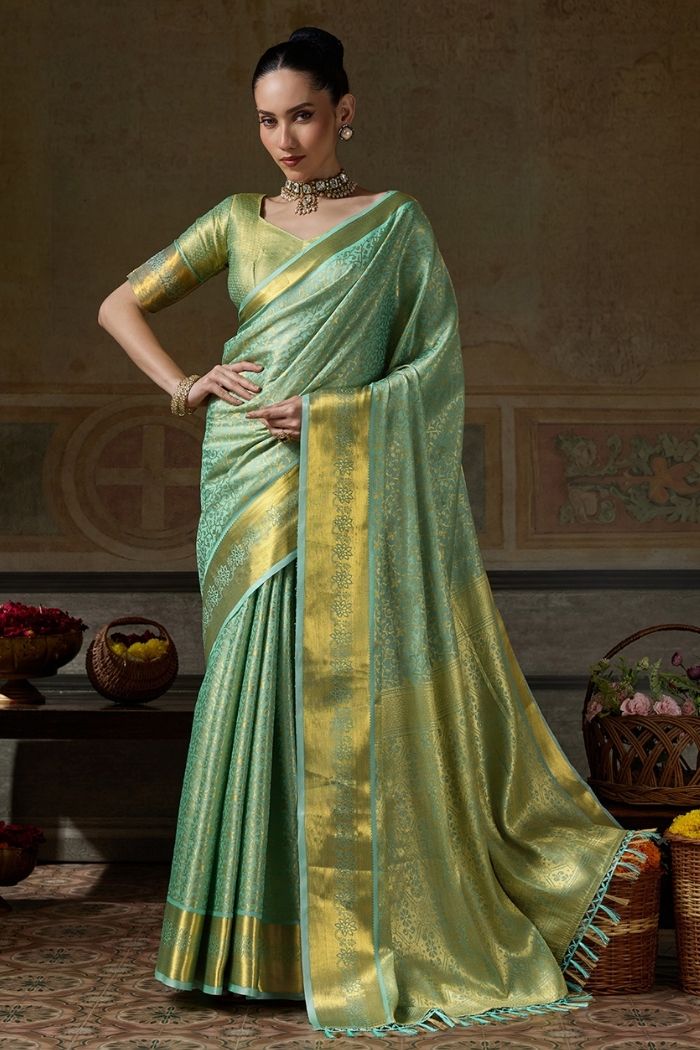
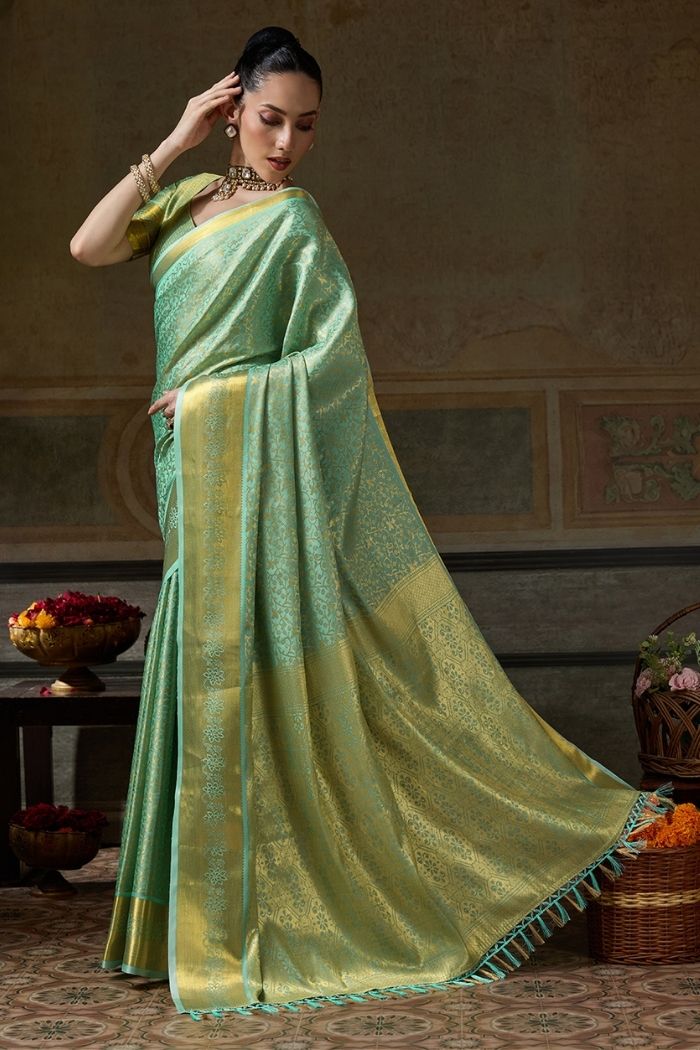
Pistachio Green Woven Kanjivaram Saree
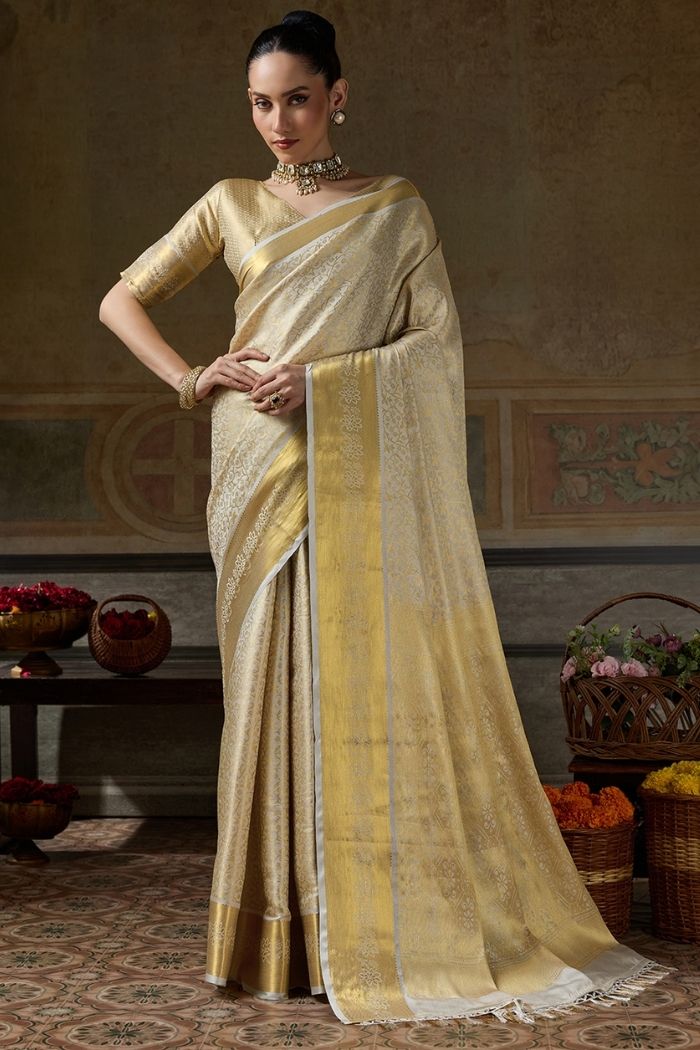
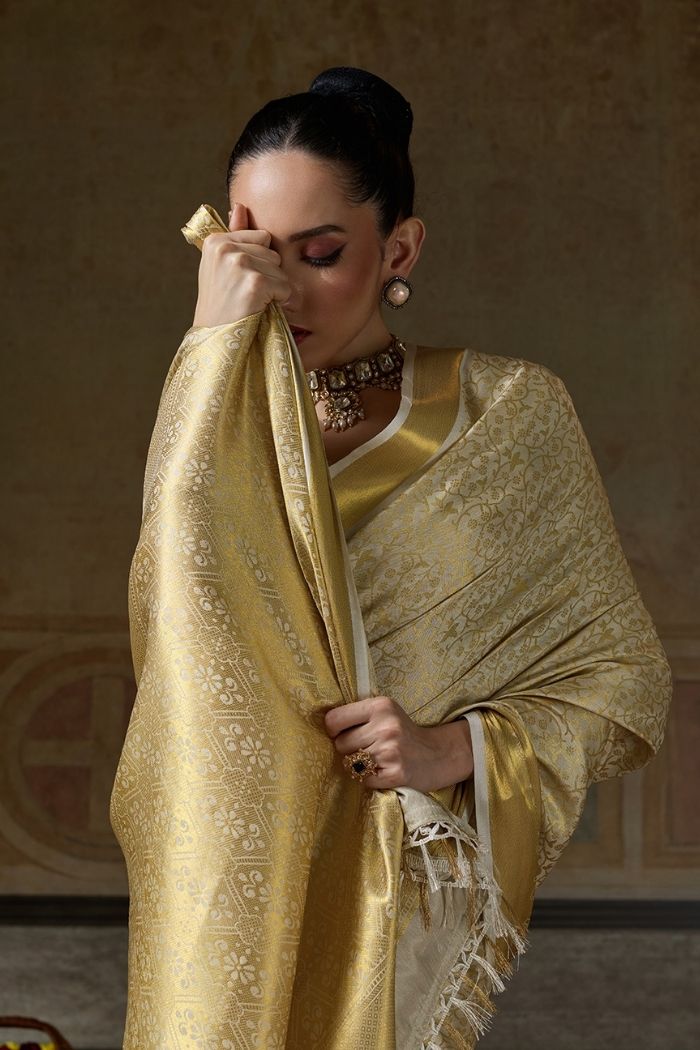
Milk White Woven Kanjivaram Saree
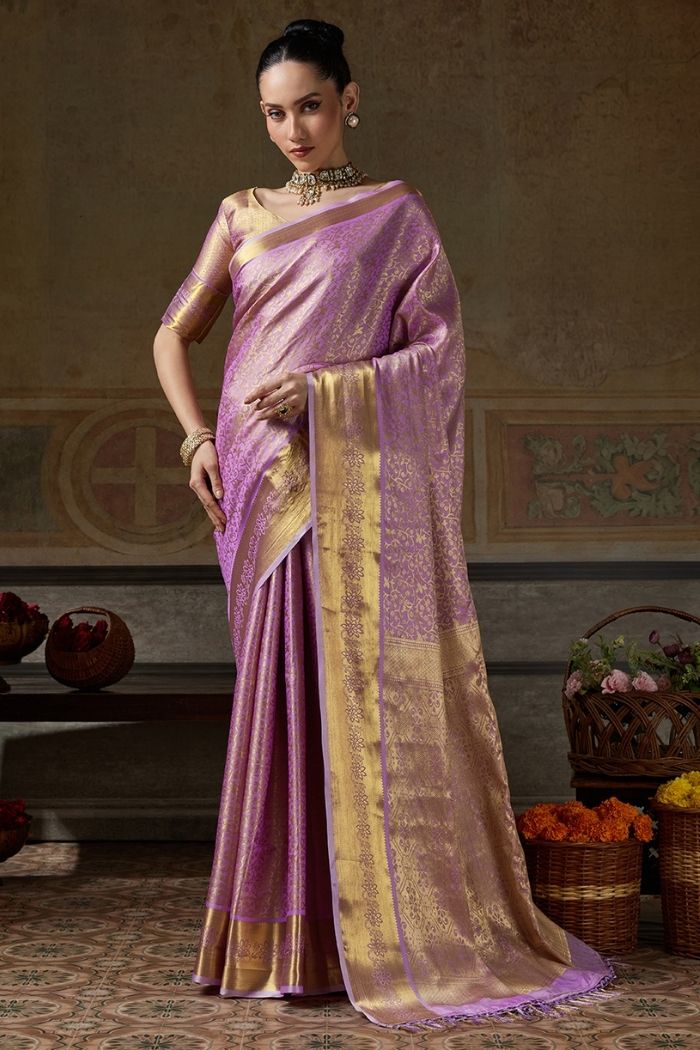
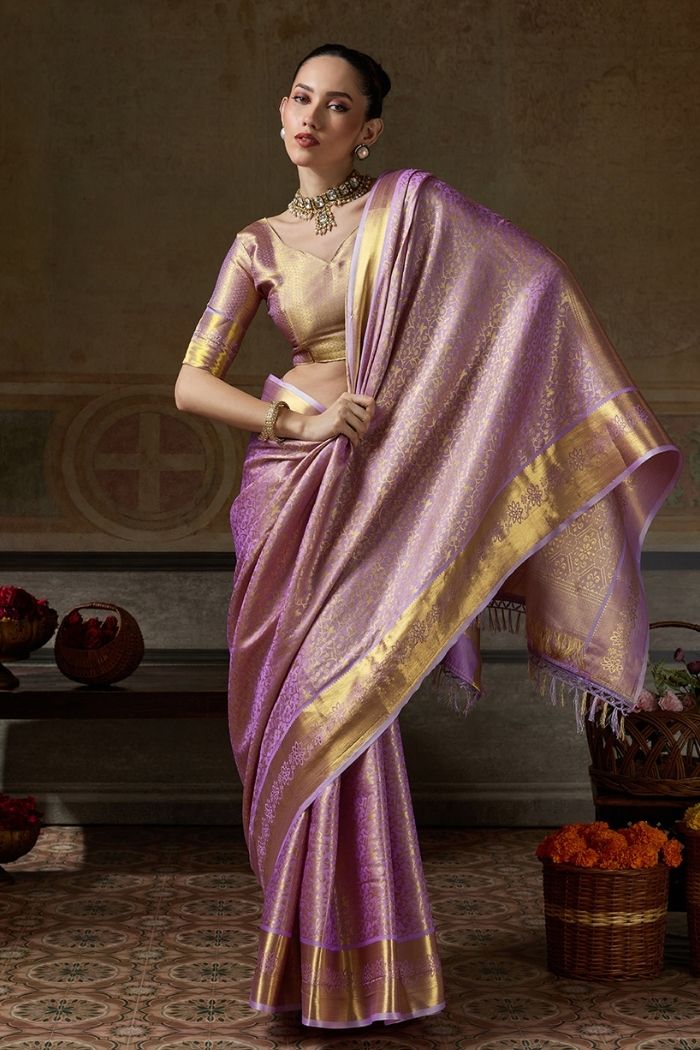
Aubergine Purple Woven Kanjivaram Saree
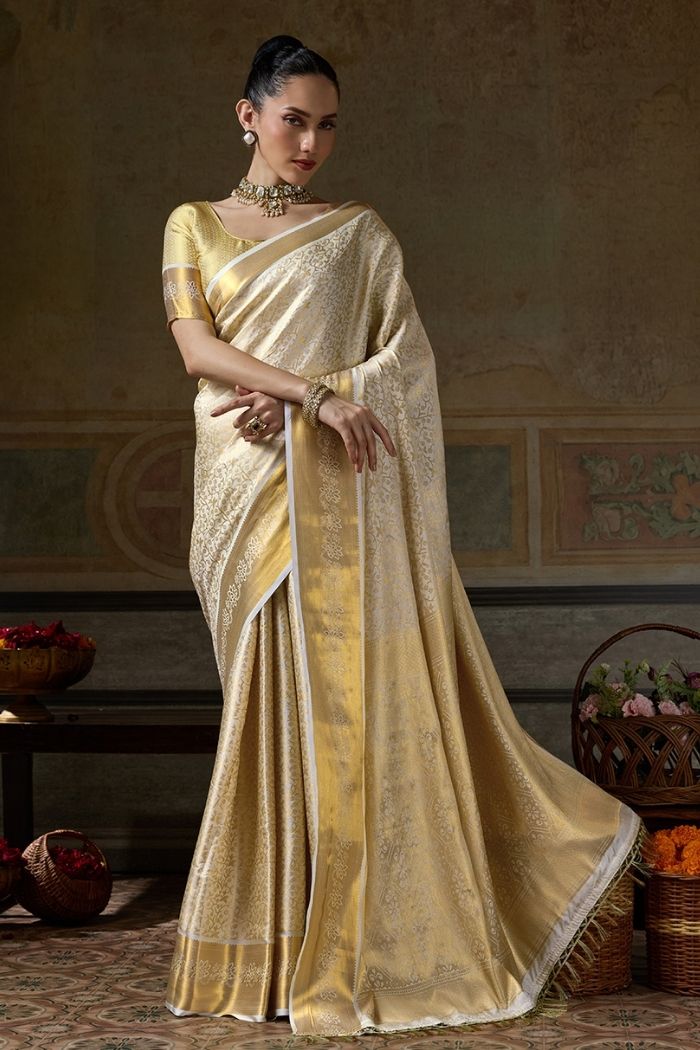
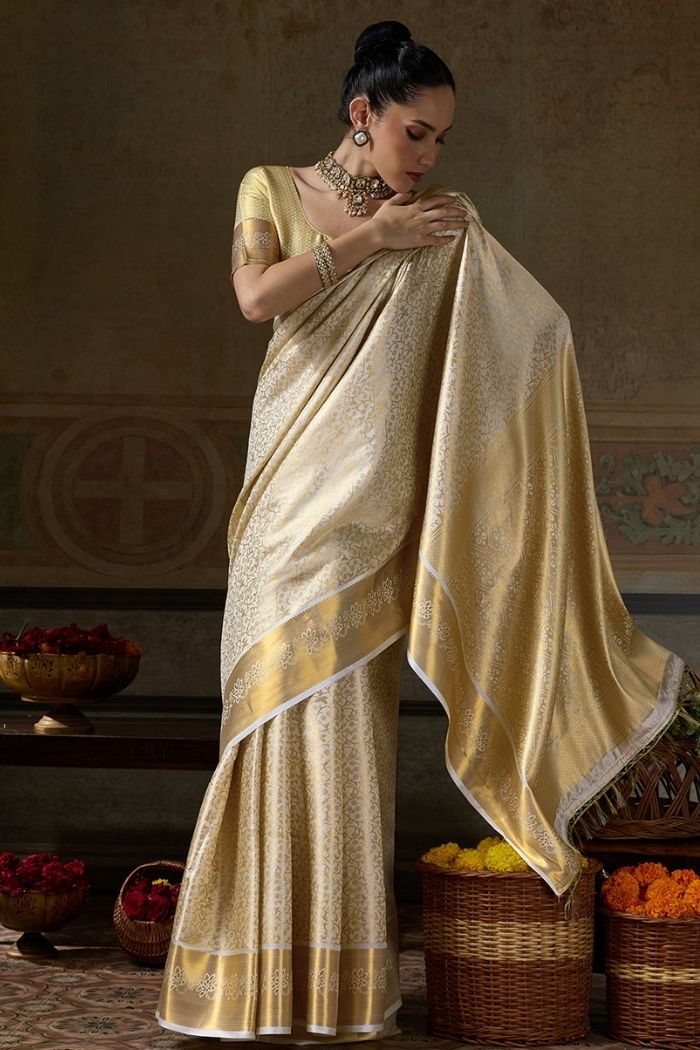
Oyster White Woven Kanjivaram Saree
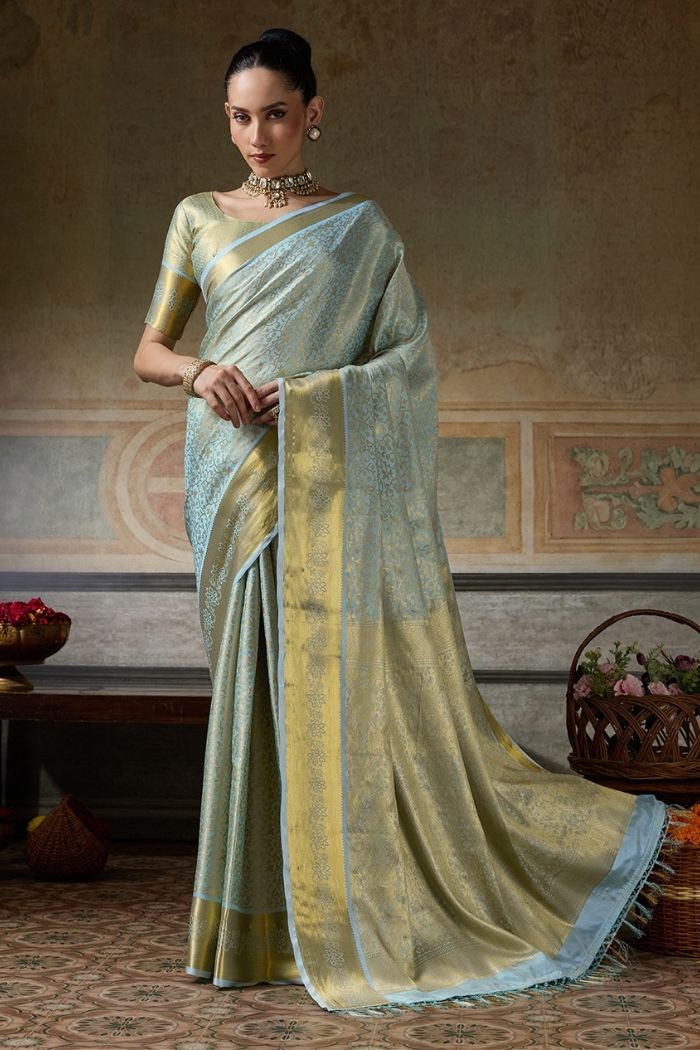
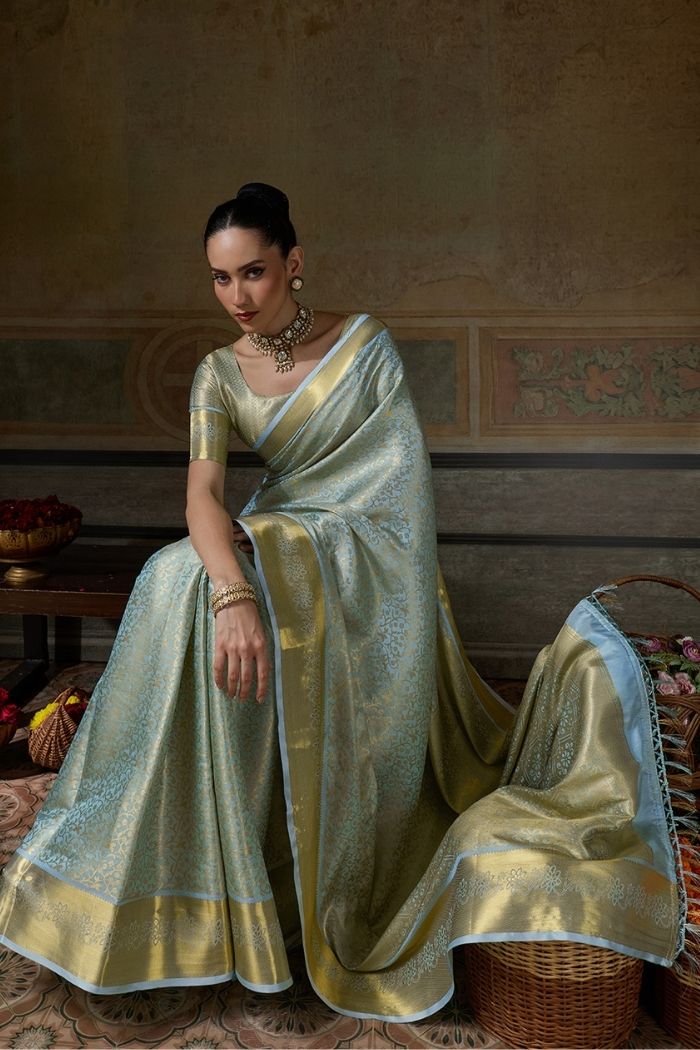
Dusty Blue Woven Kanjivaram Saree
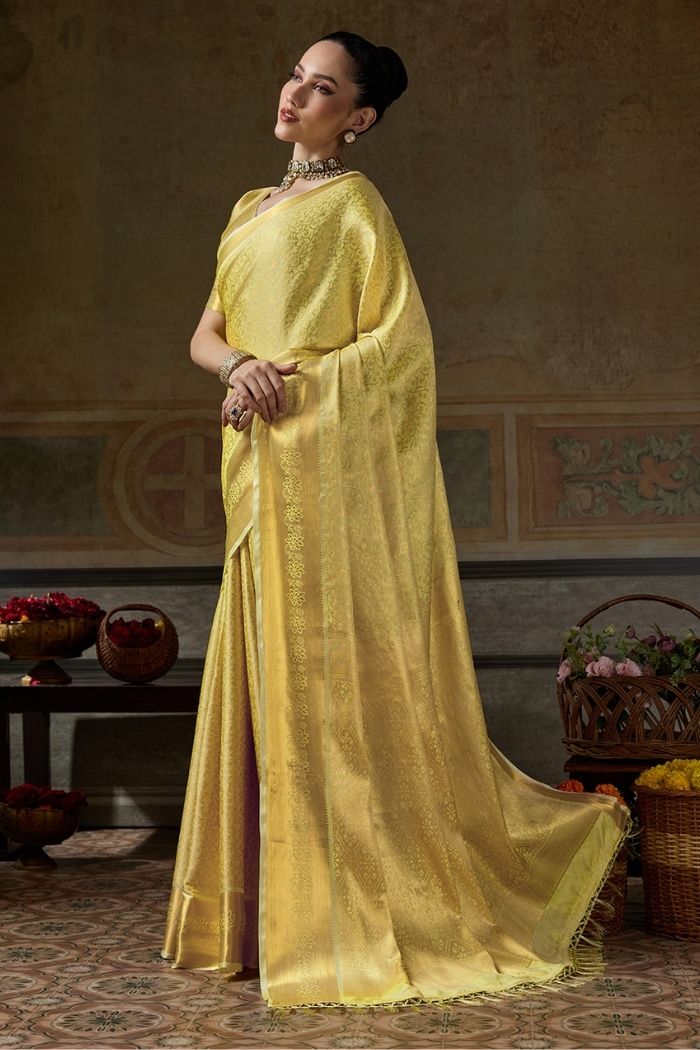
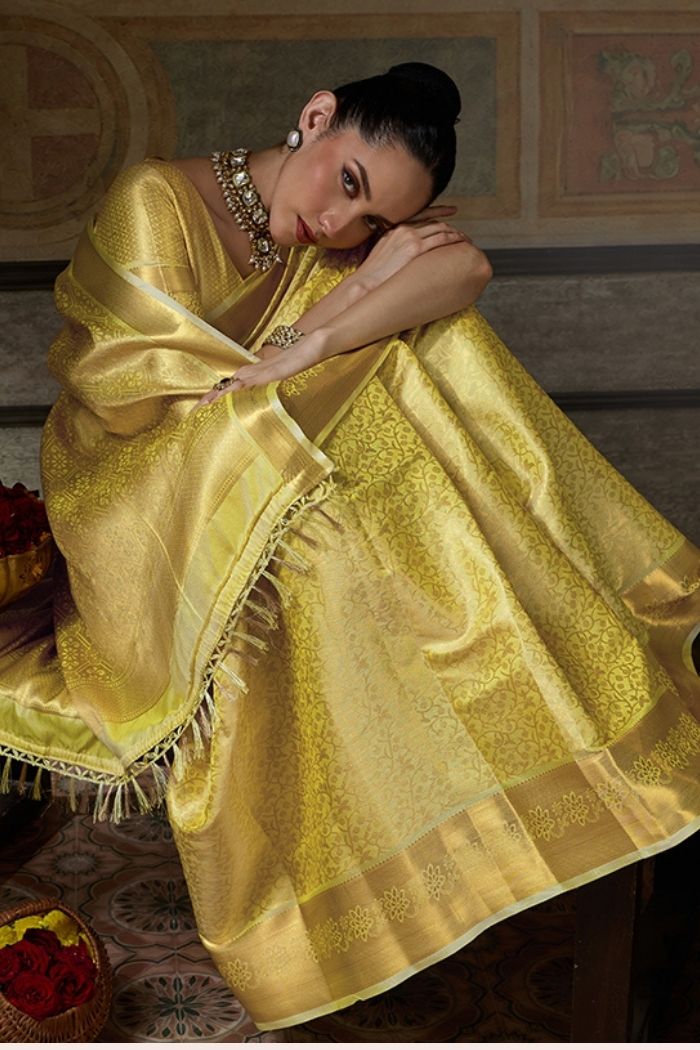
Ochre Yellow Woven Kanjivaram Saree
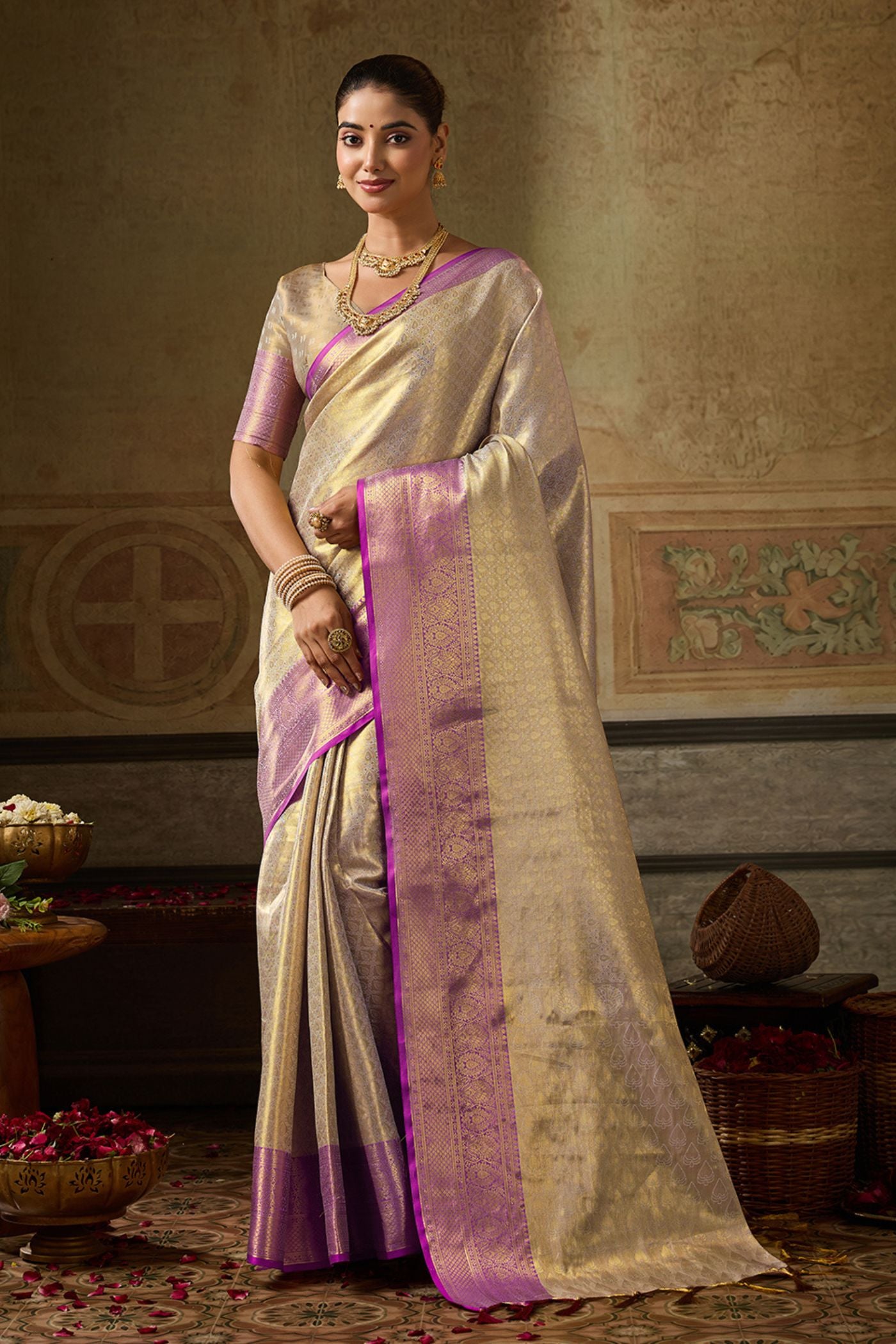
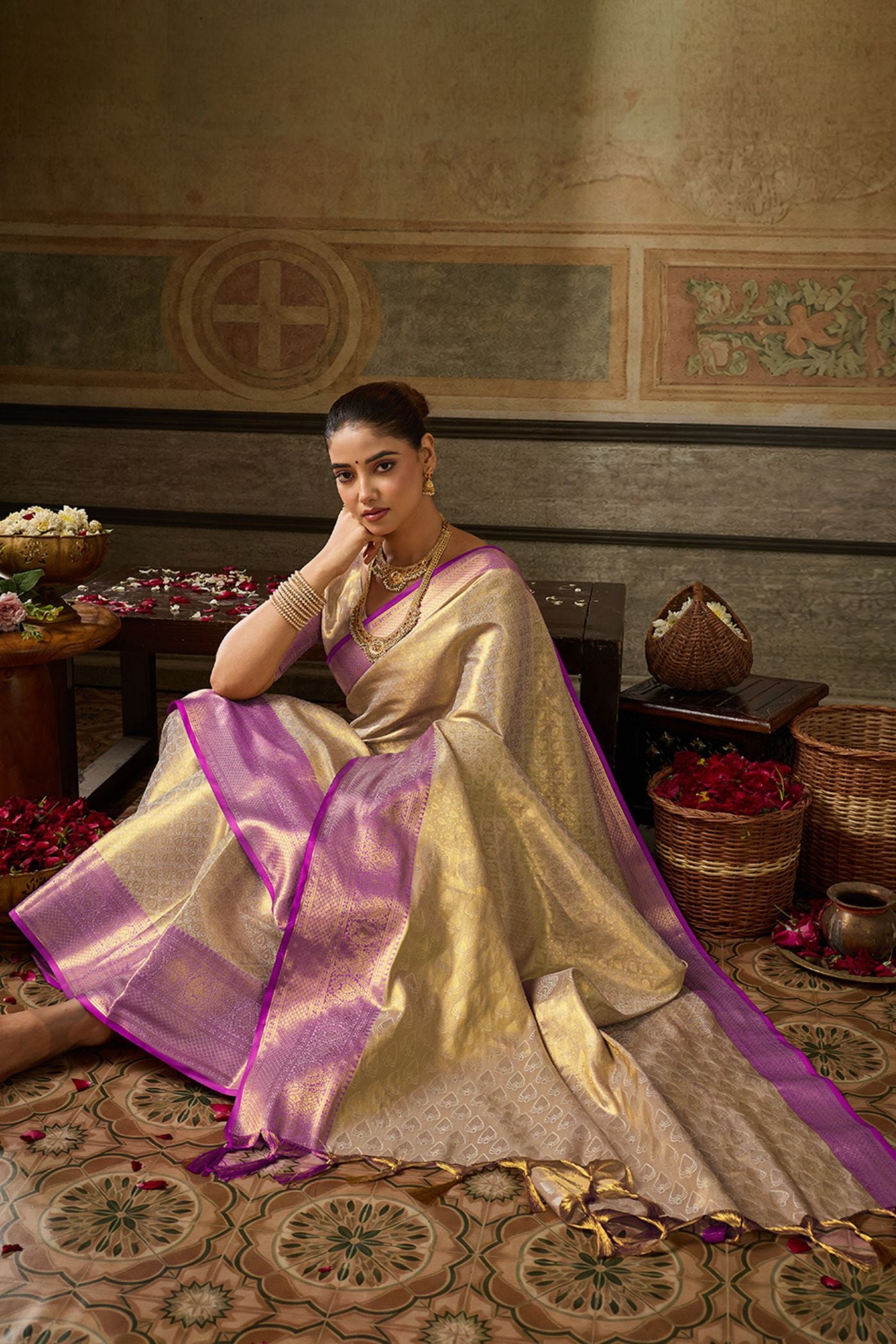
Porcelain Cream Woven Kanjivaram Saree
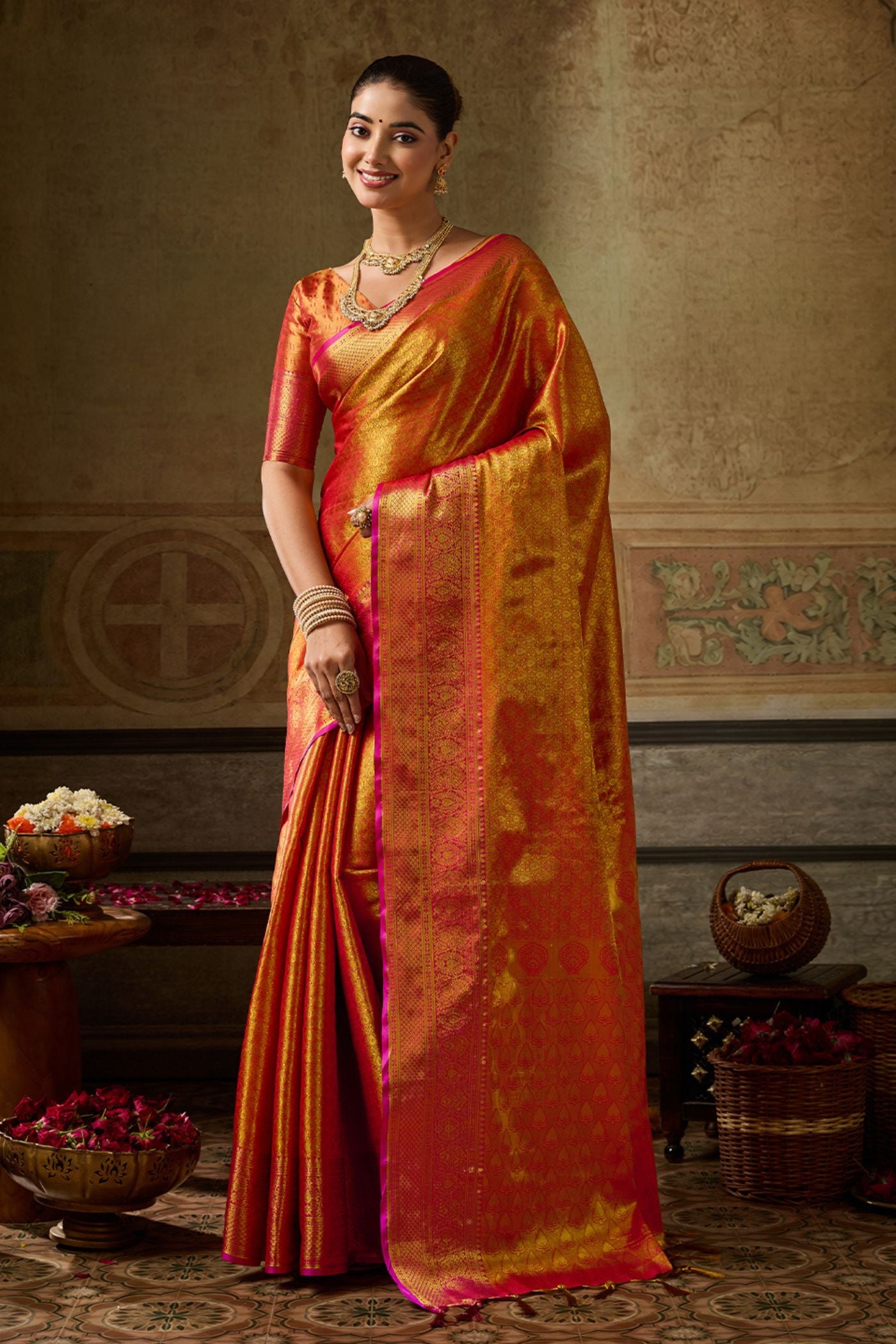
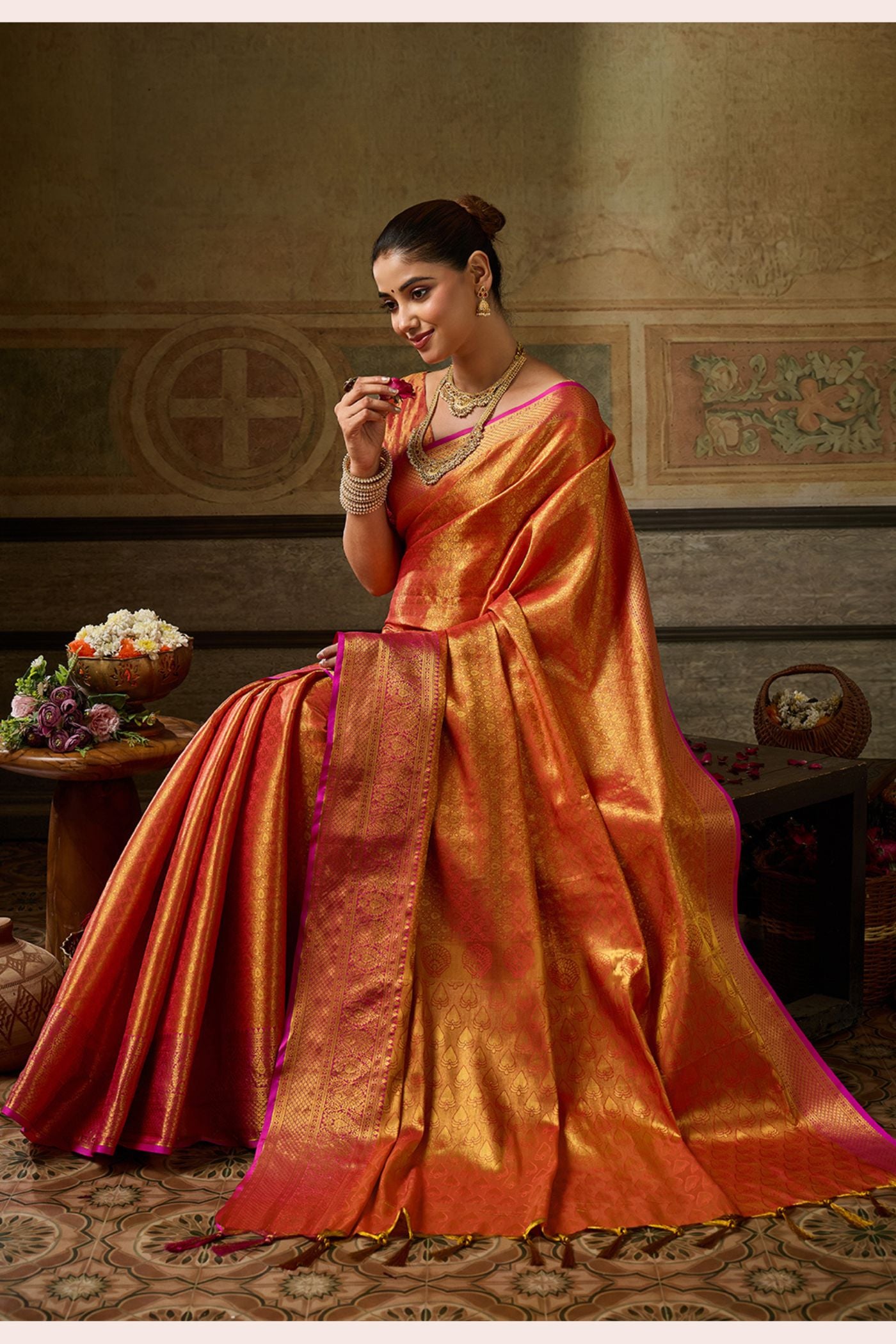
Papaya Orange Woven Kanjivaram Saree
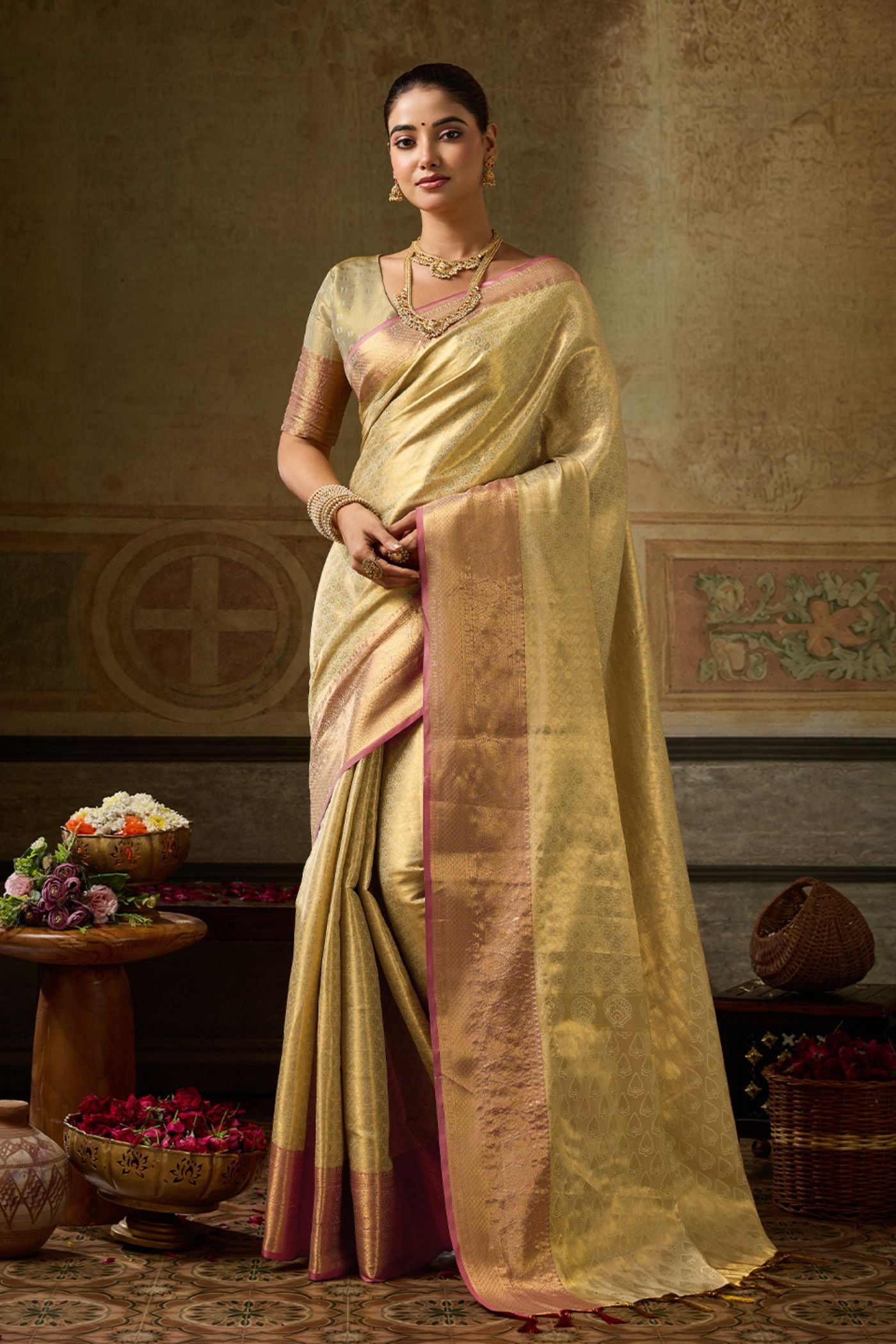
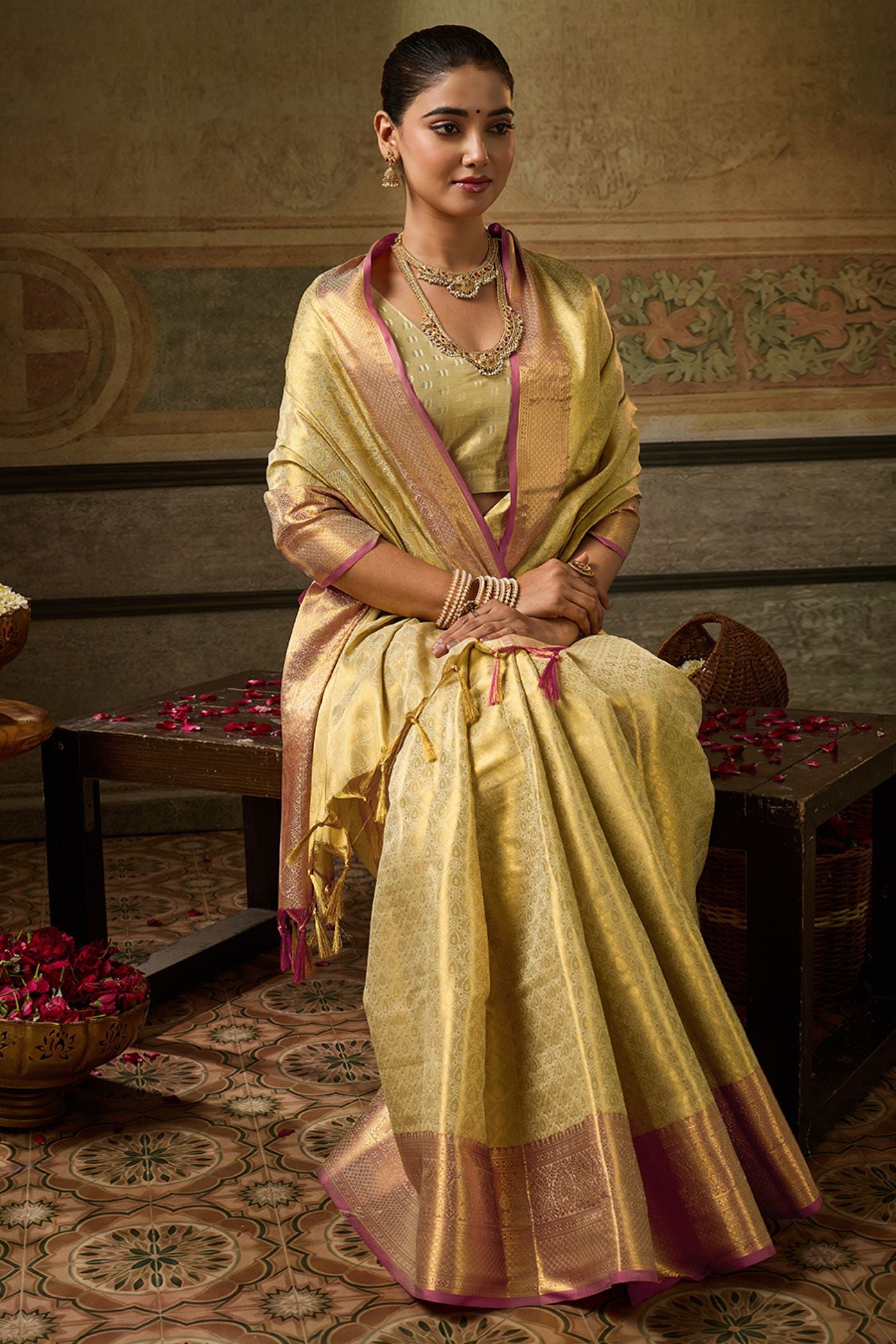
Frosted Cream Woven Kanjivaram Saree
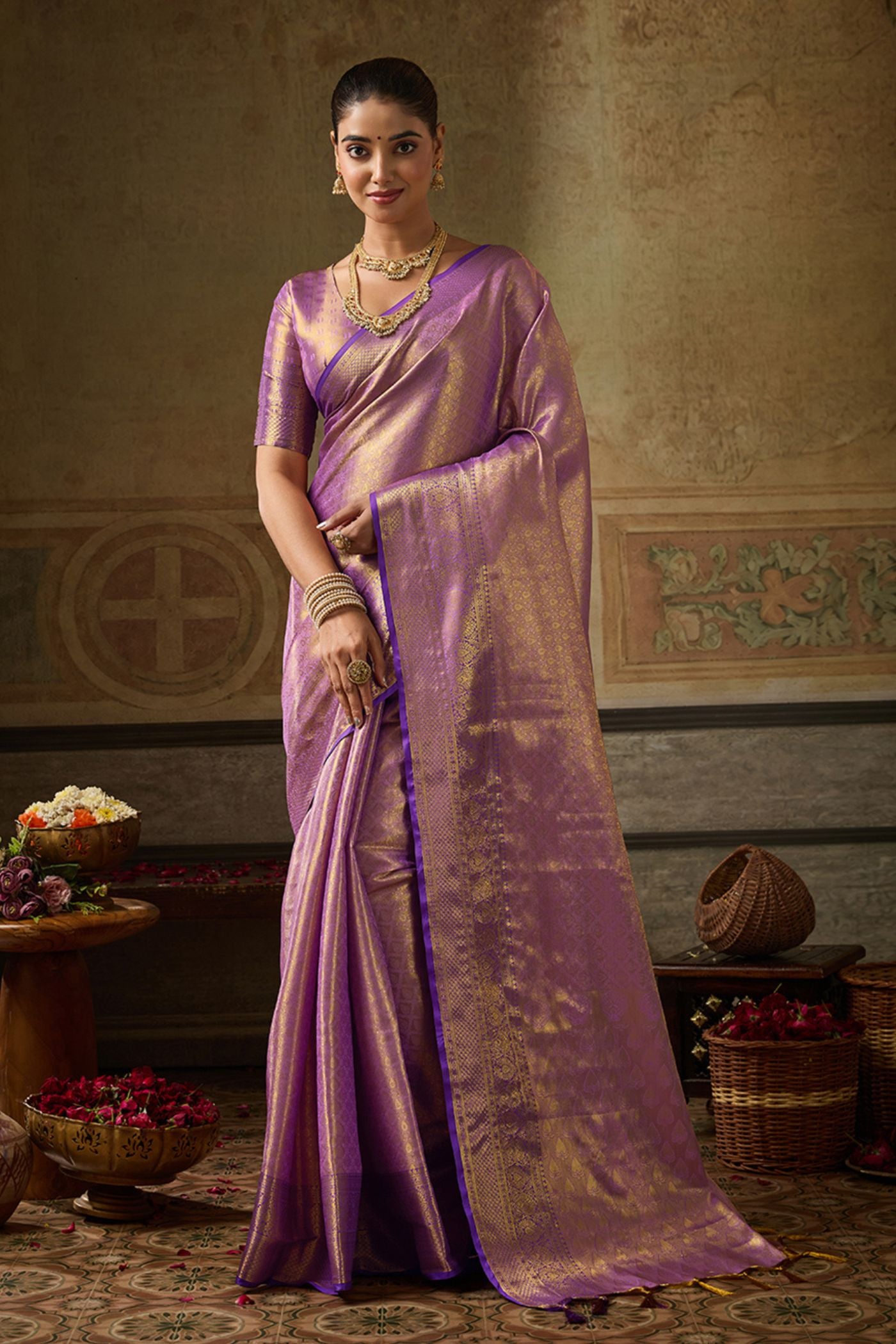
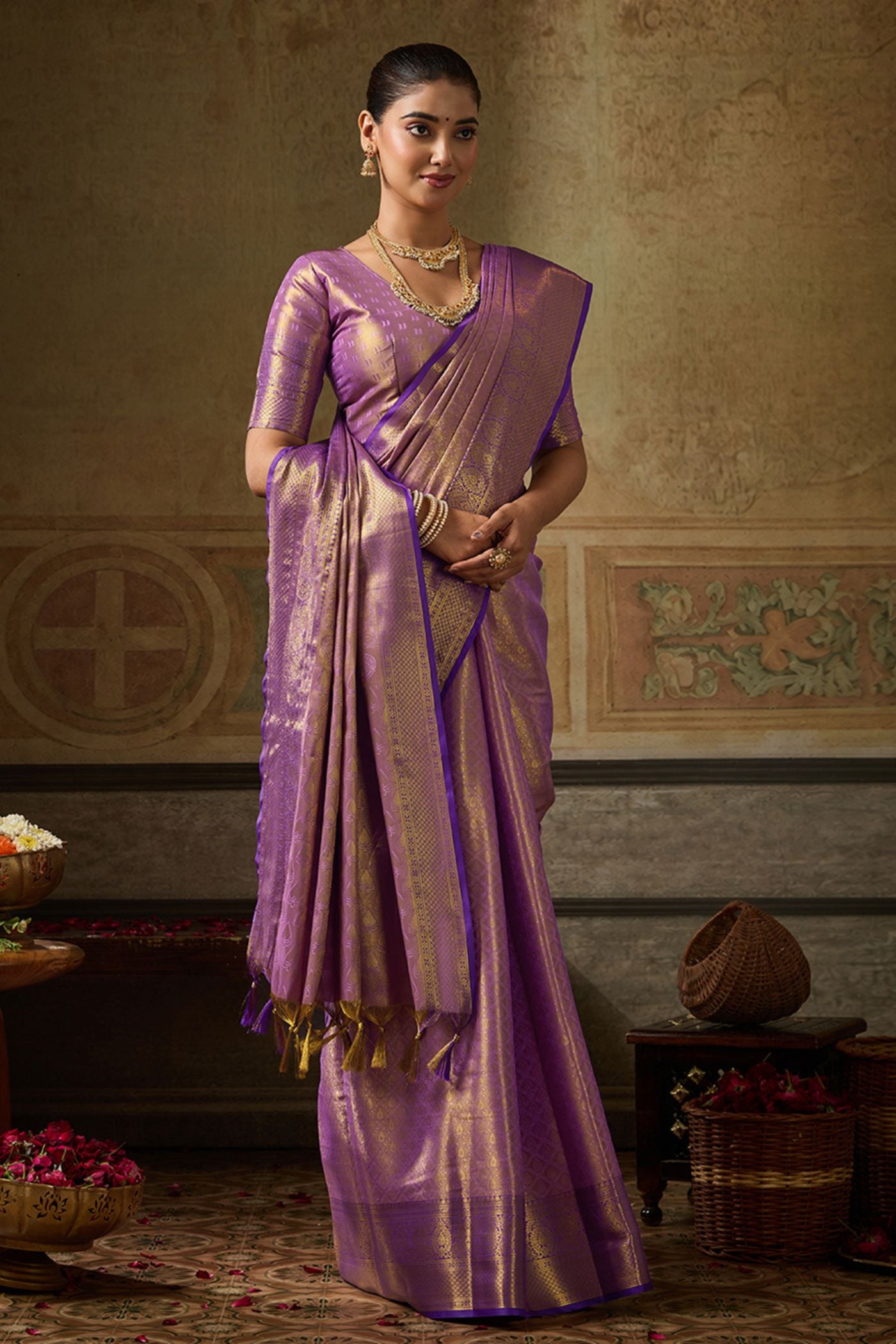
Heather Purple Woven Kanjivaram Saree

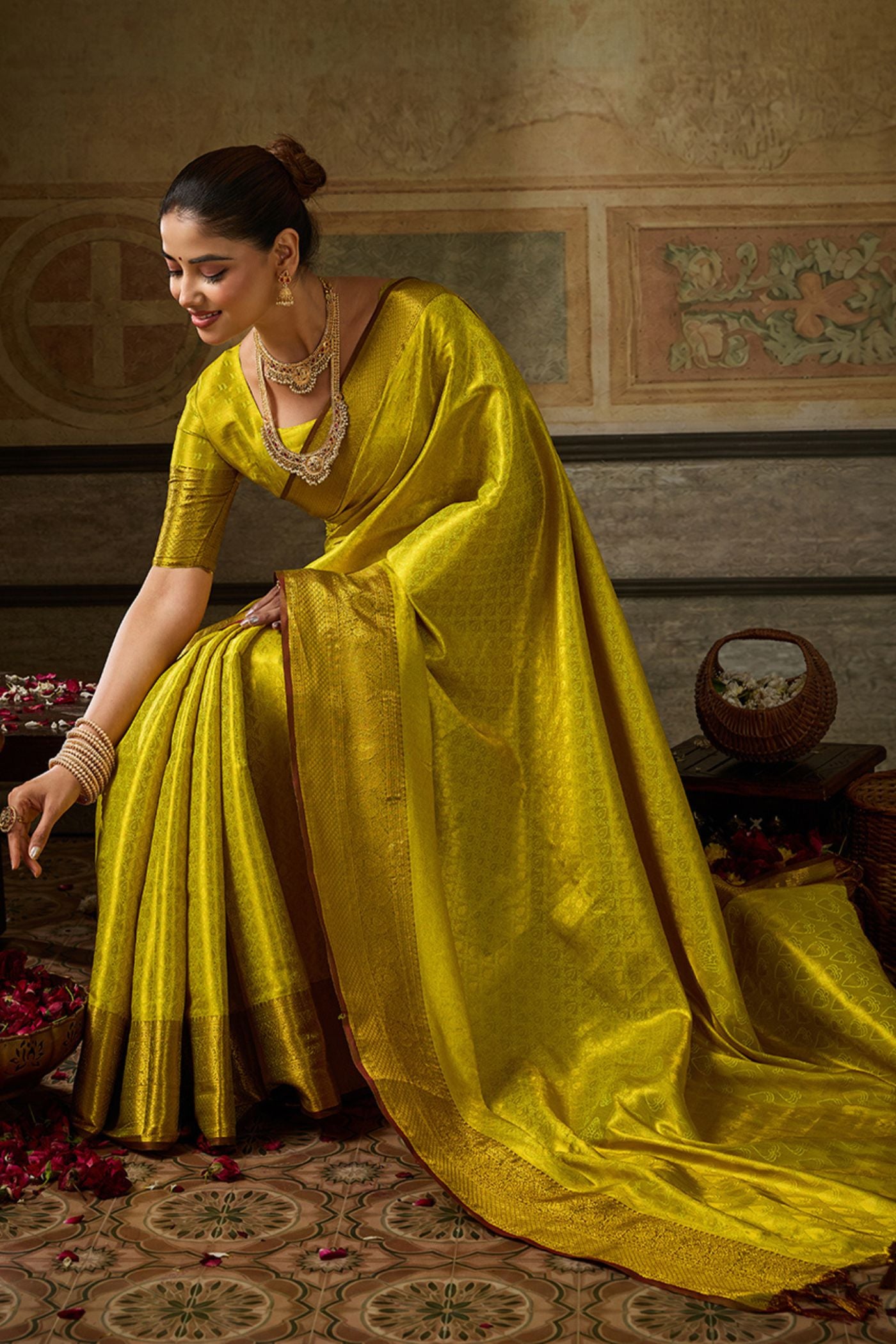
Maize Green Woven Kanjivaram Saree
Frequently Asked Questions — Kanjivaram Sarees
How can I tell if a Kanjivaram saree is genuine pure silk?
No single test is proof, so use several together. Start with the border: on a traditional Kanjivaram the contrast border is woven separately and interlocked with the body (the korvai technique), so on the reverse you can see the two colours lock together rather than simply change. Next, the zari: gently scrape a thread at an inconspicuous edge — real zari shows a reddish or silver core, while a white core means synthetic metallic yarn. Then the fibre: pure mulberry silk feels soft and dry, its lustre shifts colour as it moves, and a single burned thread smells like burnt hair and crumbles to ash, whereas polyester melts into a hard bead. Skip the popular ring test — smooth synthetics slip through a ring easily, so it proves little. Finally, certification: a Silk Mark label confirms natural silk, and the Kanchipuram GI tag belongs only to pure-silk handloom pieces from the Kanchipuram cluster. Blended and tissue Kanjivaram-style weaves cannot carry either, so every MySilkLove listing states its fabric plainly — a blend is always described as a blend — and our team will confirm on WhatsApp which labels, if any, come with a specific saree before you order.
What is the price range for a genuine Kanjivaram silk saree?
Kanjivaram pricing spans a wide spectrum because four factors drive the cost: the silk (pure mulberry versus blended or tissue weaves), the zari (pure silver or gold versus tested and copper-based), the intricacy of the borders and motifs, and the loom time — simple designs take a couple of weeks, while dense temple-border work can take months. In the wider market, classic handloom pure-silk Kanjivarams generally begin around ₹8,000–10,000, and heavy bridal pieces with pure zari can run to ₹50,000 and beyond. At MySilkLove, the Kanjivaram sarees currently in stock are listed from about ₹3,500 to about ₹6,500 — an entry-to-mid band of Kanjivaram-style woven, satin-silk and handloom-labelled pieces, which is why it sits well below the pure-silk bridal market. Every listing states its fabric plainly, so a blend is always described as a blend. Those are regular list prices; seasonal offers apply automatically at checkout and often bring the amount you pay lower. Cash on delivery is available, and our team can match your budget to the right piece over WhatsApp.
Can I wear a Kanjivaram saree in summer or is it too heavy?
Traditional heavy Kanjivaram sarees woven in thick pure silk with wide zari borders can feel warm in hot weather, but you are no longer limited to them. Modern looms produce lighter-weight Kanjivarams that drape comfortably in warm conditions — look for dual-tone sarees in lighter silk weights (around 600–700 gsm) with slimmer borders, or tissue Kanjivaram variants that blend silk with a touch of cotton for extra breathability. These lighter pieces are well suited to daytime ceremonies, outdoor functions and destination weddings, where a full-weight bridal Kanjivaram would be tiring to carry. The trade-off is presence: a lighter Kanjivaram reads as elegant rather than grand, so many brides still choose a heavier weave for the main ceremony and a lighter one for daytime or travel events. Every Kanjivaram at MySilkLove lists its approximate weight and fabric honestly, so a blend is always described as a blend, and our team can help you choose a lighter, more wearable piece over WhatsApp.
How much does a pure Kanjivaram saree weigh, and is a heavier saree always better quality?
A genuine pure Kanjivaram silk saree typically weighs between 600 and 800 grams, and grand wedding-grade pieces with heavy pure-zari borders can exceed 1 kilogram. This weight comes from two sources: the density of the 100% mulberry silk threads and the real zari (gold or silver wrapped over a silk or copper core). A heavier saree is not automatically a higher-quality one, though — weight should always come from genuine silk and real zari, not from artificial fillers or low-grade thicker synthetic thread. The most reliable purity checks remain the same regardless of weight: scrape a tiny bit of the zari to confirm you see a reddish (gold) or silver thread underneath rather than a white synthetic core, look for the Silk Mark label, and confirm the GI tag. If you prefer a lighter, more wearable drape, ask for a lower-gsm Kanjivaram with a slim border rather than assuming light means impure. Every Kanjivaram at MySilkLove lists its approximate weight, and our team can recommend the right weight for your occasion over WhatsApp.
How should I store a Kanjivaram silk saree long-term to keep the zari from tarnishing?
Proper storage is what lets a Kanjivaram last for decades and become an heirloom. Always wrap the saree in a soft cotton or muslin cloth rather than a plastic cover — silk needs to breathe, and plastic traps moisture that dulls both the silk and the zari. Keep it in a cool, dark cupboard away from direct sunlight, which fades colours and tarnishes zari over time. Tuck a few neem leaves or cloves between the folds as a natural insect repellent instead of chemical mothballs. Don't stack more than three heavy Kanjivarams in a single column, and refold the saree along a different line every three to four months so permanent creases don't form and weaken the silk at the folds. Airing it out flat for about half an hour each season also helps preserve the colour and yarn. Every Kanjivaram from MySilkLove arrives with care guidance, and our team is happy to advise on preservation over WhatsApp.
What do the traditional motifs on a Kanjivaram saree mean, and how do I choose one?
Kanjivaram motifs carry centuries of temple-town symbolism, and knowing them helps you pick a saree with meaning. The famous temple border (reku) - a row of upward-pointing triangles - echoes the gopuram spires of Kanchipuram and is considered highly auspicious for brides. The peacock (mayil) stands for grace and beauty, the parrot (kili) for love, and the mythical annapakshi swan for purity and prosperity. Mango or paisley motifs (manga malai) signify fertility and good fortune, rudraksham beads offer protection, checks (kattam) represent simplicity and order, and the elephant (yanai) denotes strength and royalty. As a guide: brides traditionally choose temple borders with grand mythological or elephant motifs, festive buyers lean towards peacock and annapakshi designs, and for understated elegance small buttas or classic checks work beautifully. On an authentic Kanjivaram these motifs are woven into the fabric, never printed. Every MySilkLove Kanjivaram is sourced directly from Kanchipuram weavers with Silk Mark and GI certification, and our team can help you match a motif to your occasion over WhatsApp.
Which blouse should I pair with a Kanjivaram saree for a wedding versus a reception?
The same Kanjivaram can read very differently depending on the blouse, so match it to the occasion. For the wedding ceremony, lean traditional: a richly woven or zari-embroidered blouse, often with full or elbow sleeves and a high or boat neck, in a colour drawn from the saree border. Pair it with temple jewellery and a waist belt to anchor the drape for a regal, heritage look. For a reception, soften and modernise the same saree: choose a contrast-colour blouse, lighter embellishment, or a contemporary cut such as a back-detail, sweetheart, or net-overlay sleeve, finished with polki or diamond jewellery and evening makeup that lets the silk lead. A reliable styling rule is to echo the saree's border colour in the blouse so the contrast body and pallu pop. At MySilkLove, many Kanjivarams ship with a matching blouse piece, and our team can suggest bridal versus reception pairings for your specific saree over WhatsApp.
What is the GI tag on a Kanjivaram saree, and how does it guarantee authenticity?
A GI (Geographical Indication) tag certifies that a saree was genuinely woven in the Kanchipuram region of Tamil Nadu using its traditional techniques — the same way Champagne can only come from Champagne. Kanjivaram (Kanchipuram) silk received its GI registration in 2005-06, so the name is legally protected and cannot be used for lookalikes woven elsewhere or on power looms. In practice the GI tag is a small woven or printed label, often paired with the Silk Mark hologram, and it tells you three things: the saree comes from the authorised Kanchipuram weaving cluster, it follows the genuine interlocked korvai border and pure-zari tradition, and it is not a Bangalore-silk or art-silk imitation sold under the Kanjivaram name. The GI tag works best alongside the Silk Mark (which certifies 100% natural silk) and the weaver ID card (which names the artisan). Certification follows the cloth rather than the name, so a pure-silk handloom Kanjivaram from the Kanchipuram cluster can carry these documents while a blended or tissue Kanjivaram-style weave honestly cannot — and we will not claim otherwise. Every MySilkLove listing states its fabric plainly, a blend is always described as a blend, and our team will confirm on WhatsApp exactly which certification comes with a specific saree before you order.