
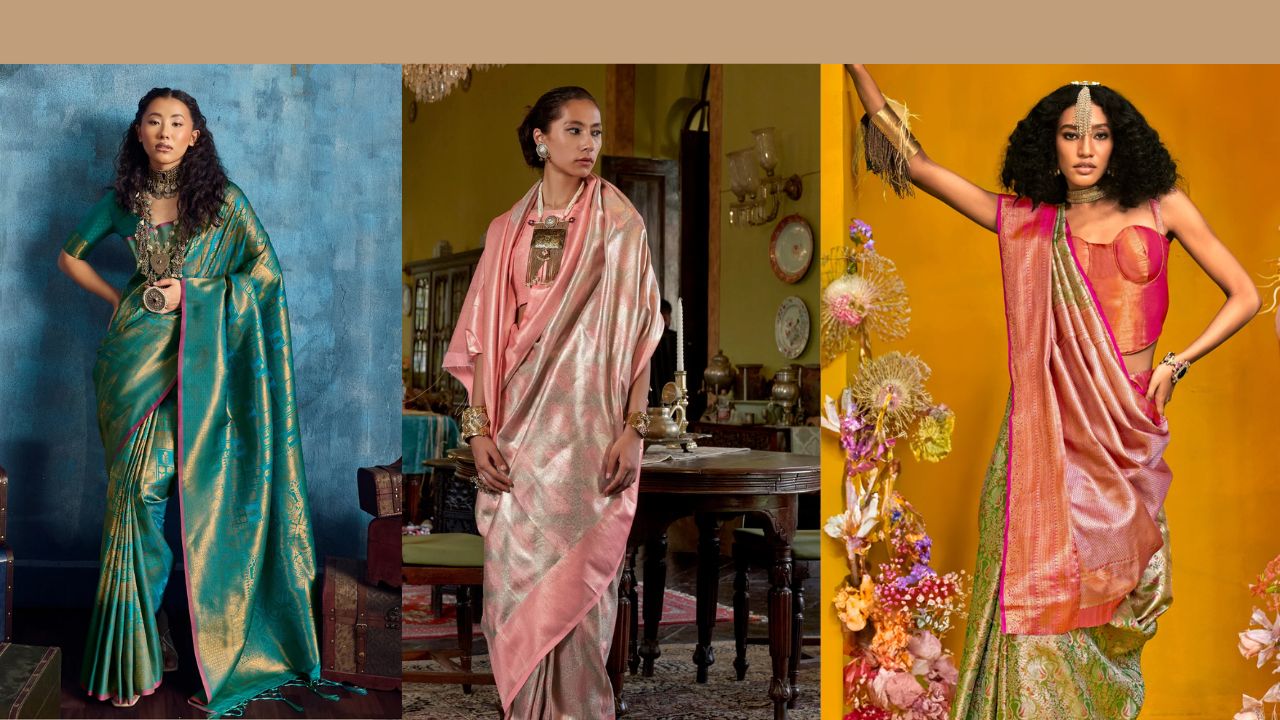
Kanjivaram Silk Sarees: The Complete Guide (Weave, Authenticity, Price & Care)
What Is a Kanjivaram Saree?
A Kanjivaram saree — also spelled Kanchipuram or Kanjeevaram — is a handwoven pure-silk saree from the temple town of Kanchipuram in Tamil Nadu. Woven on traditional pit looms from mulberry silk and real zari (gold- or silver-wrapped thread), it is prized for its weight, its lustre, and a contrast border and pallu that are structurally part of the saree rather than printed on. For many South Indian families it is the saree of weddings, of first jobs, and of heirlooms passed down three generations. This guide covers how a Kanjivaram is made, how to tell a genuine one from an imitation, what it should cost, and how to choose, wear and care for yours. When you're ready to browse, see our full Kanjivaram saree collection.
The Korvai Weave: Why a Kanjivaram Feels Different
The single feature that defines a true Kanjivaram is the korvai technique. The body of the saree and its contrast border are woven on separate sets of warp threads and then interlocked by hand, thread by thread, where they meet. This is slow, skilled work — it is why a genuine Kanjivaram border doesn't fray away from the body and why the join shows a faint ridge you can feel with a fingernail. The pallu (the decorative end) is often woven separately again and joined the same way, which is why the pallu colour can differ completely from the body. Three-shuttle weaving lets the weaver carry the body colour, the border colour and the zari at once. None of this can be faithfully reproduced on a power loom, which is the basis of every authenticity test below.
How to Identify a Pure Kanjivaram
Five checks, in order of reliability:
- Silk Mark & GI tag. Genuine Kanjivaram silk carries the Silk Mark label from the Silk Mark Organisation of India, and the weave holds a Geographical Indication (GI) tag tying it to Kanchipuram. Ask for both.
- The korvai ridge. Run a finger along the line where border meets body. A real korvai join has a slight, even ridge; a power-loom copy is perfectly smooth because border and body are one piece.
- The zari scrape. Gently scrape a tiny section of the zari. Real zari shows a reddish (gold-over-silver) or silver thread underneath; a synthetic copy shows white plastic thread.
- Weight. Pure mulberry silk with real zari is substantial — a full Kanjivaram typically weighs 600–800g, and bridal pieces more. A suspiciously light "Kanjivaram" is usually a blend.
- The burn test (last resort, on a stray thread). Real silk burns to a fine ash and smells of burnt hair; synthetic melts into a hard bead and smells of plastic.
Kanjivaram Price Guide: What You Should Pay
Authentic Kanjivaram prices are driven by silk purity, the type of zari, motif complexity and weeks of loom time. As a rough map:
- ₹8,000–₹20,000: entry-level pure silk, lighter weight, simpler zari borders — ideal for festive and guest wear.
- ₹20,000–₹50,000: mid-weight pieces with richer butta motifs and wider borders — receptions and family weddings.
- ₹50,000–₹1,50,000+: bridal-grade, heavy pure-silk Kanjivarams with thick pure-gold zari and temple borders, often months on the loom.
Anything sold as "pure Kanjivaram" far below ₹8,000 is almost always a blend or power-loom piece — a legitimate product, but a different thing. Browse our range, which spans roughly ₹12,000–₹85,000, in the Kanjivaram collection.
Kanjivaram vs Kanchipuram vs Banarasi
"Kanjivaram" and "Kanchipuram" are the same saree — two names for the weave from Kanchipuram town ("Kanjeevaram" is just another spelling). The more useful comparison is Kanjivaram versus Banarasi: Kanjivaram is South Indian, heavier, with the korvai contrast border and temple/peacock motifs; Banarasi is from Varanasi, generally lighter, woven in fine brocade with Mughal-inspired floral jaal patterns. Both are pure-silk, GI-tagged traditions — the choice is about weight, drape and aesthetic, not quality.
How to Choose a Kanjivaram by Occasion
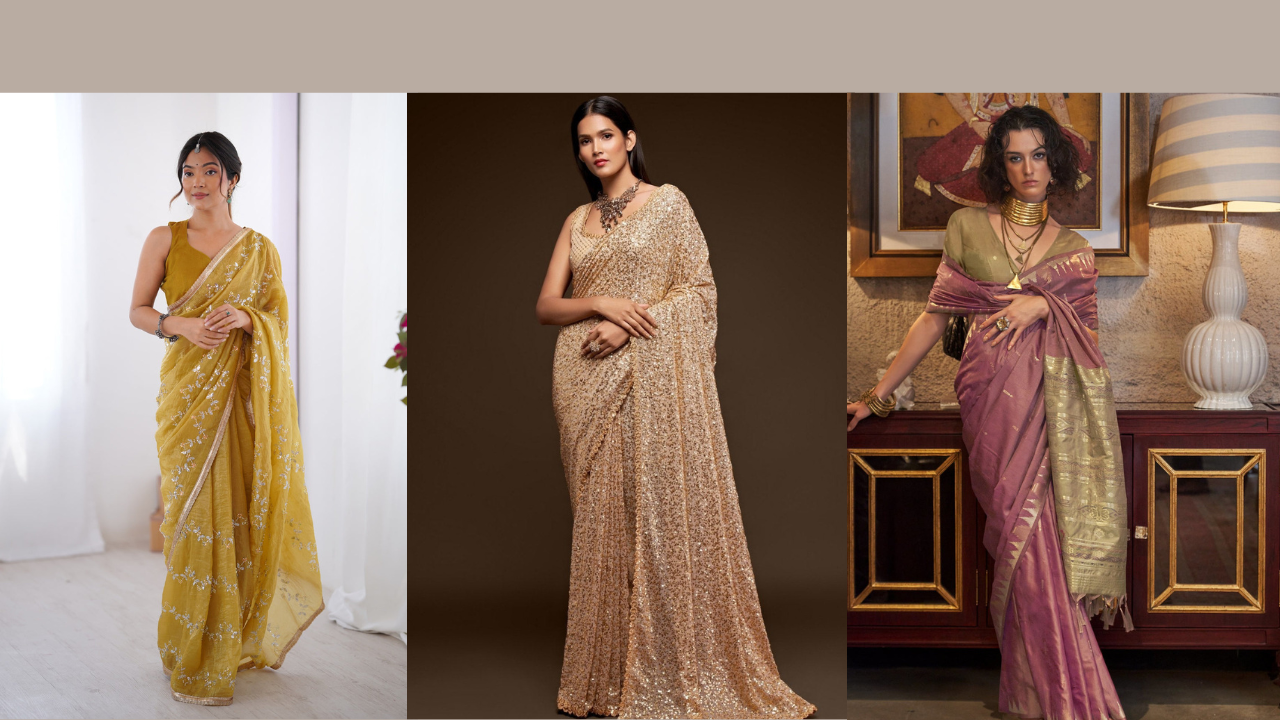
Bridal: heavy pure-silk in a jewel tone with a wide pure-gold zari temple border and a contrast korvai pallu. Reception & festive: mid-weight pieces with butta motifs and a moderate border. Guest & daywear: lighter dual-tone or tissue Kanjivarams (around 600–700 gsm) that drape easily and stay comfortable in warm weather. Match the blouse either to the border colour for a classic look or to a contrasting pallu shade for a modern one.
Caring for and Storing a Kanjivaram
Dry-clean rather than wash, and only when needed — silk doesn't need frequent cleaning. Store the saree wrapped in soft cotton or muslin, never plastic, so the silk can breathe and the zari doesn't tarnish; keep it in a cool, dark cupboard away from direct sunlight. Tuck in neem leaves or cloves instead of chemical mothballs, don't stack more than three heavy pieces in a column, and refold along a different line every few months so permanent creases don't weaken the silk. Cared for this way, a Kanjivaram genuinely lasts decades.
Frequently Asked Questions
Is Kanjivaram the same as Kanchipuram? Yes — identical saree, different name, after Kanchipuram town.
How much does a real Kanjivaram cost? Roughly ₹8,000 for entry-level pure silk up to ₹1,50,000+ for bridal pieces with heavy pure-gold zari.
How do I know mine is genuine? Check for the Silk Mark and GI tag, the korvai ridge at the border, real zari under a gentle scrape, and the substantial weight of pure silk.
Ready to shop? Explore the full MySilkLove Kanjivaram saree collection — GI-certified, sourced direct from Kanchipuram weavers, with free shipping, COD and easy 7-day returns.
Shop & Compare
Ready to choose?
- Browse the complete Kanjivaram silk saree collection — every weight and border style we currently stock, sortable by price.
- Working to a set budget? See Kanjivaram sarees under ₹5,000 — the accessible blend and semi-silk tier this guide describes, and the single most-searched Kanjivaram price band.
- For the wider South Indian silk family under its Tamil name, browse pattu sarees.
- Comparing it against the North Indian brocade tradition? Start with Banarasi silk sarees.
- Still deciding between weaves? Our Kanjivaram vs Banarasi guide breaks down which suits your occasion.

Leave a comment
This site is protected by hCaptcha and the hCaptcha Privacy Policy and Terms of Service apply.