

Paithani Saree History: 2,000 Years from Paithan to Yeola, Decoded (2026)
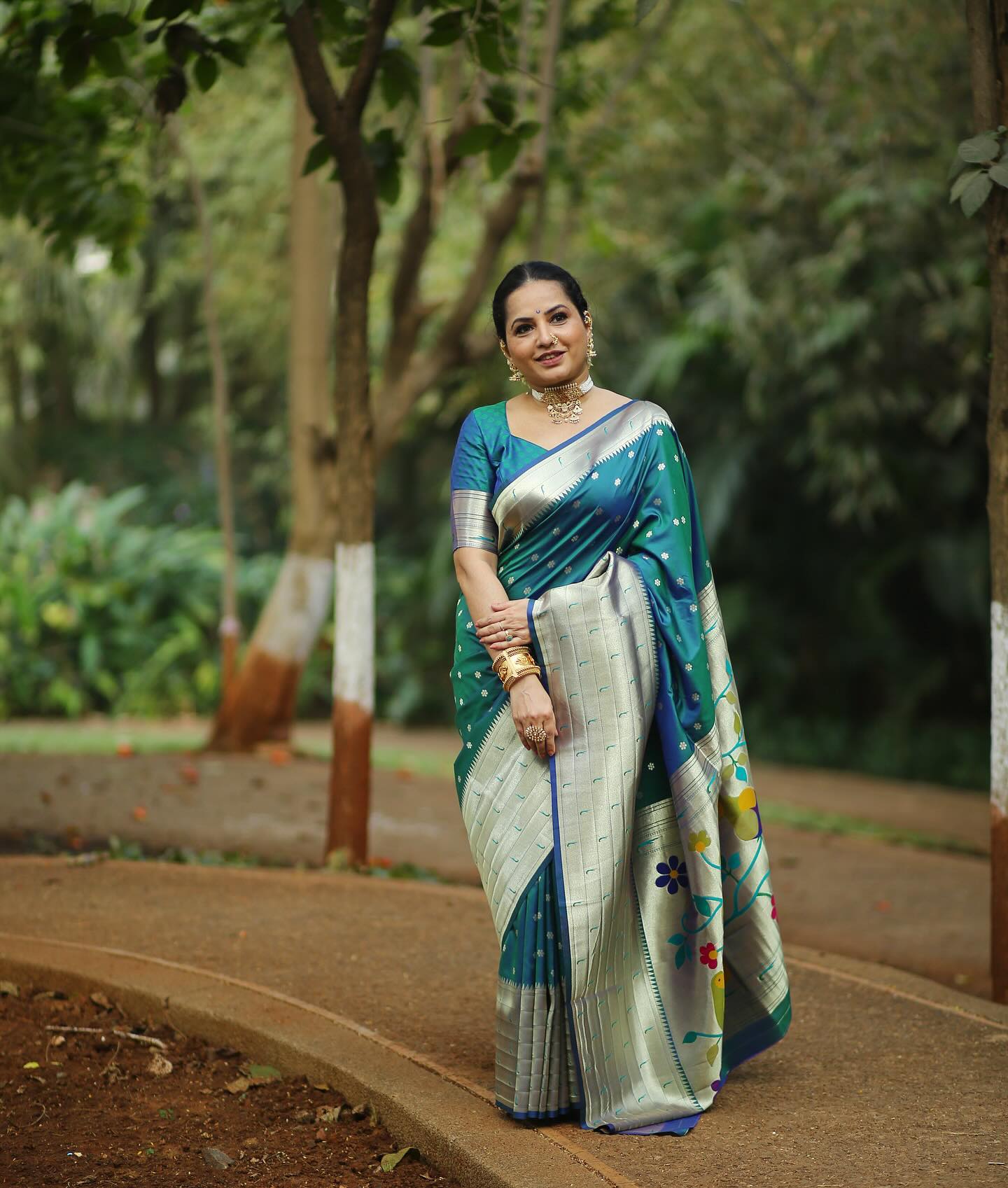
How old is the Paithani saree? The Paithani takes its name from Paithan (ancient Pratishthan), the Satavahana capital on the Godavari, and textiles from the town were already prized in trade with the Greco-Roman world some 2,000 years ago. Today the true handloom Paithani is woven mainly in Yeola, Nashik district, holds a GI tag (2010), and a single elaborate piece can take a weaver 18 months or more.
Satavahana Paithan: where the story starts
Paithan sat on a trade route that connected the Deccan to the western ports, and the Satavahana dynasty (roughly 2nd century BCE to 2nd century CE) traded actively with Rome. The Greek geographer Ptolemy lists "Baithana" among the important Deccan cities, and regional accounts describe fine, gold-worked cloth leaving from there. Take the exact trade figures with a pinch of salt, since sources differ, but the direction is clear: this was a luxury cloth from the start, not a village staple.
Why the weavers moved to Yeola
Under Peshwa patronage, some Paithan weavers were relocated to Yeola in Nashik district, which became the centre of the craft. Yeola still has thousands of weavers, and the town is the reason Maharashtrian brides think of "Yeola Paithani" as the benchmark. The Paithani received its Geographical Indication registration in 2010, tying the name to this craft and region.

The technique that makes it a Paithani
Three details separate a Paithani from any saree that merely borrows the motifs:
- Tapestry weave: the motifs are woven in, not embroidered, so the reverse of the pallu shows neat interlocking with no long loose floats.
- Kadiyal (interlocking) technique: the border and pallu are built with interlocked wefts, which is why the pattern reads almost the same on both sides.
- The motif vocabulary: the muniya (parrot) on the border, the peacock (mor) and lotus in the pallu, and the asavali flowering-vine border are the classics.
Nauvari and the Peshwai drape
A nine-yard Paithani is a different animal. Expect the drape to weigh around 800g, and you will feel it after a long ceremony, which is exactly why the kasta (tucked-through-the-legs) style exists: it keeps the fabric out of the way for work and riding. For festival dress codes, see our Ganpati Visarjan saree guide.
Our take: buy the story, be honest about the fabric
My position: a Paithani-inspired woven silk saree at under ₹6,000 is a completely legitimate festive buy, but it is not a Yeola handloom, and nobody should let a listing blur that line. A true handloom piece is priced by the months of weaving. What you can and should insist on at any price is the woven motif, a clean reverse, and a seller who names the fabric plainly. Our woven Paithani-style sarees are blends and soft-silk weaves, and they are listed that way.

Shop the Edit
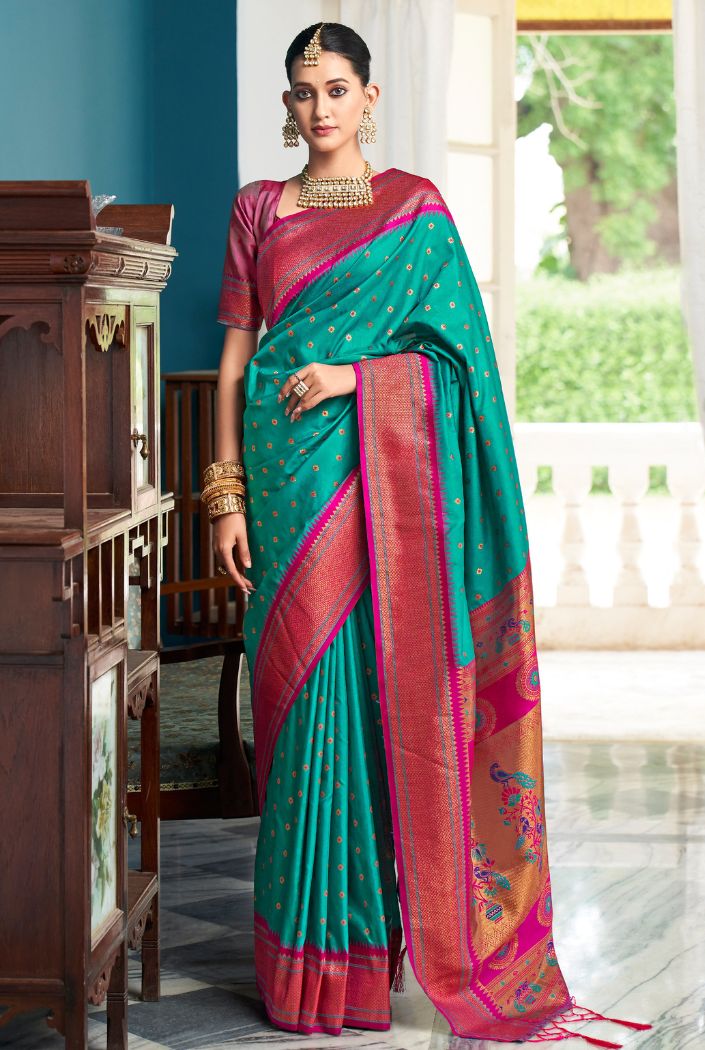
- Casal Green Woven Paithani Silk Saree — broad border, bird-motif pallu, ₹5,985 regular price
- Sycamore Green Zari Woven Titli Paithani Silk Saree — butterfly motif, ₹5,999
- Mulberry Wood Purple Woven Paithani Silk Saree — deep purple, ₹5,277
- Emerald Green Woven Paithani Silk Saree — ₹5,985
Browse the full Paithani sarees collection. Prices are regular list prices; seasonal offers at checkout often bring these lower. For weave-by-weave context, read our silk saree buying guide.
Frequently asked questions
1. Where does the name Paithani come from?
It comes from Paithan, the ancient Satavahana capital called Pratishthan, on the Godavari river in Maharashtra. The town was a textile trading centre two millennia ago, and the saree still carries its name, while most weaving now happens in Yeola.
2. Does Paithani have a GI tag?
Yes. Paithani was registered under India's Geographical Indications of Goods Act in 2010, which protects the name for the traditional craft and its region. Sarees sold as Paithani-style weaves in blends do not carry that handloom claim.
3. Why is a real Paithani so expensive?
Because of time. Tapestry weaving builds each motif thread by thread, and elaborate pallus can take a weaver a year and a half or more. Real zari and pure silk raise the cost further, which is why handloom pieces sit in a separate, much higher tier.
Ready to wear the tradition? Explore the Paithani sarees collection and pick your festive drape.
Two narrower routes from this history
The Paithani sarees collection linked above is the broad route, though three of its six bestselling pieces are unpublished at the moment. These two pages each follow something this history raises:
- Maharashtrian dress, nauvari included. For the Nauvari and Peshwai drape section, our Maharashtrian sarees page is built from the Maharashtrian tag and only lists pieces with stock on hand; woven Paithani sarees from our range lead its bestselling end, the Mulberry Wood Purple from the edit above among them.
- A lighter festive drape. If the weight of a woven Paithani is the worry, our soft silk sarees page groups sarees with soft silk in their name and only lists pieces with stock on hand; Banarasi soft silks and Gaji Bandej soft silks lead its bestselling end.

,%20the%20Satavahana%20capital%20on%20the%20Godavari,%20and%20textiles%20from%20the%20town%20were%20already%20prized%20in%20trade%20with%20t...)
Leave a comment
This site is protected by hCaptcha and the hCaptcha Privacy Policy and Terms of Service apply.