
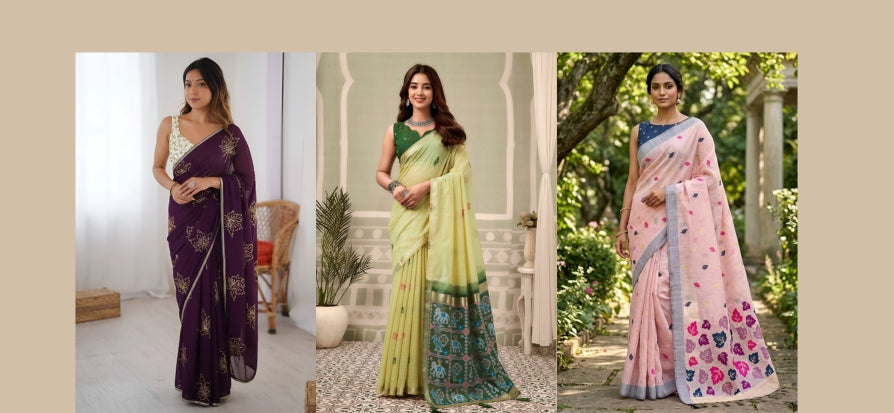
Saree Blouse History: How Colonial India Invented the Choli
The saree blouse is younger than the sewing machine. The stitched choli almost every Indian woman wears today is barely 160 years old — it was popularised in the 1860s by Jnanadanandini Devi, who fused Parsi draping habits with Victorian tailoring after colonial society shamed the bare-shouldered Bengali style. The drape is ancient; the blouse beneath it is a relatively modern invention. Here's the full, slightly uncomfortable story of how a borrowed garment became "traditional."
Before the blouse: how Indian women actually draped
For most of the saree's existence, the choli and petticoat we treat as non-negotiable simply weren't standard. In large parts of Bengal, women wore a single length of cloth wound around the body — no stitched bodice underneath, the pallu doing the work of covering the upper body.
This wasn't carelessness; it was a complete, self-sufficient way of dressing. The unstitched garment carried deep cultural meaning — stitched cloth was historically considered impure for certain rituals, which is partly why the saree resisted tailoring for so long. The idea that a saree needs a fitted blouse is, historically speaking, the new arrival.

The woman who changed everything: Jnanadanandini Devi
Enter Jnanadanandini Devi — wife of Satyendranath Tagore, the first Indian to join the Indian Civil Service, and sister-in-law of poet Rabindranath Tagore. In the 1860s, moving in colonial Bombay and Anglo-Indian social circles, she ran into a very specific humiliation: she was reportedly turned away from British clubs because draping a saree over a bare upper body was deemed indecent by Raj-era standards.
Her response wasn't to abandon the saree. It was to redesign how it was worn. She studied how Parsi and Gujarati women — already in contact with European dress — were pairing their drapes with stitched upper garments, and combined that with English tailoring. The result was the high-necked, long-sleeved, collared blouse that mirrored the Victorian chemise almost exactly.
That's the part most people miss: the "traditional" saree blouse was, at its birth, a piece of cross-cultural engineering — Indian drape, Parsi adaptation, British silhouette.

Why a Parsi collar and a Victorian sleeve?
The Parsi community of western India had been trading with Europe for generations, and their gara sarees were already worn with structured blouses. For a woman trying to make the saree "club-acceptable" without surrendering it, that template was right there.
The Victorian influence shows in the details: early blouses had high necks, full sleeves, and sometimes lace and frills — far removed from today's backless, noodle-strap, corset-style cholis. In other words, the blouse has been evolving non-stop for 160 years. The 2026 belted-saree and shirt-as-blouse experiments aren't a betrayal of tradition — they're the next chapter of a garment that was always being remixed.
From "navin" to Nivi: the drape that came packaged with it
Jnanadanandini didn't just popularise the blouse — she's closely associated with the rise of the Brahmika style, which pleated the fabric at the waist and threw the pallu neatly over the left shoulder. This became the basis of the Nivi drape — the pleat-and-pallu style that most of India now treats as the way to wear a saree.
The name itself tells the story: Nivi is linked to the word navin, meaning "new." The most "classic" drape in the country is literally named after its own novelty. If you want to actually master that pleat-and-pin technique, our complete saree draping guide walks through it step by step.

So is the blouse even "Indian"? Here's my honest take
This is where people get touchy, so let me be direct: yes, the modern blouse is absolutely Indian — but not because it's ancient. It's Indian because Indian women invented and owned the adaptation. Jnanadanandini didn't copy a British dress; she solved a problem on her own terms and gave the country a new grammar of dressing.
The South Indian ravike and the older kanchuka referenced in classical texts show that stitched bodices weren't entirely foreign either — what changed in the 1860s was that the blouse-plus-Nivi combination became the national default. Calling it "colonial" is half-true and lazy. Calling it "timeless tradition" is also wrong. The truth is more interesting: it's a 160-year-old act of fashion diplomacy that stuck.
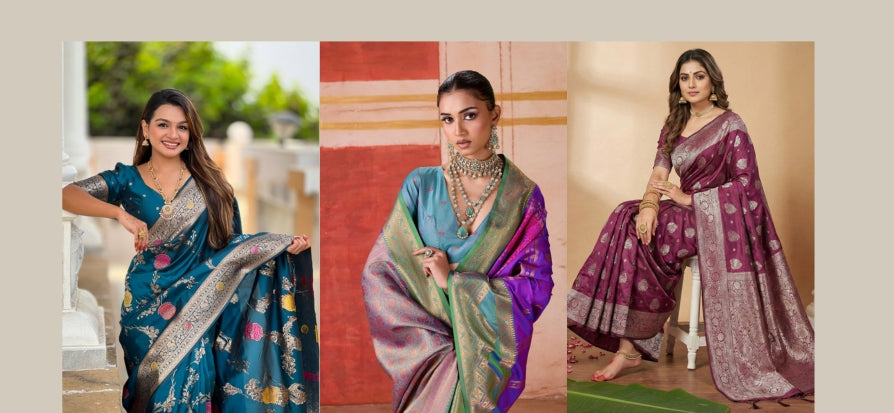
That same spirit lives in heritage weaves today. A handwoven Kanjivaram like the Casal Green Woven Kanjivaram or a textured Tamarillo Red Banarasi Raw Silk is ancient in its loom-work but completely open to how you choose to blouse and drape it — collared, cropped, or belted.

FAQ
Who invented the modern saree blouse?
Jnanadanandini Devi, wife of civil servant Satyendranath Tagore, is widely credited with popularising the modern saree blouse in the 1860s. She combined Parsi-style stitched upper garments with Victorian tailoring to make the saree acceptable in colonial-era social settings.
Did Indian women really wear sarees without a blouse?
Yes. In many regions, especially Bengal, women traditionally draped a single unstitched cloth with no fitted blouse or petticoat underneath. Stitched garments were sometimes considered ritually impure, which is one reason the saree resisted tailoring for centuries.
What is the Nivi drape and why is it called that?
The Nivi drape pleats the fabric at the waist and drapes the pallu over the left shoulder — the most common saree style in India today. Its name links to navin, meaning "new," because it spread alongside the modern blouse in the 19th century.

Shop handwoven silk sarees at MySilkLove →
Shop heritage silk sarees to style your way
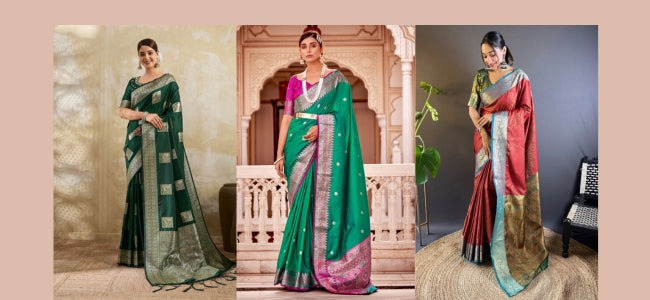
Whatever blouse you choose — collared, cropped, or belted — start with a weave worth styling: browse our handwoven Kanjivaram silk sarees, explore classic Banarasi silk sarees, or find a ready-to-drape piece in our party wear sarees edit. Sort by price to shop your budget.

Leave a comment
This site is protected by hCaptcha and the hCaptcha Privacy Policy and Terms of Service apply.