
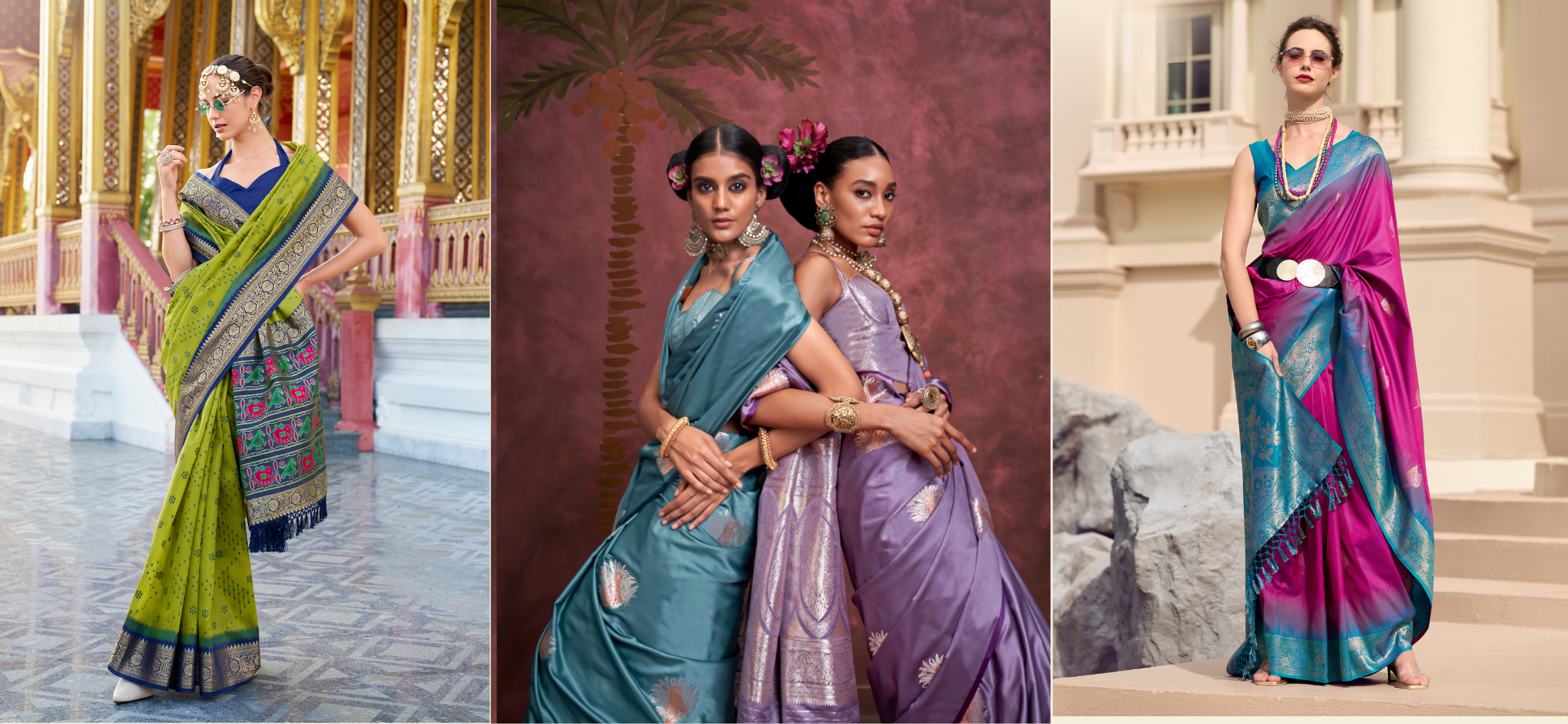
Types of Banarasi Silk Sarees: Styles for Every Occasion
Banarasi sarees are among the most celebrated handwoven textiles in India, cherished for their intricate zari work and rich silk base. Browse our full Banarasi sarees collection — 2,600+ styles across all weave types. This guide explains what each type is. Whether you're shopping for a bridal trousseau or a festive occasion, understanding the different types helps you make the right choice — and know exactly what you're paying for. Prices range from Rs 1,200 for semi-silk variants to Rs 25,000+ for the finest katan silk weaves.
Katan Silk Banarasi
Katan silk is the gold standard of Banarasi weaving. It is made with pure silk in both the warp (vertical threads) and the weft (horizontal threads), making it the heaviest and most traditional variety available. The resulting fabric has a dense, lustrous body that drapes with authority — the hallmark of a true Banarasi bridal saree.

What makes katan special?
- Both warp and weft are twisted pure silk, giving exceptional durability
- Zari (gold or silver metallic thread) is woven directly into the fabric, not printed or embroidered
- The body has a slight stiffness ideal for elaborate pleating and pallu display
- Motifs — ranging from Mughal florals to geometric buttas — are woven with precision
Best for: Weddings, high-occasion ceremonies, heirlooms
Price range: Rs 8,000 – Rs 25,000+
Organza Banarasi
Organza Banarasi is woven on a sheer, crisp base fabric rather than a heavy silk body. The translucent ground allows zari motifs to appear almost as if they are floating in air, creating a delicate and visually striking effect. This is the saree type that photographs exceptionally well under good lighting.
Characteristics of organza Banarasi
- Sheer base gives a lightweight feel despite the presence of zari work
- Fabric holds its shape without being stiff — structured yet airy
- Popular in pastels and whites where the sheerness adds elegance
- Requires careful handling as the sheer base can snag
Best for: Formal events, receptions, summer weddings
Price range: Rs 3,000 – Rs 8,000

Georgette Banarasi
Georgette Banarasi brings Banarasi weaving into contemporary fashion. The base fabric is a crinkled, flowing georgette that produces a fluid drape quite different from the structured body of katan or organza. This variety appeals strongly to younger wearers and those looking for a saree that moves easily through the day.
Why georgette Banarasi works for modern wardrobes
- Soft, flowing drape reduces the formality of the look without sacrificing the zari detail
- Lighter weight makes it easier to carry through long events
- Wide range of colours including contemporary pastels and jewel tones
- Zari work is typically lighter — floral jaal or minimal butis rather than heavy borders
Best for: Parties, office functions, festive occasions, daytime events
Price range: Rs 2,500 – Rs 6,000

Shattir Banarasi
Shattir (also spelled Shatir) is a specialty weave within the Banarasi tradition that uses the extra-weft technique to create raised, three-dimensional patterns on the surface of the fabric. If you run your fingers across a shattir Banarasi, you will feel the motifs standing slightly proud of the ground fabric — a sensation that distinguishes it from flat-woven varieties.
How to identify shattir weave
- Turn the saree over — the reverse will show a distinctive pattern of floating threads where the extra-weft passes between motifs
- Motifs appear slightly raised or textured on the face side
- Heavier than organza or georgette types because of the additional thread content
- Often used for architectural motifs: jali, arches, and geometric lattice patterns
Best for: Special occasions, weddings as a guest, festive wear
Price range: Rs 6,000 – Rs 15,000

Tissue Banarasi
Tissue Banarasi derives its name from the French word for woven fabric, and it earns its designation. The warp threads are metallic — gold or silver zari — rather than silk, which causes the entire body of the saree to shimmer with a golden or silver luminescence. Hold a tissue Banarasi up to light and the fabric appears to glow from within.
Key features of tissue Banarasi
- Metallic warp creates an all-over shimmer, not just in the motifs
- Available in gold tissue (sona zari warp) and silver tissue (rupa zari warp)
- Motifs are often woven in contrast silk thread against the metallic base
- The fabric has a firm, papery hand — it holds pleats beautifully
Best for: Bridal wear, festive ceremonies, evening events
Price range: Rs 4,000 – Rs 12,000

Semi-Silk and Tussar Banarasi
Not every occasion calls for pure silk, and not every budget extends to Rs 8,000. Semi-silk Banarasi uses a blend of silk and cotton or art silk (synthetic) threads, while Tussar Banarasi substitutes the smooth mulberry silk with Tussar (wild silk), which has a natural slubbed texture and warm gold tone.
Who should consider this category
- Everyday festive wear — pujas, small family functions, casual ethnic occasions
- First-time Banarasi buyers exploring the weaving tradition without a large investment
- Those who prefer Tussar's natural, earthy texture over the smoothness of mulberry silk
- Buyers in warmer climates where lighter-weight fabric is more comfortable
Best for: Everyday festive, casual occasions, gifting
Price range: Rs 1,200 – Rs 4,000

How to Choose the Right Banarasi for Your Occasion
Use this quick-reference table to match your occasion to the right Banarasi type:
| Occasion | Recommended Type | Price Range | Fabric Feel |
|---|---|---|---|
| Wedding (bride) | Katan Silk or Tissue | Rs 8,000 – Rs 25,000+ | Heavy, structured, lustrous |
| Wedding (guest) | Shattir or Katan | Rs 6,000 – Rs 15,000 | Textured, rich |
| Reception / Evening event | Tissue or Organza | Rs 3,000 – Rs 12,000 | Shimmering, airy |
| Festive / Puja | Georgette or Semi-Silk | Rs 1,200 – Rs 6,000 | Soft, flowing, comfortable |
| Office / Daytime formal | Georgette Banarasi | Rs 2,500 – Rs 6,000 | Light, contemporary drape |
| Gifting | Semi-Silk or Tussar | Rs 1,200 – Rs 4,000 | Approachable, versatile |

Frequently Asked Questions
What is the most expensive type of Banarasi saree?
Katan silk Banarasi is consistently the most expensive type because it uses pure mulberry silk in both warp and weft, combined with real zari work. Rare variants — particularly those woven with kadwa technique for individual motifs rather than continuous weave — can exceed Rs 50,000 for heirloom-quality pieces.
How do I identify a real Banarasi saree?
The most reliable test is the reverse-side check: genuine handwoven Banarasi sarees have loose floating threads on the back where the zari or extra-weft passes between motifs. A perfectly clean reverse indicates machine production. Also check for the Silk Mark certification tag and, for Banarasi specifically, the GI (Geographical Indication) tag from Varanasi.
What is the difference between katan and tissue Banarasi?
Both use pure silk and real zari, but in katan the warp is silk, making the base fabric a rich silk colour. In tissue, the warp itself is metallic zari, so the entire fabric body shimmers gold or silver — not just the woven motifs. Katan drapes heavily; tissue holds its shape more firmly due to the metallic warp.
Which Banarasi is best for a wedding?
For the bride, katan silk or tissue Banarasi are the traditional choice — their weight, structure, and luminosity photograph beautifully and they carry the historical gravitas of Varanasi weaving. For wedding guests, organza or shattir varieties offer visual richness without the weight, making them more comfortable over long ceremonies.
How do I care for a Banarasi silk saree?
Dry clean heavy Banarasi (katan, shattir, tissue) after each wearing. Store flat or rolled — never hang — wrapped in a soft muslin cloth to prevent zari from oxidising. Keep in a cool, dry space away from direct sunlight. Air the saree periodically and store with neem leaves rather than mothballs, which can damage zari. For georgette and semi-silk variants, careful hand-washing with mild detergent is acceptable.
Ready to explore our collection? Browse our full range of Banarasi sarees or discover the timeless elegance of our ivory Banarasi sarees — each piece handpicked for authenticity and craftsmanship.

Shop the Banarasi Weaves in This Guide
The full Banarasi and ivory Banarasi collections are linked just above. For the individual weaves this guide walks through:
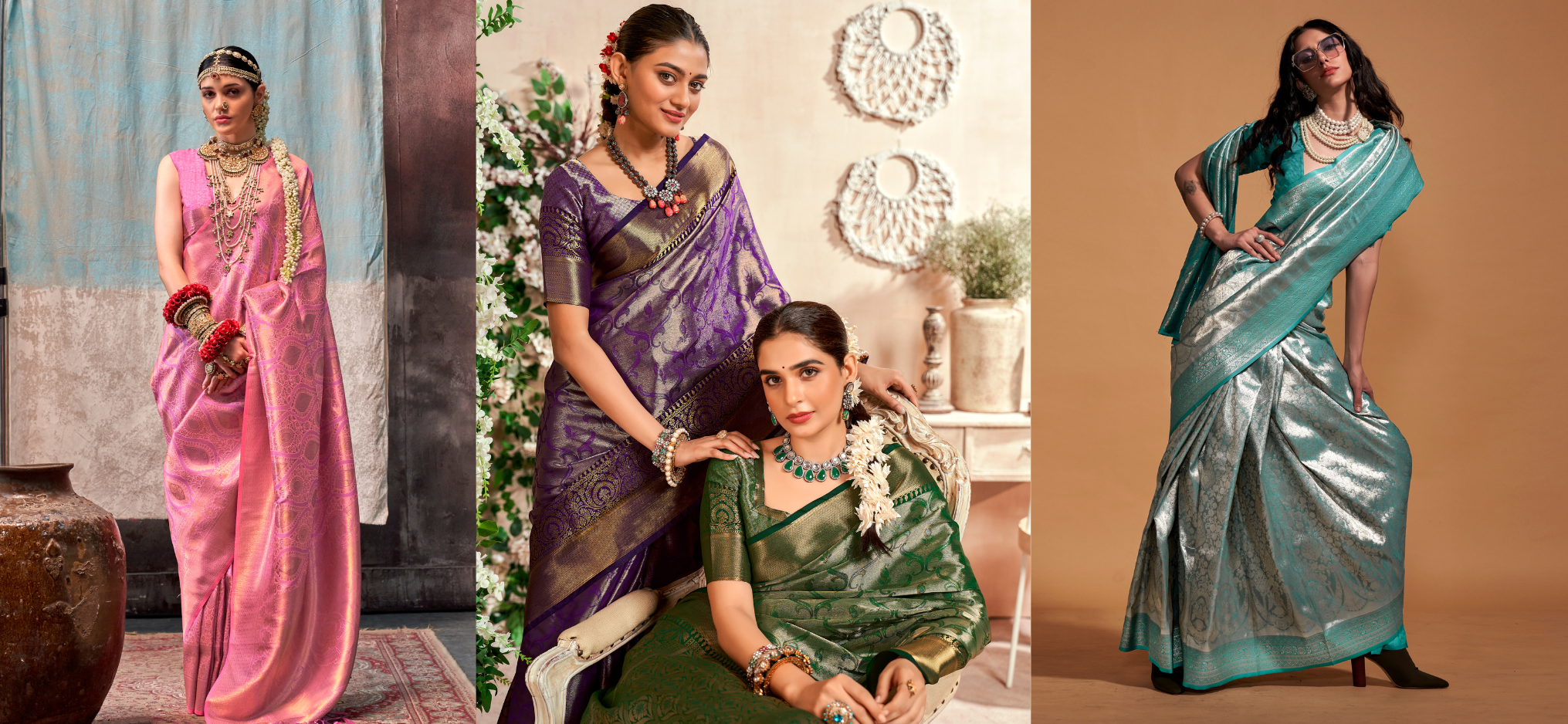
- For the Katan section, our Banarasi Katan sarees page is built from the word Katan in the listing title and only lists pieces with stock on hand.
- For the tissue section, see our tissue sarees, built from the tissue tag and gated on stock the same way.
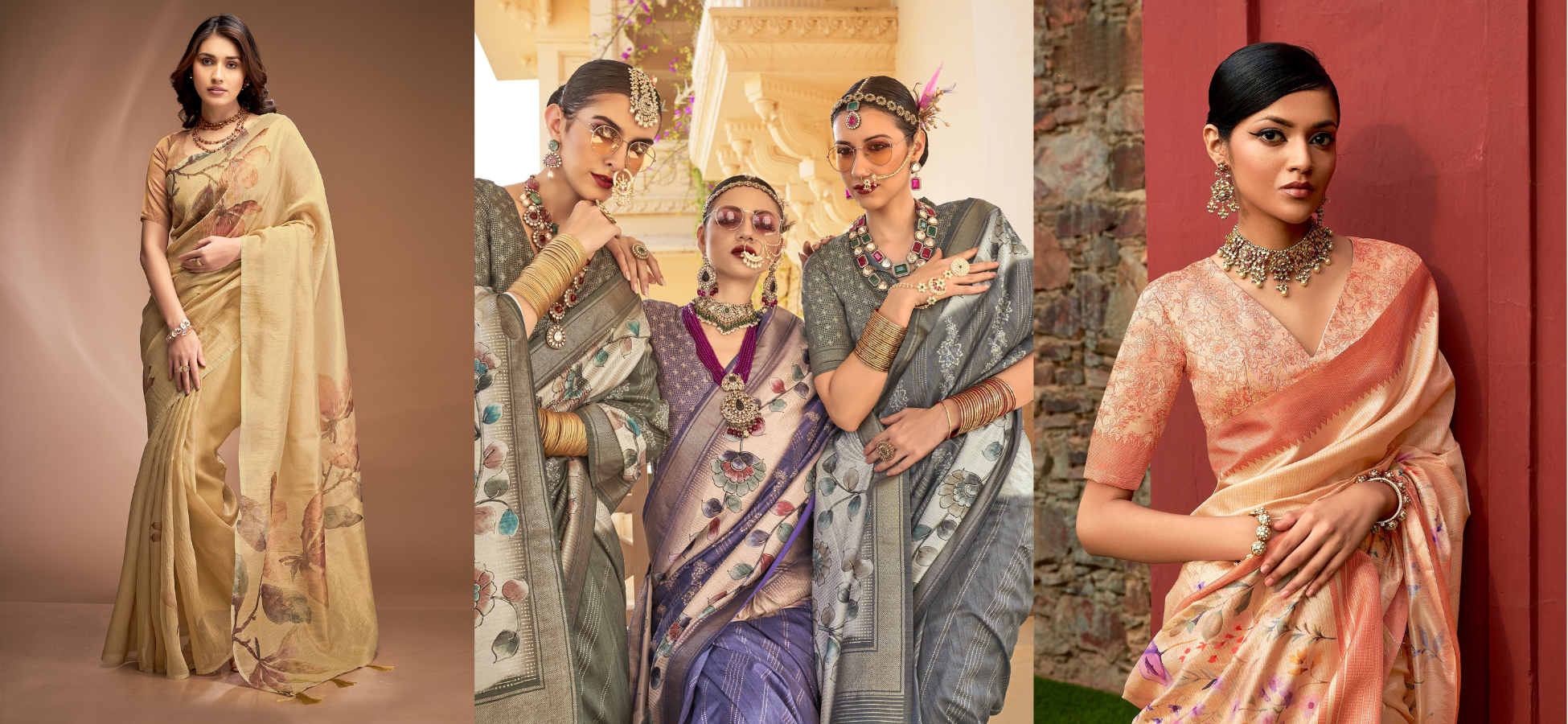
- The Frostbite Pink Rangkaat and Sage Green Tussar pieces pictured above are both handloom Banarasis; our handloom sarees page gathers handloom pieces across weaves, with Banarasi handlooms at its bestselling end.
- The table's reception and evening row points to tissue or organza; for that occasion, our reception sarees page only lists pieces with stock on hand and is led by a handloom satin Banarasi.

Leave a comment
This site is protected by hCaptcha and the hCaptcha Privacy Policy and Terms of Service apply.