
Jamdani Sarees | Buy Authentic Bengali Jamdani Sarees
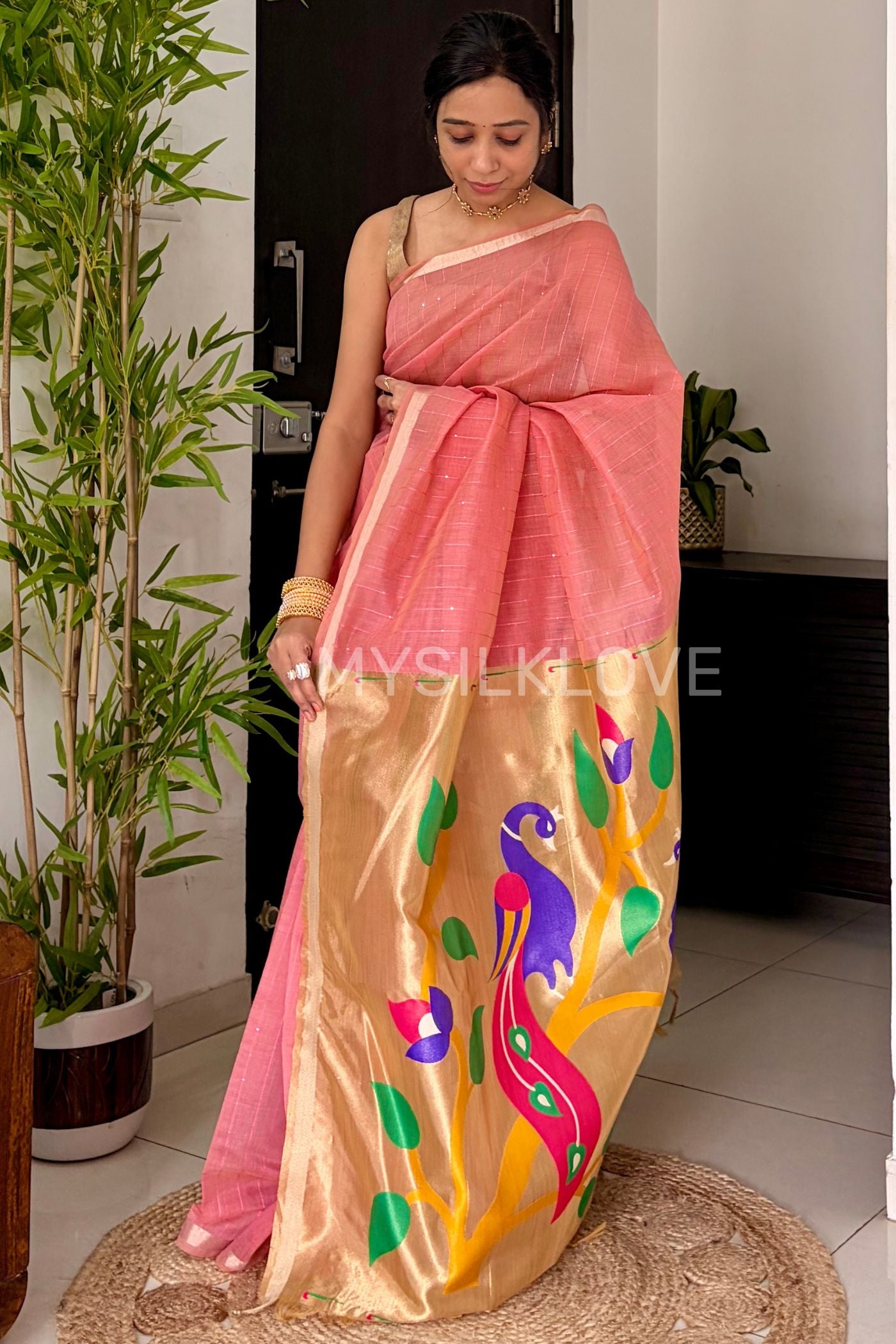
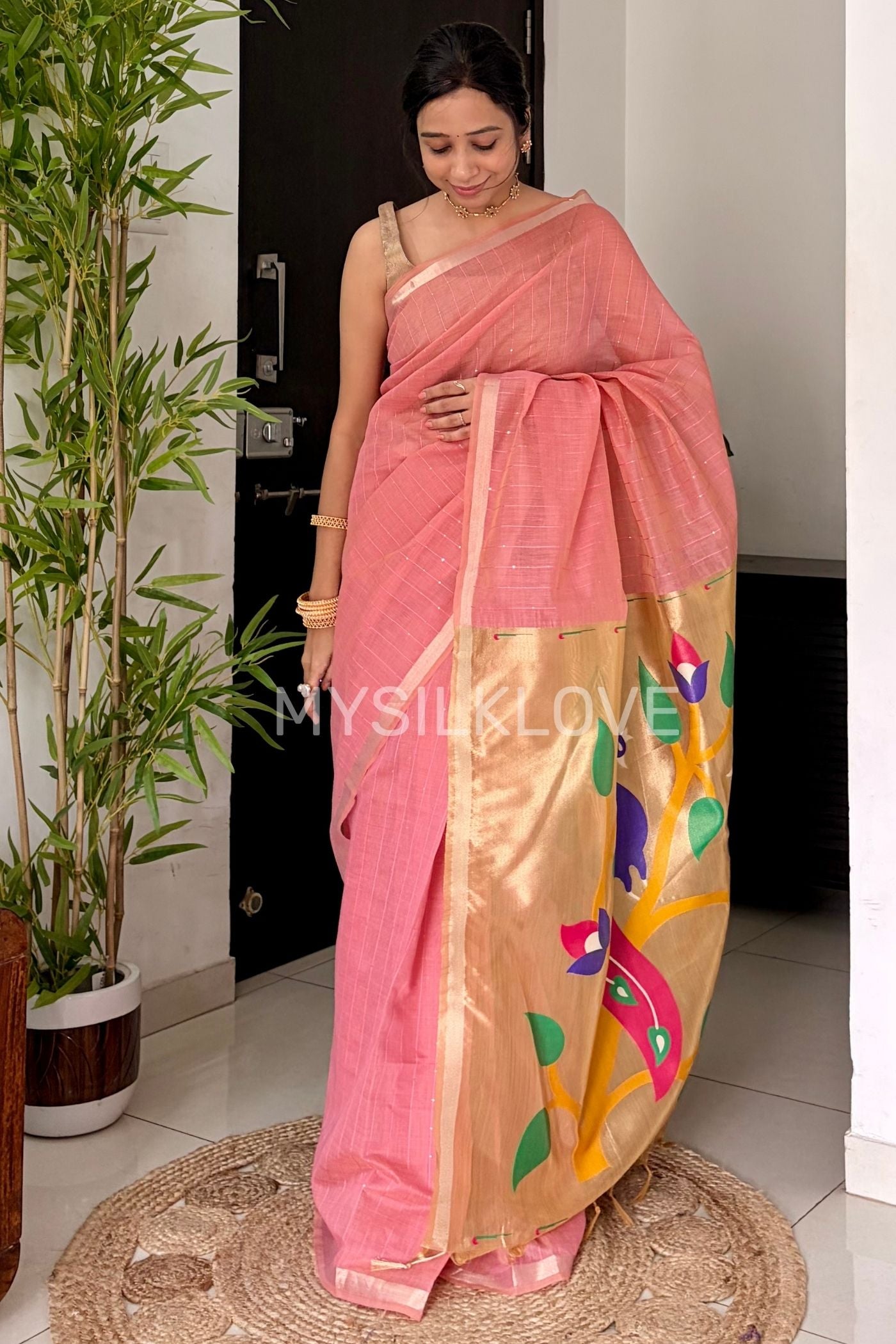
Froly Pink Chanderi Paithani Saree with Peacock Pallu
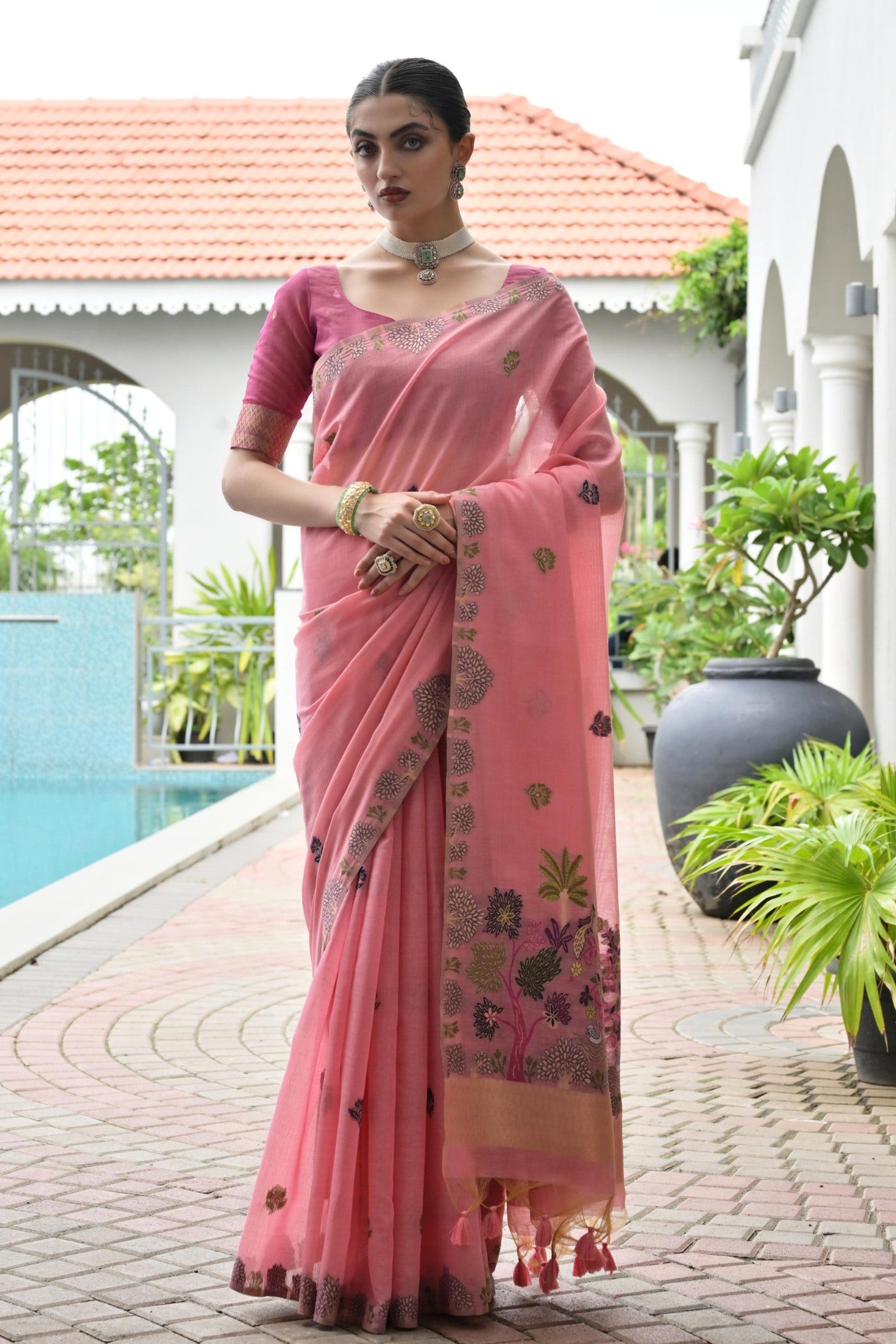
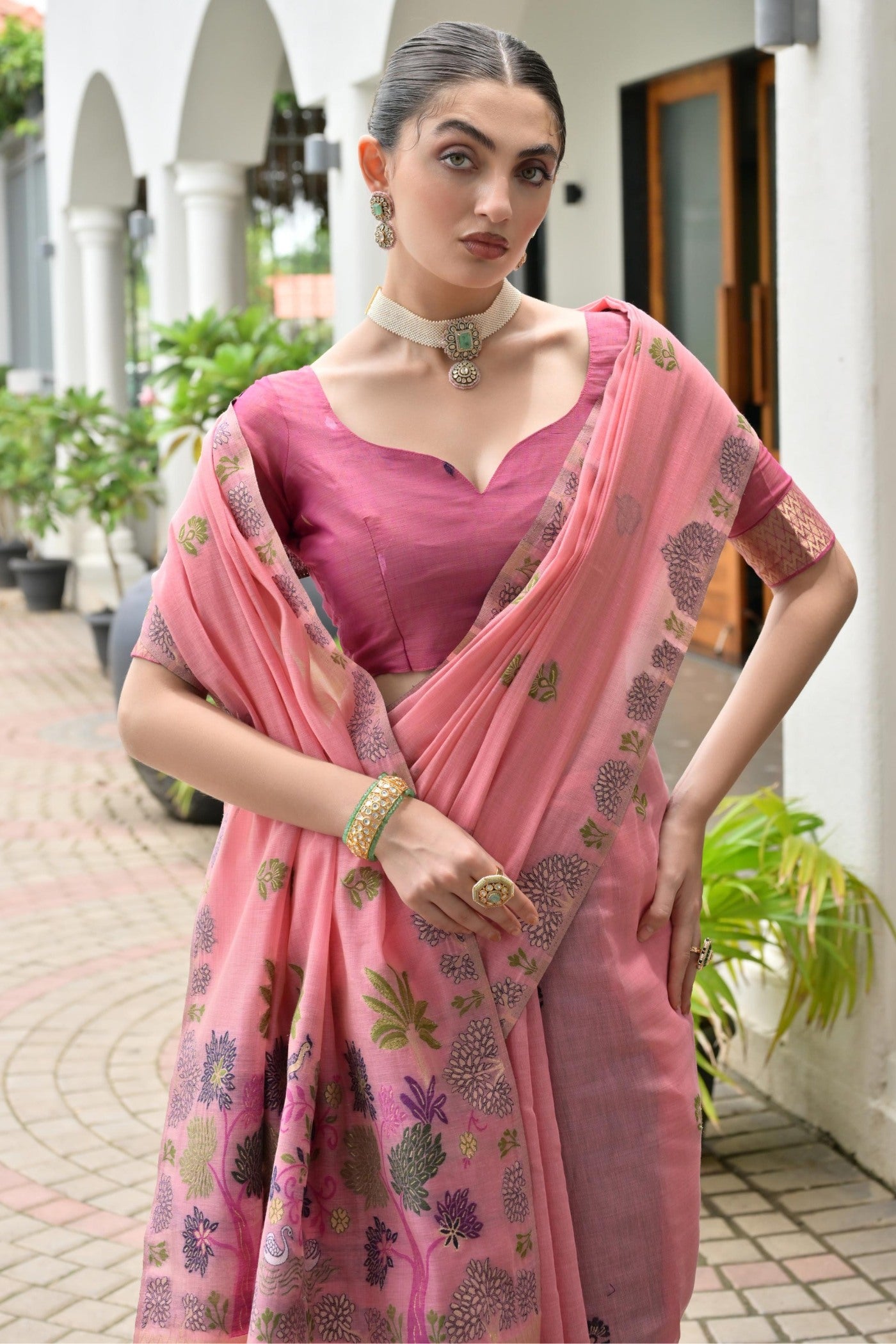
Mulberry Pink Woven Muga Cotton Saree
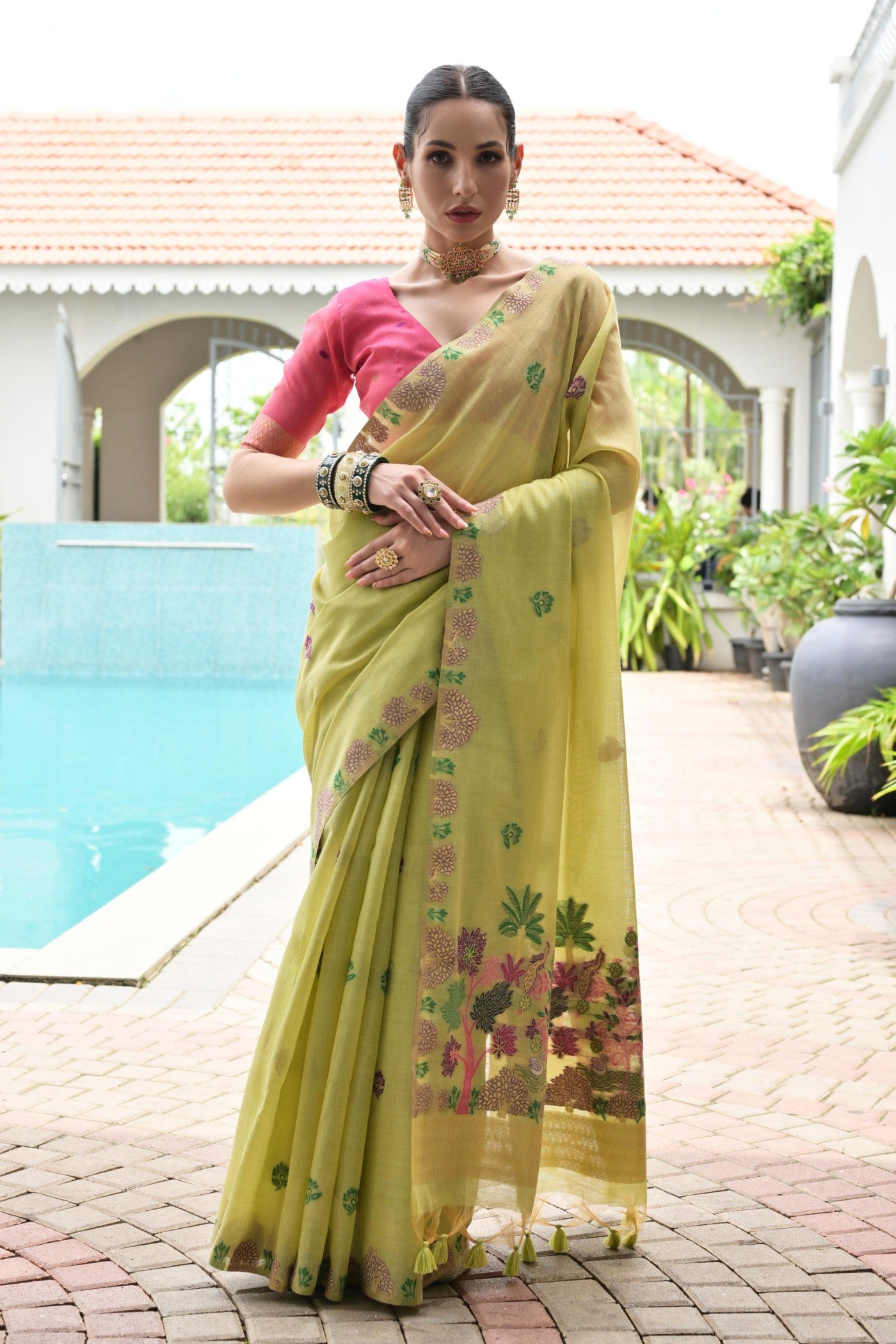
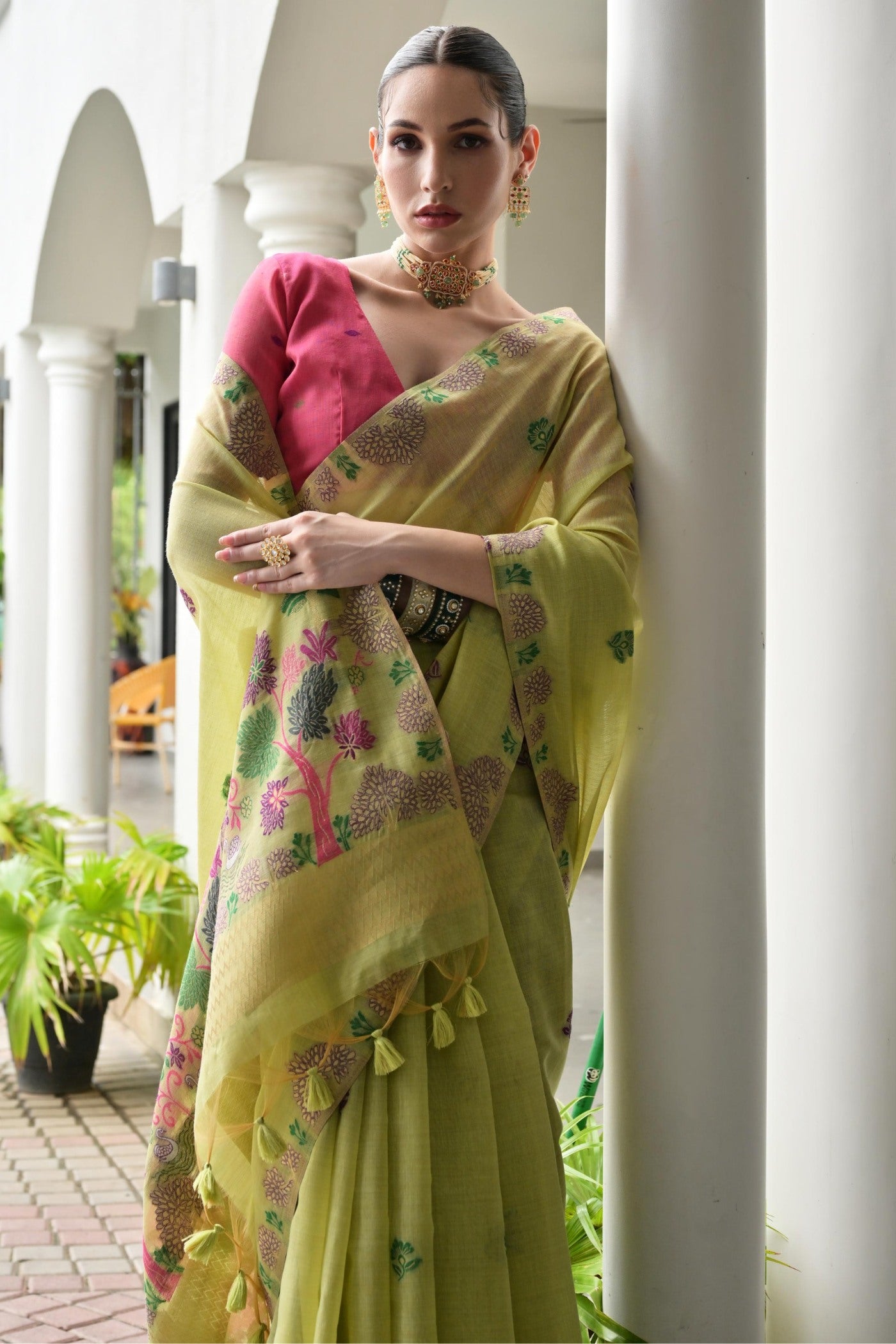
Jad Green Woven Muga Cotton Saree
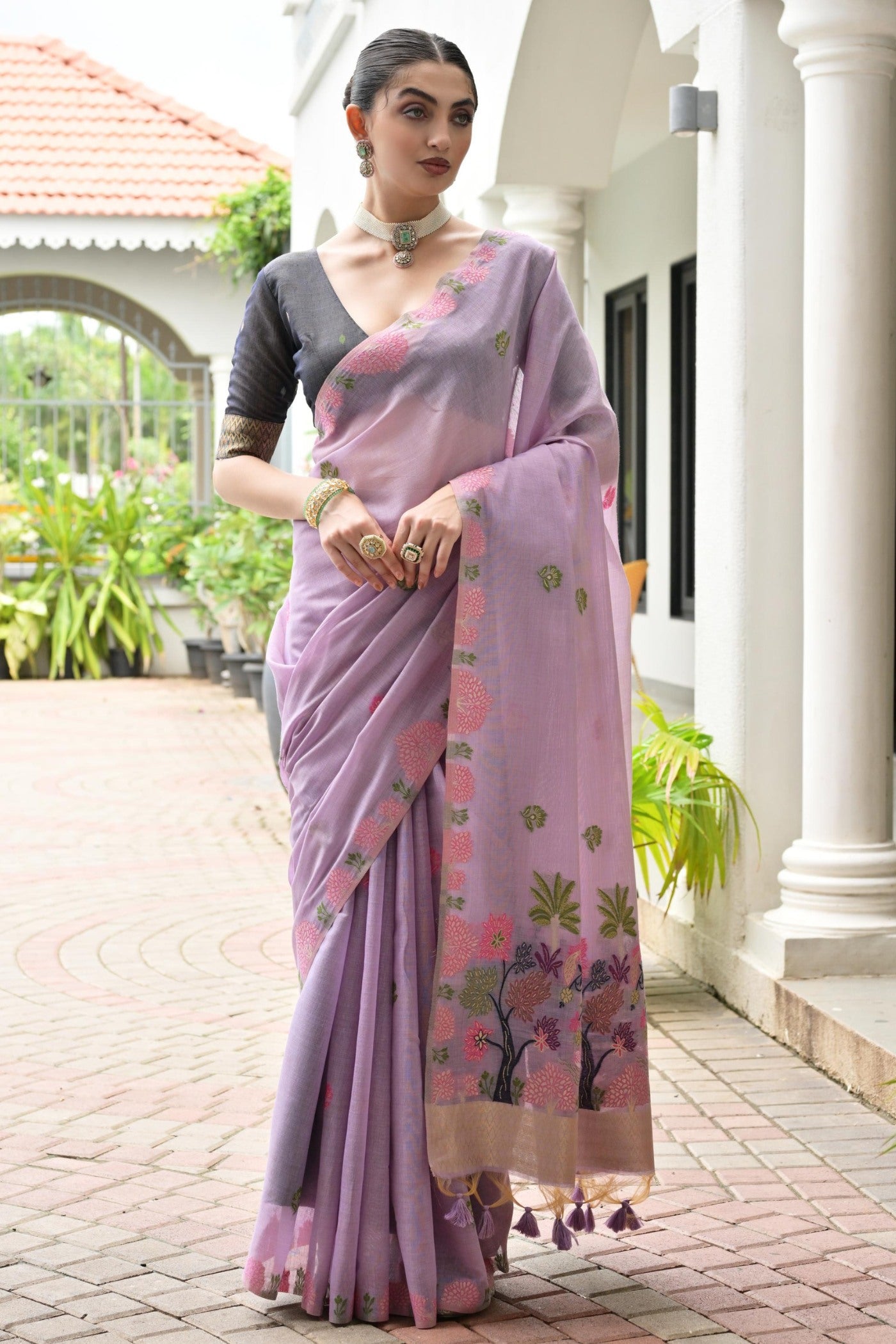
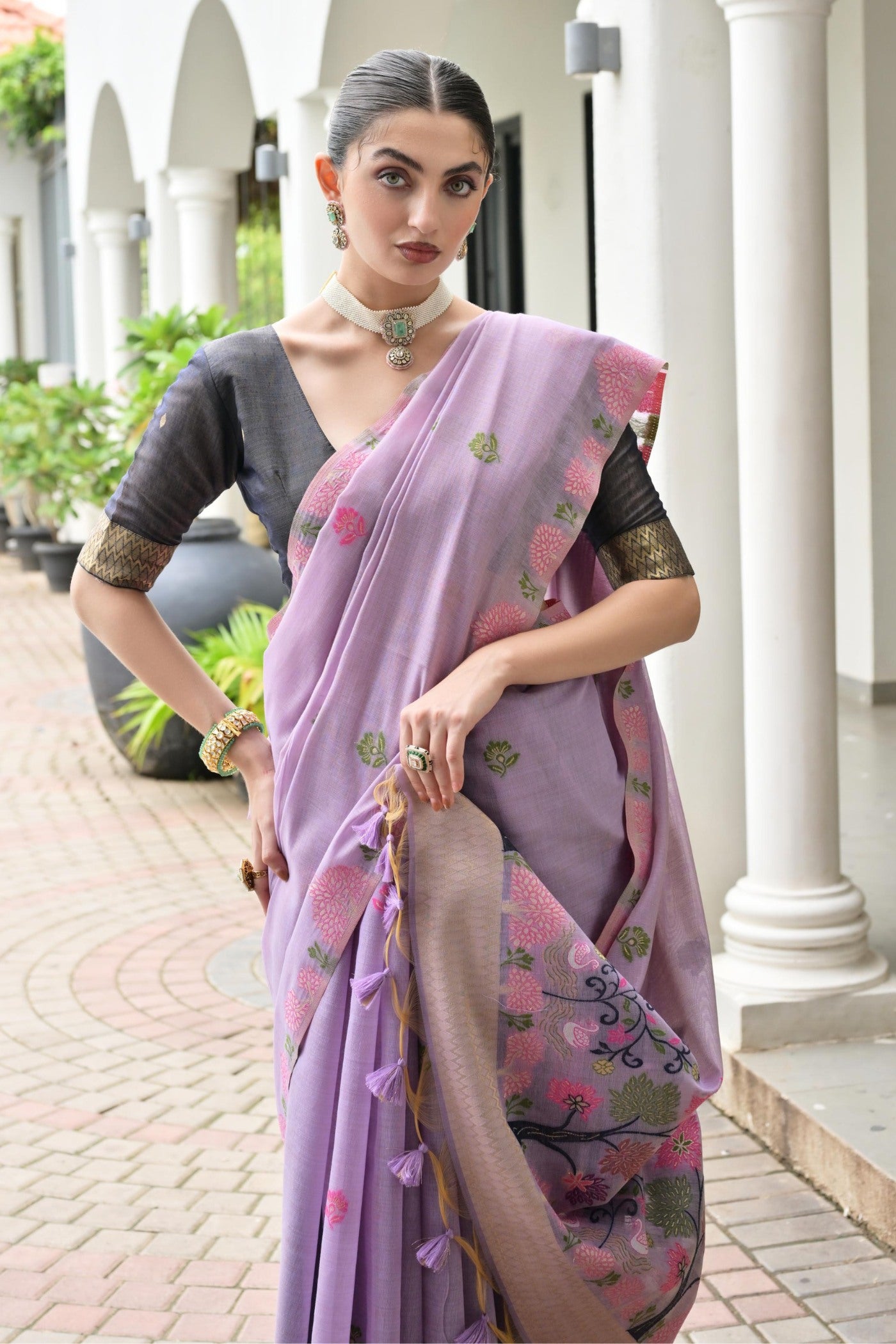
Wisteria Purple Woven Muga Cotton Saree
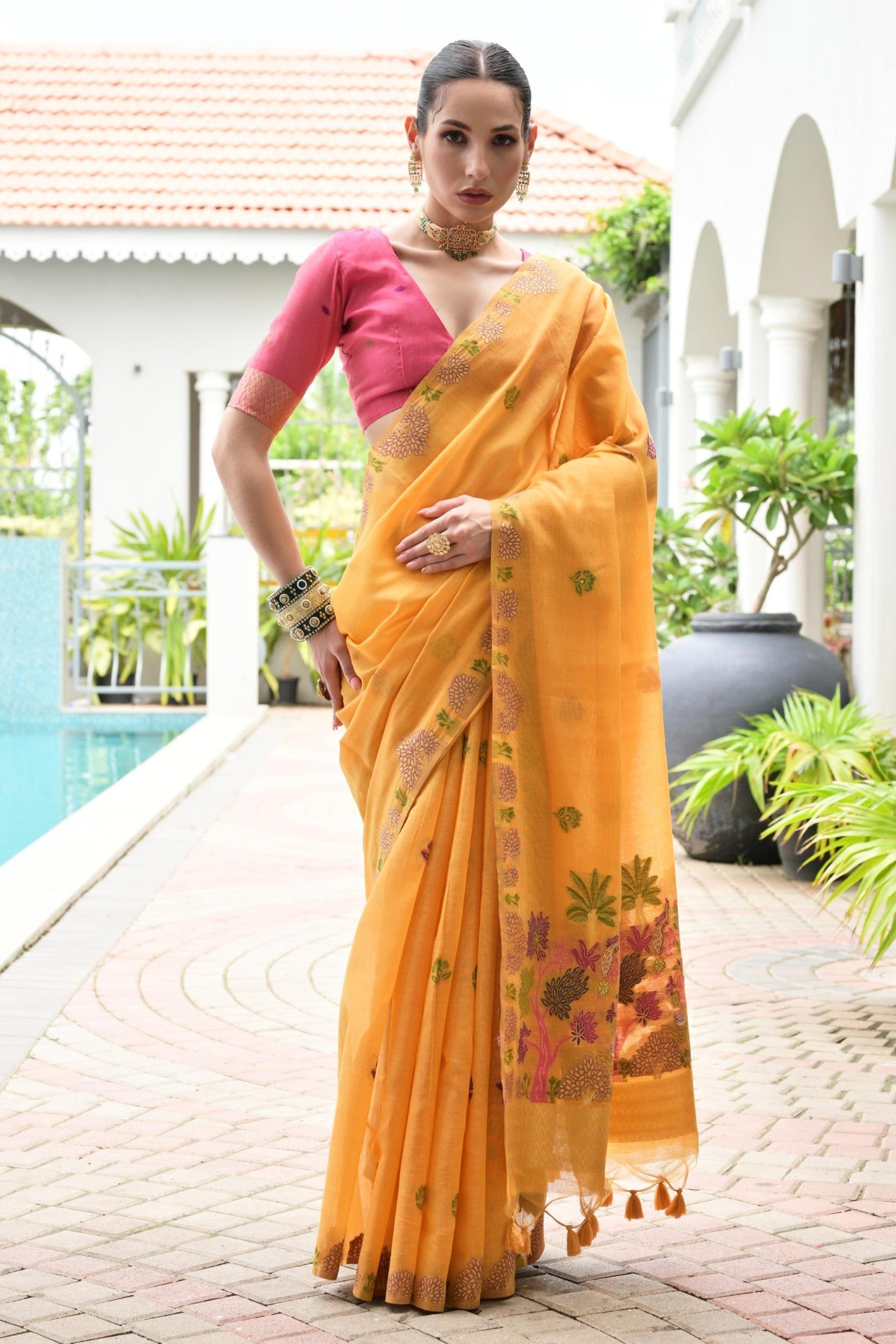
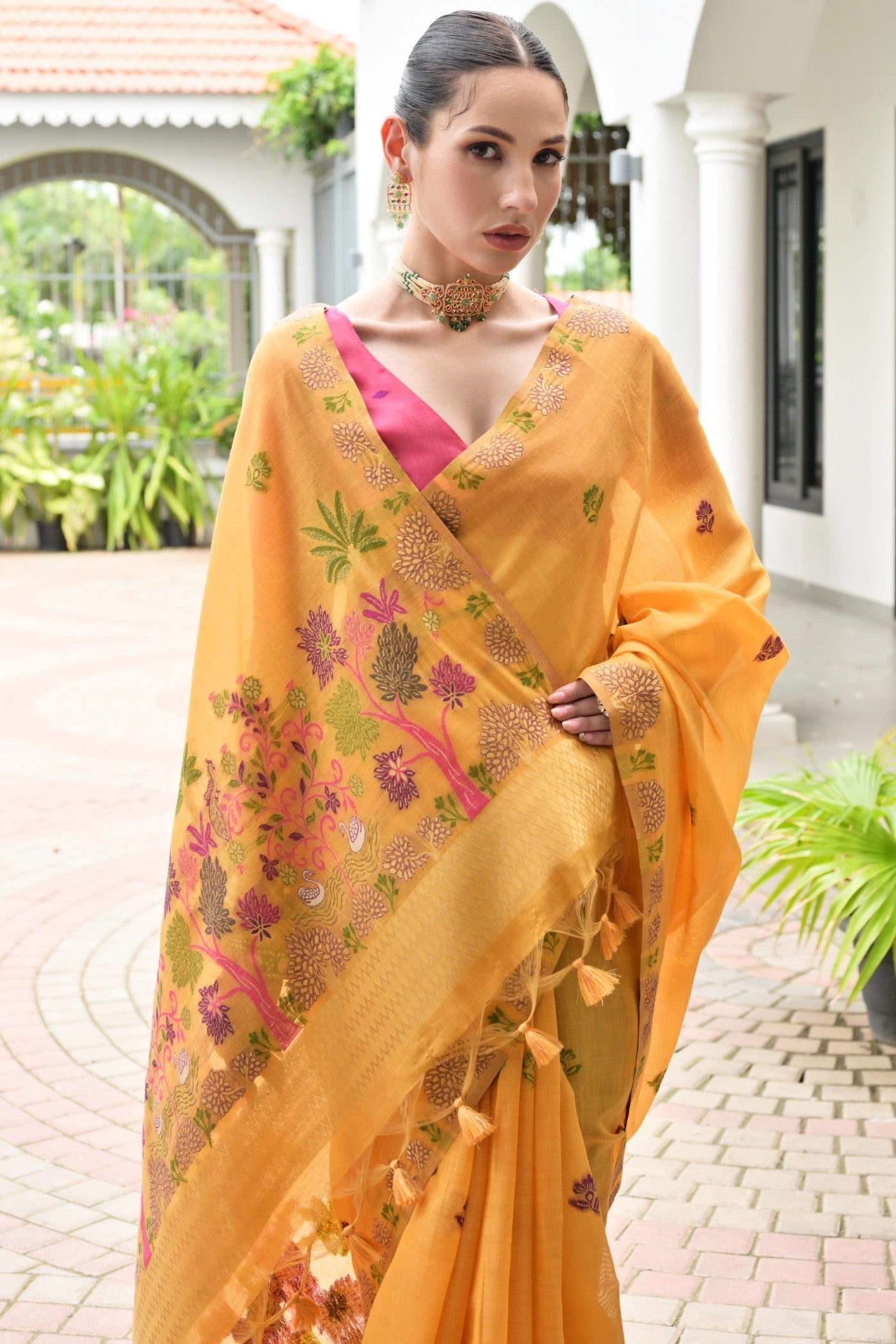
Turmeric Yellow Woven Muga Cotton Saree
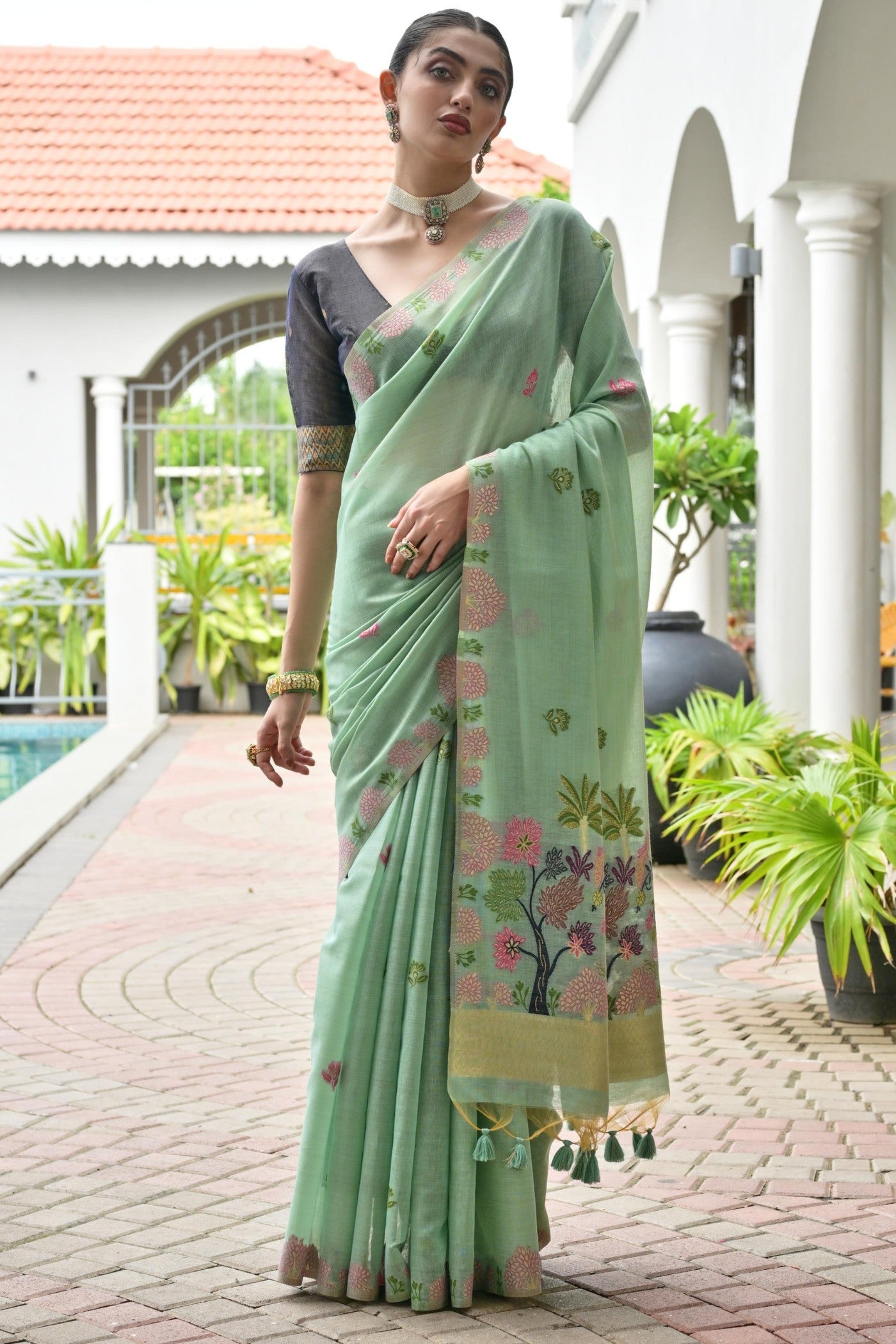
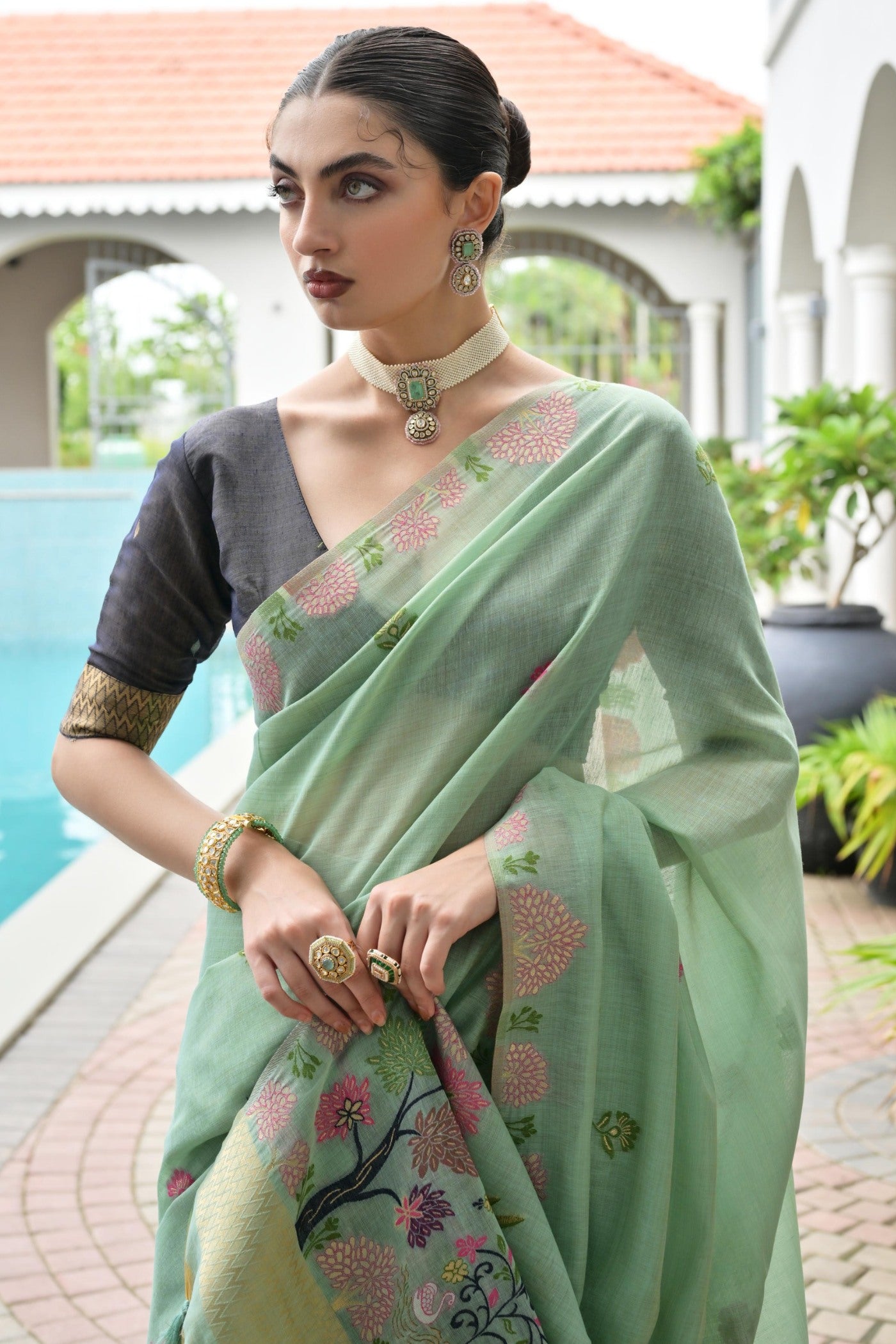
Mentor Green Woven Muga Cotton Saree
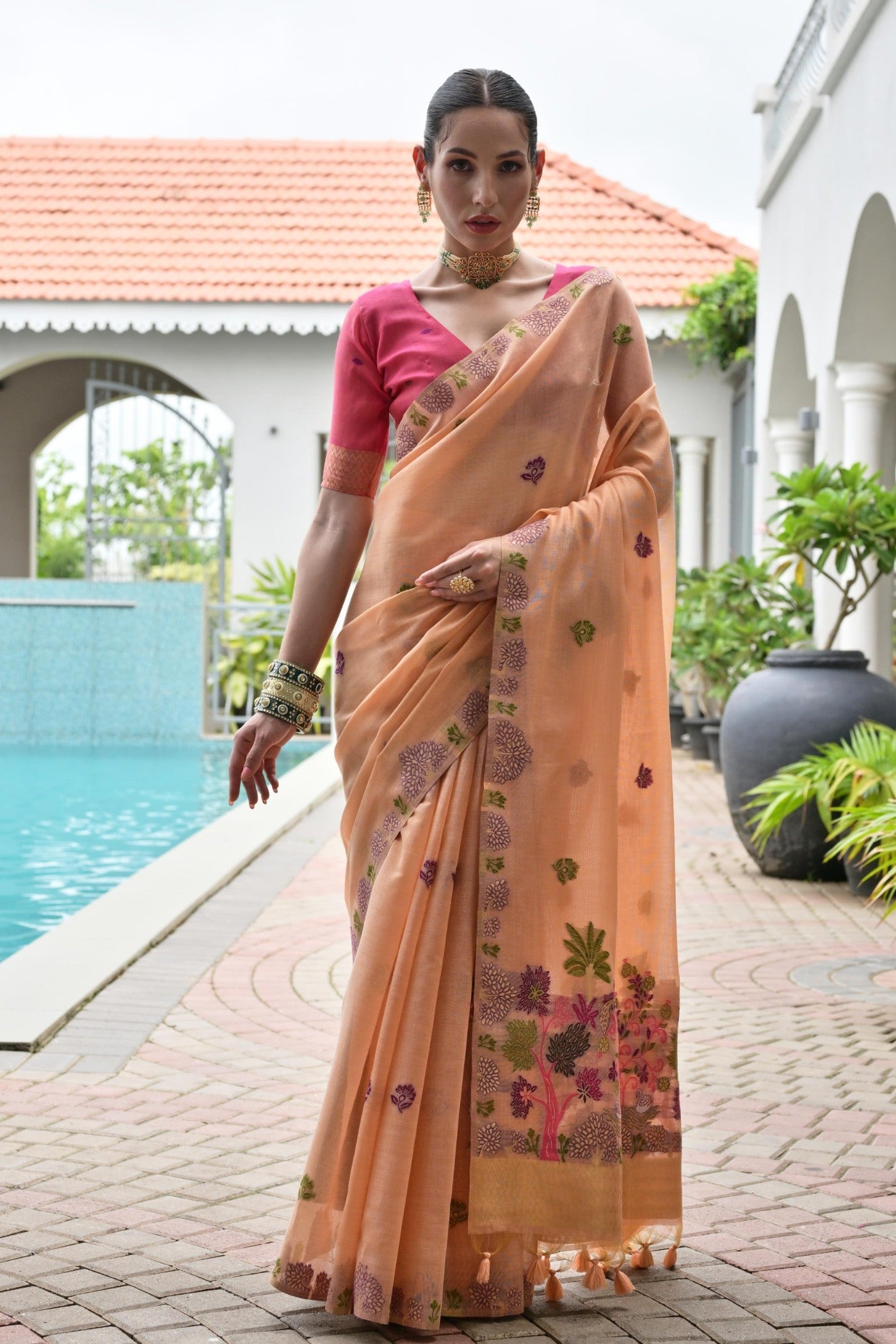
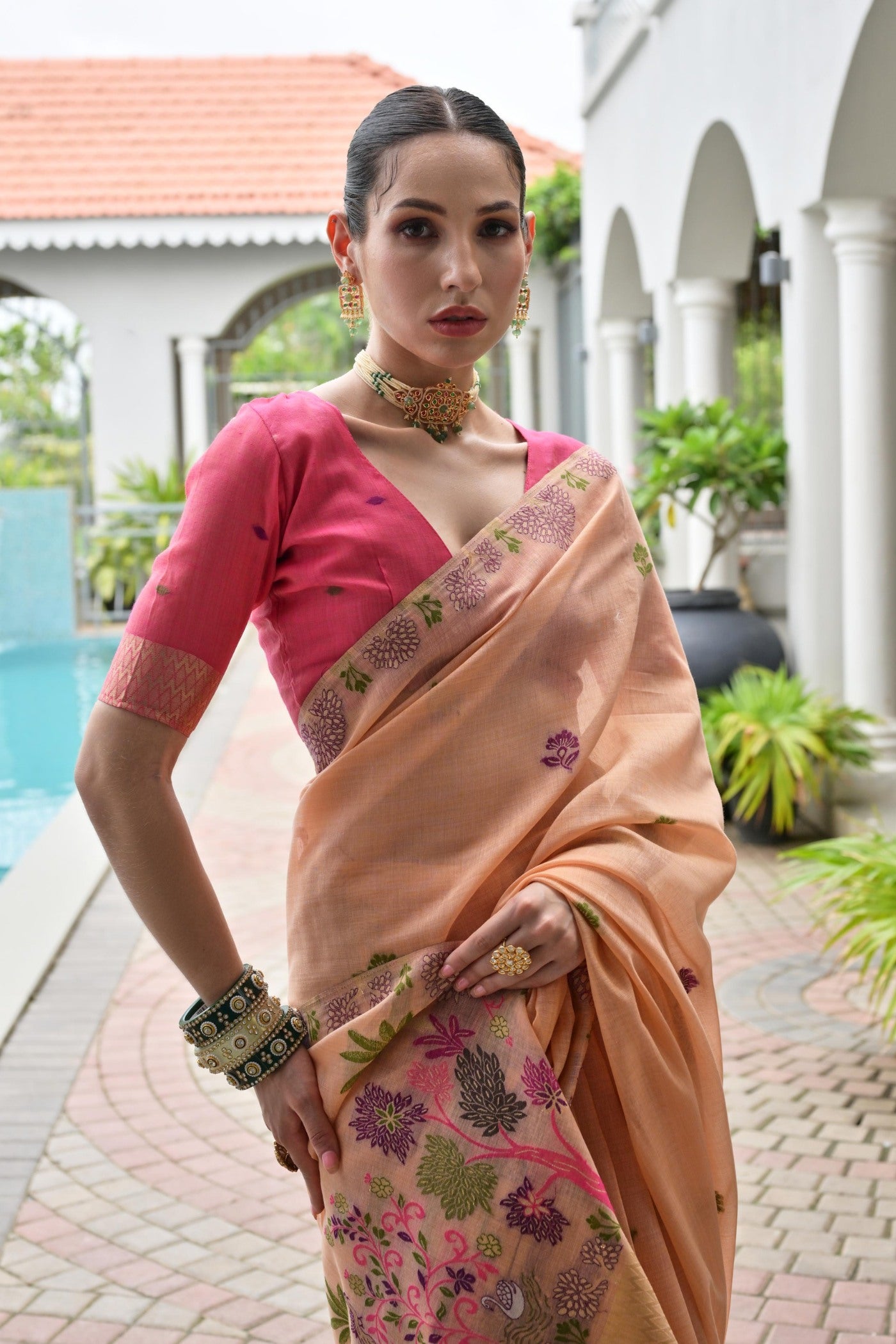
Maple Orange Woven Muga Cotton Saree
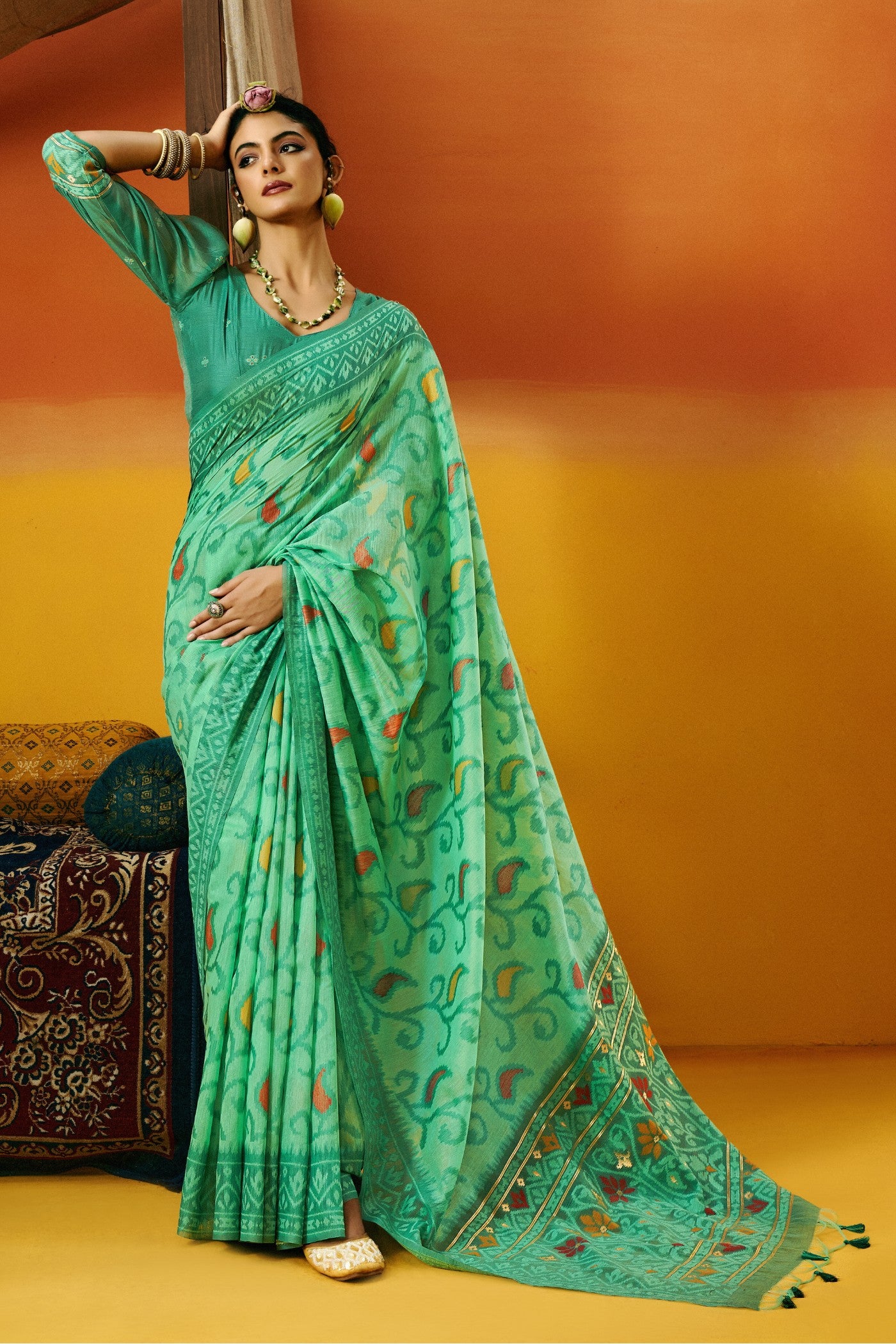
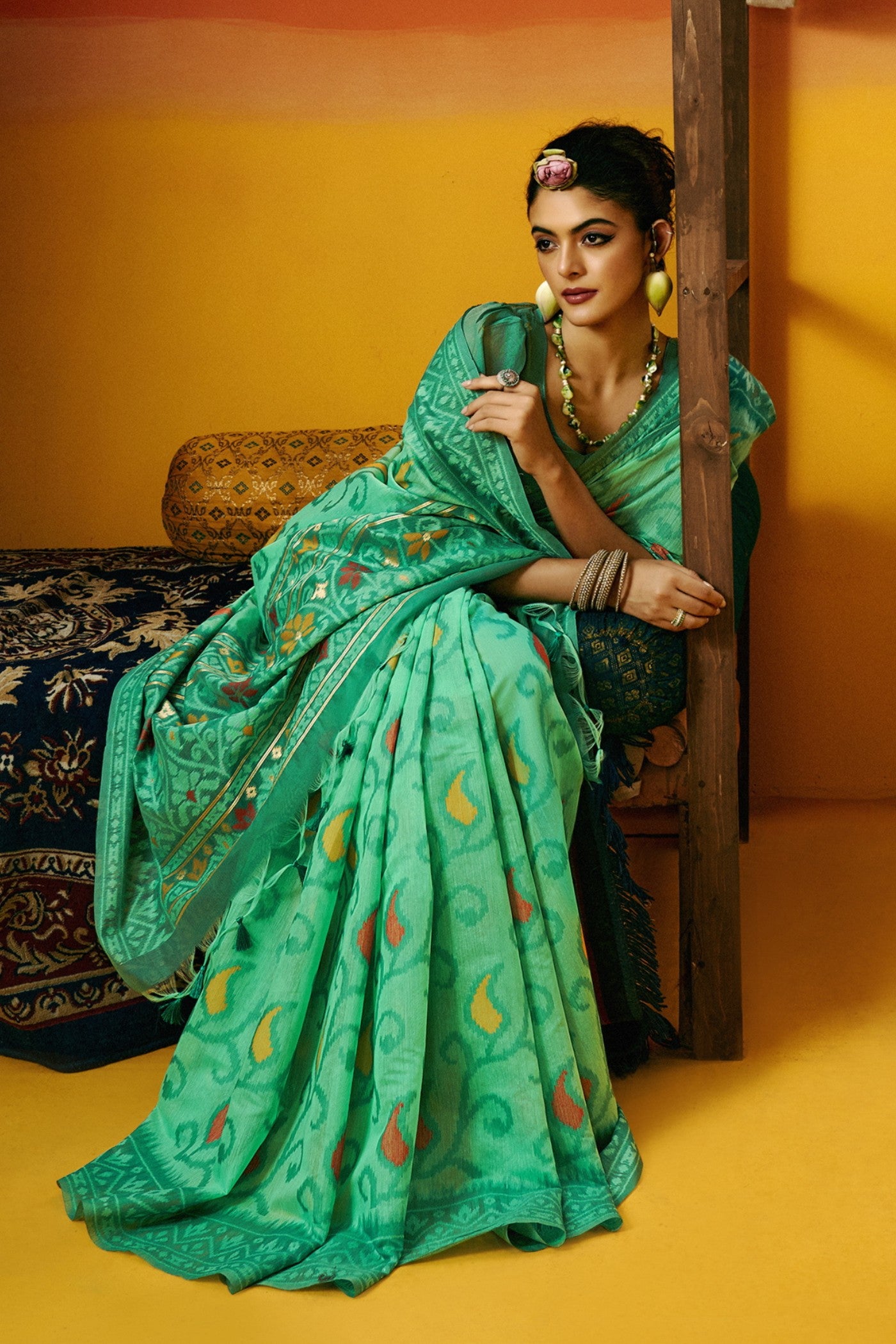
Spruce Green Handloom Jamdani Saree
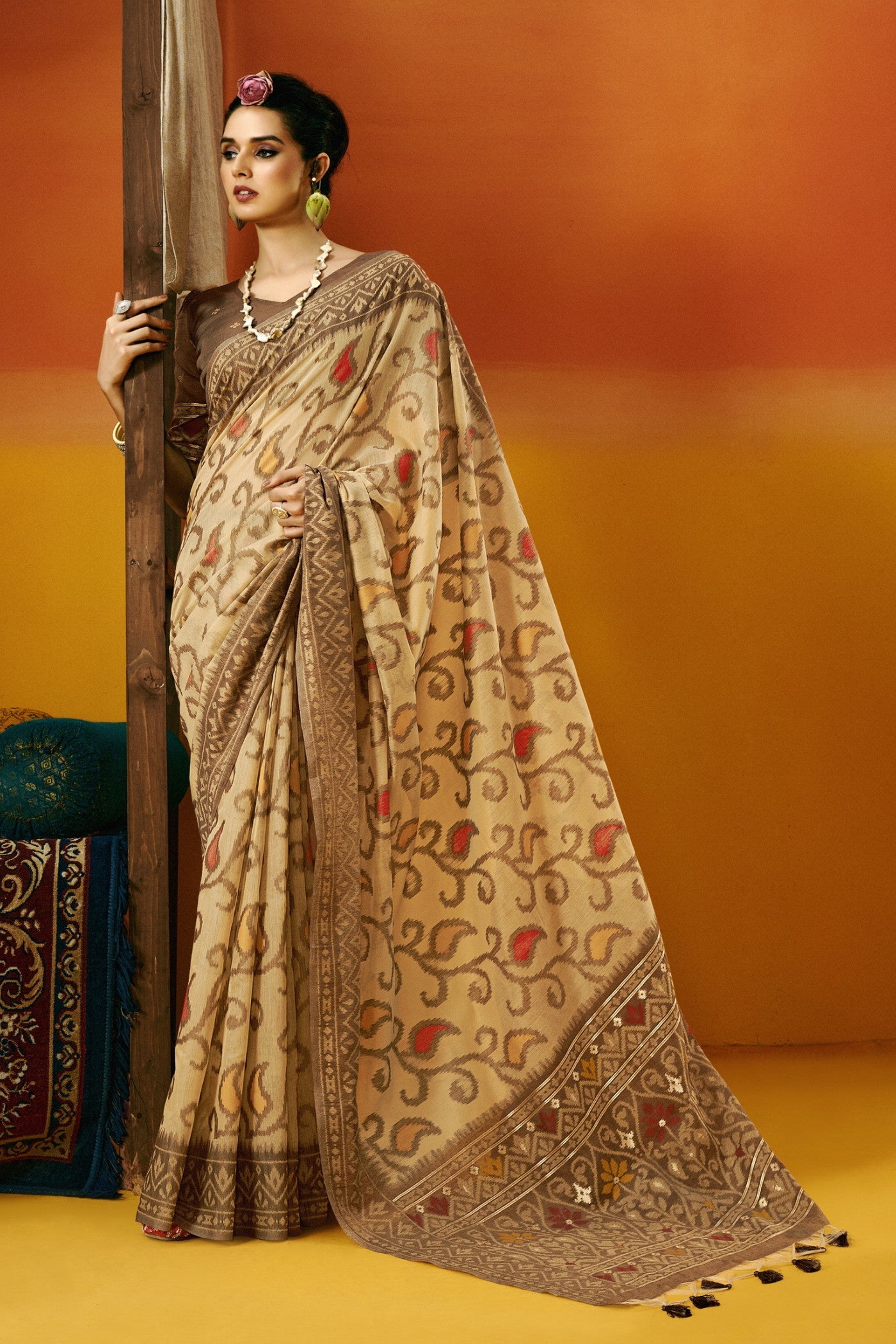
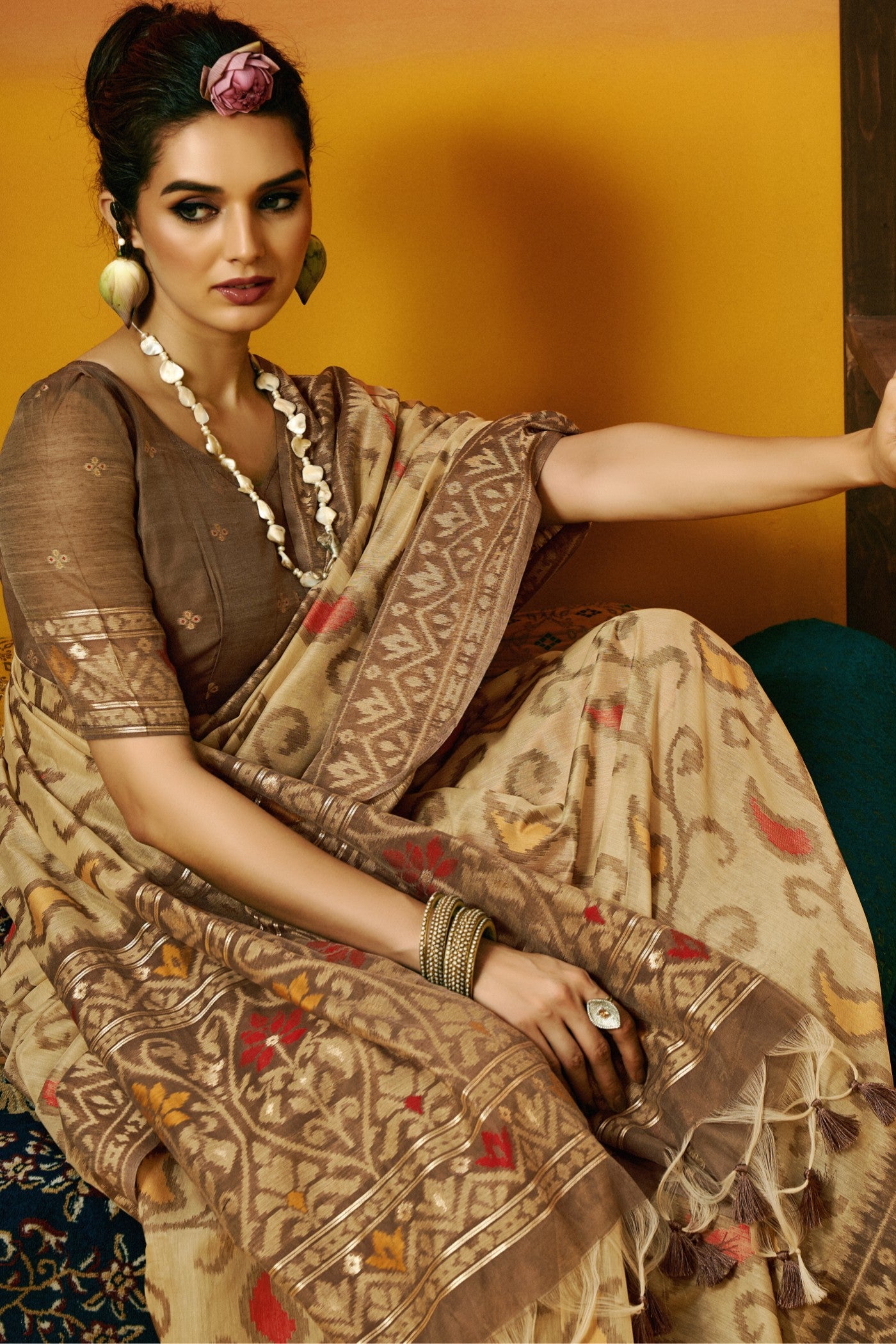
Bullet Shell Cream Handloom Jamdani Saree
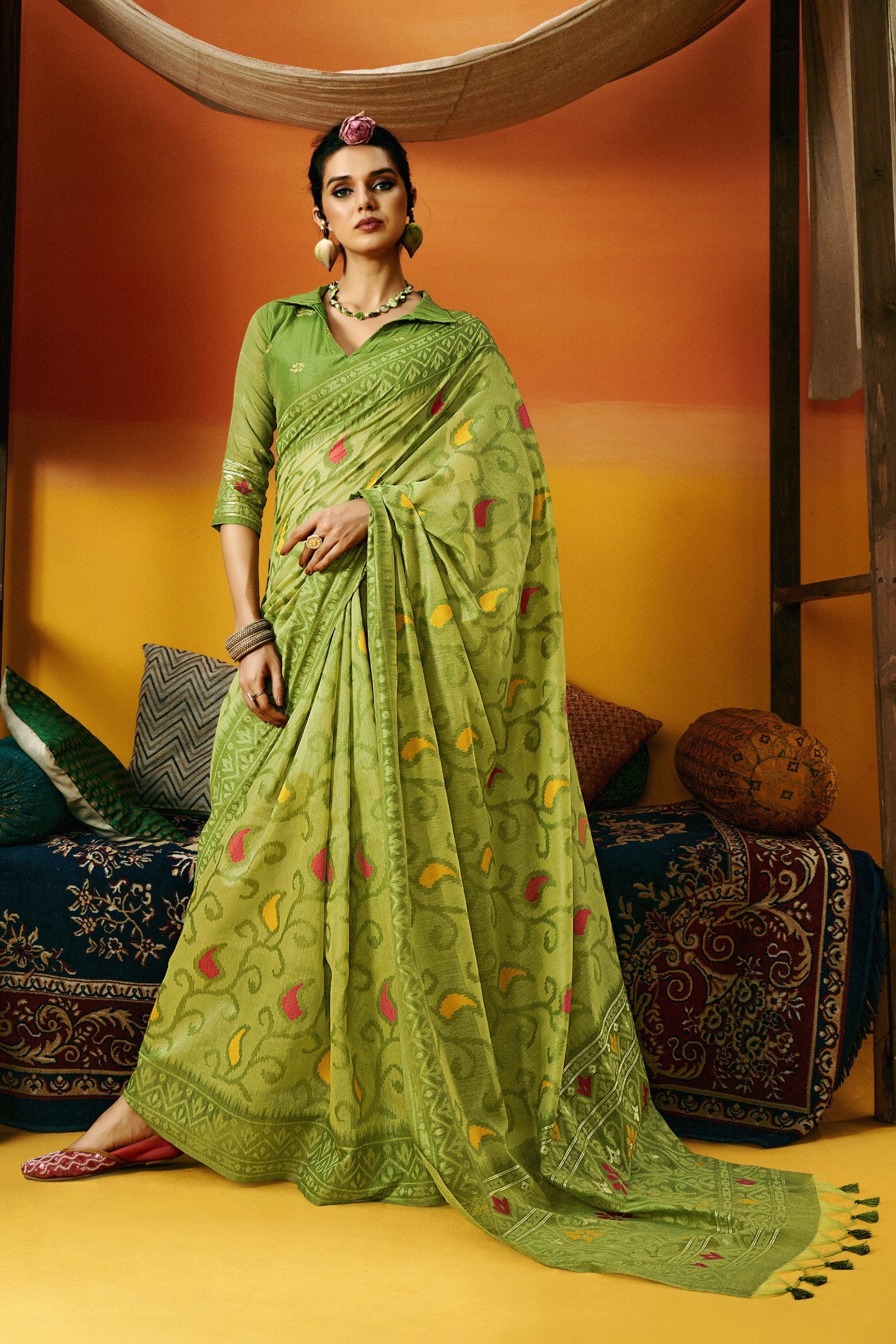
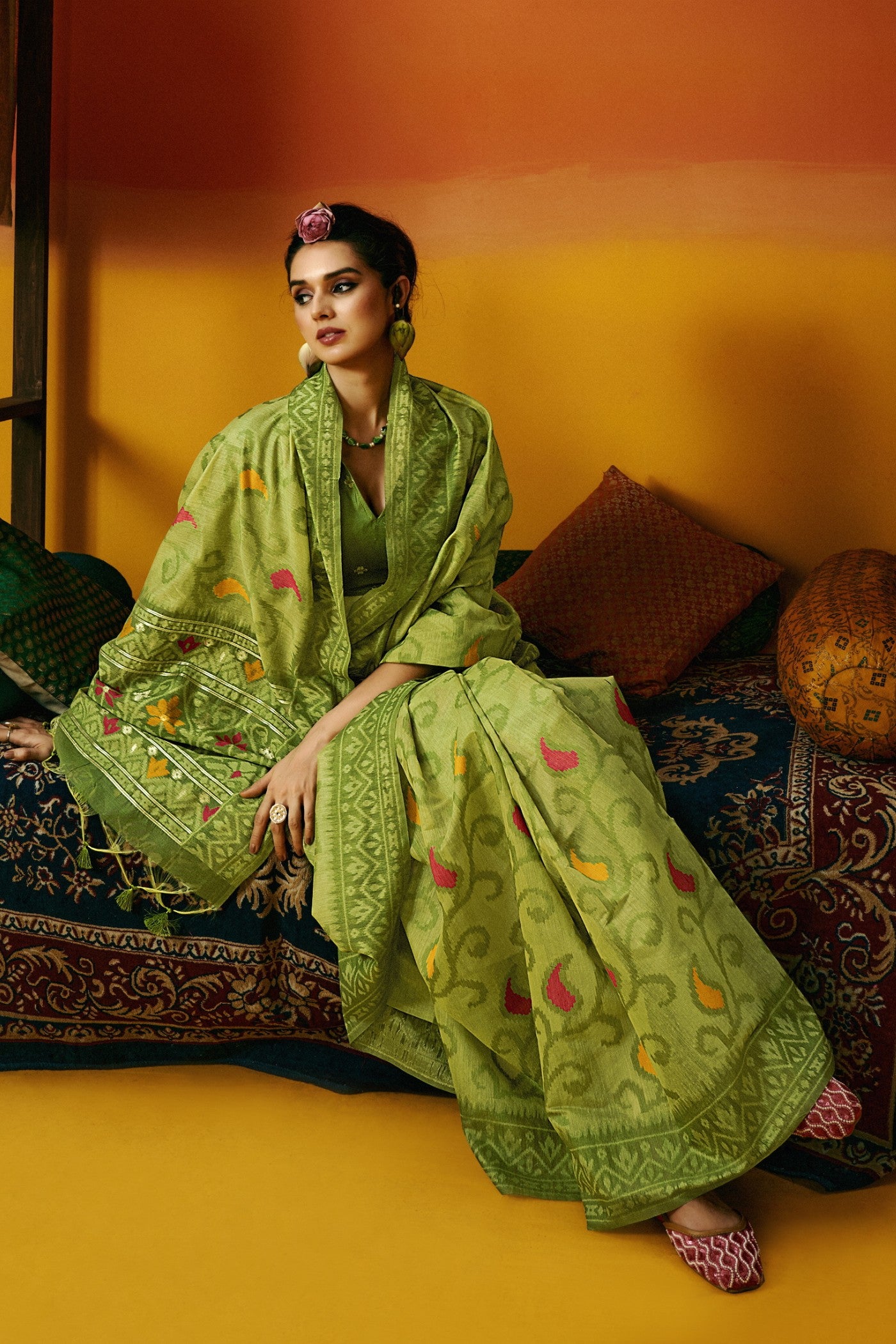
Mantis Green Handloom Jamdani Saree
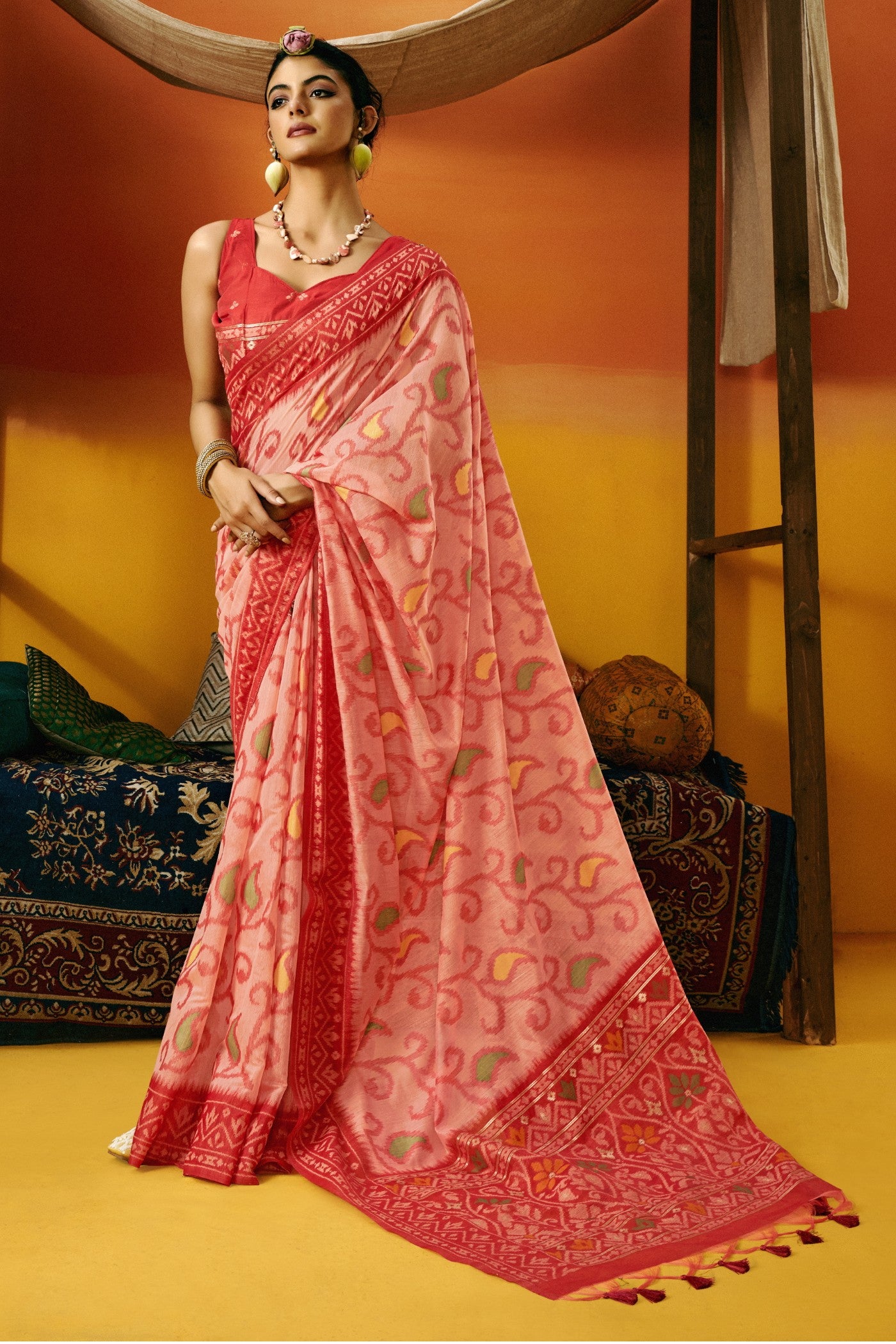
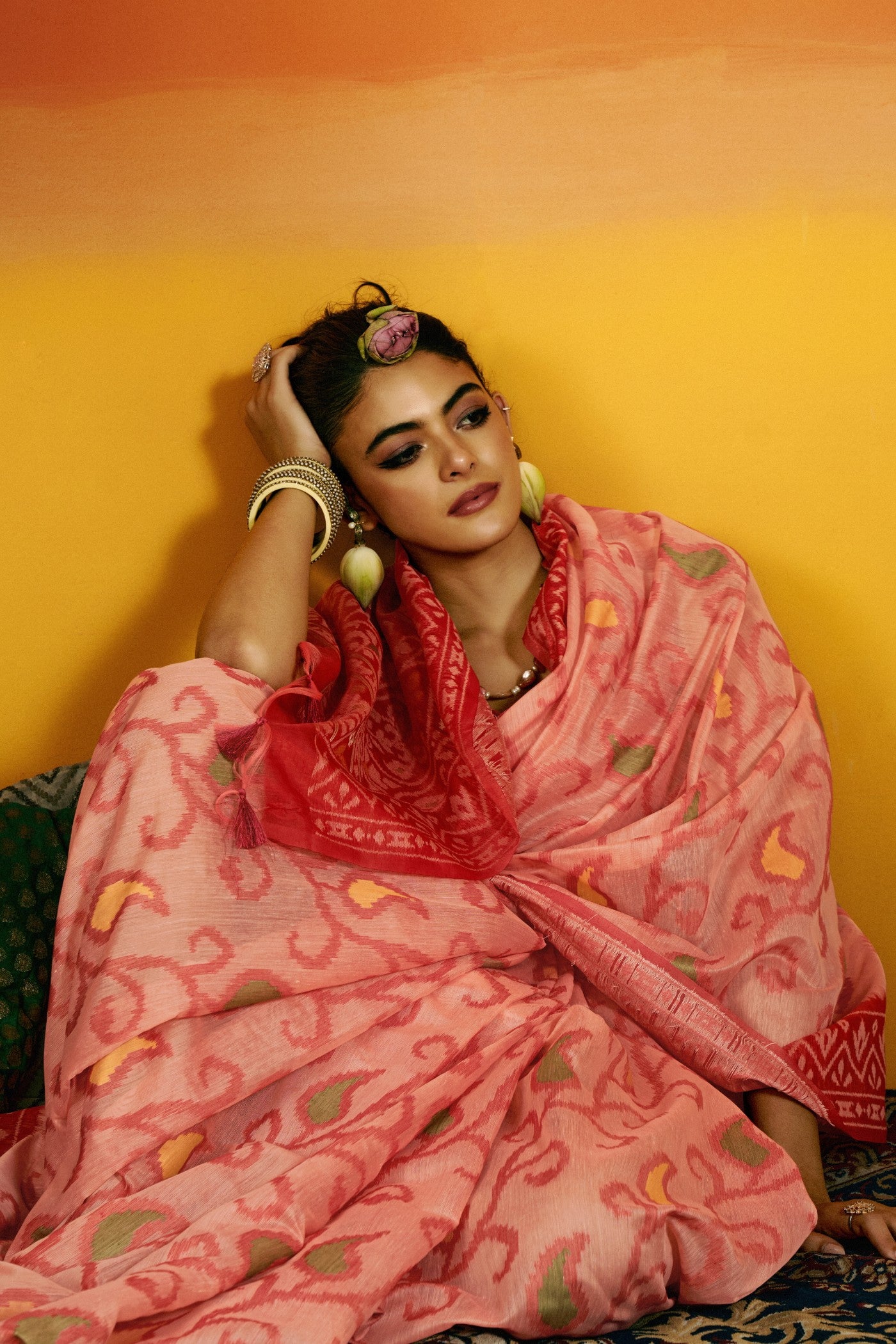
Faded Pink Handloom Jamdani Saree
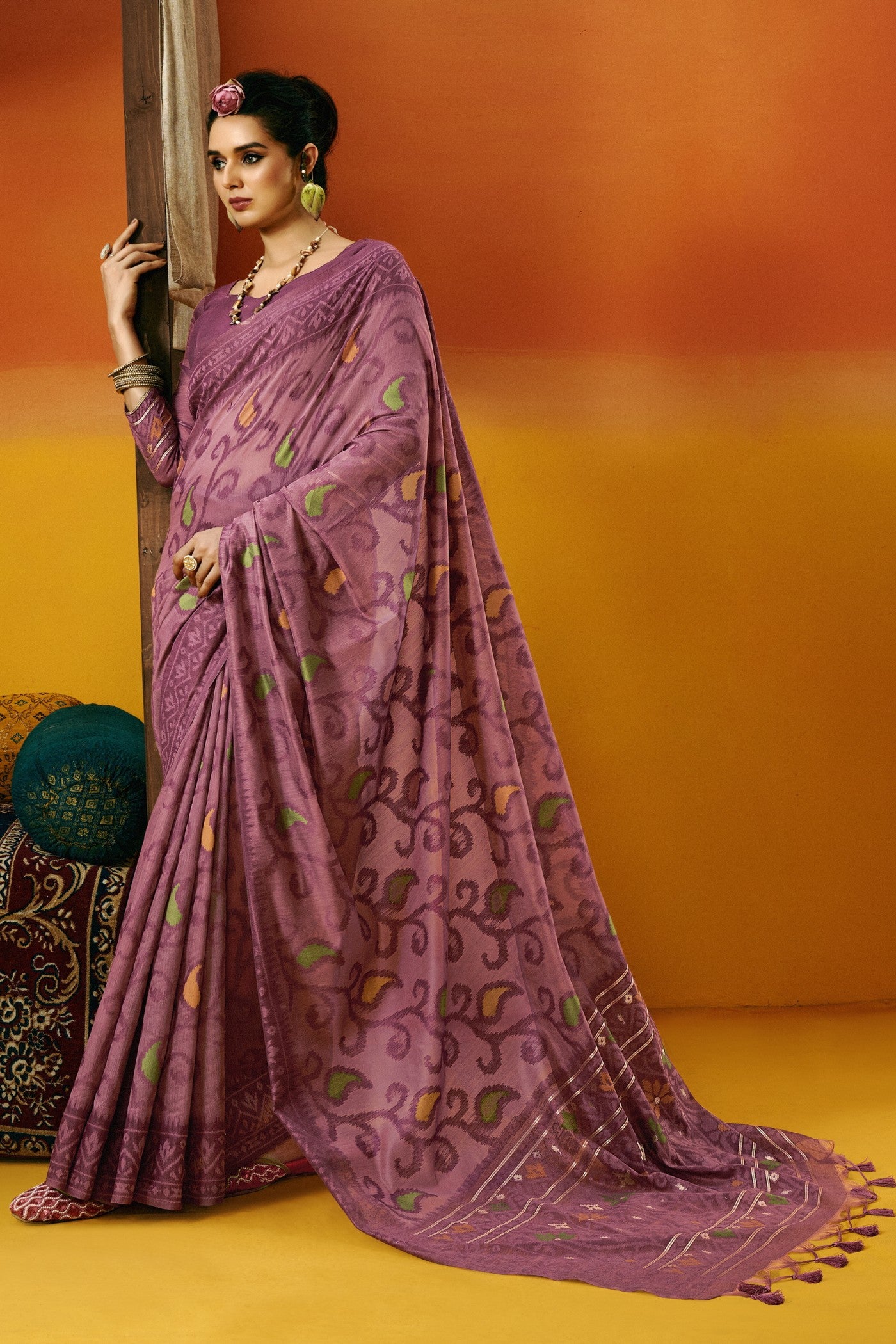
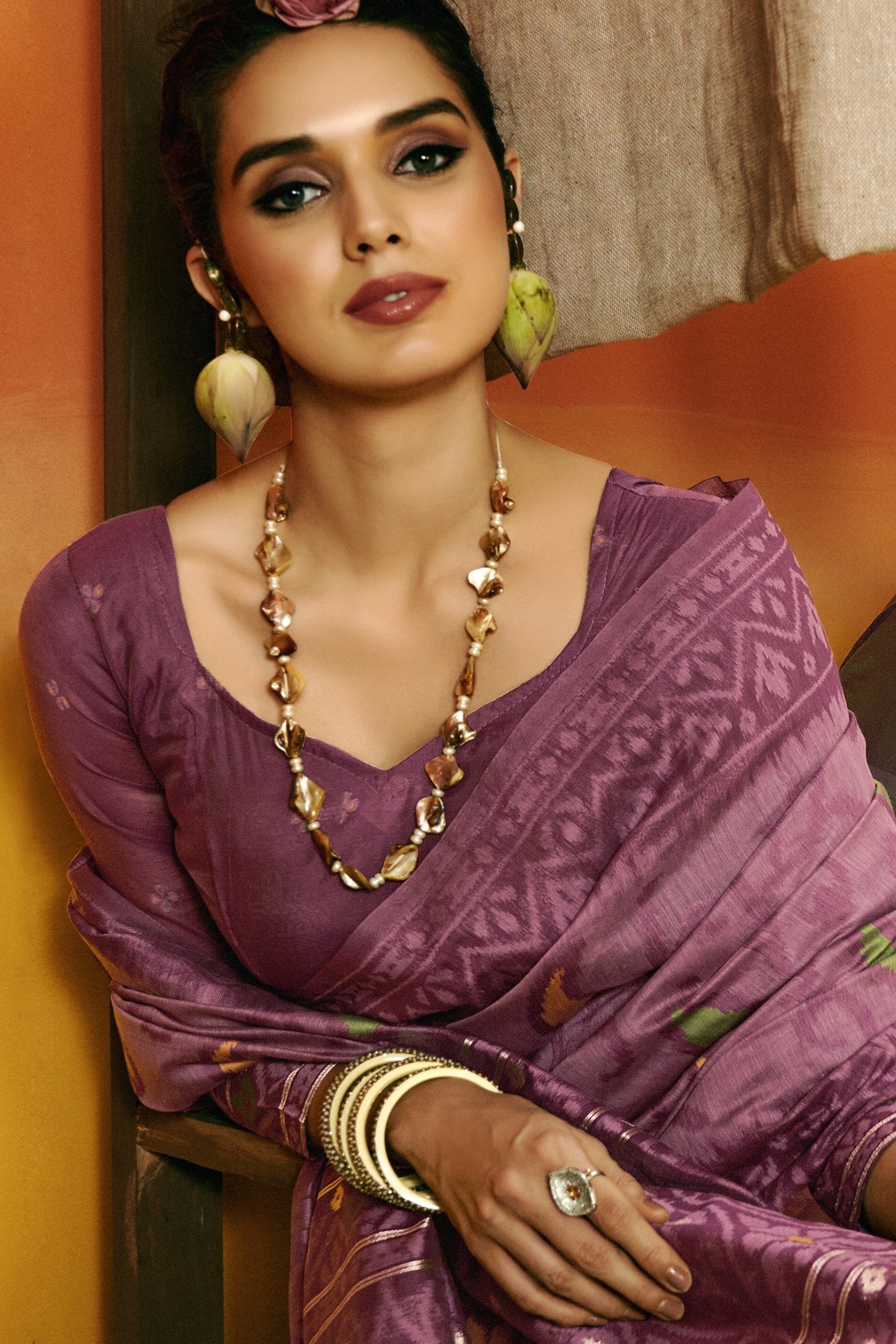
Velvet Purple Handloom Jamdani Saree
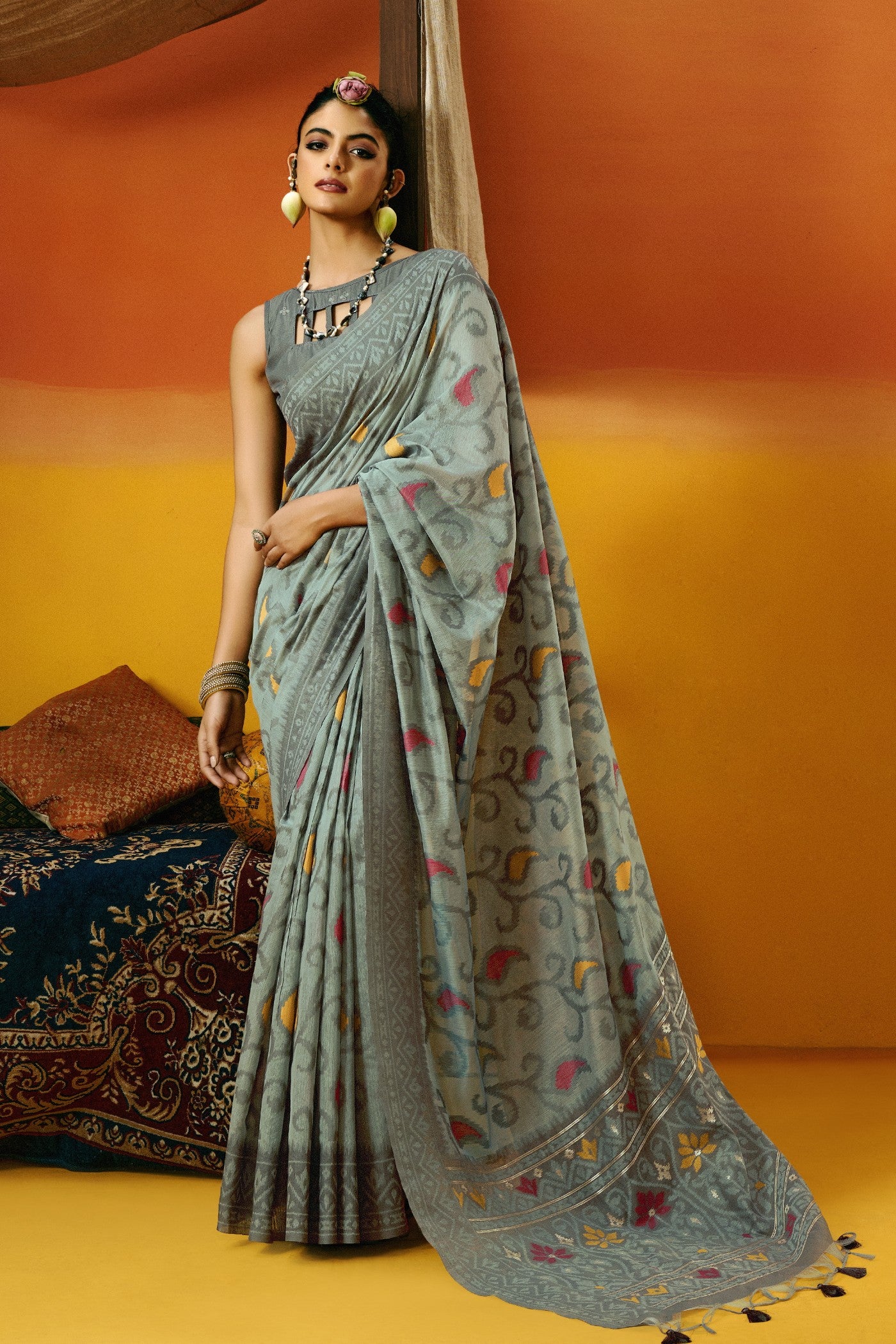
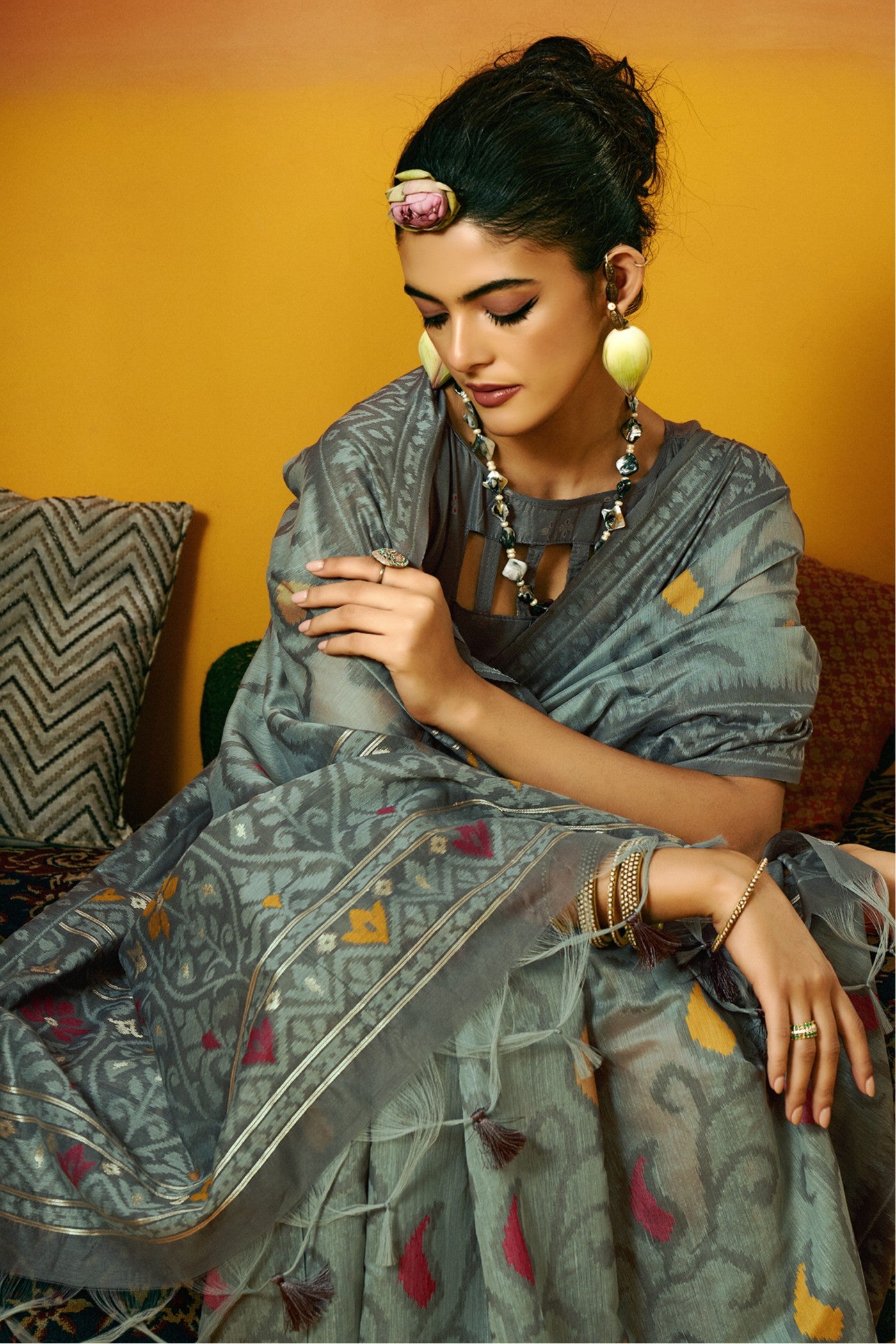
Smokey Green Handloom Jamdani Saree
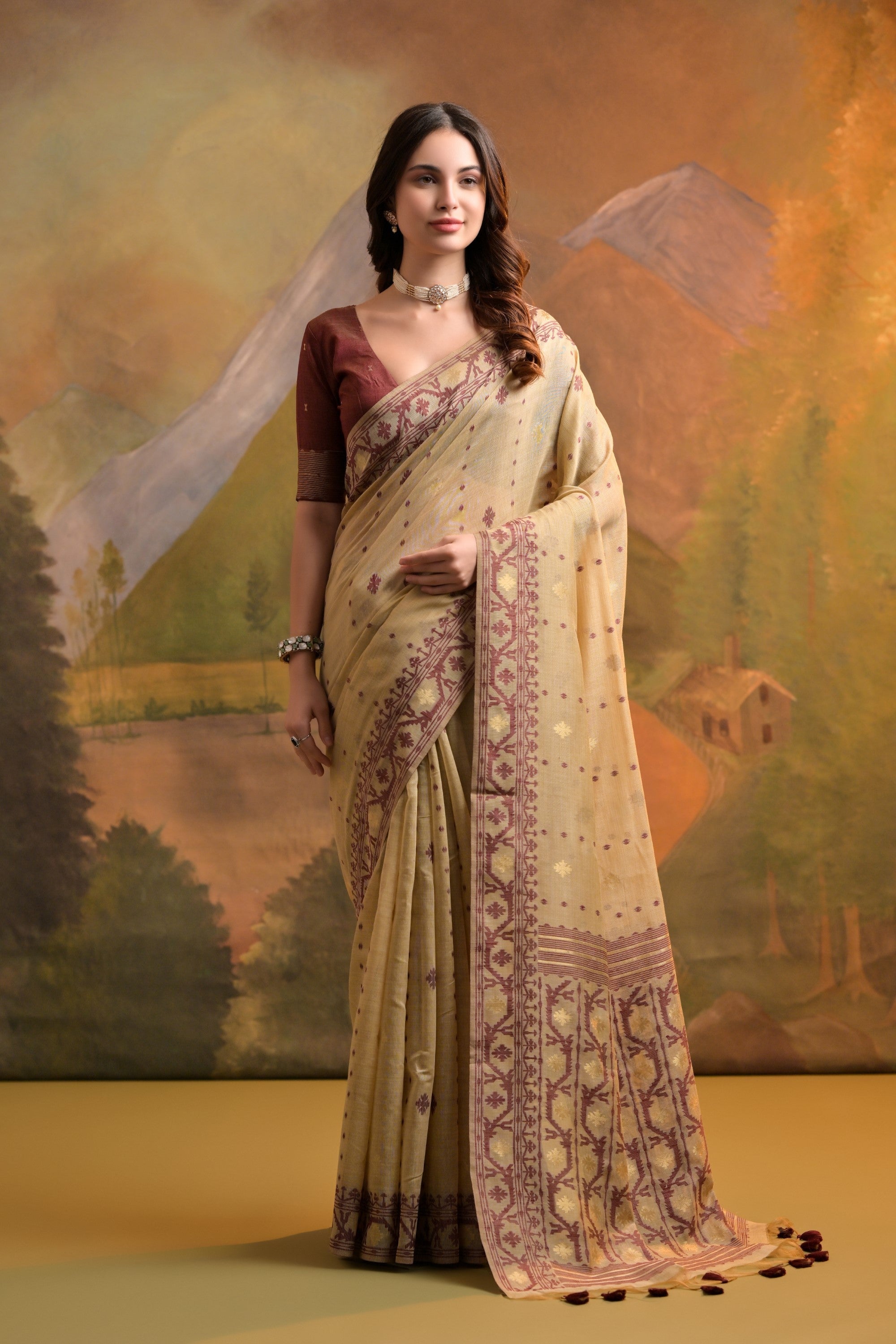
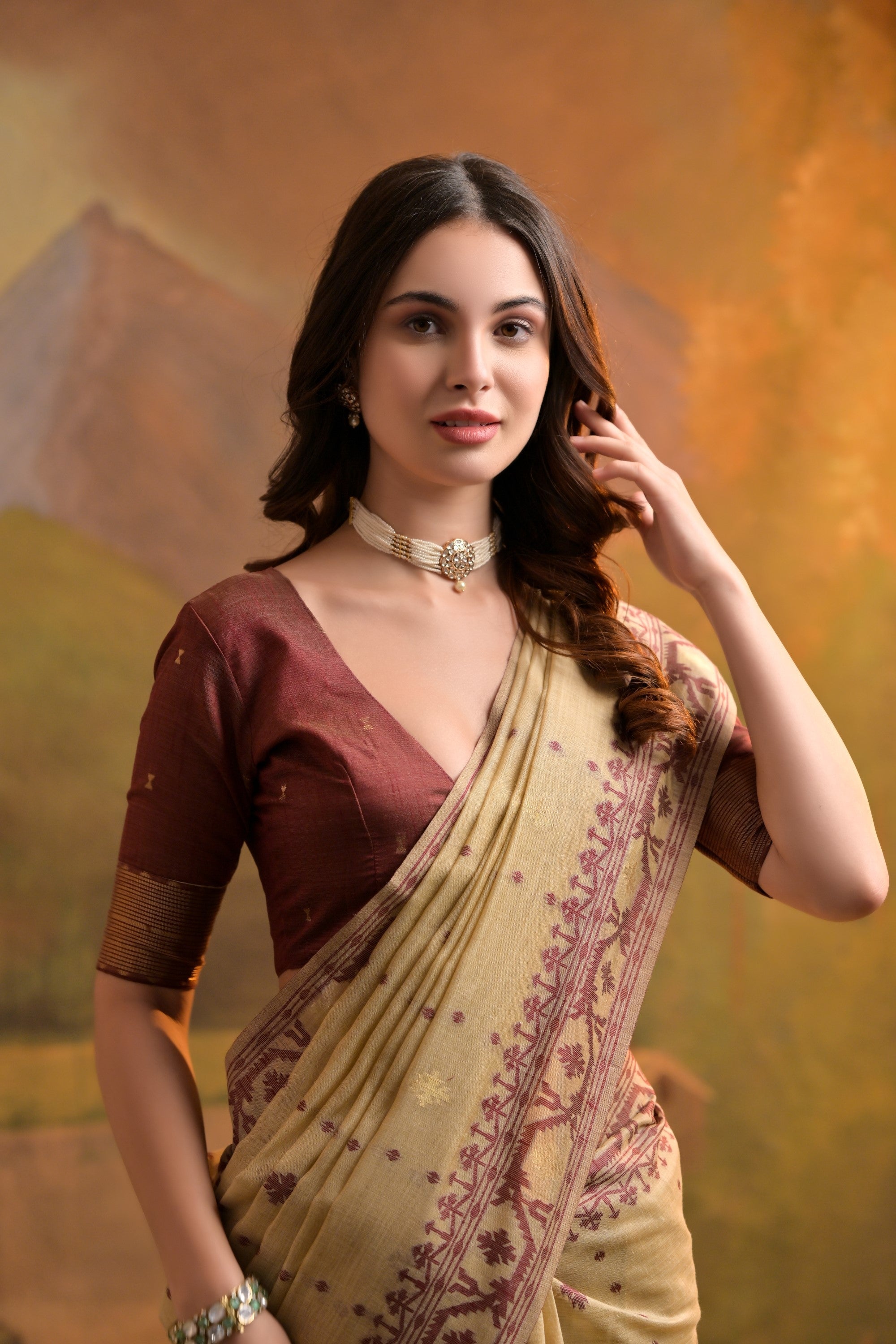
Brandy Cream Jamdani Woven Muga Cotton Saree
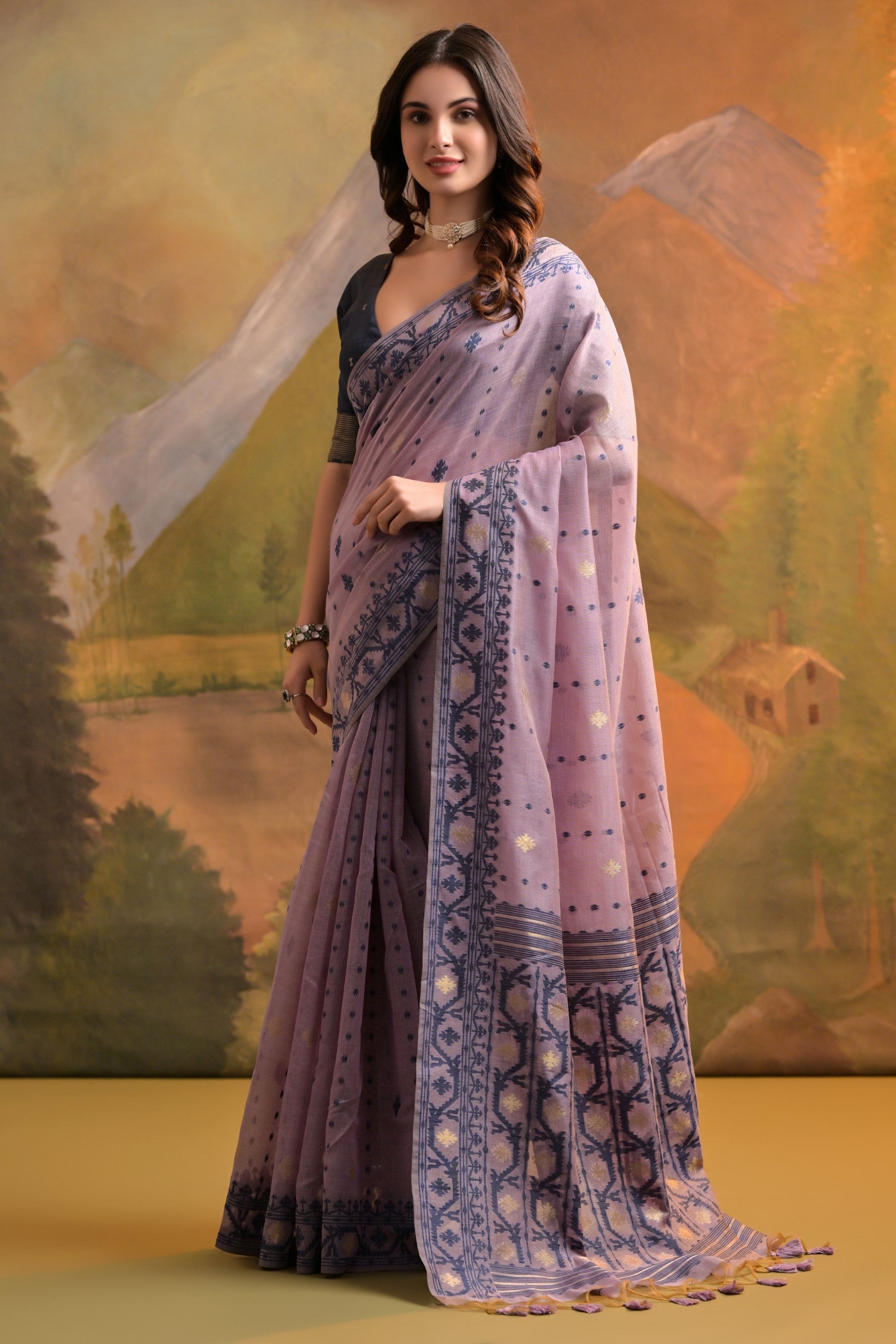
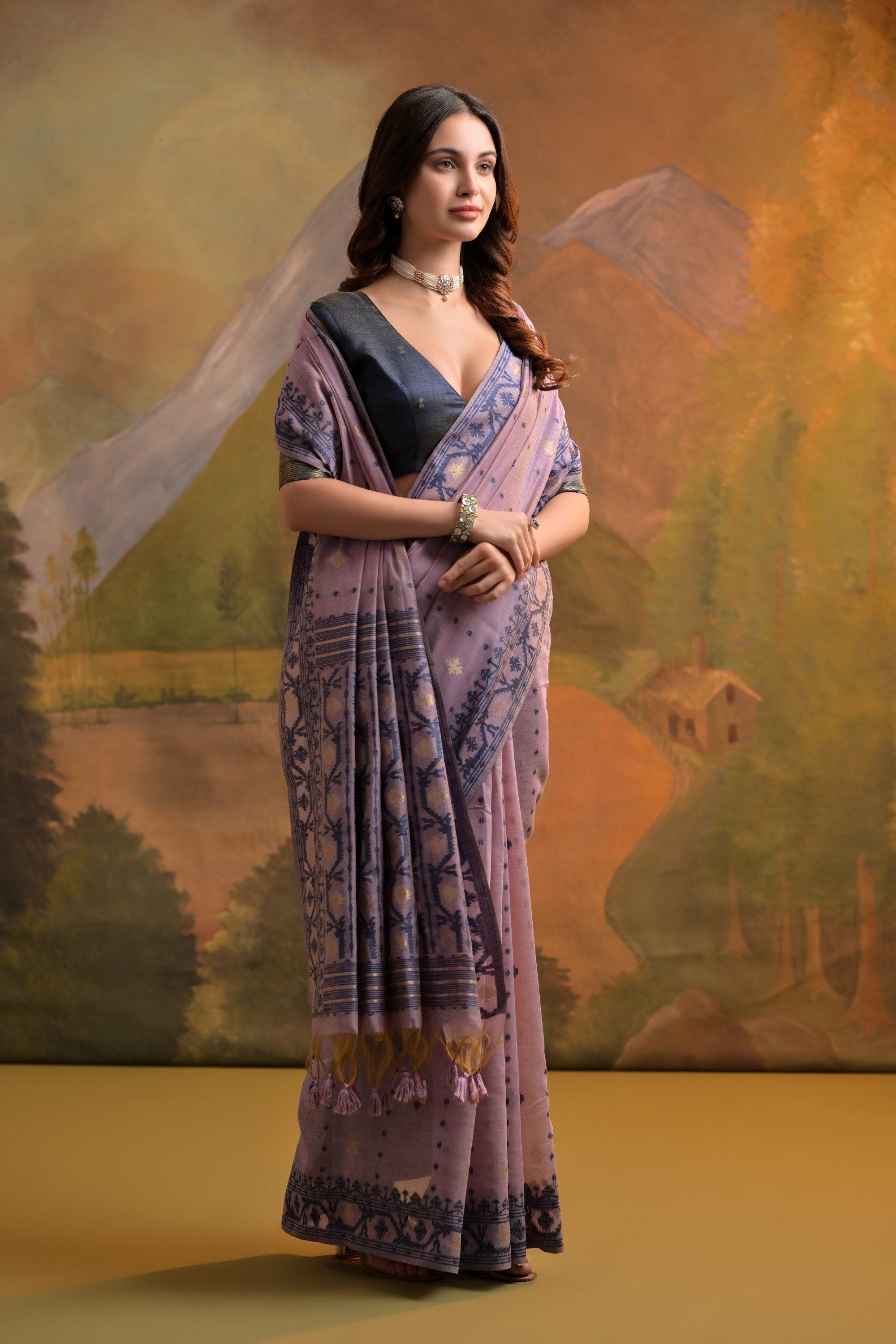
Bouquet Purple Jamdani Woven Muga Cotton Saree
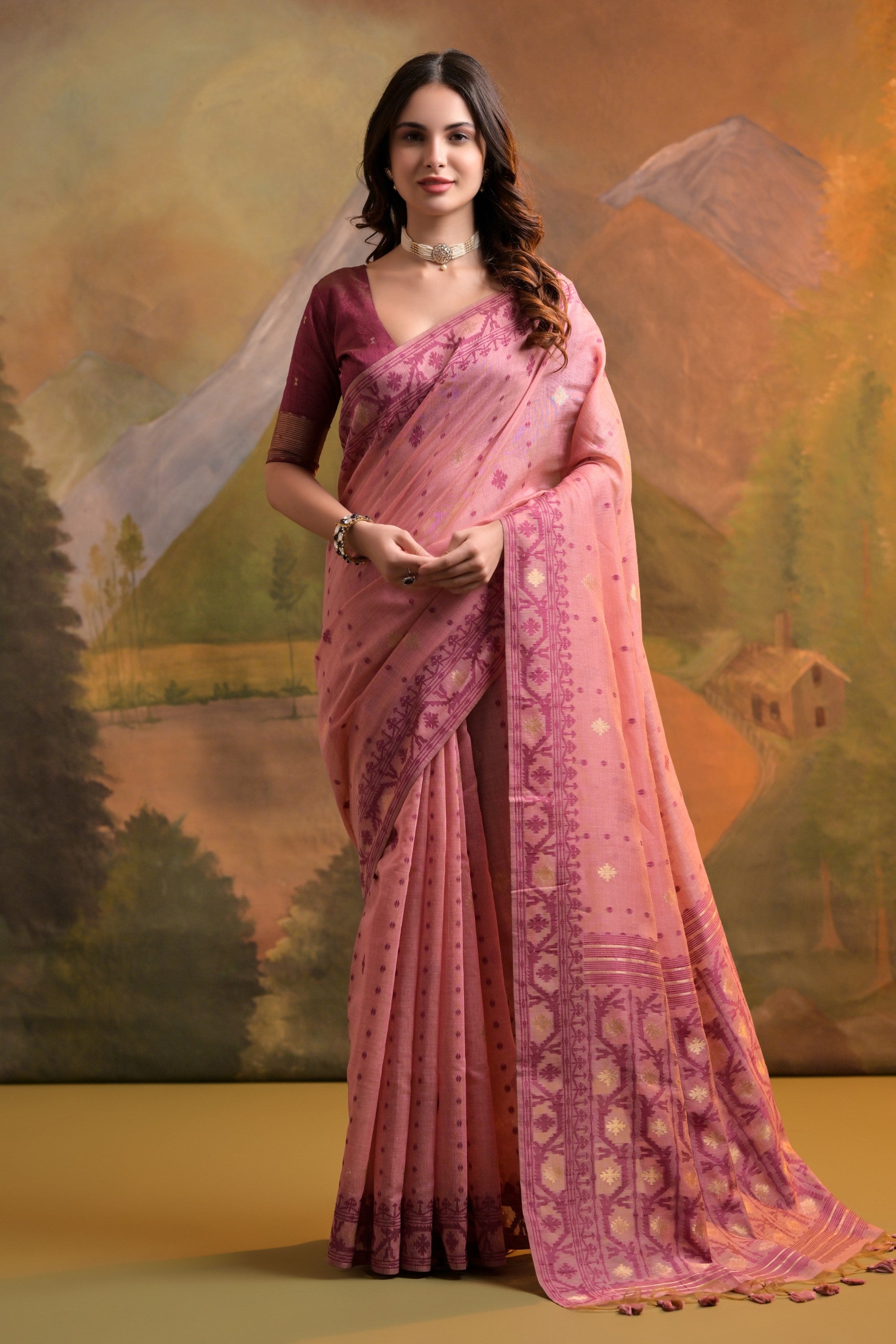
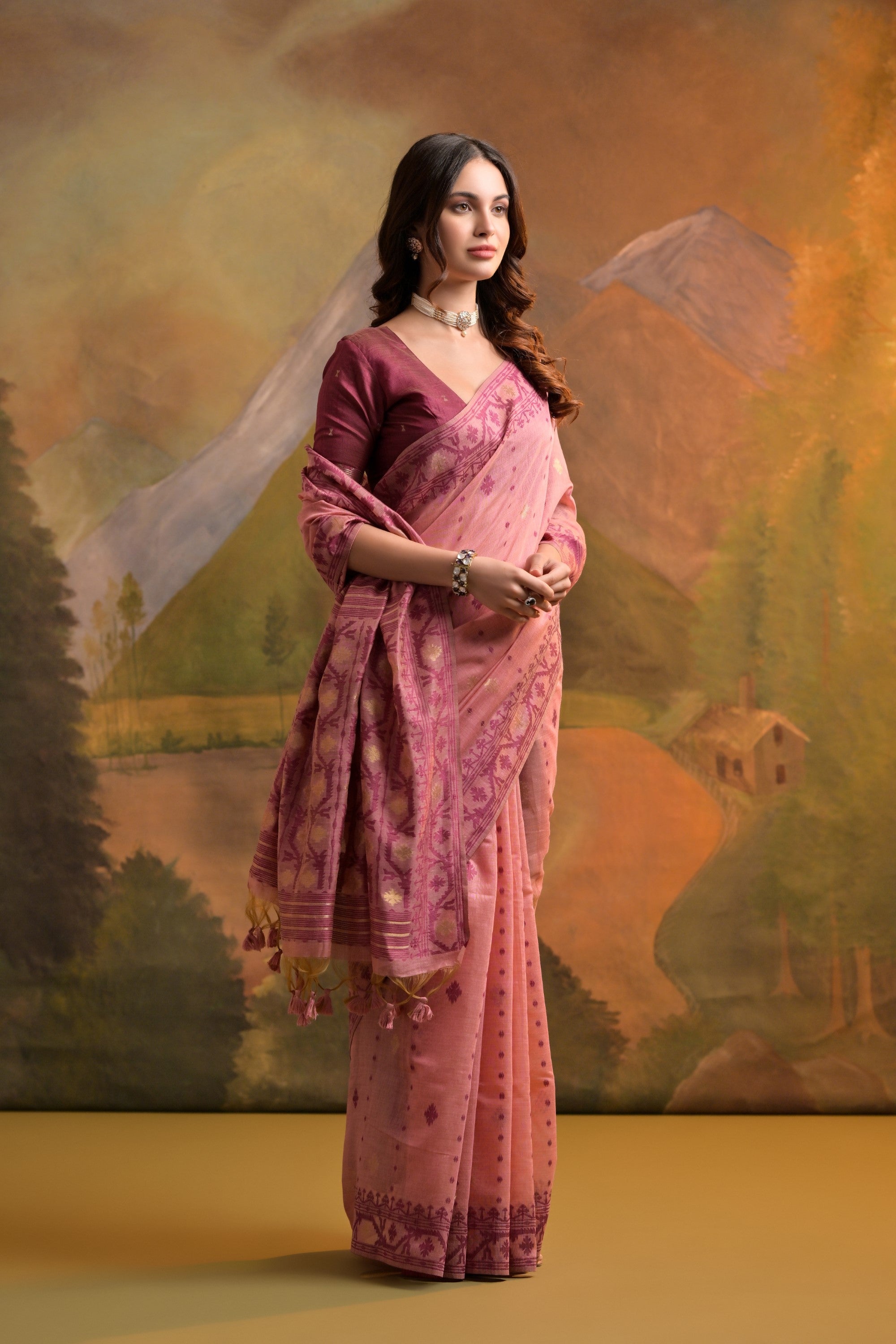
Charm Pink Jamdani Woven Muga Cotton Saree
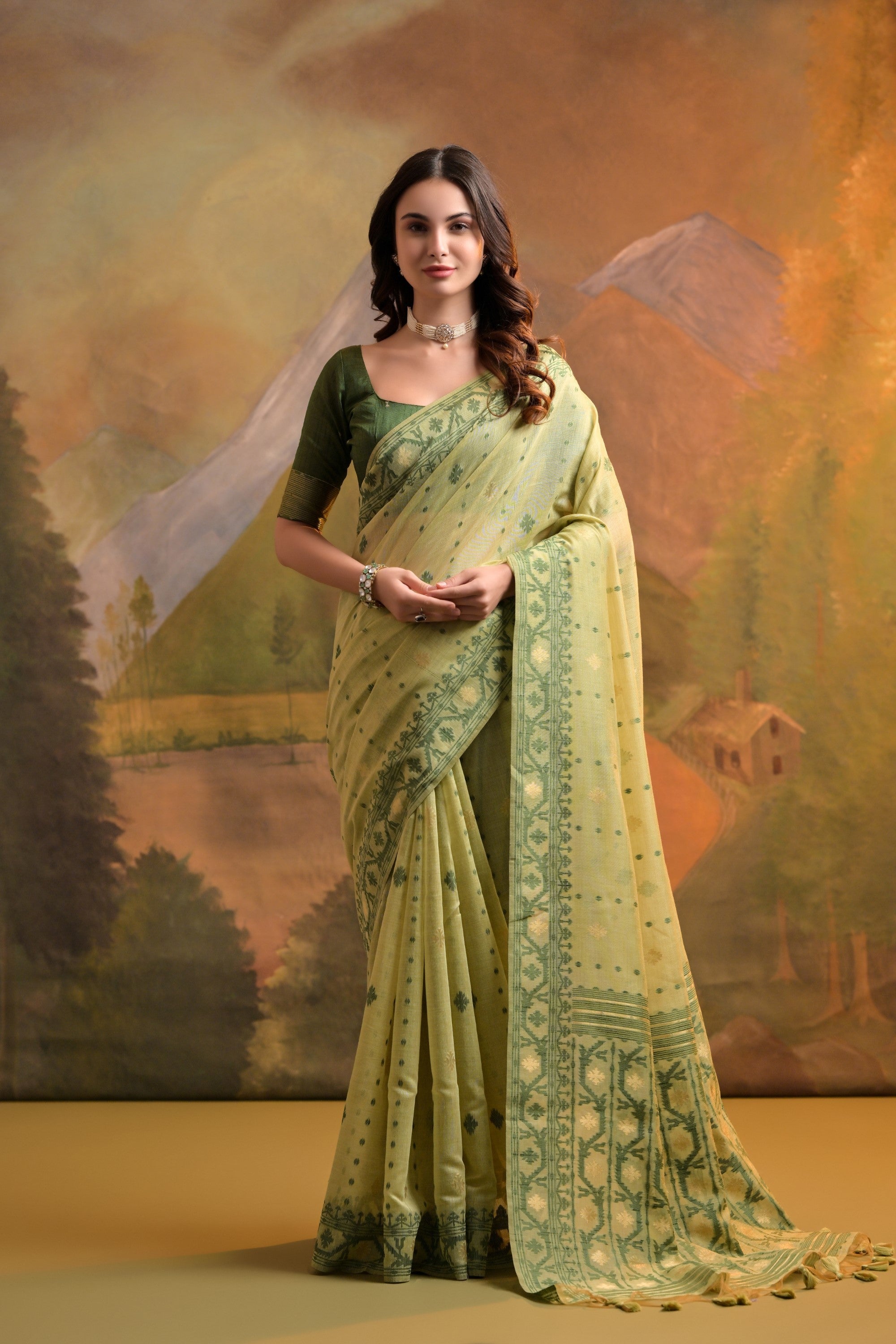
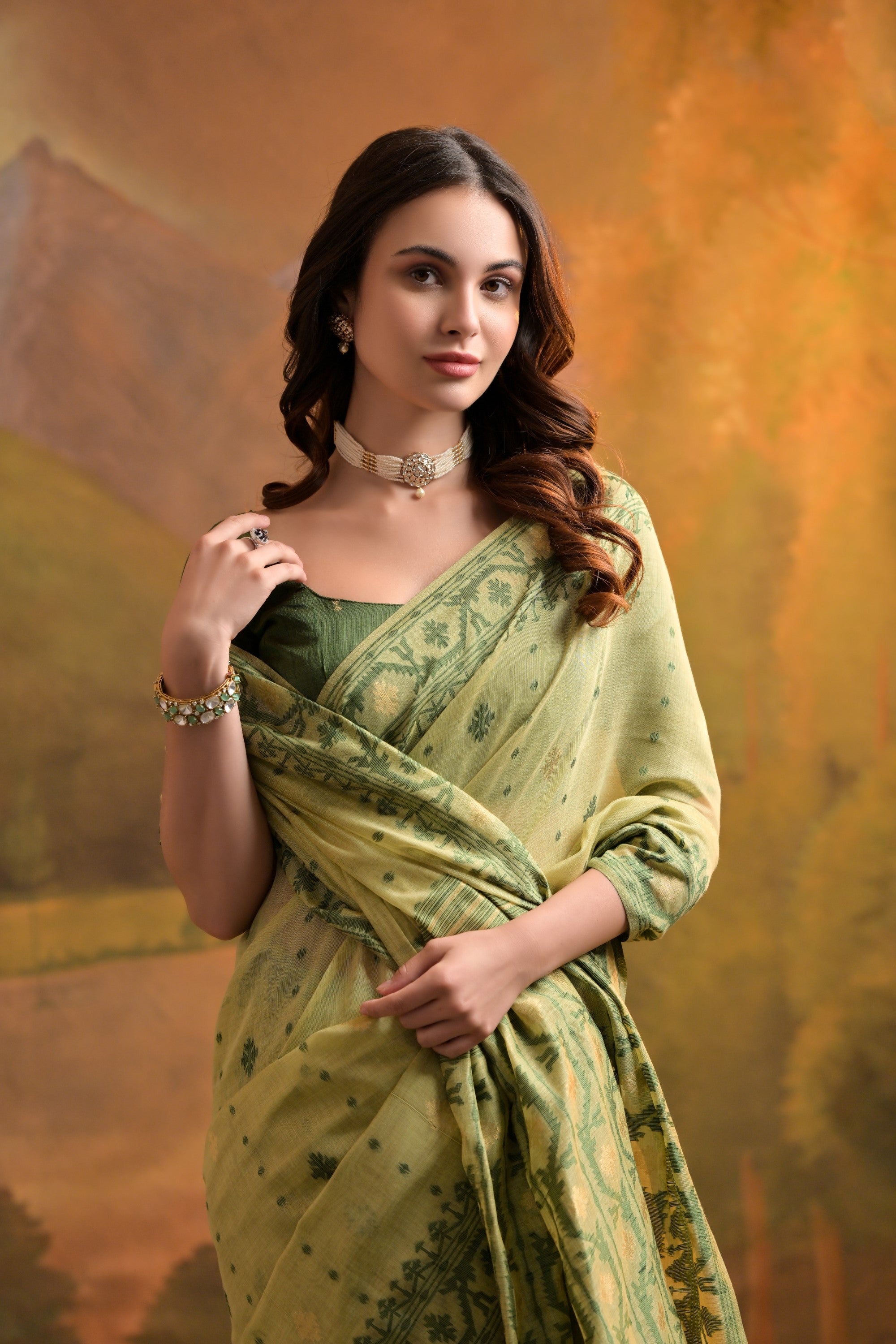
Green Smoke Jamdani Woven Muga Cotton Saree
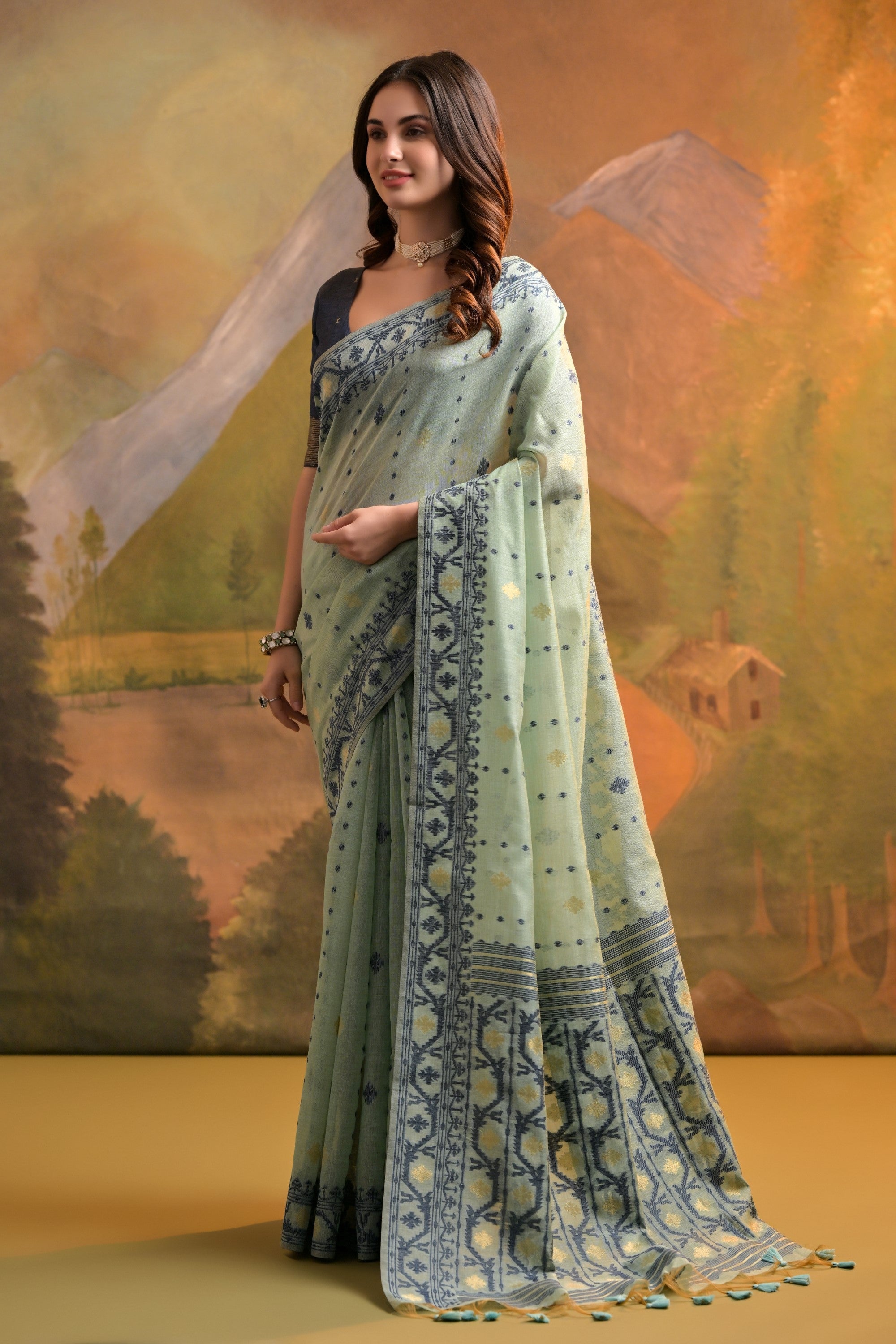
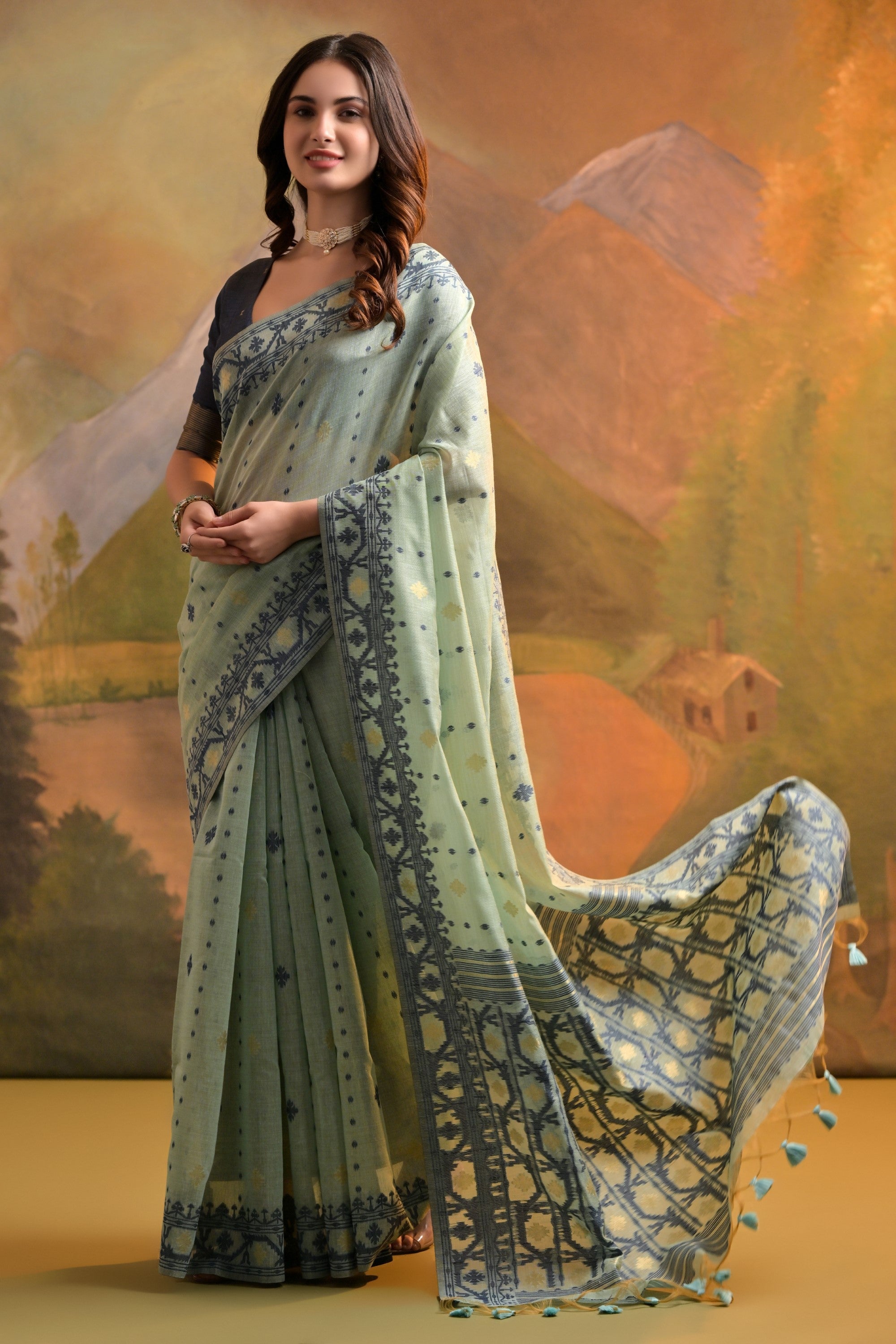
Eagle Green Jamdani Woven Muga Cotton Saree
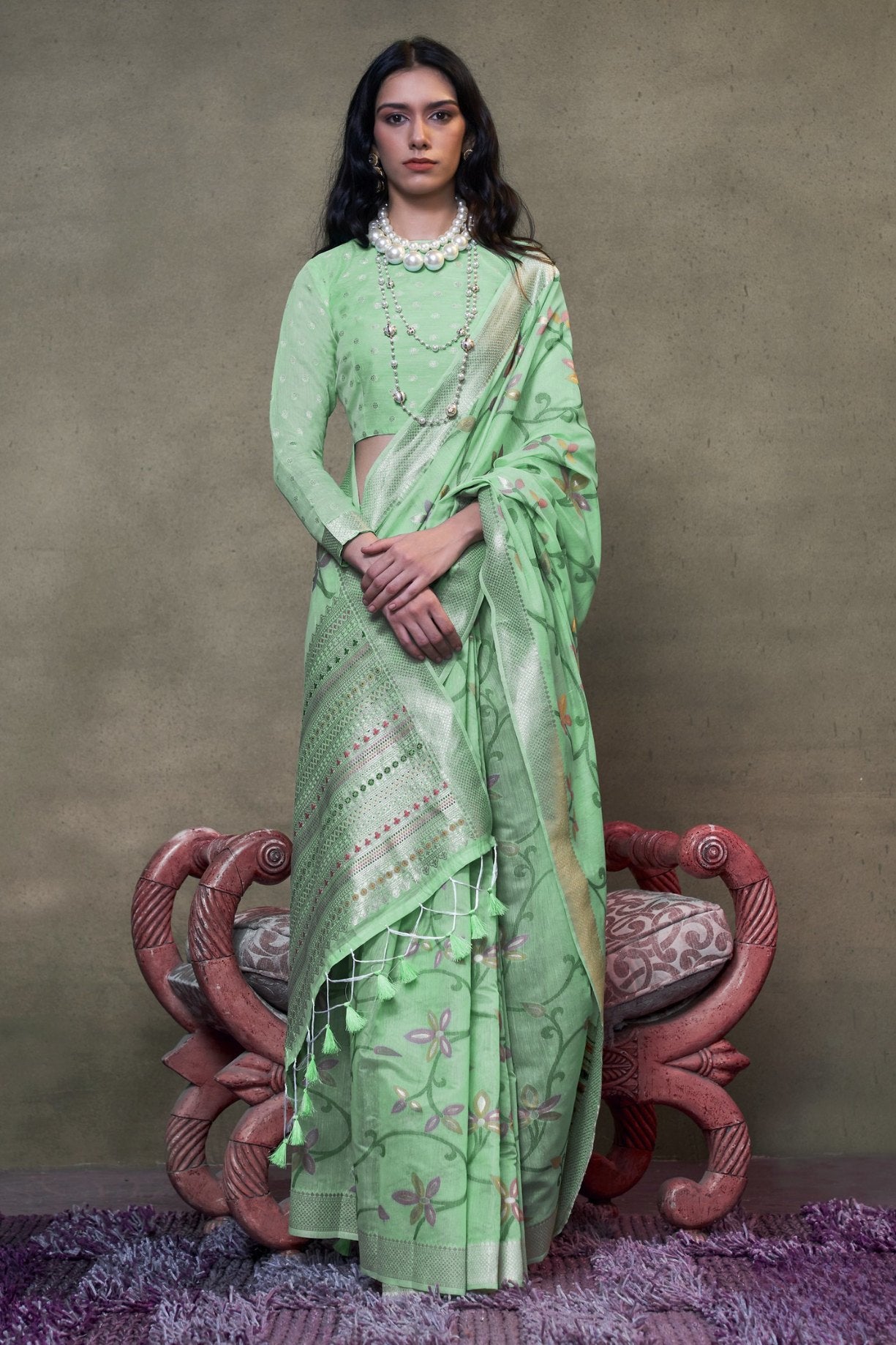
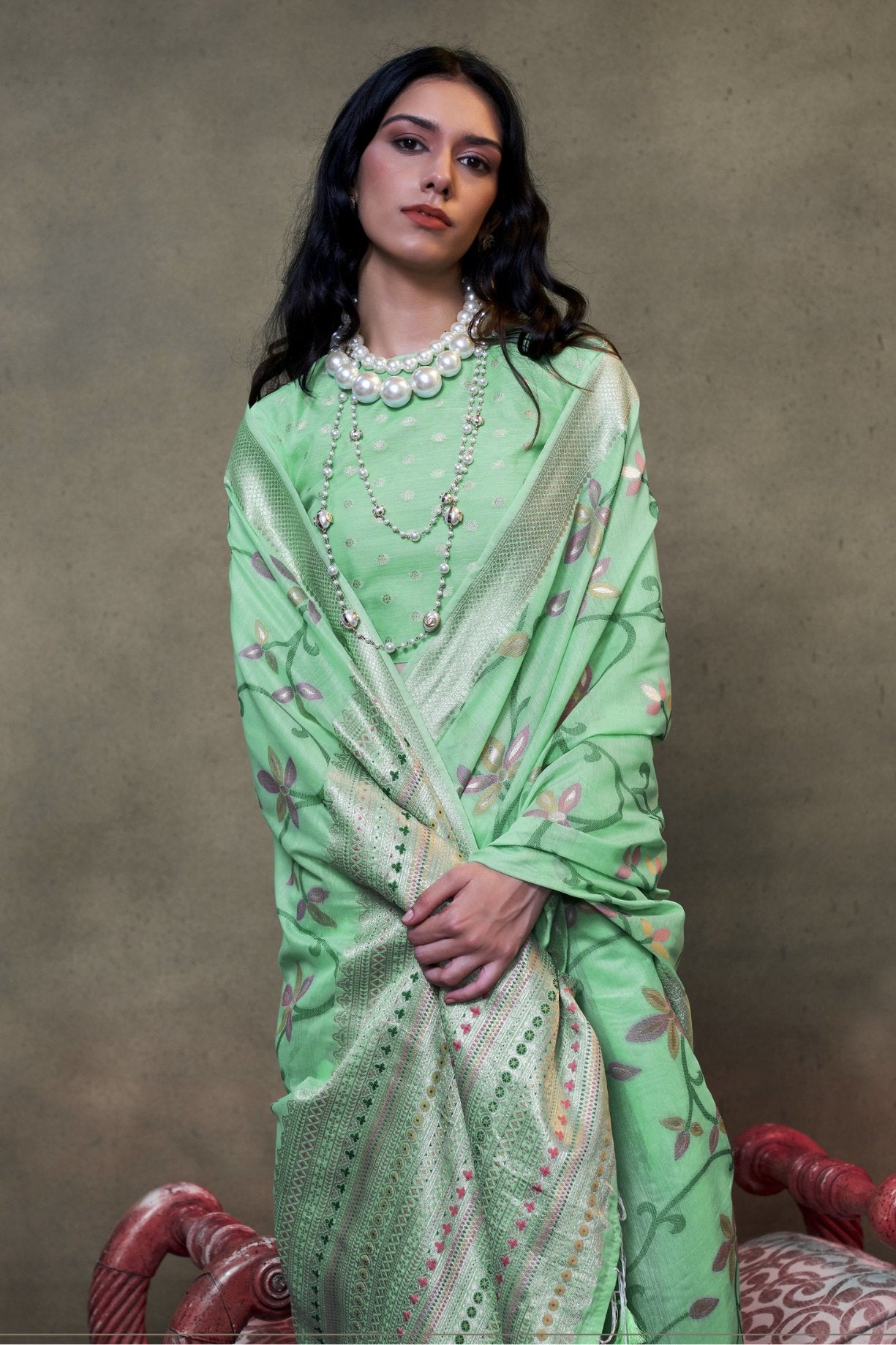
Pista Green Handloom Jamdani Saree
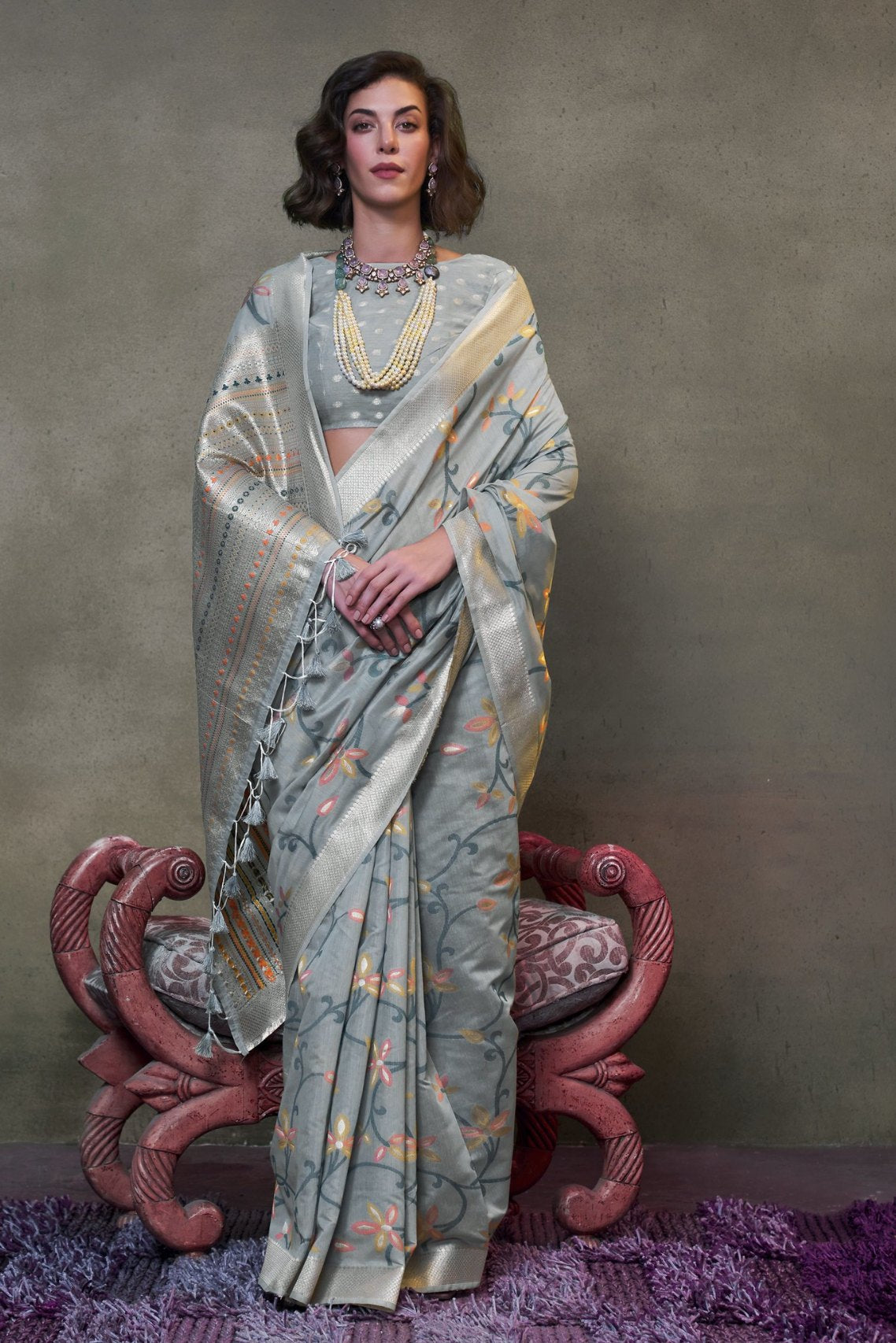
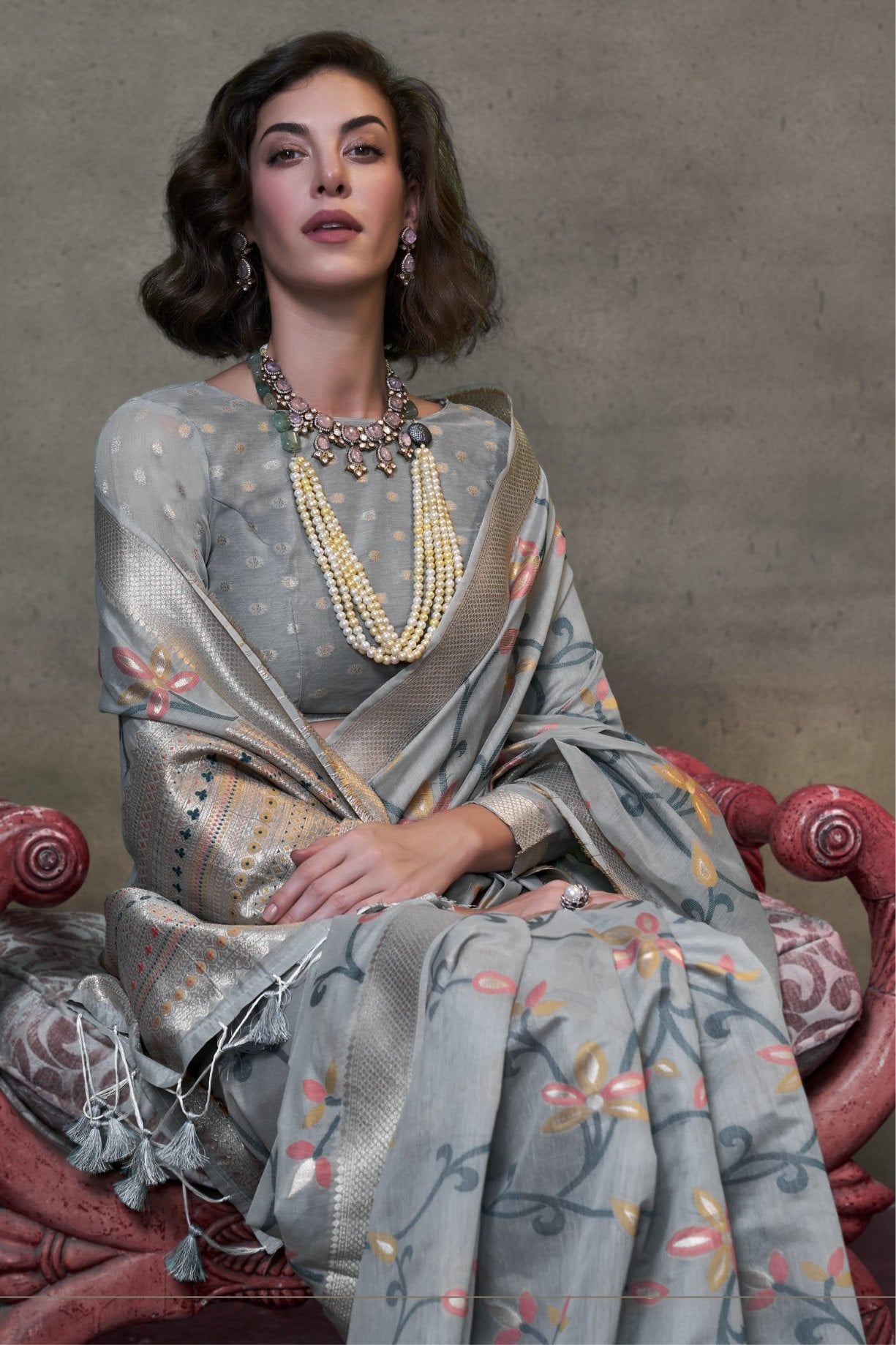
Sirocco Grey Handloom Jamdani Saree
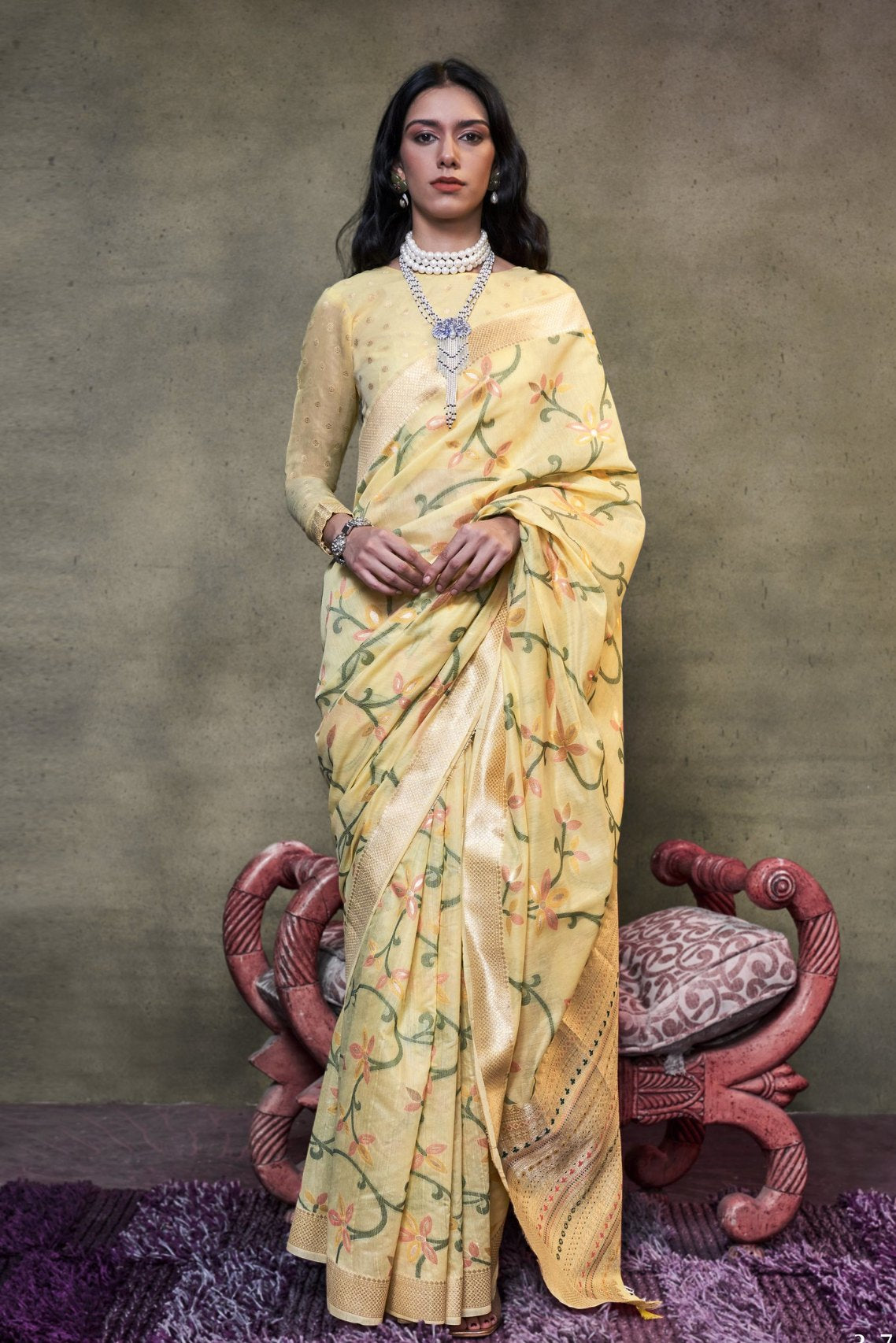
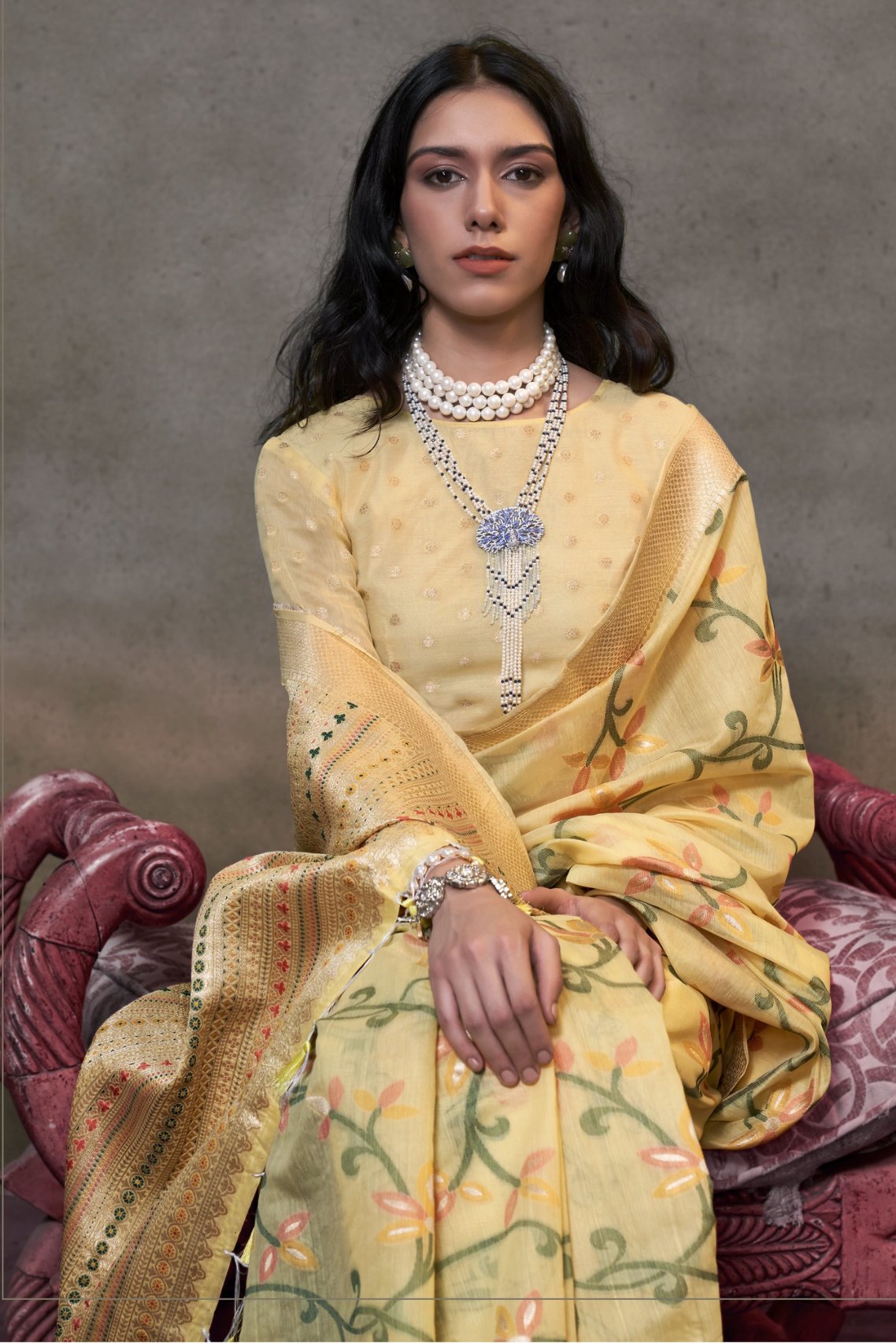
Sapling Yellow Handloom Jamdani Saree
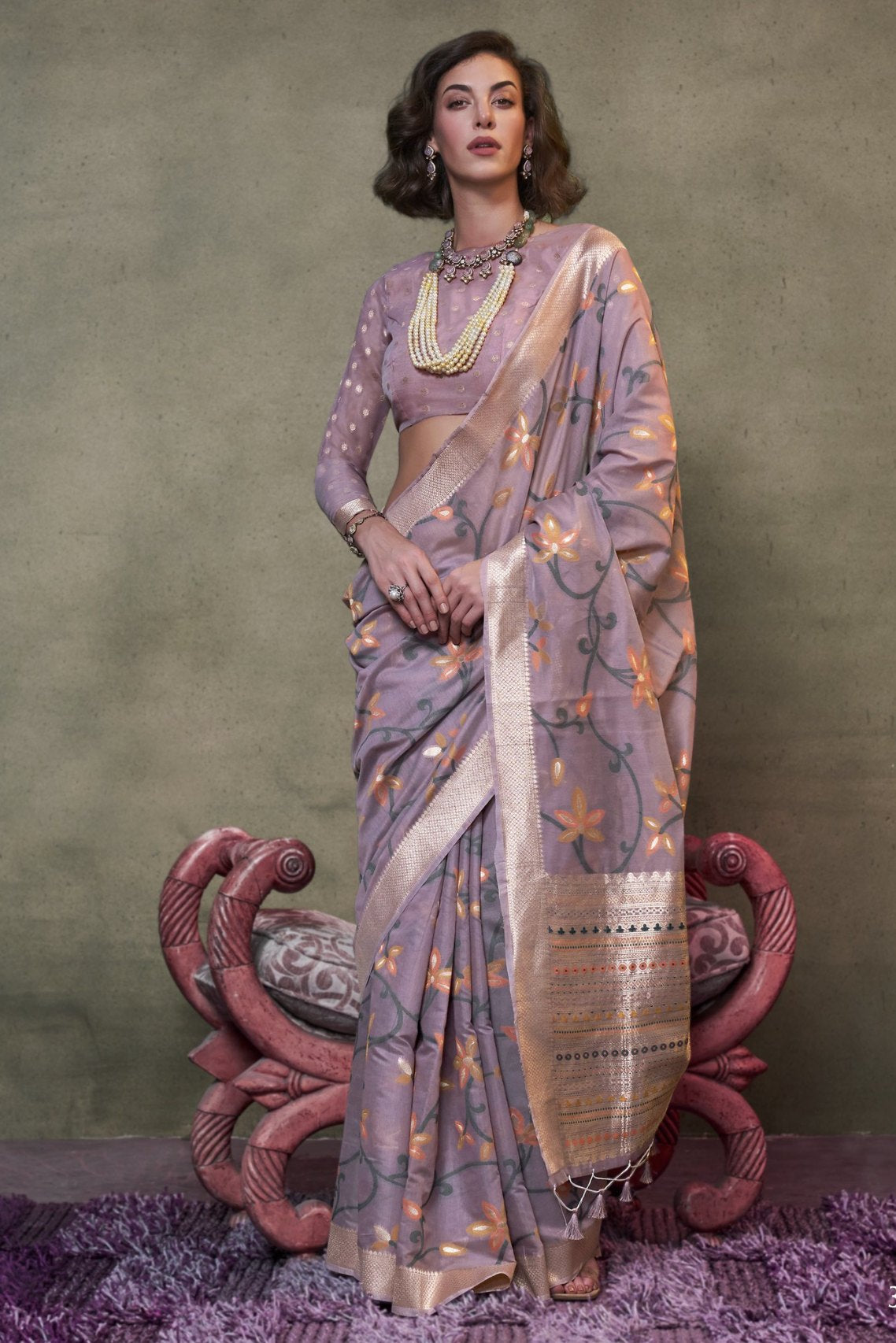
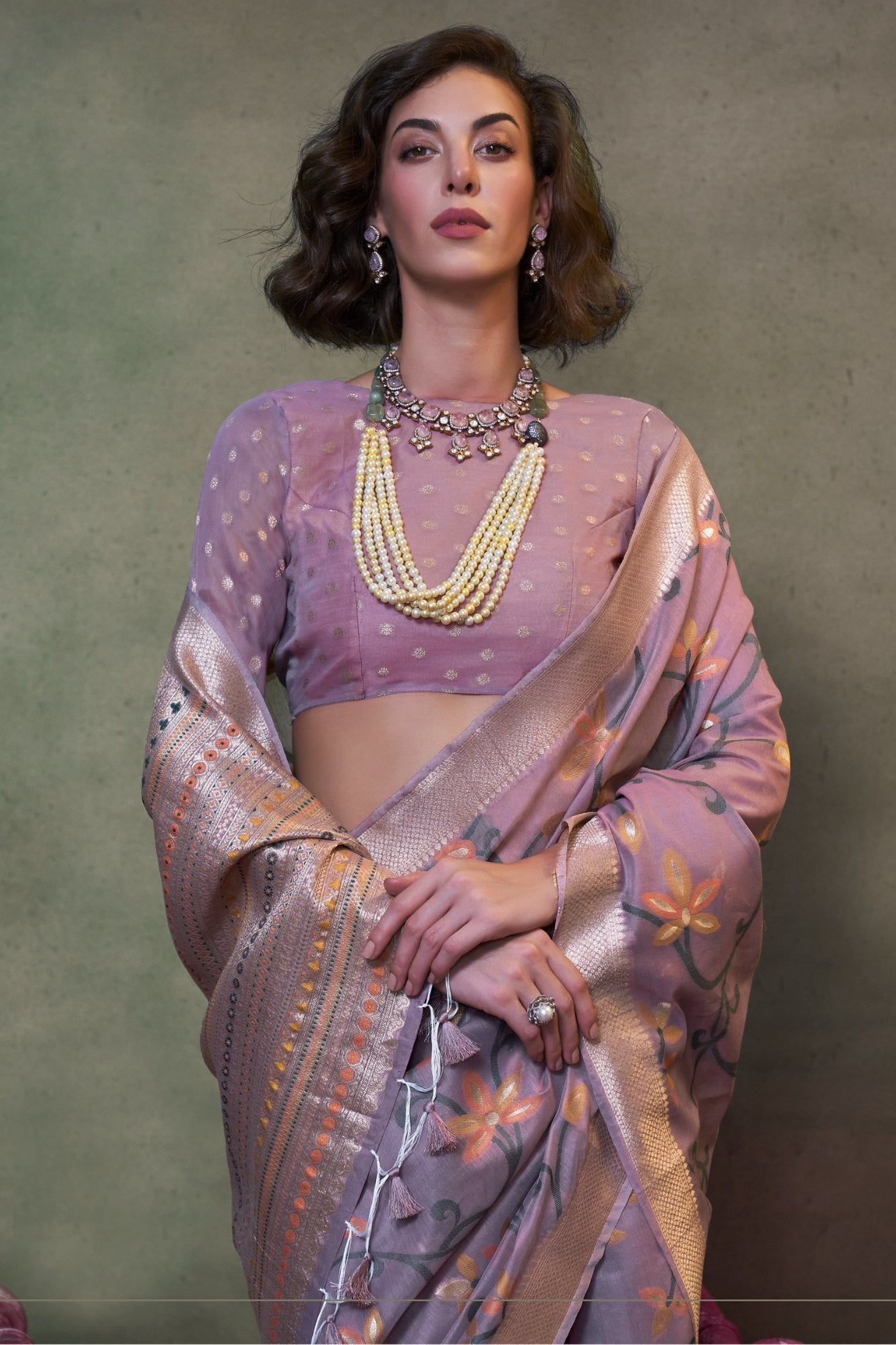
Mountbatten Purple Handloom Jamdani Saree
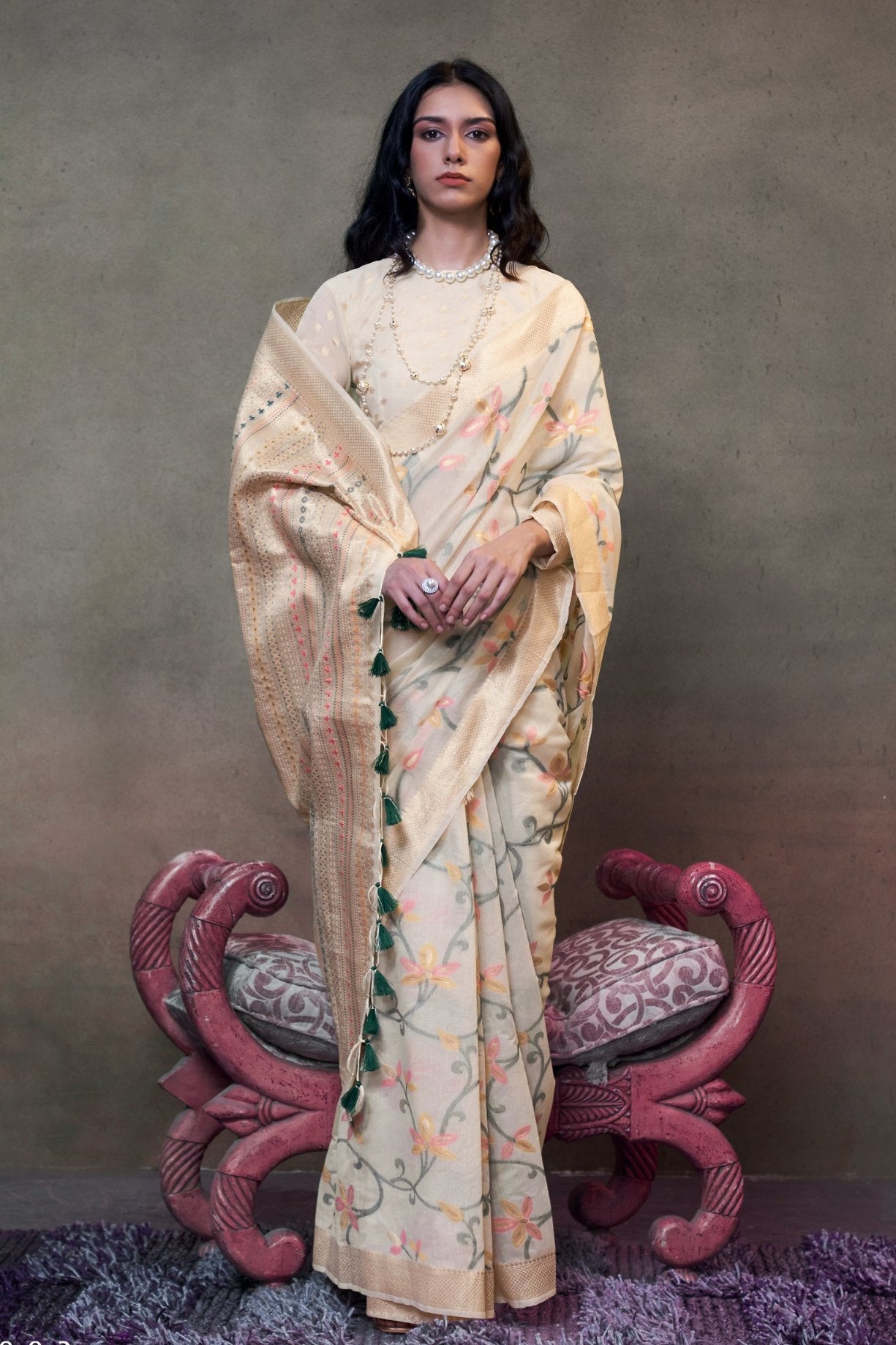
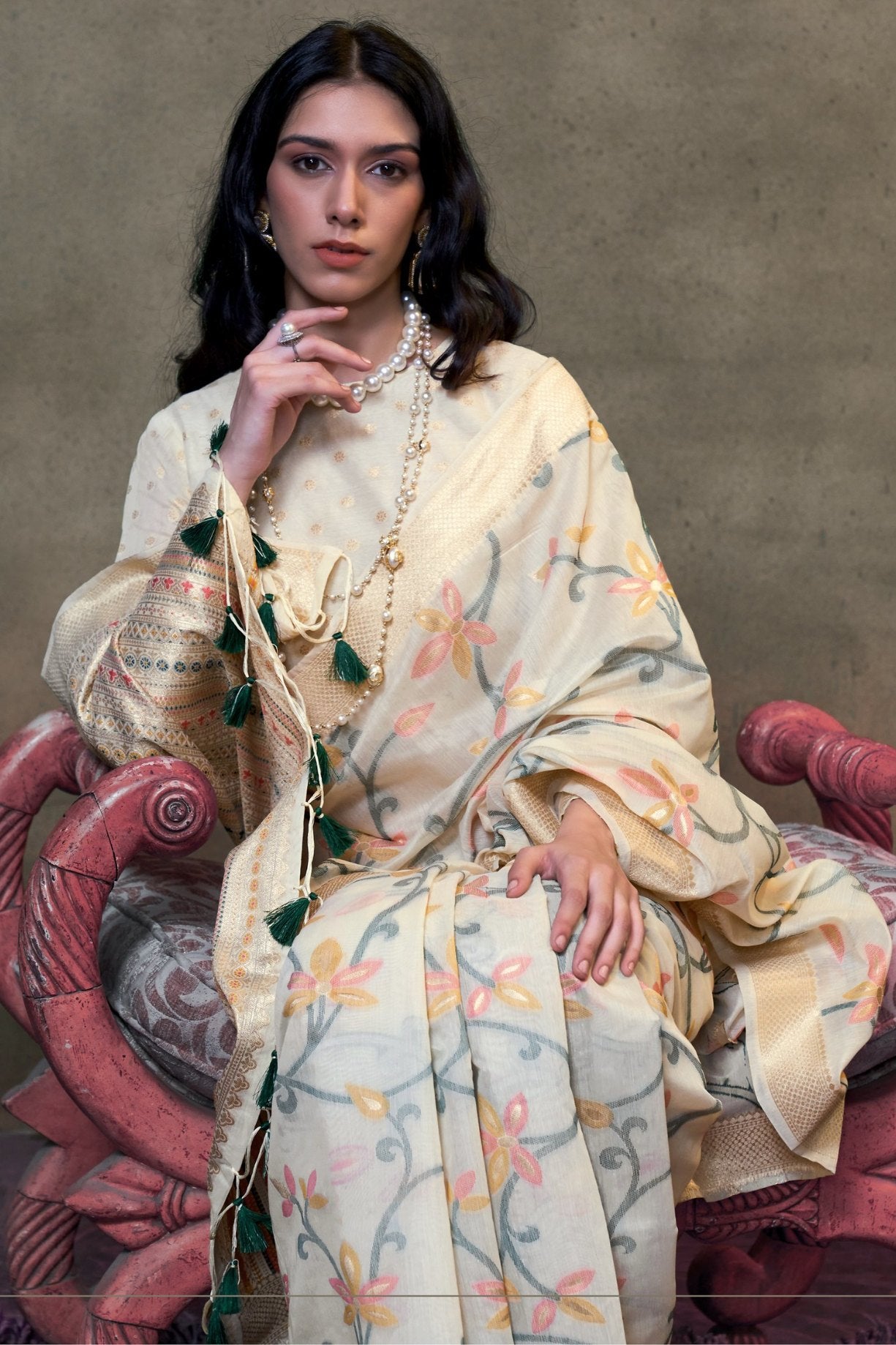
Champagne Cream Handloom Jamdani Saree
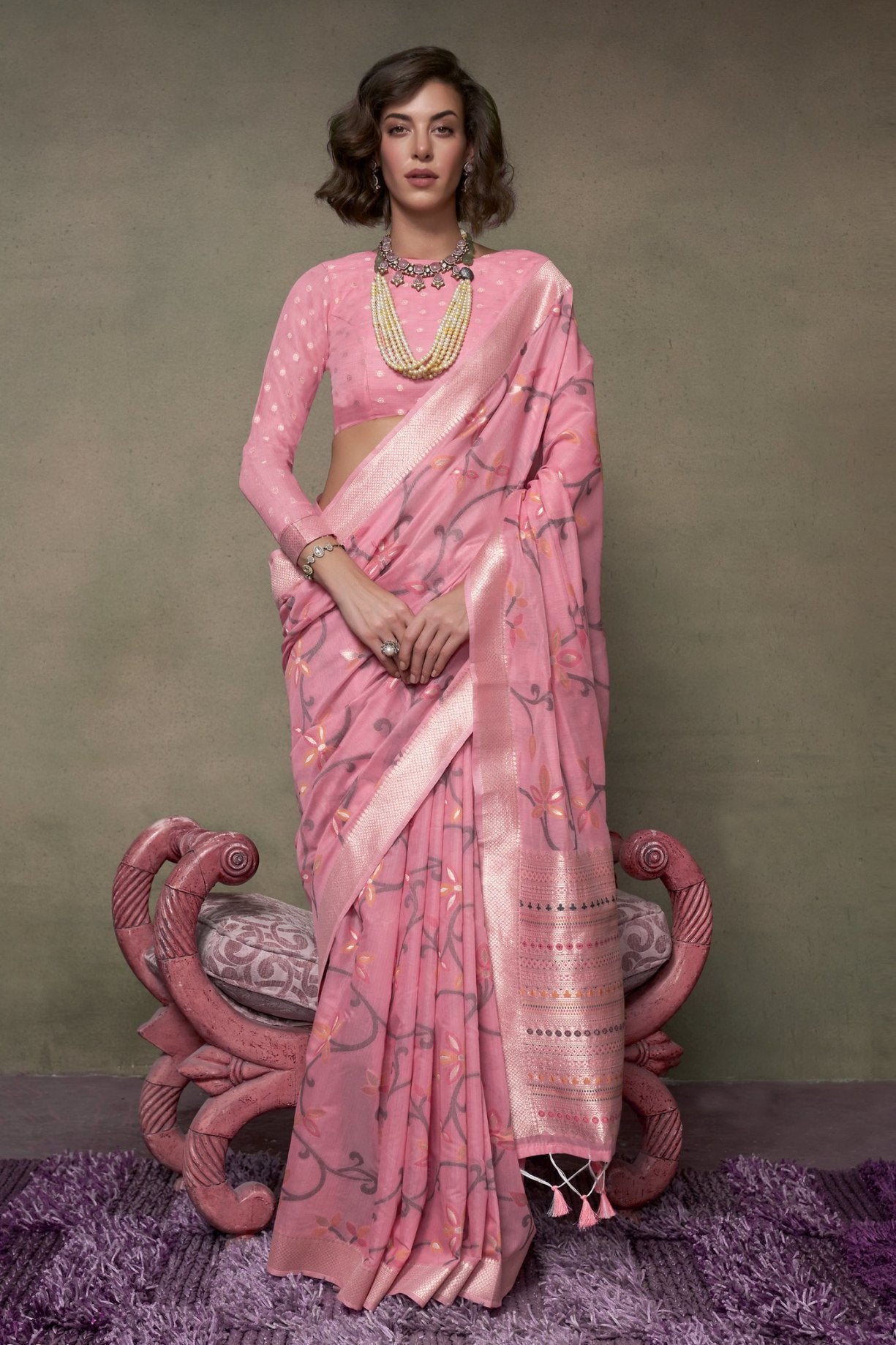
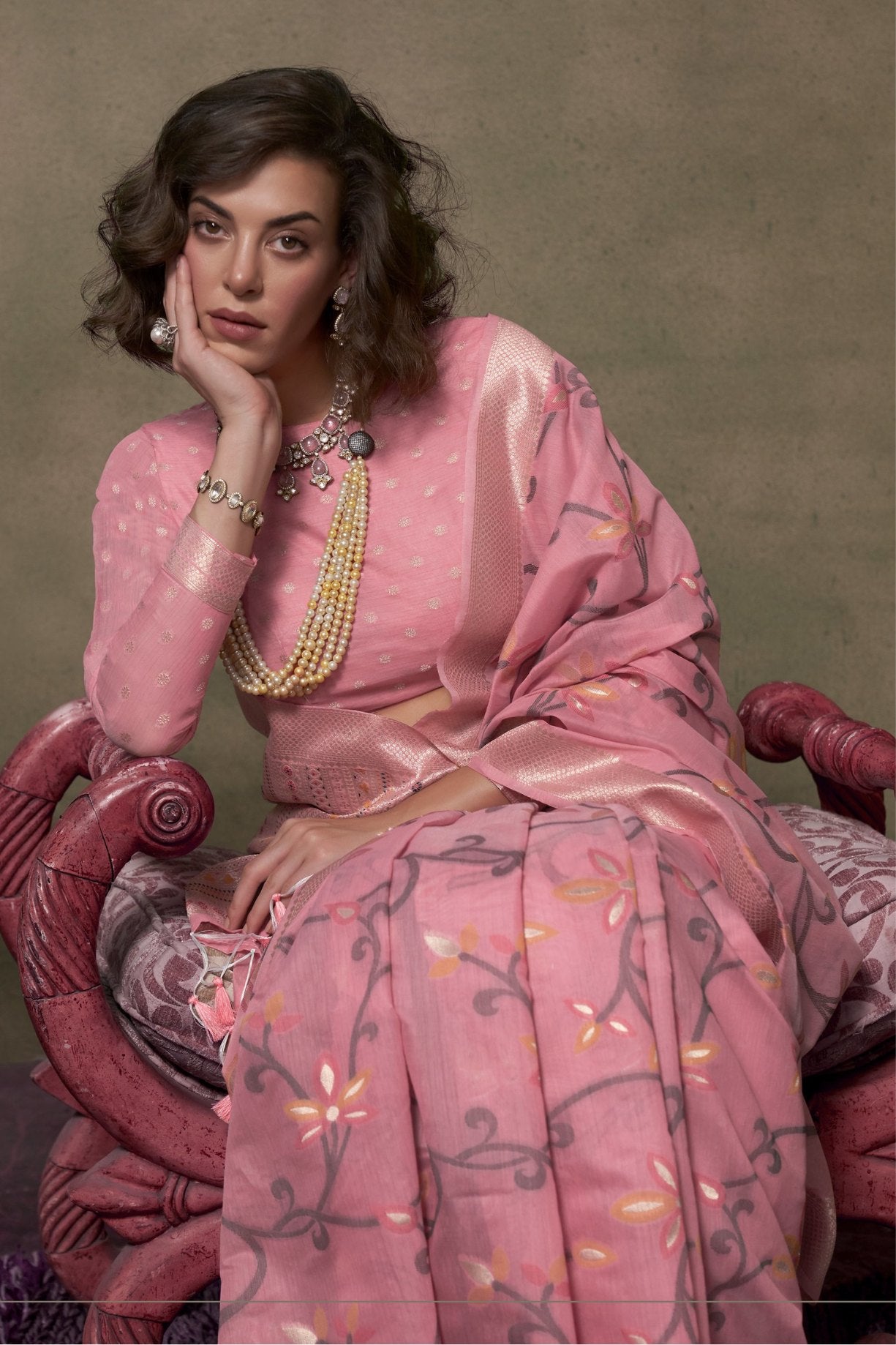
Old Rose Pink Handloom Jamdani Saree
Frequently Asked Questions — Jamdani Sarees
What is a Jamdani saree, and how do I know it is handwoven?
Jamdani is one of the finest and most labour-intensive handloom traditions, in which the motifs are woven into the fabric by hand using a supplementary weft — the weaver adds each pattern thread individually as the base cloth is woven, so the design is part of the fabric itself, never printed or embroidered on top. This is why genuine Jamdani has a distinctive quality: the motifs appear to float on a sheer ground, and the reverse shows the loose supplementary threads that mark true hand weaving. A powerloom imitation has a flat, machine-perfect reverse and identical repeats. Jamdani carries GI recognition and takes considerable loom time even for a simple piece. At MySilkLove every Jamdani listing states its exact fabric — cotton, silk or muga-cotton — so you always know what you are buying, and each piece is sourced directly from weavers, backed by free worldwide shipping, COD, easy 7-day returns and WhatsApp assistance.
Why do Jamdani saree prices vary, and what do they cost at MySilkLove?
Jamdani pricing reflects the extraordinary hand labour: the density of the supplementary-weft motifs, the fineness of the base yarn, and the fibre (cotton, silk or muga) all drive the cost, and a densely patterned piece can take weeks on the loom. At MySilkLove the Jamdani collection currently in stock is priced around ₹5,600 to ₹6,000 across around 23 active pieces, spanning handloom cotton and muga-cotton Jamdani, each honestly labelled by fabric. Those are regular list prices; seasonal offers apply automatically at checkout and often bring the amount you pay lower. Buying directly from weavers keeps the price fair with no middleman markup, and every order is sourced directly from weavers, backed by free worldwide shipping, COD, easy 7-day returns and WhatsApp assistance.
How do I care for a Jamdani saree?
Jamdani's fine, hand-woven motifs deserve gentle care. Dry cleaning is safest, especially for silk and muga Jamdani; a plain cotton Jamdani can be hand washed very gently in cold water with a mild detergent, never scrubbed or wrung, then dried flat in shade so the sheer ground does not distort. The floating supplementary threads on the reverse can catch, so keep the saree away from rough surfaces and hooks. Iron on a low-to-medium setting from the reverse with a thin cotton cloth in between. Store the saree wrapped in soft muslin rather than plastic so it can breathe, tuck in neem leaves against insects, and refold along different lines every few months so creases do not weaken the fine weave. Every Jamdani from MySilkLove ships with care guidance, and our team can advise over WhatsApp.
When can I wear a Jamdani saree, and how do I style it?
Jamdani's understated, hand-woven elegance suits festive occasions, cultural events, daytime weddings and celebrations where refined craft is appreciated, while lighter cotton Jamdani is graceful for daytime and office-festive wear. The floating motifs are the star, so styling stays simple: a plain or subtly woven blouse in a tone from the motifs, delicate gold or oxidised silver jewellery, and a neat drape that lets the patterned pallu show. A crisp cotton Jamdani holds elegant pleats; a silk or muga Jamdani drapes with a soft sheen. Fresh flowers or a simple bun complete a graceful, rooted look. Because the beauty is in the weave, one or two refined jewellery pieces are plenty. Many Jamdani sarees at MySilkLove include a coordinating blouse piece, and our team can suggest styling for your saree over WhatsApp.