
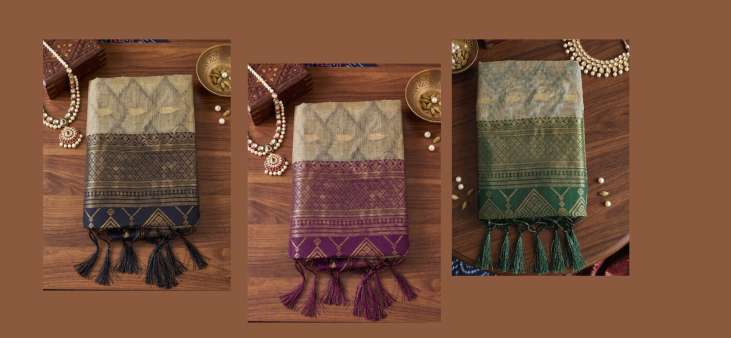
Banarasi Saree Prices in the UK — What You Should Actually Pay (2026 Guide)
A genuine Banarasi silk saree delivered to the UK typically costs between £40 and £350, depending on the silk type and how much real zari (metallic thread) is woven into it. Lightweight Banarasi georgette and chiffon pieces sit at the lower end; pure Katan silk with dense brocade work sits at the top. If you are buying from India, prices display in pounds on the global store and shipping worldwide is free — so the number you see is close to the number you actually pay, with import VAT being the main thing to budget for separately.
Below is a realistic guide to what UK-based buyers should expect to pay in 2026, how to tell whether a price is fair, and how to avoid the two traps NRIs fall into most: overpaying a UK boutique markup, and underpaying for something that turns out to be polyester.

What drives the price of a Banarasi saree?
The single biggest price lever is the base fabric. A "Banarasi" saree refers to the weaving tradition of Varanasi, not one fixed material. Pure Katan silk — twisted, degummed mulberry silk woven on a handloom — is the heaviest and most expensive base. Georgette and chiffon Banarasis use a lighter silk or silk-blend ground, drape more softly, and cost less because they use less yarn and weave faster.
The second lever is the zari. Traditional Banarasi brocade uses gold or silver-toned metallic thread, and the proportion of real versus tested (electroplated) zari changes the price sharply. A heavily brocaded pallu and full-body buti (motif) work means more hours on the loom and more thread — a saree that is 60–70% covered in zari can take a weaver several weeks to complete. Sparse border-and-pallu designs are quicker and cheaper.
The third is the weave technique. The kadhua technique, where each motif is woven separately so there are no loose floating threads on the reverse, takes far longer than the fekua (cutwork) method where threads float across the back and are trimmed. Kadhua pieces command a premium and are a hallmark of serious handloom work.

Banarasi saree price bands for UK buyers (2026)
The table below reflects typical price-in-pounds ranges for authentic Banarasi sarees bought directly from India, before any UK import VAT. These are guide figures, not fixed quotes — real prices move with silk rates and the amount of work in each piece.
| Price band (GBP) | What you typically get | Best for |
|---|---|---|
| £40 – £80 | Banarasi georgette or chiffon, tested zari, lighter motif work. Easy to drape, travel-friendly. | Day functions, office Diwali, first Banarasi |
| £80 – £160 | Soft silk or blended Katan, fuller zari coverage, defined border and pallu. | Engagements, receptions, festival evenings |
| £160 – £300 | Pure Katan silk handloom, kadhua or dense brocade, substantial zari. | Weddings, milestone occasions, heirloom buys |
| £300+ | Heavy bridal Katan, intricate jangla or shikargah patterns, near-full zari. | Bridal trousseau, gifting |
For context, a comparable pure-Katan handloom Banarasi in a UK ethnic-wear boutique often carries a 2–4x markup over the India direct price, largely because the boutique has already paid import duty, shipping and retail overhead. Buying direct from India is usually the cheaper route for a like-for-like piece, even after you account for VAT.

How to tell if a UK Banarasi price is fair
If a "pure silk Banarasi" is being sold for under about £30 with heavy all-over shine, treat it with caution — that price point usually means an art-silk (polyester) or heavily blended fabric, not pure Katan. Genuine handloom silk has irregularities in the weave, a slightly muted sheen rather than a plastic gloss, and a real weight to it.
Three quick authenticity checks worth knowing:
First, look for the Silk Mark — a certification by the Silk Mark Organisation of India confirming the saree is pure natural silk. Reputable sellers will say whether a piece is Silk Mark certified. Second, ask about the zari composition; honest listings distinguish "real/half-fine zari" from "tested zari," and the price should reflect it. Third, check the reverse of the fabric in photos — on kadhua handloom work the motifs are clean on the back with no long floating threads, whereas cheap power-loom imitations show messy floats or a printed-on pattern.

Shipping, VAT and currency for UK orders
When you order from India, the global store shows prices in pounds and ships worldwide free of charge, so there is no separate delivery fee to factor in. What you should budget for is UK import VAT (and potentially a small handling fee from the courier) on the declared value — this is charged by HMRC, not the seller, and applies to most goods entering the UK. Keeping the order value and the VAT line clearly separate in your head is the easiest way to avoid a "the price changed" surprise at delivery.
Where to start browsing
If you are buying your first Banarasi, the georgette and chiffon ranges are forgiving and easy to drape; if you are buying for a wedding, go straight to pure Katan handloom. You can browse the full Banarasi saree collection with prices shown in pounds, see lighter occasion-wear in the organza saree collection, or look at heavier bridal pieces in the Wedding Edit. UK shoppers can also start from the dedicated silk sarees in the UK page, which keeps everything in local currency.

FAQ: Buying Banarasi sarees in the UK
How much should I pay for a real Banarasi silk saree in the UK?
For an authentic piece bought direct from India, budget roughly £80–£160 for a good everyday-festive Katan or soft silk, and £160–£300+ for a wedding-grade pure Katan handloom. Anything claiming "pure silk" under about £30 is almost certainly art silk.
Is it cheaper to buy a Banarasi from India or from a UK shop?
For a like-for-like handloom piece, buying direct from India is usually cheaper because you skip the boutique's retail markup. You will pay UK import VAT, but that is typically far less than the markup on the same saree in a UK store.
Will I be charged customs or VAT when it arrives in the UK?
Most saree orders into the UK attract import VAT on the declared value, collected by the courier on HMRC's behalf. This is separate from the saree price and is not something the seller keeps. Free worldwide shipping means there is no additional delivery charge on top.
How do I know my Banarasi is genuine silk?
Look for Silk Mark certification, ask about the zari (real/half-fine versus tested), and check the reverse of the fabric — clean kadhua motifs with no long floating threads indicate genuine handloom work rather than a power-loom imitation.

Shop Banarasi sarees, priced in pounds
Each collection below opens on our global store, so every figure you see is in GBP. UK import VAT is charged separately by the courier on HMRC's behalf, exactly as described above.
- Everything Banarasi. The full Banarasi silk saree collection spans Katan, satin and soft-silk grounds — sort by price to sit inside whichever band you picked from the table.
- The Katan ground. Banarasi Katan silk sarees are the handloom Katan end of our own range, and they sit nearer the entry bands in that table than the bridal one — useful if you want a real Katan base without the top-band commitment.
- Kadhua and handloom construction. If the reverse-side test in this guide is what you actually care about, the handloom saree collection gathers woven pieces across Banarasi, Kanjivaram and Paithani, so you can compare construction rather than price alone.
- The light, easy-drape end. For the first-Banarasi and day-function tier, chiffon sarees give you the soft fall this guide recommends for travel and warm rooms.
One honest limit: our Banarasi range does not reach the heavy bridal Katan tier at the top of that table. For a jangla or shikargah bridal piece with near-full zari, buy from a GI-registered Varanasi weaver — we would rather say so than point you at the band below it.
%20is%20woven%20into%20it.%20Lightweight%20Banarasi%20ge...)
Leave a comment
This site is protected by hCaptcha and the hCaptcha Privacy Policy and Terms of Service apply.