

Best Paithani Sarees in Mumbai: Where to Buy Online 2026
Where can you buy authentic Paithani sarees in Mumbai online? The honest answer for 2026: the everyday and festive Paithani sarees Mumbai shoppers actually buy online — woven soft-silk, organza and semi-Paithani weaves — start at around ₹3,200 and run up to roughly ₹9,300 at MySilkLove, with the bulk of woven Paithani designs sitting in the ₹4,300–₹4,700 band. True handloom pure-silk Paithani — the heirloom bracket woven in Paithan and Yeola — is a very different investment (tens of thousands and up, often bought to order), and this guide is careful to keep the two apart. If you are shopping from Dadar, Girgaon, Borivali or anywhere across the Mumbai Metropolitan Region, here is how to buy the right Paithani online without overpaying or mistaking a soft-silk weave for pure silk. All prices below are regular list prices; seasonal offers apply at checkout.
Why Mumbai loves the Paithani
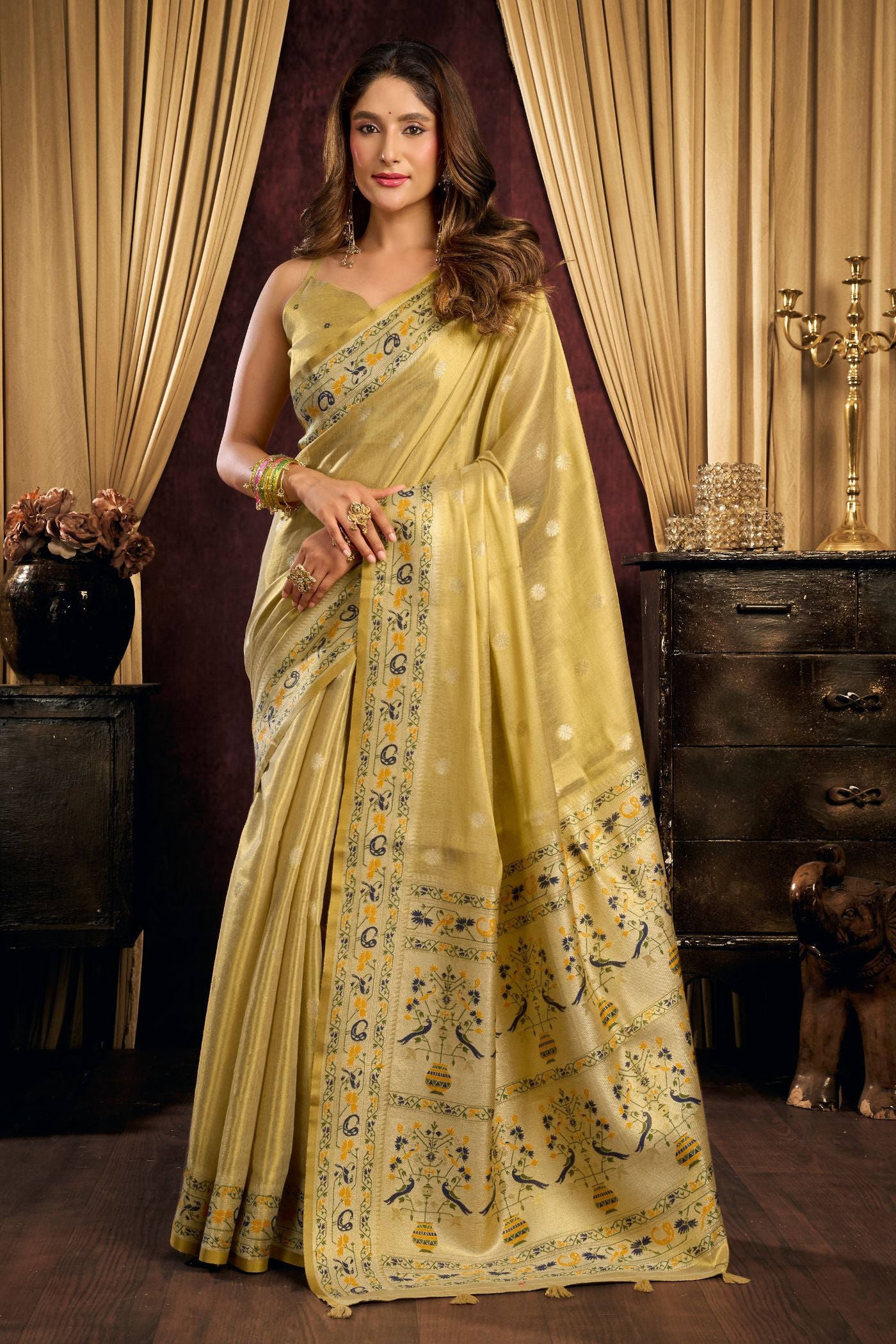
No saree is more woven into Maharashtrian identity than the Paithani. For a Mumbai household, it is the drape that appears at the biggest moments — the bride's nauvari or six-yard Paithani at a Maharashtrian wedding, the festive nine days of Ganeshotsav, Gudi Padwa mornings in Girgaon and Dadar, and Navratri and Diwali get-togethers across the suburbs. The oblique-square muniya (parrot) border, the peacock and lotus pallu, and the interlocked tapestry weave where no float is left loose on the reverse — these are the marks Mumbai buyers look for.
The catch is that Mumbai's famous saree lanes — Dadar's Ranade Road, Girgaon, the Borivali and Thane markets — carry everything from ₹2,000 powerloom copies to lakh-rupee handloom originals under the same word, "Paithani." That is exactly why buying online, where the weave, the fabric and the price are stated up front, has become the sensible route for so many Mumbai shoppers.
Paithani prices for Mumbai buyers in 2026
Here is the live, honest picture of what a Paithani costs online at MySilkLove today, quoted as regular list prices (seasonal offers apply at checkout):
Entry / everyday Paithani — from about ₹3,200
The most affordable Paithani-style sarees begin around ₹3,200. These are typically Chanderi-base Paithani and lightweight semi-Paithani sarees — a soft, easy-to-drape body with woven Paithani motifs and a peacock or parrot pallu. They are ideal for a haldi, an office Ganpati celebration, or a first Paithani for a younger member of the family. Important: at this price the fabric is a blend or a Chanderi/soft-silk base, not pure silk, and a good listing will say so.
Woven soft-silk & organza Paithani — ₹4,300 to ₹4,700
This is the heart of the online Paithani range and where most Mumbai buyers land. Woven zari Paithani, Nath-motif Paithani and organza Paithani sarees cluster between roughly ₹4,346 and ₹4,665. You get the classic gold-zari border, a proper woven pallu and festive-ready drape at a price that suits Ganeshotsav, Navratri, an engagement or a family wedding you are attending (rather than hosting). Again, these are soft-silk and blended weaves, not handloom pure silk — and that is a fair trade-off for the price and the everyday wearability.
Premium woven Paithani — up to around ₹9,300
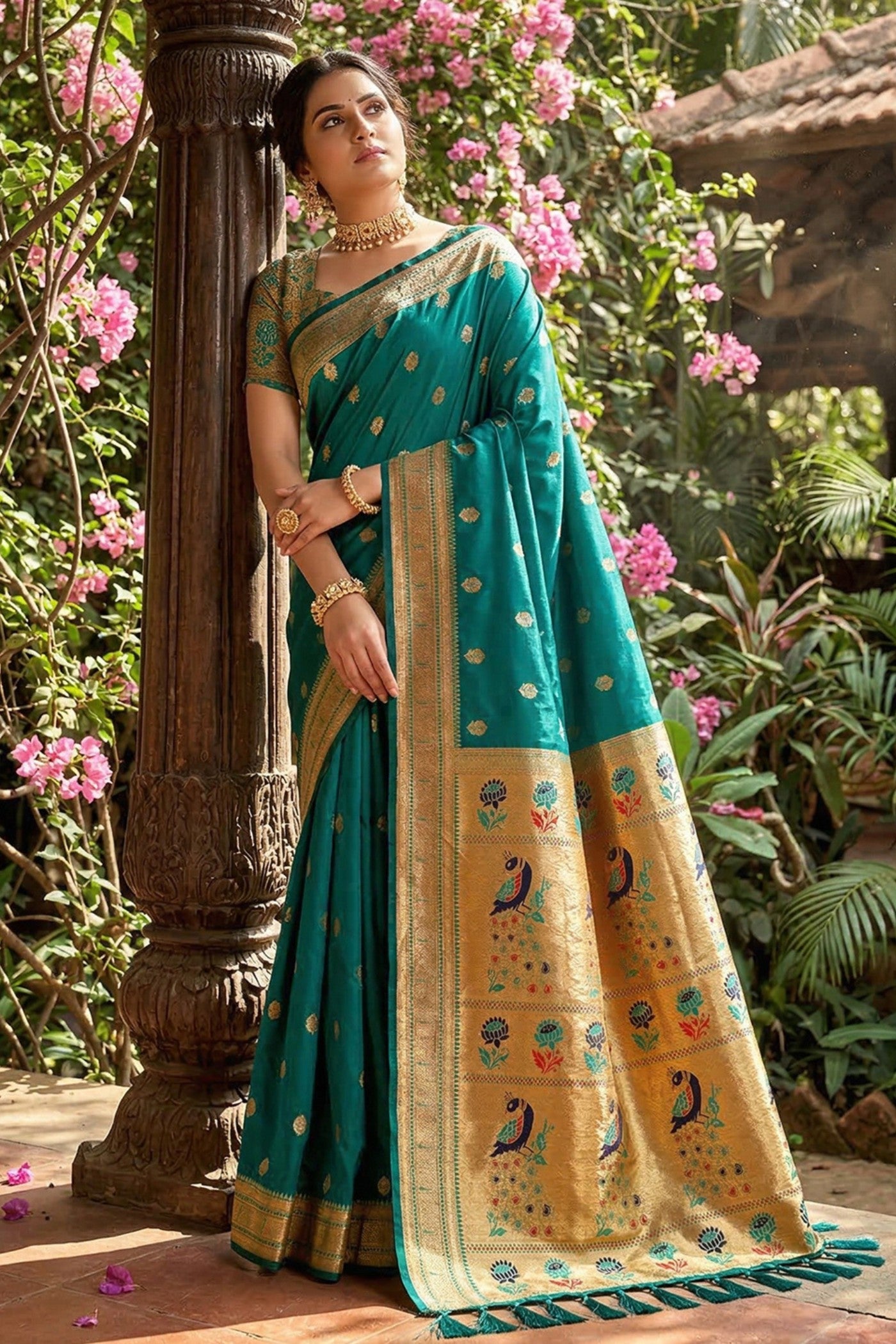
At the upper end of what is buyable online today, richer woven Paithani sarees with denser zari and more elaborate pallus run up to about ₹9,300. These read as bridal-adjacent — a strong choice for the mother of the bride, a sangeet, or a reception where you want the Paithani look without the pure-silk price.
Handloom pure-silk Paithani — a separate, higher tier
The genuine handloom pure-silk Paithani — the kind woven on pit looms in Paithan and Yeola, where a single saree can take weeks to months — is a different category altogether. Expect a large step up in price (from the tens of thousands into six figures for the finest bridal pieces), and expect to buy it to order or after seeing it in person. If a listing prices a "pure silk handloom Paithani" at a few thousand rupees, treat that as a red flag: at that price it is a woven soft-silk or art-silk saree, however beautiful. Fabric facts are ground truth, and an honest seller will never call a blend "pure silk."
How to tell a real Paithani from a powerloom copy
1. Read the reverse of the pallu
On a genuinely woven Paithani, the motifs on the back of the pallu are interlocked and neat — the tapestry technique leaves no long loose threads. A printed or heavily powerloom "Paithani" shows a flat, floated or blurred reverse.
2. Match fabric to price
Use the tiers above as a sanity check. A sub-₹5,000 Paithani is a soft-silk, organza, Chanderi-blend or art-silk weave — a lovely festive saree, but not pure-silk handloom. Anyone selling "pure silk handloom" in that band is mislabelling.
3. Look at the border and pallu motifs
The classic Paithani signatures are the muniya (parrot) border, and peacock, lotus or Bangdi Mor (bangle-peacock) pallu designs. Crisp, well-defined motifs point to a better weave.
4. Check the zari
Traditional Paithani used real gold/silver zari; modern affordable pieces use tested (imitation) zari, which is completely normal at online price points. What matters is that the listing is honest about it.
Buying a Paithani online in Mumbai: delivery and fit
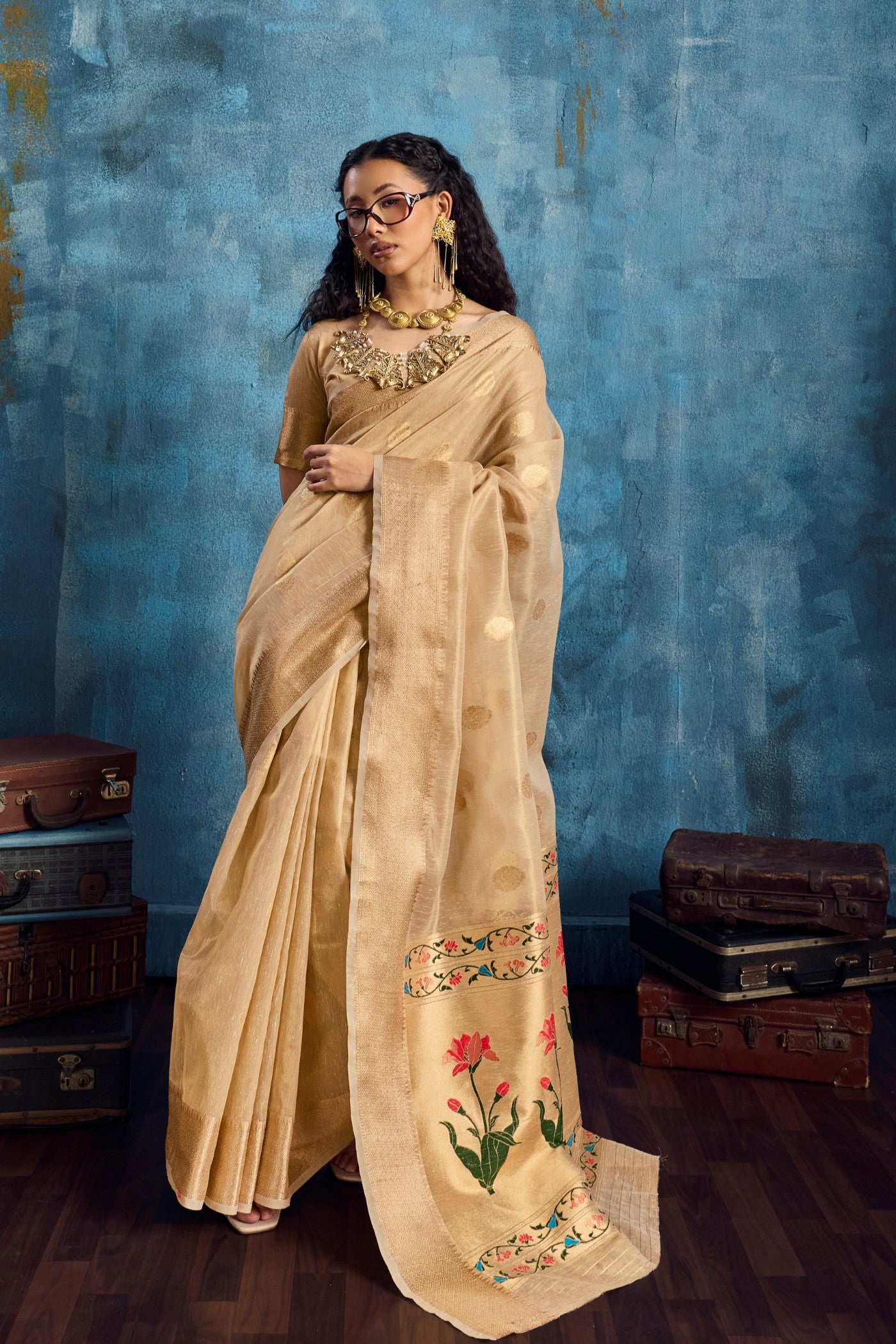
Ordering online in Mumbai is straightforward: MySilkLove ships across all Mumbai pincodes — South Mumbai, the Western and Central suburbs, Navi Mumbai, Thane and the wider MMR — with prices in INR and no import worries since it ships within India. A few practical tips for Mumbai buyers:
First, decide six-yard versus nine-yard early. Maharashtrian brides and many festive occasions call for the nauvari (nine-yard) drape; most contemporary Paithani sarees are the standard six-yard. Second, plan for the blouse: many Paithani sarees ship with an unstitched blouse piece, so build in a few days with your Dadar or local tailor before the event. Third, order ahead of the festive rush — Ganeshotsav, Navratri and the October–November wedding season are peak, and popular colours sell through.
Which Paithani colour for which Mumbai occasion?
For a Maharashtrian wedding or reception, the timeless choices are a bottle-green, deep purple or classic red Paithani with a gold border. For Ganeshotsav and Gudi Padwa daytime functions, yellows, parrot-greens and pinks feel festive and photograph beautifully in daylight. For Navratri, lean into the brighter organza Paithani shades. For an engagement or sangeet where you want something lighter, an organza or Chanderi Paithani drapes easily through a long evening.
Shop the edit
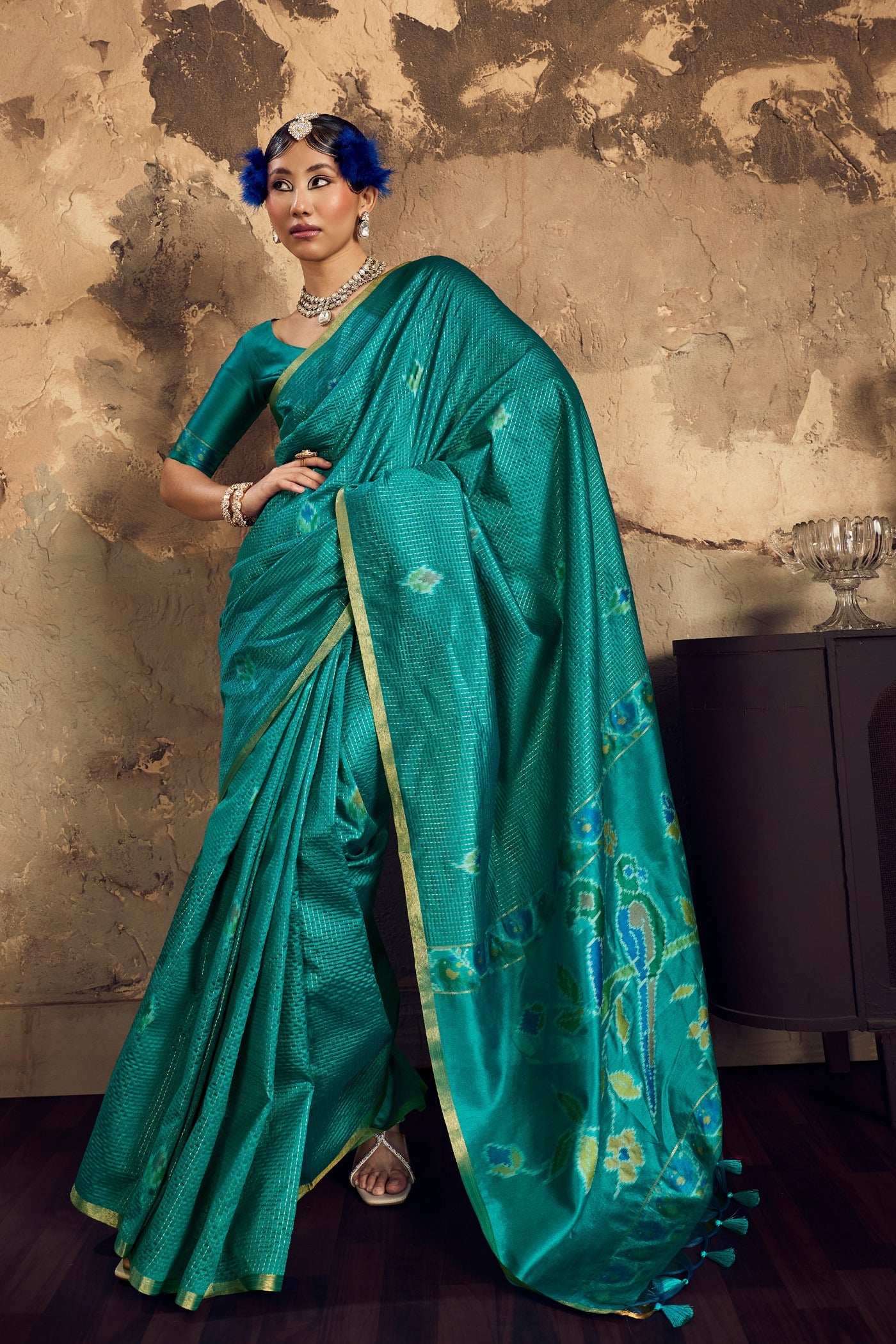
Browse the full Paithani sarees collection to see the current woven, organza and semi-Paithani designs with live prices. If you want to explore beyond Paithani into the wider Maharashtrian repertoire — including nauvari and Peshwai styles — visit the Maharashtrian sarees collection. And if you are shopping for a bride or a big-day guest look, the curated Wedding Edit gathers the festive and bridal-ready pieces in one place.
Frequently asked questions
1. What is the price of a Paithani saree in Mumbai online?
Online at MySilkLove, Paithani-style sarees start at about ₹3,200 for entry Chanderi/semi-Paithani weaves, with most woven soft-silk and organza Paithani designs between ₹4,300 and ₹4,700, and premium woven pieces up to around ₹9,300. These are regular list prices; seasonal offers apply at checkout. Genuine handloom pure-silk Paithani sits in a much higher, separate tier.
2. Are Paithani sarees under ₹5,000 pure silk?
No. In this price band you are buying woven soft-silk, organza, Chanderi-blend or art-silk Paithani sarees — beautiful and festive, but not handloom pure silk. Any listing calling a sub-₹5,000 saree "pure silk handloom Paithani" is mislabelling the fabric.
3. Can I get a Paithani delivered anywhere in Mumbai?
Yes. MySilkLove ships to all Mumbai and MMR pincodes — South Mumbai, Western and Central suburbs, Navi Mumbai and Thane — with prices in INR and delivery within India, so there are no customs or duty concerns.
4. Six-yard or nine-yard (nauvari) Paithani for a Maharashtrian wedding?
Traditional Maharashtrian bridal and many ceremonial looks use the nine-yard nauvari drape. Most modern Paithani sarees are the standard six-yard; check the product length and choose nauvari specifically if the occasion calls for it.
5. How do I know a Paithani is genuinely woven and not printed?
Check the reverse of the pallu: a woven Paithani shows neat, interlocked tapestry motifs with no long loose threads, while a printed or basic powerloom copy looks flat or blurred on the back. Well-defined muniya borders and peacock/lotus pallu motifs are further signs of a proper weave.
 Paithani weave and fabric details reflect how each saree is listed; prices are regular list prices verified on MySilkLove and are subject to seasonal offers at checkout. Published September 2026.


Leave a comment
This site is protected by hCaptcha and the hCaptcha Privacy Policy and Terms of Service apply.