

Dussehra 2026 Saree Guide: What to Wear on 20 October

Dussehra 2026 falls on Tuesday, 20 October — the tenth day, right after Navratri closes. The short answer on what to wear: a gold-zari silk in a warm, auspicious shade (red, mustard, deep green or true gold), in a weave you can sit on the floor in and walk outdoors in. Not your heaviest bridal piece. Dussehra is a doing festival, and the saree has to keep up.
That's the part most festive guides get wrong. They hand you a colour and stop. But Dussehra asks you to sit cross-legged for Ayudha Puja, walk across a boundary for Seemollanghan, or stand in an open maidan at dusk while an effigy burns. Three very different physical days, one date.
Why gold zari genuinely belongs on this day
In Maharashtra, Dussehra is the day people exchange leaves of the Apta tree and call them sone — gold. You hand someone a leaf, they hand you one back, and the greeting is literally an exchange of gold. It is one of the loveliest small rituals in the Indian calendar, and it is the reason gold-zari sarees dominate this particular day rather than, say, Navratri's rotating nine colours.
There's a second reason the day carries weight in Maharashtra: Vijayadashami is one of the sade teen muhurat — the three and a half auspicious days (with Gudi Padwa, Akshaya Tritiya, and the half-day of Balipratipada) on which no separate muhurat is needed to begin something. New ventures, new vehicles, new instruments, first lessons. People dress for a beginning, not just a festival.
So: if you own one saree with real, generous gold work, this is its day.
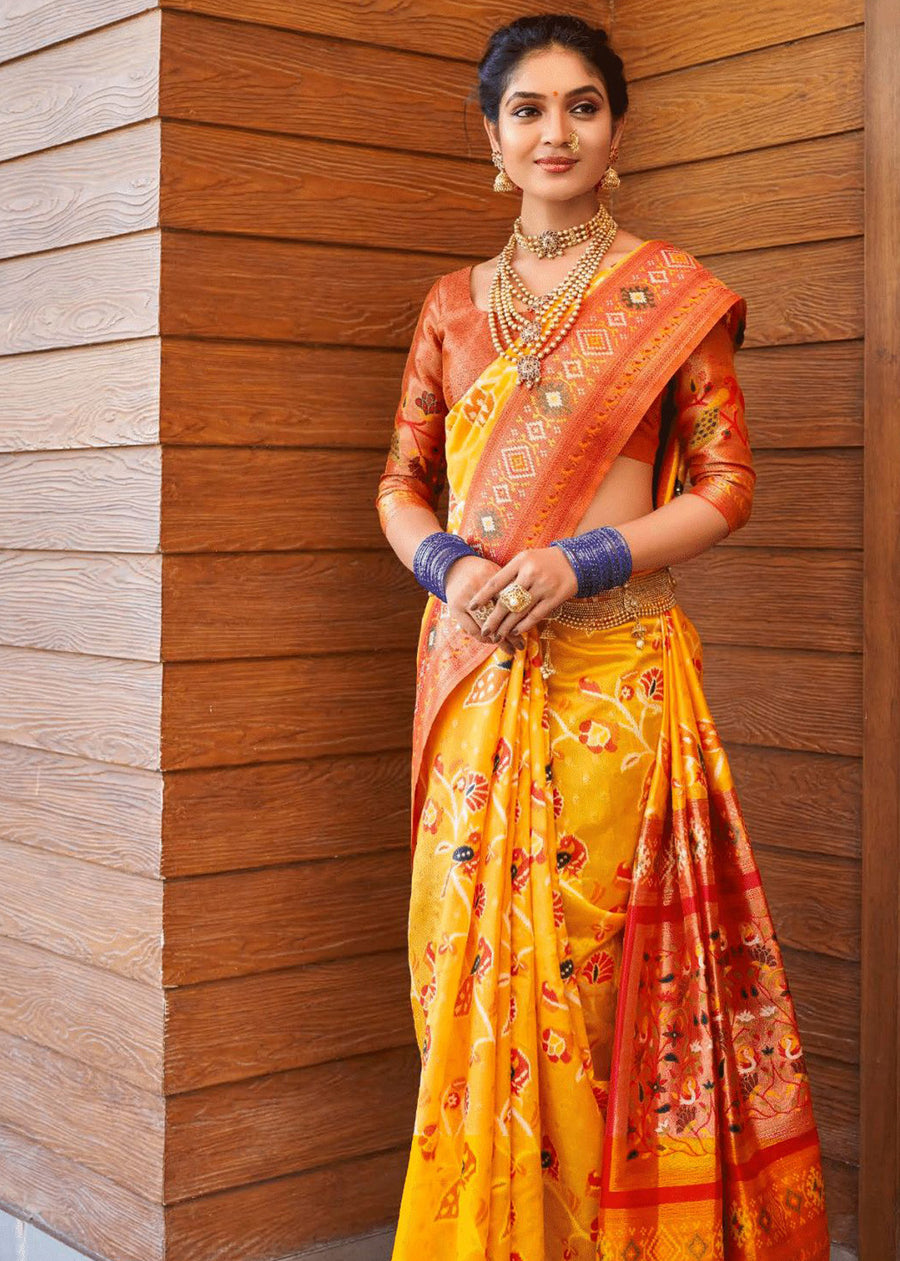
Maharashtra: Paithani, and why it beats a heavier weave here
The instinct is to reach for the heaviest silk in the cupboard. I'd push back on that. Seemollanghan means walking — often to a temple, often in a group, often in October afternoon heat that has not yet given up. A full-weight nine-yard Nauvari runs close to 800g of fabric; after three hours of standing and greeting, you feel every gram of it.
A woven Paithani is the smarter Maharashtrian answer. You get the gold-zari border and the motif-heavy pallu the day is asking for, in something that drapes lighter and pleats flatter than a bridal-weight silk. The Vithala-Rukhmani and titli motif Paithanis are especially apt — they carry devotional imagery rather than generic florals.
If you want the full background on Nauvari versus Paithani and which Maharashtrian drape suits which occasion, our Maharashtrian saree guide goes deeper than we can here.

The South: Ayudha Puja, Saraswati Puja and Mysuru Dasara
Across Tamil Nadu, Karnataka and Andhra, Vijayadashami splits into two pujas that shape what you should wear. In Ayudha Puja, tools, instruments and vehicles are honoured — and that means turmeric, kumkum, sandal paste, oil lamps and a lot of floor-level work. In Saraswati Puja, books and instruments are placed before the goddess, and children are given their first lesson on Vijayadashami itself.
Practical translation: wear a Kanchipuram or a soft-silk in a colour that hides a turmeric smudge. Mustard, sun-yellow, orange and warm red are the traditional Ayudha Puja palette anyway, and they are forgiving in exactly the right way. Cream and ivory are not. I have watched one kumkum thumbprint end a white saree's career.
For Mysuru Dasara — the Jamboo Savari procession runs to 21 October in 2026 — you are outdoors, in crowds, for hours. Choose a handloom Kanjivaram with a firm body that holds pleats through a long day rather than a fine tissue that will crush by noon.
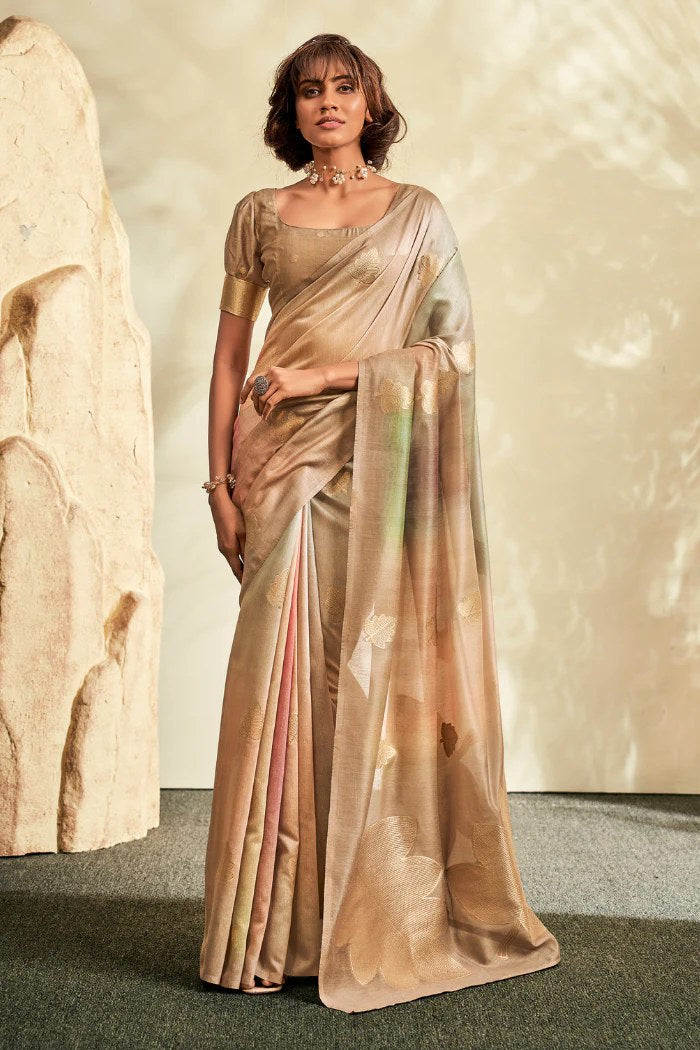
The North: Ravan Dahan is an evening, outdoors, near smoke
Ramlila grounds at dusk are dusty, crowded and — the moment the effigy goes up — smoky. Two rules. First, real zari and woodsmoke are not friends; smoke residue dulls metallic thread and is genuinely hard to lift later. If you're going to stand close, don't wear the piece you're saving. Second, dress for a temperature drop: north Indian October evenings fall away fast, and a silk with some body handles that better than georgette.
A woven Banarasi in a deep, warm tone is the sensible pick — festive enough for the evening, sturdy enough for a maidan.
An honest opinion: don't repeat your Navratri palette
Nine days of colour-coded dressing will have exhausted most of your festive wardrobe by the 19th. The temptation on the 20th is to re-wear day one. Resist it — Dussehra photographs and Navratri photographs end up in the same album, and the day deserves its own frame. Pick something you deliberately held back. If you planned the nine days using our Navratri 2026 colour guide, this is the tenth outfit that guide doesn't cover. And if you're dressing for the Bengali Dashami instead — sindoor khela, red-and-white — our Durga Puja guide handles that tradition properly.

Shop the Edit
- Torch Red Woven Paithani Saree — ₹5,332. The classic Devi red with a gold zari border and Vithala-Rukhmani motifs. The default Maharashtrian Dussehra answer.
- Sun Yellow and Orange Woven Kanchipuram Saree — ₹5,594. Built for Ayudha Puja: the traditional warm palette, and turmeric-forgiving.
- Twine Golden Banarasi Handloom Silk Saree — ₹5,484. If you want to wear the sone rather than just exchange it, this is the literal choice.
- East Bay Blue Kanjivaram Handloom Saree — ₹4,964. A firm handloom body that survives a full Dasara procession day.
- Racing Green Woven Paithani Saree — ₹5,332. Deep green reads auspicious and photographs beautifully against marigold.
Those are regular list prices; seasonal offers at checkout often bring them lower. Delivery is free across India, with no minimum order value. Browse the full Kanjivaram collection if the South Indian route is yours, and read our golden saree guide before you buy anything sold to you as gold — real zari and tested zari are not the same claim.
Dussehra 2026 saree questions, answered
What colour saree should I wear on Dussehra 2026?
Warm, auspicious shades with gold work: red, mustard, sun-yellow, orange or deep green. Red dominates in Maharashtra and the North, while yellow and orange lead the South's Ayudha Puja palette. Avoid cream, white and pale ivory — turmeric, kumkum and oil lamps make short work of them.
Which saree is best for Ayudha Puja?
A Kanchipuram or soft-silk in mustard, yellow or warm red. Ayudha Puja involves sitting on the floor and handling turmeric, kumkum and oil, so choose a weave that pleats flat for floor-sitting and a colour that forgives a stain. Keep tissue and organza for indoor evening events instead.
Can I re-wear a Navratri saree on Dussehra?
You can, but it is worth holding one back. Navratri and Dussehra photographs land in the same album days apart, and the tenth day traditionally marks a beginning rather than a continuation. If you must repeat, change the blouse and jewellery so the drape reads as a different look.
 Twenty October is close. If you're ordering rather than shopping in person, give yourself the week — pick your weave now and let delivery be the easy part. Start with the Paithani collection for the Maharashtrian route, or the Banarasi collection if you want gold with weight behind it.
Shop the Dussehra Edit by Shade
The guide above picks the day's palette; these are the shelves where each shade actually lives:
- For the sone itself — gold-zari cloth rather than an Apta leaf — browse our golden sarees.
- For the Devi red that leads both the Maharashtrian and the North Indian route above, see our red sarees.
- For the Ayudha Puja palette — mustard and sun-yellow, the shades that forgive a turmeric smudge — explore our yellow sarees.
- Walking Seemollanghan, or standing through the Jamboo Savari? That is the firm-bodied handloom argument made above — browse our handloom sarees.
All four shelves are inventory-gated, so every piece they show has stock on hand.


Leave a comment
This site is protected by hCaptcha and the hCaptcha Privacy Policy and Terms of Service apply.