
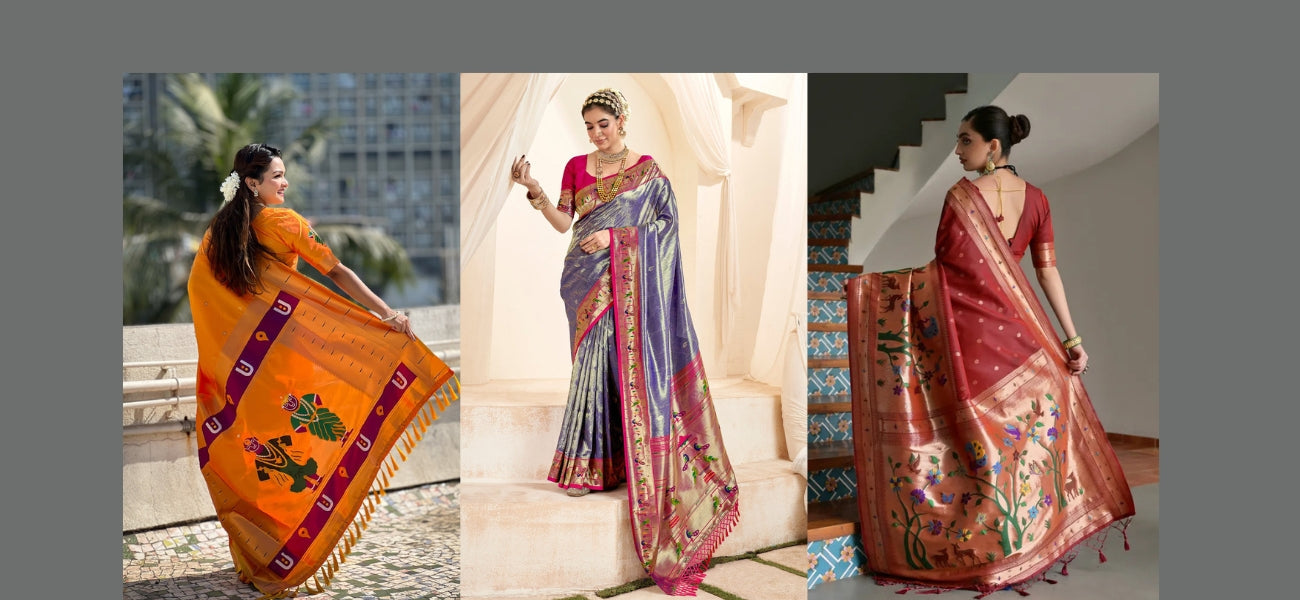
Best Paithani Sarees Under Rs.5000 in 2026 – Authentic & Affordable
Looking for a Paithani saree under 5000 that still carries the soul of this centuries-old Maharashtra weave? You are not alone — budget Paithani has become one of the most searched saree categories online, and for good reason. With the right knowledge, you can find a beautiful, wearable Paithani that fits your budget without being misled about what you are actually getting.
What Paithani Under Rs 5,000 Actually Is
Let us be honest: a fully handwoven, pure silk Paithani with real zari traditionally starts at Rs 8,000 and goes up to several lakhs for heirloom pieces. So what are you actually getting in the Rs 5,000 range?
Power-loom Paithani (Rs 2,000–3,500): The weaving is done entirely by machine. The signature peacock and floral motifs are woven by jacquard mechanism rather than by hand. The silk may be art silk (viscose) rather than pure mulberry silk, and the zari is usually metallic thread rather than real silver-coated yarn. These sarees look beautiful in photographs and are perfectly suited for casual functions, but they are not handwoven artisan products.

Semi-handloom Paithani (Rs 3,500–4,500): The base fabric may be machine-woven, but the border or pallu motifs are finished with hand-weaving. You get a genuine handcraft element at an accessible price. Semi-handloom pieces are often produced in Yeola, the secondary Paithani weaving centre in Maharashtra.
Entry-level handwoven Paithani (Rs 4,500–5,000): At the top of this budget range, you may find genuine handwoven Paithani from Yeola in simple designs with a smaller pallu and minimal motif complexity. Thread count and zari density will be lower than premium pieces, but the fundamental hand-weaving technique is present. Treat this as an entry point into the handwoven Paithani world.
Authenticity Markers Even in Budget Paithani
Even when buying at the lower end of the price range, certain markers help you identify a better-quality piece:
- Peacock motif presence: The peacock — Maharashtra's state bird — is central to Paithani identity. Look for a clearly defined peacock in the pallu. A blurry or disproportionate peacock often indicates poor-quality jacquard programming or very low thread count.
- Oblique interlocking weft on the reverse: In a genuine hand-woven or semi-handwoven Paithani, the weft threads interlock at an oblique angle where the motif meets the background. If you turn the saree over and see loose floating threads or no visible texture difference, it is likely fully power-loom woven.
- Zari quality indicators: Rub the zari border gently with a damp white cloth. Real zari (silver-coated copper thread with gold wash) will not bleed colour. Imitation metallic thread often leaves a golden or greenish tinge on the cloth after rubbing. Higher-quality budget Paithani will use at minimum tested metallic zari.
- Fabric weight: Pure silk Paithani has a natural heaviness and a cool-to-touch feel. Art silk (viscose) feels lighter and slightly warmer. At Rs 3,000 and below, expect art silk; at Rs 4,500 and above, you have a reasonable chance of finding pure silk Paithani in the budget segment.

Price Breakdown: What You Get at Each Tier
Here is a transparent breakdown of what changes as you move up within the Rs 5,000 budget:
- Rs 2,000–3,000 — Basic Power-Loom: Art silk or poly-silk fabric, jacquard-woven motifs, imitation zari border, machine-finished edges. Suitable for: everyday wear, gifting, children's functions, décor use.
- Rs 3,000–4,500 — Semi-Handloom: Silk-blend or pure silk base, partially hand-finished pallu motifs, better zari quality, richer colour saturation. Suitable for: casual family functions, office festive wear, temple visits.
- Rs 4,500–5,000 — Entry Handwoven: Genuine handwoven construction in Yeola or Paithan, simple motif design, lower thread count than premium Paithani, pure silk or high-quality silk blend. Suitable for: mehendi, engagement parties, festive occasions where you want authenticity without spending over budget.

How Budget Paithani Compares to Expensive Pieces
Understanding the trade-offs helps you appreciate what you are buying:
- Thread count: Premium Paithani can have 100–120 threads per centimetre in both warp and weft. Budget versions typically run 40–60 threads per centimetre, resulting in a less dense, lighter fabric.
- Zari density: Expensive Paithani has continuous, dense zari coverage in the border that creates a rich, three-dimensional shine. Budget versions have sparser zari with visible gaps between threads.
- Motif complexity: A premium Paithani pallu may contain dozens of individually woven peacocks in varying poses with intricate floral fills. Budget pallu motifs are simpler — often a single row of peacocks in a standard pose.
- Weight and drape: Pure silk Paithani with dense weave drapes heavily and elegantly. Budget versions are lighter and drape more loosely, which some wearers actually prefer for all-day comfort.
- Longevity: A well-cared-for premium handwoven Paithani can last 50+ years and be passed down as an heirloom. Budget power-loom Paithani typically has a useful life of 5–10 years with proper care.

Care Instructions for Paithani Silk
Proper care extends the life of your Paithani significantly regardless of budget:
- Handwoven Paithani: Always dry clean. Avoid water washing entirely — the interlocking weft structure can distort when wet. After dry cleaning, air the saree in shade before storing.
- Power-loom Paithani: You can hand wash in cold water with a mild, pH-neutral detergent. Never wring or twist the fabric. Gently press out excess water between two towels, then lay flat to dry in shade. Never tumble dry or hang, as the weight of a wet saree can stretch the fabric.
- Storage: Wrap in a clean, unbleached muslin cloth before folding. Muslin allows the fabric to breathe and prevents moisture retention. Avoid plastic packaging, which traps humidity and encourages mildew.
- Avoid direct sunlight: Silk fibres and natural dyes degrade in ultraviolet light. Never dry in direct sunlight and store away from windows. Even a few hours of direct sun exposure repeatedly over time will fade the vibrant Paithani colours.
- Zari protection: Tarnishing of the zari border can be slowed by placing a small piece of camphor or neem leaves in your saree storage. Avoid contact with perfume, deodorant, or sweat on the zari border as acids accelerate tarnishing.

FAQ
Is a Rs 5,000 Paithani genuine?
It depends on what you mean by genuine. At Rs 4,500–5,000, you can find genuinely handwoven Paithani in simple designs from Yeola. At Rs 2,000–4,000, you are most likely getting a power-loom or semi-handloom piece that is a legitimate product of Maharashtra's Paithani weaving industry — it just is not fully handwoven. Always ask the seller to specify: power-loom, semi-handloom, or handwoven.
What is the minimum price for real handwoven Paithani?
For a fully handwoven, pure silk Paithani with real zari from Paithan or Yeola, expect to pay a minimum of Rs 7,000–10,000 for the simplest designs. Prices for handwoven pieces with complex peacock and floral motifs typically start at Rs 15,000 and go up significantly for heirloom-quality work.
Best occasions for budget Paithani?
Budget Paithani in the Rs 3,000–5,000 range is excellent for mehendi ceremonies, haldi functions, puja visits, festive lunches, and as gifting sarees. For bridal wear or milestone celebrations where photographs and memories will last decades, investing in a higher-quality piece is worth considering.
How to spot power-loom Paithani?
Turn the saree over and examine the reverse of the pallu. In hand-woven Paithani, the reverse shows the interlocking weft in an oblique pattern — motif colours are visible but slightly messy, with threads crossing at angles. Power-loom Paithani has a cleaner, more uniform reverse with floating threads or a backing fabric hiding the construction. Additionally, machine-woven sarees have perfectly uniform selvedge edges, while hand-woven selvedges show slight variations that are a mark of the handloom process.
Ready to find your Paithani? Browse our full Paithani collection or explore our complete Maharashtrian saree range for more regional weaves from Maharashtra.

Shop Paithani in This Budget
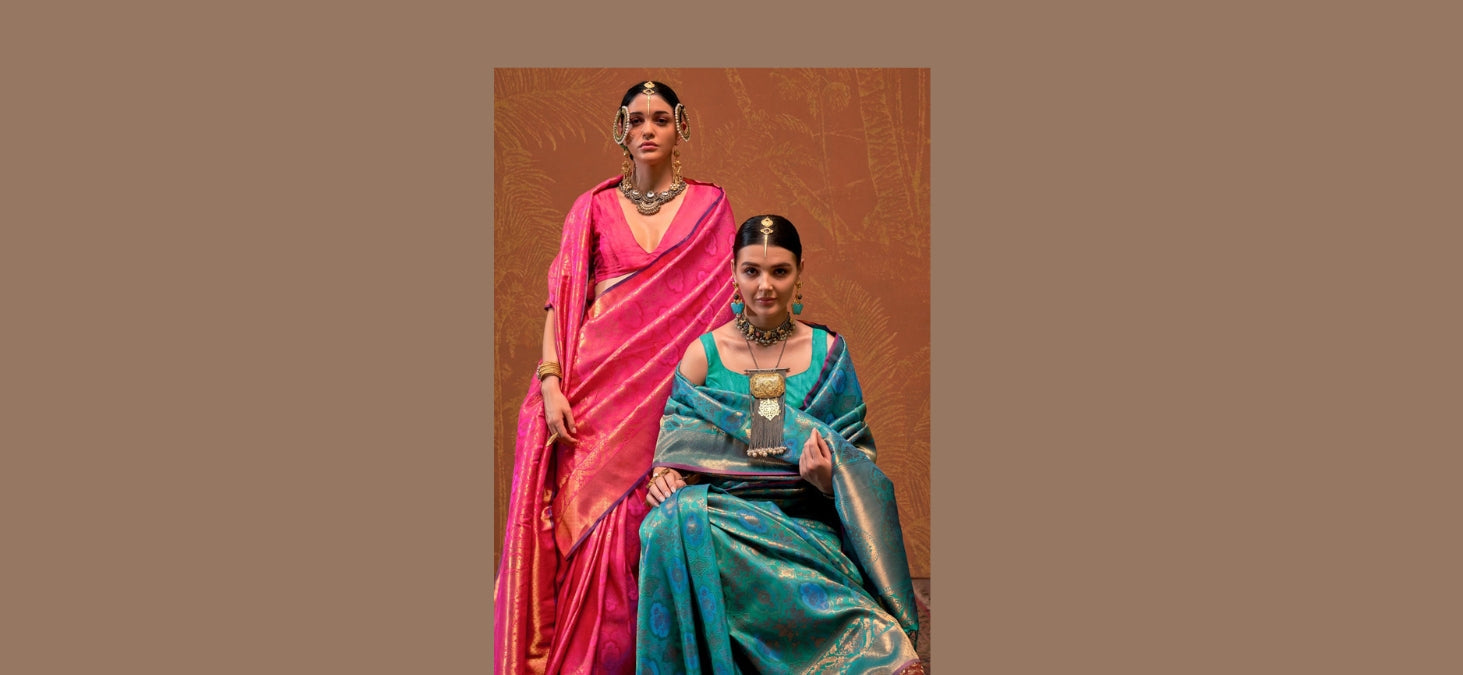
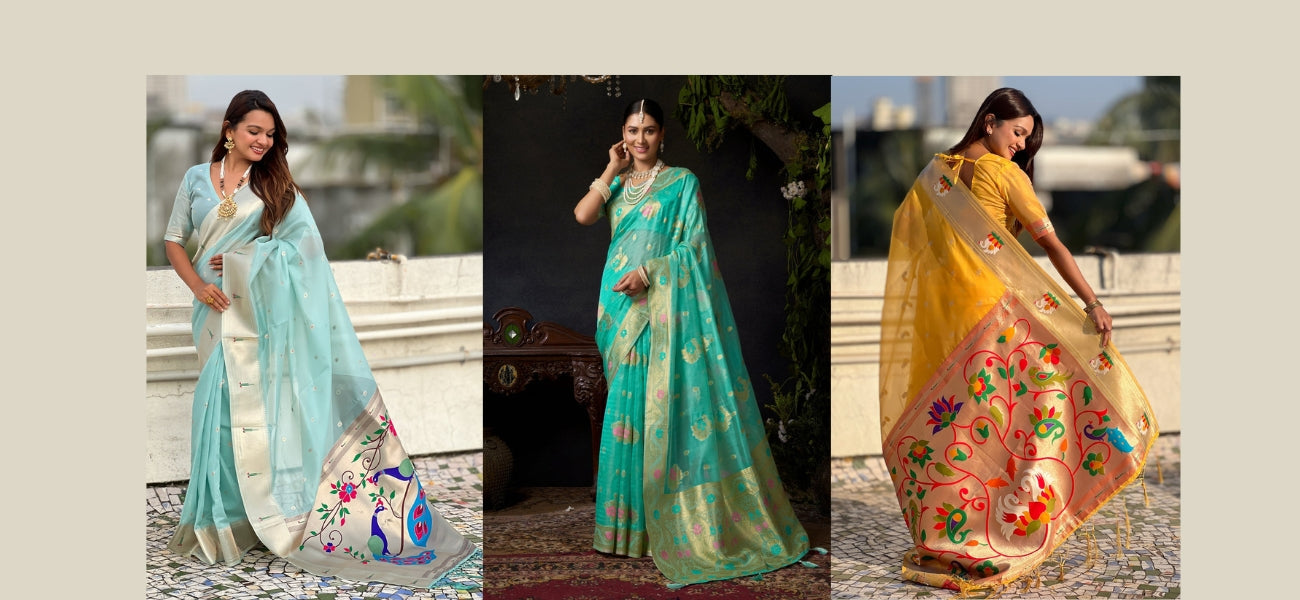
The Paithani and Maharashtrian collections are linked just above. One honest note before you open them: several of the Paithani collection's top sellers are unpublished at the moment, and the regular list prices at its bestselling end sit just above ₹5,000. Paithanis listed under ₹5,000 are on the same page, just not at its bestselling end — for example the Tulip Pink and Peacock Blue woven Paithanis, or the Congress Blue Nath Paithani.
If hand-weaving is what you are paying for, our handloom sarees page is built from the handloom tag and only lists pieces with stock on hand. Its bestselling end is Banarasi and Kanjivaram rather than Paithani, so treat it as a cross-weave comparison rather than a Paithani shelf.

Leave a comment
This site is protected by hCaptcha and the hCaptcha Privacy Policy and Terms of Service apply.