
Article: Patola Saree History: 900 Years of Double Ikat from Patan's Salvi Looms, Decoded (2026)
Patola Saree History: 900 Years of Double Ikat from Patan's Salvi Looms, Decoded (2026)

Patola is a double-ikat silk saree from Patan, Gujarat, with a recorded history of roughly 900 years. Both the warp and the weft threads are tie-dyed to the final pattern before a single thread is woven, which is why one genuine Patan Patola takes three to six months. It received its GI tag as "Patan Patola" in 2013 — and today only a handful of Salvi families still weave it the original way.
12th Century: A King, a Prayer and 700 Weaving Families
The founding legend of Patola belongs to King Kumarapala of the Solanki (Chaulukya) dynasty, who ruled from Anhilwad Patan between roughly 1143 and 1172. A devout Jain, he insisted on wearing fresh, unworn silk for worship every morning. The finest silk of the day came from the Salvi weavers of Jalna, in present-day Maharashtra — so, the story goes, he invited around 700 Salvi families to settle in Patan.
Whether every detail is literal or not, the outcome is real: Patan became the home of double ikat, and the Salvi surname became synonymous with it. That's also why Patola carries a ritual purity in Gujarat that no other weave quite matches — Jain, Nagar Brahmin and Vohra families historically reserved it for weddings and auspicious ceremonies, and it was often worn for the first time on the wedding day itself.
What Makes Double Ikat So Hard (The Part Most Articles Skip)
Most "ikat" you see is single ikat: either the warp or the weft is resist-dyed, and the other thread is plain. Patan Patola dyes both. Here's what that actually means on the loom:
- Tie-and-dye, colour by colour. Bundles of silk yarn are bound with cotton thread at precise points and dipped in dye — once for each colour. A five-colour saree means repeating the tying and dyeing cycle several times on both sets of threads.
- A tilted loom. Patola is woven on a traditional handloom set at a slant, and after almost every pass of the weft the weaver nudges threads with a fine pick so the dyed sections of warp and weft meet exactly. Miss by a millimetre and the diamond blurs.
- Brutally slow output. Two weavers working together finish only around 8–9 inches of a six-yard saree in a day. Intricate designs need four or five artisans on a single piece.
- A fully reversible fabric. Because the pattern lives inside the threads, a true Patan Patola looks identical on both sides — the single most useful thing to check before you believe a "Patan" label.
There's an old Gujarati saying — "Padi Patole bhaat, phaate pan phite nahi" — the pattern in a Patola may tear, but it will never fade. It's the best one-line product review any textile has ever had.
The Indonesian Chapter: When Patola Was Currency
Here's the history most buyers in India have never heard. From at least the 16th and 17th centuries, Gujarati Patola were among the most prized trade textiles in Southeast Asia. The Dutch East India Company (VOC) used them to trade for spices in the Indonesian archipelago, and royal courts in Java and Sumatra wore them as markers of rank.
In Sulawesi, the Toraja people treated Indian trade cloths as sacred heirlooms, brought out only for funerals and major rituals. A sari woven in a small Gujarati town once functioned as diplomatic gift, status symbol and near-currency on the other side of the Indian Ocean.
The Motifs and What They Were Called
Patola designs have names, and knowing them makes you a sharper buyer:
- Narikunj bhaat — the dense, lattice-like "women's garden" design, traditionally a bridal favourite.
- Paan bhaat — the betel/peepal-leaf motif, the one most copied in printed versions.
- Chhabadi bhaat — a basket-like geometric grid.
- Vohra gaji bhaat — the design historically commissioned by the Vohra (Bohra) community, usually on deep red grounds.
The classic colourways — deep red, green, saffron, indigo and white — come from the era of natural dyes, which is why green-and-pink or red-and-green combinations still read as "Patola" to most eyes even in modern blends.
Patan vs Rajkot vs Patola-Pattern: Our Honest Position
In the 20th century, Rajkot weavers developed single-ikat Patola, which is faster to make and far more affordable. Later came Patola-pattern woven silks and printed Patola, which borrow the grid and colours without the double-ikat process.
Our take: Patola-pattern sarees are a tribute, not a fake — as long as the seller calls them what they are. A genuine Patan double ikat sits in a price band of well over a lakh rupees; if a listing claims "pure Patan double ikat" at a few thousand, walk away (our Patola price guide breaks down every tier). If it says "Patola-pattern woven silk" at that price, enjoy it — that's how millions of women get to wear this history to a sangeet without saving for a year.
That's exactly how we think about our own Patola edit. These are accessible woven and printed silks that carry the Patola grid and palette — they are not Patan double ikat, and we don't pretend otherwise. For the authentic-vs-blend checklist across weaves, see our silk saree buying guide.
Patola Today: The Last Looms and a Fresh Spotlight
The Salvi family in Patan still weaves double ikat and runs a heritage museum where visitors can watch the tilted loom at work. In October 2026, Union Commerce Minister Piyush Goyal publicly praised the Gujarat government's efforts to preserve the craft, calling the fabric "timeless" — a reminder that the weave's survival now depends as much on attention and fair prices as on skill.
Shop the Edit: Patola-Pattern Silks for Wedding Season
If you love the history and want the look for winter weddings, these are the pieces we'd reach for (regular list prices; seasonal offers at checkout often bring these lower):
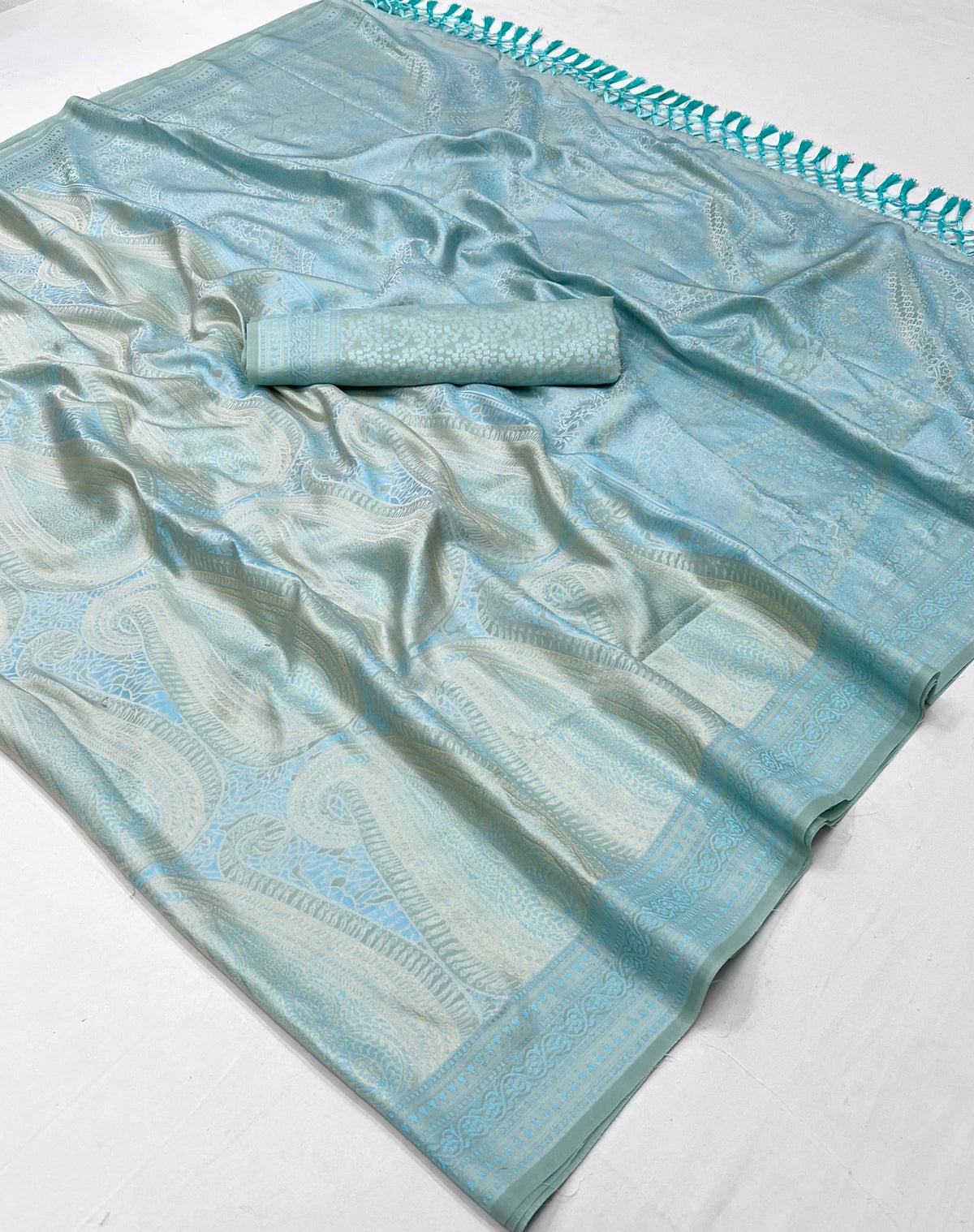
- Stromboli Green Banarasi Silk Patola Saree — the green-and-pink palette in the hero image, with a red zari border; ₹4,350.
- Peacock Blue Banarasi Silk Patola Saree — the indigo side of the Patola story, great for an evening sangeet; ₹4,350.
- Parrot Green Woven Patola Silk Saree — a woven Patola-pattern grid for haldi or mehendi mornings; ₹6,539.
- Desert Yellow Woven Patola Silk Saree — saffron-yellow, the auspicious Gujarati wedding colour; ₹6,539.
- Navy Blue Printed Patola Saree — a lighter printed take for office celebrations and day functions; ₹3,389.
Browse the full Patola sarees collection, or the Banarasi Patola edit if you want zari borders with the ikat grid. And if you love weave history, read how Paithani travelled 2,000 years from Paithan to Yeola.
Patola History: Quick Answers
How old is the Patola saree?
Patan Patola has a documented history of around 900 years, tied to King Kumarapala of the Solanki dynasty in the 12th century, who is said to have brought about 700 Salvi weaving families from Jalna to Patan. Ikat techniques in India are older still, but double ikat flourished in Patan.
Why is Patan Patola so expensive?
Both warp and weft are tie-dyed to the exact pattern before weaving, colour by colour, and the threads are aligned by hand on a tilted loom. Two weavers produce only 8–9 inches a day, so one saree takes three to six months of skilled labour, which pushes genuine pieces well above a lakh rupees.
What is the difference between Patan and Rajkot Patola?
Patan Patola is double ikat: both warp and weft are resist-dyed, and the saree is fully reversible. Rajkot Patola is usually single ikat, where only one set of threads is dyed, so it is quicker to weave, lighter on the pocket and often slightly blurred at the motif edges.
Patola survived kings, colonial trade and power looms because people kept choosing to wear it. Find your own piece of that story in our Patola sarees collection.

Leave a comment
This site is protected by hCaptcha and the hCaptcha Privacy Policy and Terms of Service apply.