

Saree Fall & Pico Decoded: What They Cost, When You Need Them (2026)

Fall and pico are two different jobs, and most people pay for both without knowing which one is doing the work. Pico is the tiny rolled hem — about 2mm — that seals the raw cut edges of the saree so the weave doesn't unravel. Fall is a strip of fabric stitched along the inside of the bottom edge to add weight, so the drape hangs straight instead of curling in at your ankles. In 2026 you should be paying roughly ₹100–₹150 for machine pico and fall on a plain saree, and ₹300–₹400 where the border is heavy and the hem has to be hand-hemmed.
What fall and pico actually do (they are not the same job)
A saree comes off the loom as a raw rectangle — usually 5.5 metres for a regular drape, 6.3m if it comes with an attached blouse piece, and 9 yards for a Nauvari. Both long edges and both cut ends are raw thread. Left alone, a silk saree will start shedding weft threads at the ends within two or three wears.
Pico fixes that. It is a narrow rolled hem run along the raw edges — the two short ends and, on some sarees, the selvedge if the mill edge is untidy. It takes a tailor about ten minutes on a machine. It is non-negotiable on every silk saree you own.
Fall is a separate thing entirely. It's a 6-inch-wide strip of cotton or satin tape stitched to the inside of the bottom edge, running roughly 4.5 to 5 metres — the pleat-and-drape section only. It never goes onto the pallu. Its whole purpose is to add weight and body at the floor so the saree falls in a clean vertical line, and to take the abrasion of your feet and floor instead of the silk taking it.
The detail almost nobody gets right
The fall fabric must be heavier than the saree, not lighter. On a Kanjivaram running 700–800g, a satin fall is the wrong call — satin slips against heavy silk and the hem twists as you walk. Use a firm cotton fall. On a lightweight georgette or a 400g soft silk, cotton is too stiff and creates a visible ridge; satin fall is correct there. If your tailor doesn't ask which saree it's for before picking the tape, ask them.
What you should pay in 2026
- Machine pico only: ₹40–₹70 per saree in most metro tailoring shops.
- Fall + pico, plain saree, machine-stitched: ₹100–₹150. This is the standard rate and the one most neighbourhood tailors quote.
- Fall + pico, hand-hemmed on both sides: around ₹300. You are paying for invisible stitching, which matters on anything you'll photograph closely.
- Heavy-work saree, hand-hemmed: ₹350–₹400. Zari borders, sequins and tissue all slow the needle down and the rate reflects it.
- Online finishing services bundled by retailers: typically ₹300–₹330 including the fall material.
Turnaround is usually two to four days. In the four weeks before Ganesh Chaturthi and Diwali it stretches to a week or more — every tailor in the city is buried. If you're buying festive sarees now, send them for fall and pico the week they arrive, not the week you need them.

Which sarees need a fall — and which are ruined by one
Here's a position I'll defend: fall is over-prescribed. Tailors add it by default because it's an easy ₹80 of margin, and on the wrong fabric it kills the saree.
Always add a fall: Kanjivaram, Banarasi Katan, Paithani, heavy Tussar, anything with a thick zari border, and any saree you'll wear standing for four hours. Weight at the hem is what stops the pleats from splaying.
Skip the fall: pure organza and fine chiffon. The entire appeal of organza is the way it floats and holds air — a cotton fall turns it into a curtain. Pico those, and leave them alone.
Judgement call: soft silks, crepe and georgette. If the saree already skims the floor cleanly on a trial drape, skip it. If the hem curls inward, add a satin fall.

Five mistakes that wreck a silk saree at the tailor
- Letting them cut the pallu end to "straighten" it. On a handloom saree the ends are rarely perfectly square. That's the weave, not a defect. Every centimetre cut is gone forever.
- Fall stitched through to the front. The stitch should catch only the inner layer. If you can see a dotted line of thread on the outside of the border, it was done badly.
- Colour-matching the fall to the border instead of the body. The fall sits behind the pleats. Match it to the body colour so it disappears in the folds.
- Pico on a zari selvedge. Real zari edges don't need it and the needle can snag and pull a metallic thread into a loop you can't fix.
- Sending a saree unwashed after one wear, then storing it. Not a tailoring mistake exactly, but it's where sarees die. Air it for a day before it goes back in the wrap.
For the storage half of this — folds, wraps, and what actually causes zari to blacken — our silk saree buying and care guide covers the full routine, and the draping guide explains why hem weight changes the pleat line.

Shop the Edit
Three sarees where the fall genuinely earns its ₹150 — all heavy enough at the hem to need one:
- Lynch Blue Woven Kanjivaram Satin Silk Saree — ₹5,655. Satin-finish Kanjivaram with a structured border; this one wants a firm cotton fall, not satin.
- Sycamore Green Zari Woven Titli Paithani Silk Saree — ₹5,999. The titli (butterfly) motif Paithani; the zari pallu is heavy, so keep the fall off the pallu end entirely.
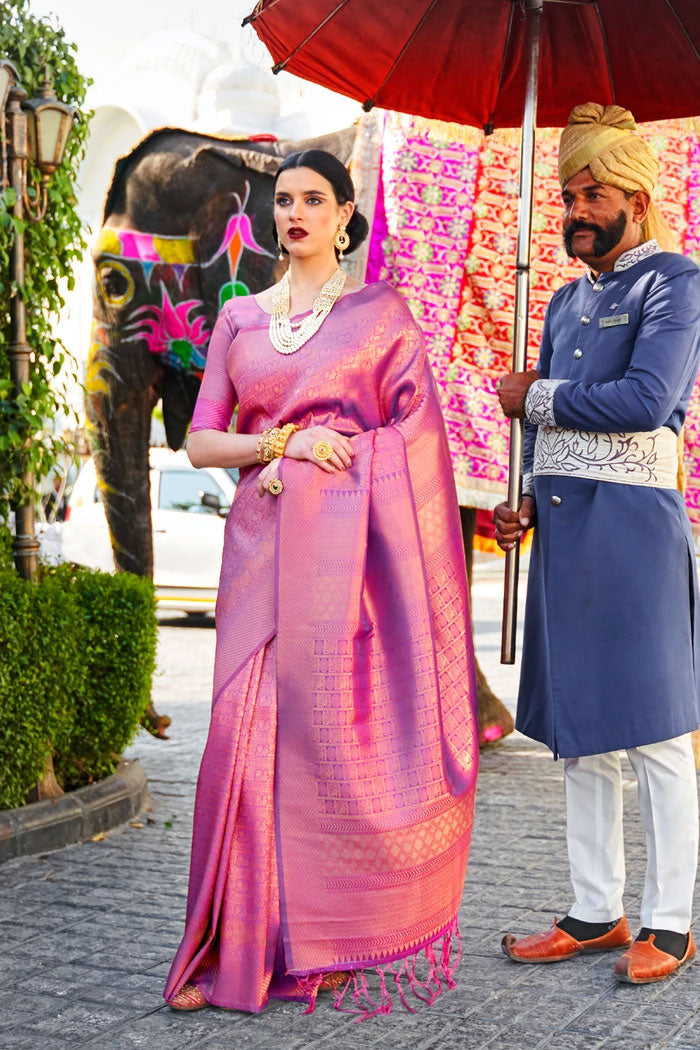
- Puce Purple Woven Kanjivaram Saree — ₹4,647. A deep purple that photographs well under festive lighting.
Browse more in Kanjivaram sarees and Paithani sarees. Prices shown are regular list prices — seasonal offers at checkout often bring these lower.
Shop by how much fall your saree needs
Buying a saree that will definitely need a firm cotton fall? Start with heavyweight Banarasi silk sarees and pure Tussar silk sarees — both sit squarely in the always-add-a-fall list above, where hem weight is what stops the pleats splaying. If you'd rather pico and leave well alone, our organza silk sarees are the ones to keep unlined so they still float. And the georgette sarees are the judgement call — trial-drape first, then add a satin fall only if the hem curls inward.

Frequently asked questions
Is fall and pico done before or after the first wear?
Before, always. A silk saree worn even once without pico will start shedding weft threads at the cut ends, and once a thread pulls through the border you cannot restore it. Send a new saree straight for finishing — it costs ₹100–₹150 and takes two to four days.
How much fall fabric does one saree need?
About 4.5 to 5 metres of 6-inch-wide tape for a standard 5.5m saree, since the fall covers only the pleat-and-drape section and not the pallu. A 9-yard Nauvari needs roughly 7 metres. Most tailors include the tape in the quoted price.
Can I do fall and pico at home?
Pico is difficult without a rolled-hem foot — the hem is only about 2mm and slipping silk makes it worse. Fall is manageable by hand if you're patient: pin along the inner bottom edge and use a slip stitch that catches only the inner layer. On an expensive silk, the ₹150 is worth paying.
Getting a new saree ready for the festive weeks ahead? Start with the weaves that hold a drape best — browse the full range of silk sarees at MySilkLove.


Leave a comment
This site is protected by hCaptcha and the hCaptcha Privacy Policy and Terms of Service apply.