

Alia Bhatt's Ganpati Saree — How to Get the Sea-Foam Green Look
On 16 September 2026, Alia Bhatt arrived at the Ambani family's Ganpati celebrations in a custom sea-foam green saree by Masaba, styled by Priyanka Kapadia. It was one of the most photographed looks of the festive week, and it is worth understanding why — because the reasons are copyable, even if the saree itself is a one-off couture piece.
The drape was a soft, pale green — closer to sea-foam than to the deep bottle and emerald greens that usually dominate festive dressing. She paired it with a matching off-shoulder corset-style blouse, oversized jhumkas, a stack of bangles (one large gold, one sea-green, one smaller gold), soft open curls and a small bindi. Nothing competed. The entire look ran on one colour and one silhouette idea.
A note on honesty: this was a custom designer saree. MySilkLove does not stock Masaba, and we are not going to pretend otherwise. What we can do is show you how the register of that look — pastel green, structured blouse, one metal — translates into sarees that are in stock today.
About the style: why pastel green reads as festive
Green has always been a festive and auspicious colour in Indian dressing, but it is usually worn dark and saturated — the bottle-green Kanjivaram, the emerald Banarasi. What Alia's stylist did was pull the same colour family into a pastel, which changes the whole effect. A dark green reads as formal and ceremonial. A sea-foam or sage green reads as light, modern and daytime-appropriate, which suits a Ganpati darshan far better than a heavy bridal weave would.
The fabric choice matters as much as the shade. Pale greens need a cloth that carries a faint sheen, or they flatten out and look washed. This is why tissue and organza work so well in this palette: both have a fine metallic or crisp lustre woven through a light ground, so the colour catches light rather than absorbing it. A pastel green in a heavy matte cotton will look dusty in photographs; the same shade in tissue will glow.
If you want the colour in a traditional weave instead, the pastel registers well in Banarasi Katan — where gold zari against a pale green ground gives you warmth without weight — and in Lucknowi Chikankari, where white hand-embroidery on green is one of the oldest pastel combinations in Indian textiles.

How to style it
The blouse. The corset blouse is doing most of the modernising here. You do not need an actual corset — a well-fitted, structured, boat-neck or off-shoulder blouse in an exactly matching shade achieves the same contrast between rigid top and fluid drape. The critical word is matching. A contrast blouse would have broken the single-colour effect that makes this look coherent. If you are getting a blouse stitched, take the saree to the tailor rather than matching from memory; pastel greens shift badly between daylight and shop light.
The jewellery. One metal, worn in two places. Alia's oversized jhumkas carried the face; the bangle stack carried one wrist; the other wrist and the neck were left bare. For a pastel green, gold is the safer choice over silver — it warms a cool shade. Skip the necklace entirely if your jhumkas are large. This is the single easiest part of the look to copy and the one most people get wrong by adding a third piece.
The drape. Soft, open pleats and a loose pallu, not a pinned and starched fan. Light fabrics like tissue and organza are meant to fall. If your saree is stiff, a night hanging on a padded hanger before wearing helps considerably. And on pinning: use as few as you can, placed at the shoulder and the waist only.
The hair and face. Open curls, pink-toned makeup, small bindi. The point of a pastel look is that nothing should be the loudest element — including the face.

Shop similar sarees at MySilkLove
Here is what is in stock in the pastel and mid-green range right now:
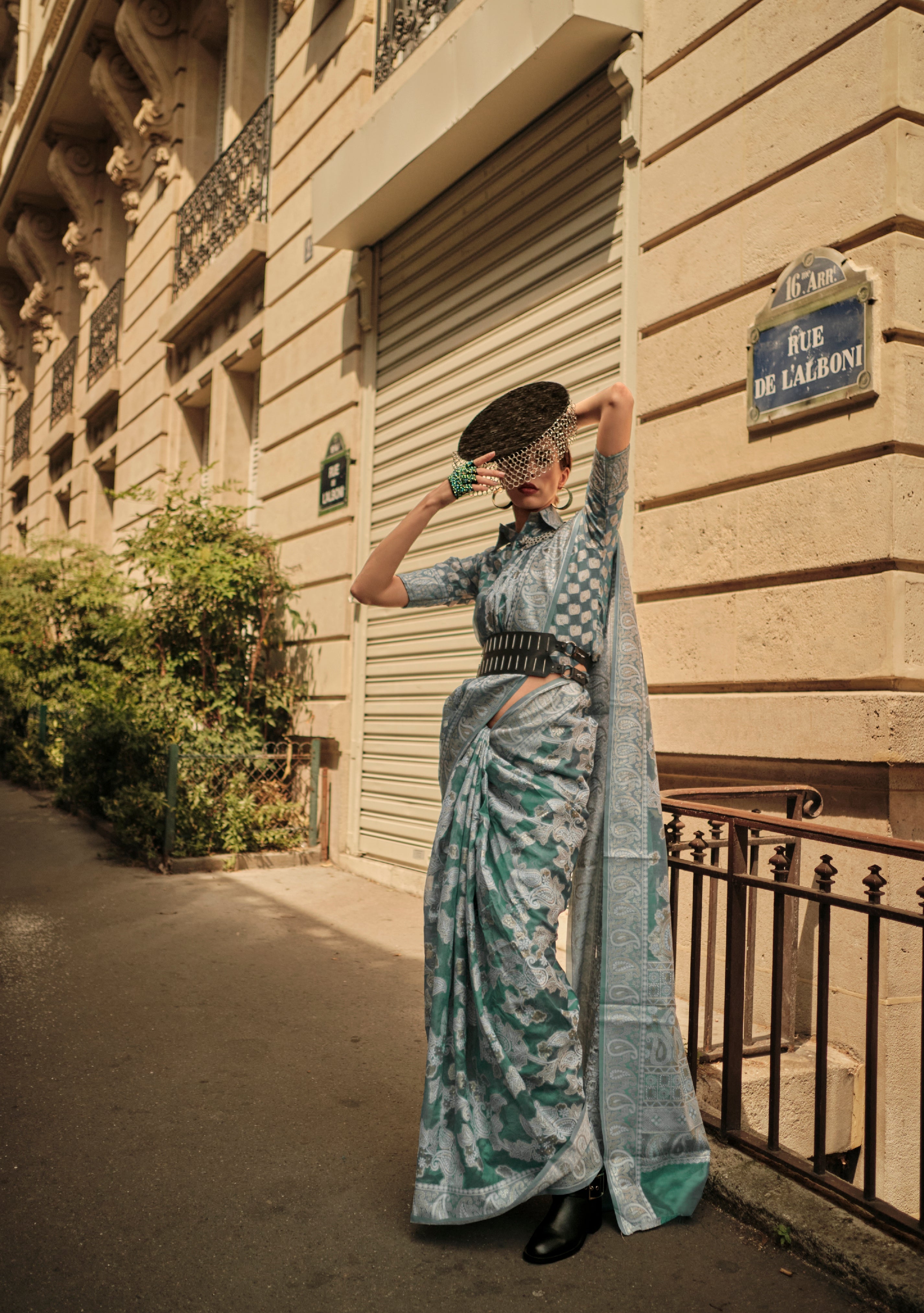
- Sage Green Printed Tissue Saree — ₹4,869. The closest match in the store to the sea-foam register: a soft sage ground in luminous tissue.
- French Green Printed Tissue Saree — ₹4,869. A fresher, slightly brighter green in the same tissue weave.
- Hillary Green Handloom Tissue Silk Saree — ₹5,169. Handloom tissue, for a little more body in the drape.
- Cascade Green Woven Lucknowi Chikankari Saree — ₹5,595. White chikankari on leafy green; the most traditional route to the same softness.
- Pista Green Banarasi Katan Silk Saree — ₹6,492. Pistachio green with Banarasi zari brocade, if you want the pastel with real weight.
- Olivine Green Kashmiri Organza Handloom Saree — ₹7,482. Organza, for the crispest version of the silhouette.
- Casal Green Woven Paithani Silk Saree — ₹5,985. A Maharashtrian weave, which is the regionally apt choice for Ganpati.
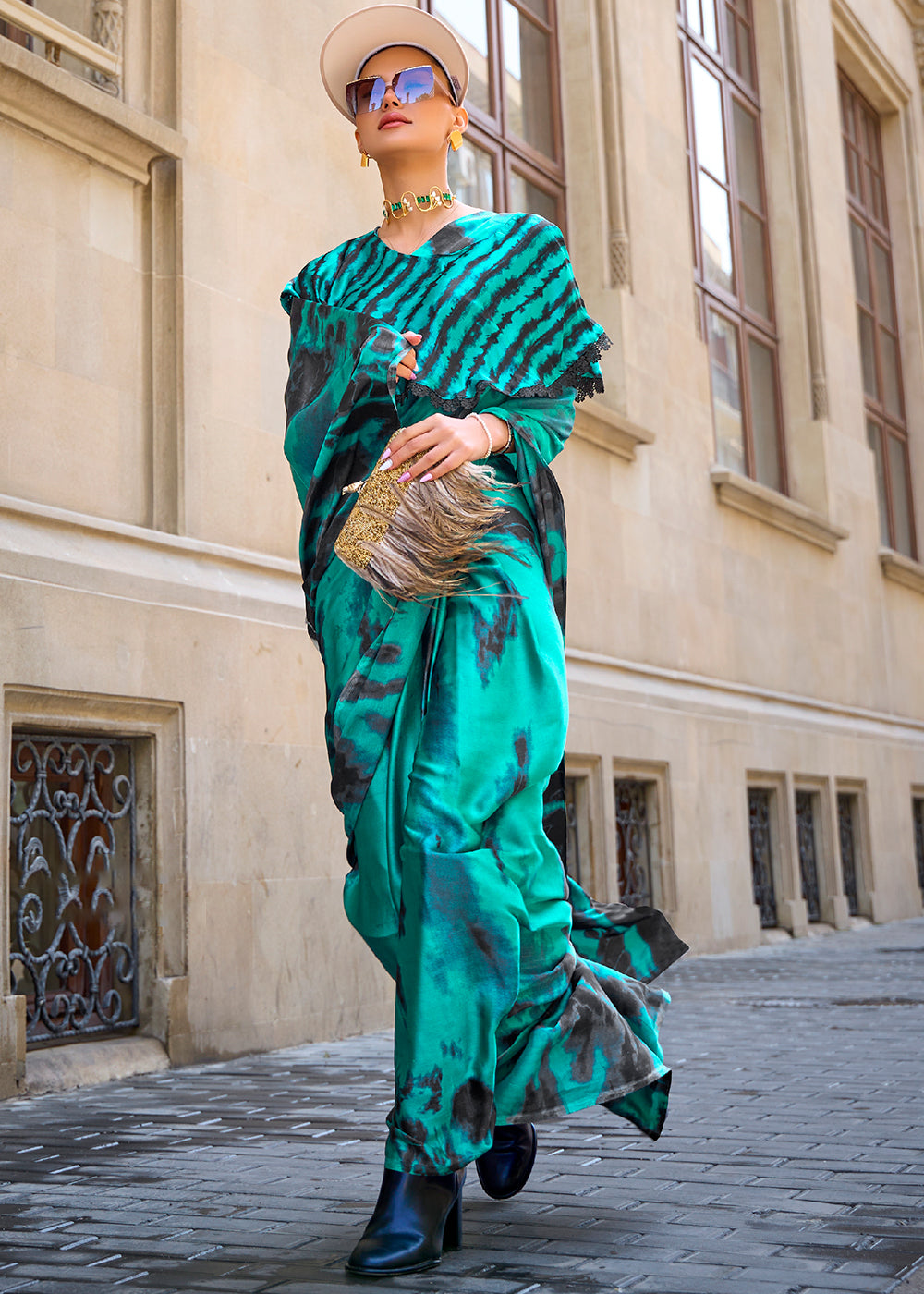
- Turquoise Green Printed Satin Crepe Saree — ₹2,874. The lightest-budget entry into the palette.
Browse the full Green Sarees collection, or narrow by budget: ₹3,000–₹5,000 and ₹5,000–₹7,500.
FAQ
What colour saree did Alia Bhatt wear to the Ambani Ganpati celebrations in 2026?
She wore a sea-foam green — a pale, cool pastel green — in a custom saree by the designer Masaba, paired with a matching off-shoulder corset-style blouse. The look was styled by Priyanka Kapadia.
Why does Alia Bhatt so often wear pastel sarees to festive events?
Pastels photograph well in the mixed indoor-outdoor light of daytime festive events, where deep jewel tones can read as heavy or flat. A pale ground also lets a single statement jewellery piece carry the look, which is a consistent feature of her festive styling — one strong earring, minimal everything else.
Can I get this look without buying a designer saree?
Yes. The saree itself was couture and not something any retailer stocks, but the three elements that actually create the effect are reproducible: a pastel green in a fabric with some sheen (tissue or organza), a structured blouse in an exactly matching shade, and gold jewellery restricted to two placements. The weave matters less than the colour discipline.
Get the palette
Start with the Green Sarees edit — it is filtered to in-stock pieces only, so everything you see is available to order. For the festive-weave route, the Paithani and Banarasi collections carry the widest green range.
Shop the fabrics that carry a pastel
The green, Banarasi, Chikankari and Paithani shelves are all linked above, so this section goes the other way — by cloth, which is what actually decides whether a pale shade glows or goes dusty. Start with the tissue sarees, the weave behind four of the pieces listed above and the one that keeps a sea-foam green luminous; the shelf is rule-built so a piece only appears while stock is recorded against it. For more body in the drape, the handloom saree edit gathers the hand-woven tissue and silk versions of the same palette, and it is built on the same in-stock rule. At the lighter-budget end, the crepe fabric sarees and the satin saree edit are where the printed satin-crepes sit — the route the turquoise green above comes from.
One honest gap: the article recommends organza twice, but our organza shelf has nothing available to order at the moment. Until that changes, the crisp-lustre effect is best found through the tissue edit.


Leave a comment
This site is protected by hCaptcha and the hCaptcha Privacy Policy and Terms of Service apply.