

Pre-Draped Sarees Decoded (2026): What to Buy, What Never to Stitch

A pre-draped saree is a saree whose pleats and pallu are stitched, pinned or structured into the garment permanently, so you step into it like a skirt instead of draping it. It is the fastest-growing thing in ethnic wear right now, and it works brilliantly — on fluid fabrics like crepe, georgette, satin and organza. On a heavy handloom with real zari, it is a decision you cannot undo, and most people regret it.
Here's the honest version of the trend: what you gain, what you permanently give up, and the two weaves we'd never let a tailor cut.
What "pre-draped" actually means (and the three types you'll see)
The word covers three very different garments, and shops use it loosely:
- Fully stitched concept saree. Pleats, pallu and often an attached waistband are sewn into a single piece. Zero draping skill needed. Zero flexibility.
- Semi-stitched / ready-pleat saree. Only the front pleats are stitched into a pleat box; the pallu is still loose and you pin it yourself. This is the sensible middle ground.
- Saree-skirt sets. A skirt plus a separate pallu panel. Technically not a saree at all — and if the shop doesn't say so, that's a flag.
In India, converting an existing saree at a tailor typically runs ₹800 to ₹2,500 depending on whether you want just the pleat box or the full stitched drape with a fitted waistband.

What you gain
Time, mostly — and it's not a small thing. A hand-drape with proper pleat alignment takes 12 to 20 minutes if you're good at it. A pre-draped saree takes about 90 seconds. For a work event, a Sangeet where you're changing twice, or a 6 a.m. flight to a wedding, that is the whole argument.
You also gain pleat consistency. Hand-pleating a slippery satin crepe is genuinely hard; the pleats splay by hour three. Stitched pleats hold their depth all night, which is why this trend started with exactly these fabrics and not with silk.
What you lose — the part shops don't mention
A stitched drape freezes three measurements permanently: your waist, your height, and your pleat depth. Pleats are set at roughly 4.5 to 5 inches; the pallu falls at a fixed length. A saree stitched for someone 5'2" will sit wrong on someone 5'8", and vice versa. So the garment stops being shareable — no lending it to your sister, no passing it down, and a much thinner resale market.
You also lose fabric. Building a stitched drape and waistband consumes length and usually adds a lining, which is why a converted saree almost never goes back to being a flat six yards.
The weaves to never pre-stitch
Here's our actual position, and it's a firm one: never pre-stitch a real handloom Paithani, Kanjivaram or Banarasi. Three reasons, and they're technical, not sentimental.
First, weight. These sarees run 700g to 900g, some bridal Kanjivarams higher — we've covered the full range in our saree weight guide. That mass hanging off a stitched waistband drags the whole silhouette down and stresses the seam, where a hand-drape distributes weight across the whole waist.

Second, zari. Real zari is metal thread. Fold metal in the identical place every single time and it work-hardens, then cracks. A stitched pleat creates exactly that permanent crease line, and the damage shows as dull, broken zari along the fold within a couple of years.
Third, value. An heirloom weave's worth is tied to it being intact. Cut it and you've converted an asset into an outfit.
How to get the look without cutting anything
You genuinely don't need to buy a pre-draped saree to get the pre-draped silhouette. Two reversible tricks do most of the work:
- Pleat once, store pleated. Drape properly, then remove and store with the pleats folded rather than flattening the saree. Your second wear takes half the time.
- A slim belt over the waist. 2026's belted saree has moved away from wide leather to tonal fabric belts and thin metal waistbands. A belt holds pleats exactly where a stitched waistband would — and comes off.
Pair that with a clean pinning method and you're at 80% of the structure with none of the commitment. Our 4-pin method is built for exactly this, and the full saree draping guide covers pleat depth by height.
Shop the Edit: fabrics that actually suit a structured drape
If you want the pre-draped look, start with fabric that behaves. Fluid crepes, satins and printed georgettes hold engineered pleats without bulk. Prices below are our regular list prices — seasonal offers at checkout often bring these lower.
- Prussian Blue Bandhani Gaji Satin Mirror Work Silk Crepe Saree — ₹3,390. Gaji satin has enough body to hold a deep pleat and enough fall to move.
- Moonhex Pink Ajrakh Printed Satin Crepe Silk Saree — ₹3,231. Crepe is the single most forgiving fabric for structured pleating.
- Leaf Green Ajrakh Satin Printed Mirror Work Saree — ₹3,559. Mirror work reads beautifully on a fixed pleat box because the pleats stop shifting.
- Mahogany Brown Designer Sequin Embroidery Work Saree — ₹3,720. A belt-and-pleat candidate for cocktail evenings.
- Emerald Green Woven Paithani Silk Saree — ₹5,985. The counter-example: wear this one draped by hand, always.
Browse more in Satin Sarees and Printed Sarees, and if you're weighing a heritage weave instead, the silk saree buying guide walks through what you're paying for.

FAQ
Is a pre-draped saree still a saree?
Culturally, yes — it's the same textile and the same silhouette. Technically, a fully stitched version is a constructed garment rather than an unstitched drape. If that distinction matters at a traditional ceremony in your family, choose a semi-stitched version with a loose pallu instead.
Can a pre-draped saree be altered later?
Waist can usually be let out or taken in by an inch or two. Height and pleat depth generally cannot, because the pallu length and pleat box are set at construction. Assume it's fitted to one person permanently.
Which fabric is best for a pre-draped saree?
Satin crepe, georgette and lightweight organza. They're fluid enough to pleat cleanly and light enough that a stitched waistband won't sag. Avoid heavy zari silks and anything above roughly 700g.
The short version: pre-drape the fabrics that are meant to move, hand-drape the ones meant to last. Start with the latest saree designs and pick a fabric before you pick a silhouette.
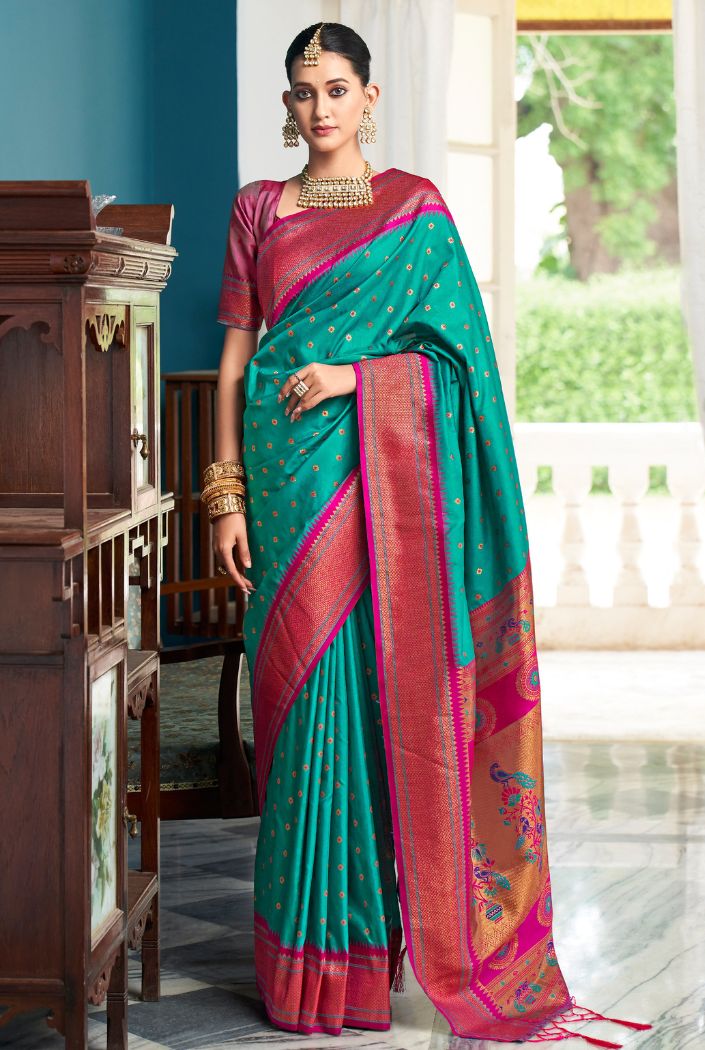
Shop the fabrics that take a structured pleat
Satin and printed sarees are already linked above, and the satin shelf already carries satin crepes, so this section goes to the other fabrics this guide names. The FAQ's answer to which fabric suits a pre-draped saree includes georgette, and the georgette saree collection has pieces available to order — it is rule-built, so a saree only appears on it while stock is recorded against it. The tie-dye pieces, including the Prussian blue bandhani at the top of this page, are gathered in the bandhani saree edit, and the Ajrakh prints listed above, the Moonhex pink and the Leaf green, sit in the Ajrakh saree collection — both built on the same in-stock rule.
One honest gap: this guide also recommends lightweight organza, and our organza shelf has nothing available to order at the moment. Until that changes, georgette, crepe and satin are the fluid fabrics we can put in front of you.


Leave a comment
This site is protected by hCaptcha and the hCaptcha Privacy Policy and Terms of Service apply.