

Buying Silk Sarees Online in New Zealand (2026): NZD Prices, the NZ$1,000 GST Line & What the India–NZ FTA Changes
Yes — you can order silk sarees from India to New Zealand, and in almost every case you will pay no customs duty and no GST at the border. New Zealand's duty and GST threshold for imported goods is a customs value of NZ$1,000, and a single saree from an Indian online store lands nowhere near it. The costs that actually matter are the free-shipping threshold, your bank's conversion rate, and a return window far shorter than New Zealand retail has trained you to expect.
What a silk saree from India actually costs in NZD
Prices on MySilkLove are listed in Indian rupees (₹) and your card provider converts at its own rate, so the NZD figures below are a guide, not a quote. They use the mid-September 2026 rate of roughly ₹55 = NZ$1 and reflect live in-stock ranges.
| What you're buying | Typical live range (₹) | Approx. NZD |
|---|---|---|
| Printed & Kalamkari sarees (entry point) | ₹3,150 – ₹3,900 | NZ$57 – NZ$71 |
| Kanjivaram | ₹4,650 – ₹6,320 | NZ$85 – NZ$115 |
| Paithani | ₹5,900 – ₹6,000 | NZ$107 – NZ$109 |
| Banarasi, incl. Kashmiri Jamawar | ₹7,200 – ₹10,100 | NZ$131 – NZ$184 |
| Blouse stitching (add-on) | ₹1,599 – ₹1,999 | NZ$29 – NZ$36 |
| Fall, pico & edging (add-on, prepaid orders) | ₹300 | about NZ$5.50 |
The top of the live catalogue sits near ₹10,100. If a site quotes you NZ$900 for an "investment" saree, you are paying for a showroom or a middleman.
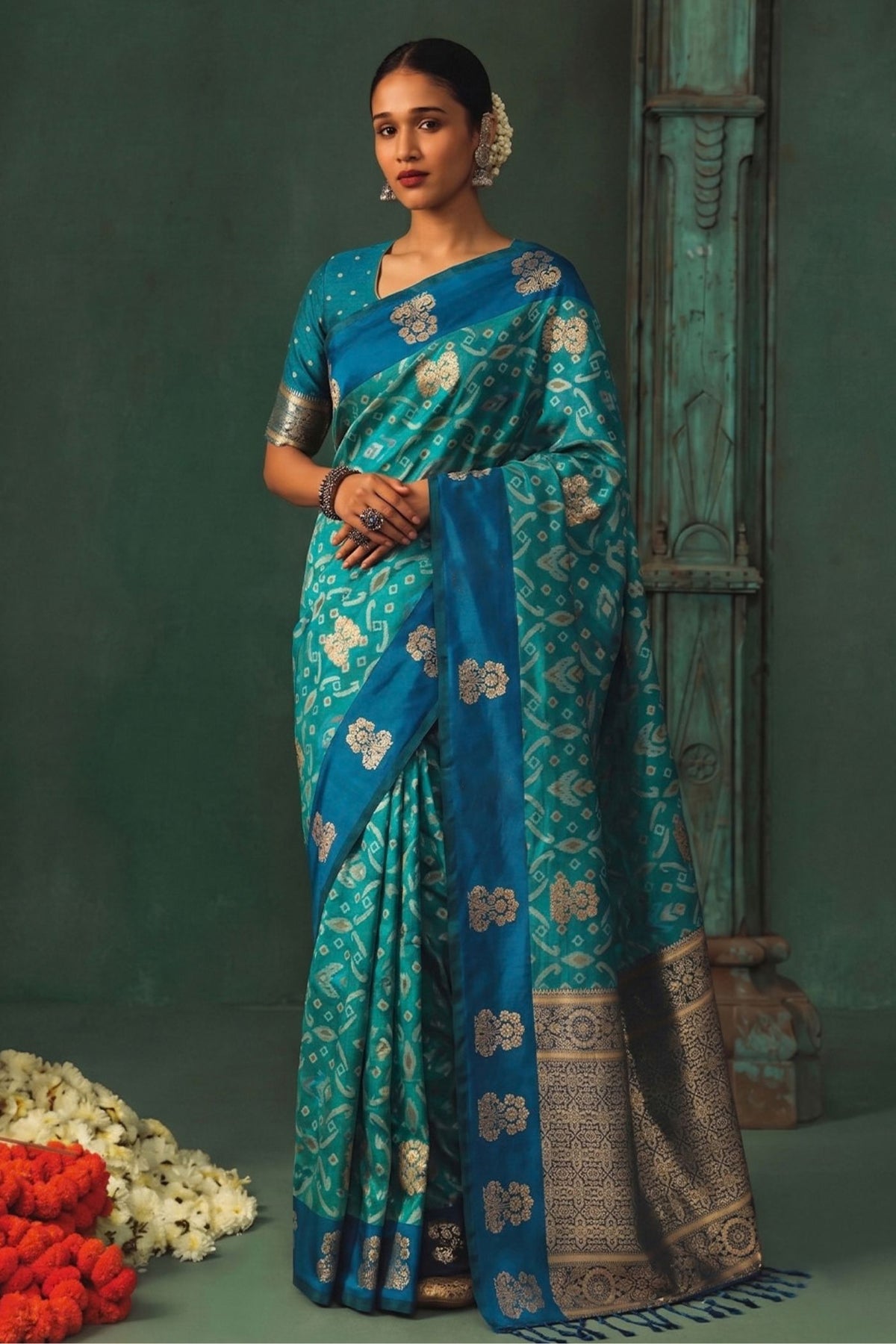
The NZ$1,000 line — and why your order sits well under it
New Zealand Customs does not collect duty or GST on an imported consignment with a customs value of NZ$1,000 or less (alcohol and tobacco excepted). That figure is the value of the goods themselves — freight and insurance are excluded from the test.
Instead, since December 2019, overseas sellers above the NZ$60,000 annual New Zealand sales threshold are required to charge 15% GST at the point of sale on low-value goods. Whether that line appears on your checkout depends on the seller's GST registration, so read the order summary before you pay rather than assuming either way.
One change worth knowing: from 1 April 2026, Customs applies a low-value goods levy of NZ$2.21 plus GST per qualifying consignment — NZ$1.46 Customs plus NZ$0.75 MPI biosecurity, slightly lower by sea. Small, but new, and charged per parcel.
Above NZ$1,000 the picture changes sharply: Customs collects GST and any duty, and fixed entry charges apply — an import entry transaction fee plus the biosecurity system entry levy. Those flat fees, not the duty rate, are what make a NZ$1,050 consignment feel disproportionately expensive.
Now the arithmetic that matters. NZ$1,000 is roughly ₹55,000 — about nine top-of-catalogue sarees in one consignment. One saree cannot cross it. A full bridal trousseau shipped in a single box can, so if you are buying from the Wedding Edit for a family wedding, consider splitting it across two consignments.

What the India–New Zealand FTA changes (honestly, not much for you)
India and New Zealand signed a free trade agreement in Delhi on 27 April 2026, after concluding negotiations in December 2025. New Zealand's Parliament passed the implementing legislation on 16 September 2026. For textiles it provides zero-duty access across 1,057 tariff lines, replacing New Zealand tariffs that ran as high as 10% on Indian apparel.
Two caveats. First, it is not yet in force — New Zealand's vote is a domestic step, and India has still to complete its own ratification. Second, and more relevant to you: New Zealand already charged no duty below NZ$1,000, so removing a tariff that never applied to your saree changes your invoice by nothing. The FTA matters for commercial shipments and bulk importers. If a retailer offers you an "FTA discount" on a NZ$150 saree, there was no duty there to pass on.
Shipping — what "free" actually means here
MySilkLove's international shipping is threshold-based, not unconditional, and the threshold moves:
- Standard orders: shipping is free on prepaid orders above ₹6,000 (about NZ$109). Below that it is ₹1,000, roughly NZ$18.
- Orders with stitching: adding blouse stitching moves the order onto the customised-products profile, where the free-shipping bar rises to ₹7,000 (about NZ$127).
That second rule catches people out. A ₹6,500 saree ships free on its own, then picks up ₹1,000 of shipping the moment stitching is added. Either add a second item to clear ₹7,000, or order the stitching separately.
Duties and taxes are not prepaid — this is not a DDP service. Below NZ$1,000 that is academic. Above it, the courier advances the charges and bills you on delivery. Plan on roughly 4–5 business days to dispatch plus 4–5 in transit; the current terms are on the shipping policy page.
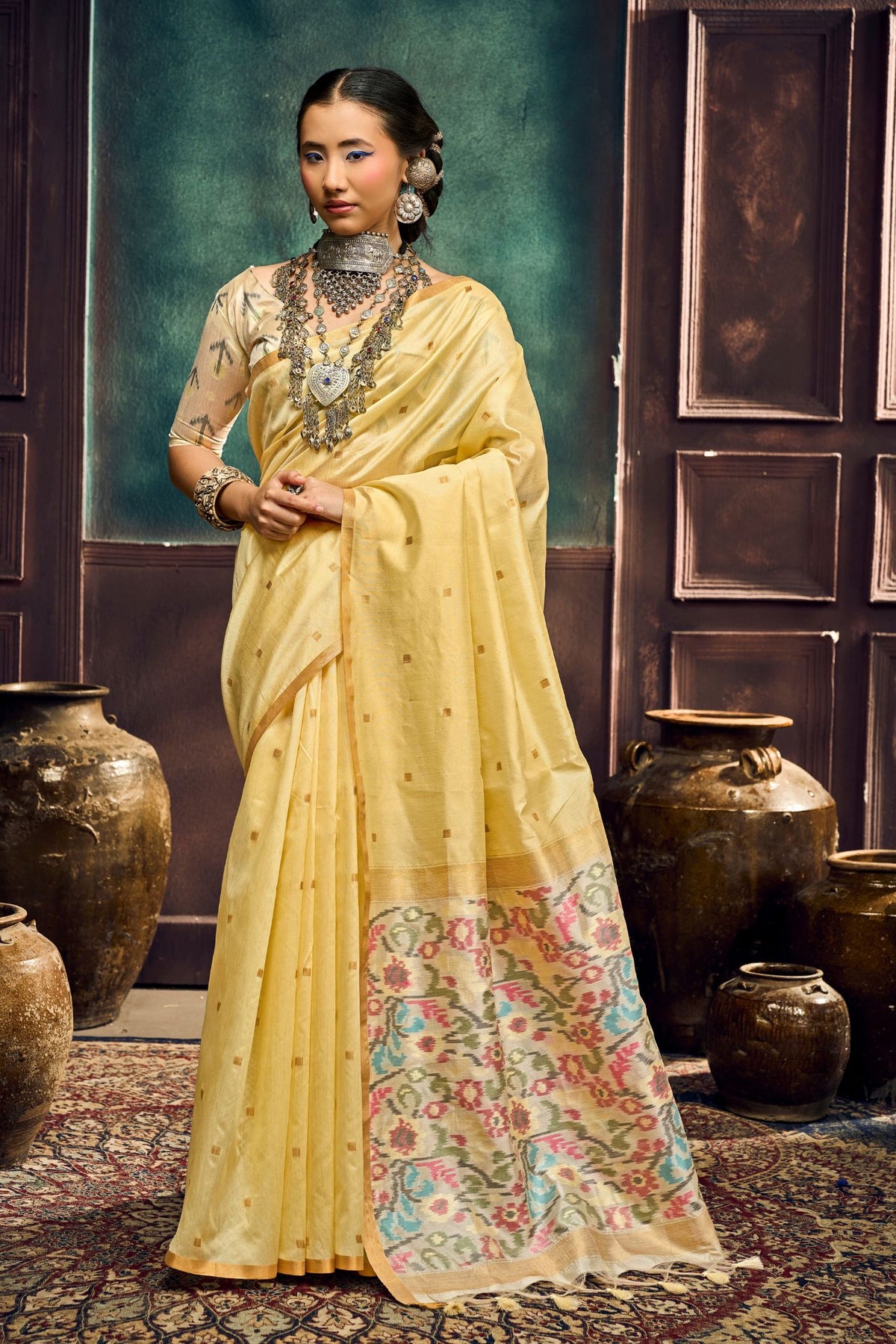
The first 48 hours after your parcel lands
International orders carry a two-day return window from delivery, you pay the return courier, the refund covers the product only, reverse import duty at India's ports is deducted from it, and exchanges are not offered on international orders at all. In practice the unboxing is the inspection. Two checks, both doable in daylight in your first hour:
Kanjivaram — find the korvai join. In a korvai Kanjivaram, body and border are woven on separate warps in different colours and interlocked by hand, three shuttles working together. The join runs as a fine zigzag — weavers call it the pitni — that you can feel with a fingernail along the border edge. A border that is printed or dyed on has no join to find, because nothing was joined.
Banarasi — turn it over. In kadhwa weaving each motif is woven in individually and the reverse is comparatively clean. In cutwork, the float threads run between motifs and are snipped afterwards, so the back shows cut ends. Neither is a fake — cutwork is a legitimate, faster, cheaper technique — but they should not cost the same, and the reverse tells you which you were sold.
One hard rule: any needle through the cloth ends your window. Blouse stitching, fall, pico, pleating or pre-draping makes a saree non-returnable and non-exchangeable. Decide before you add it, not after. A 24-hour cancellation still gets a full refund either way — the full terms are on the return and exchange policy page.
FAQ
Do I pay GST on a saree shipped to New Zealand?
Not at the border, if the consignment's customs value is NZ$1,000 or less — Customs does not collect duty or GST at that level. Registered offshore suppliers charge 15% GST at checkout instead, so whether you see a GST line depends on the seller's New Zealand registration. Since 1 April 2026 a low-value goods levy of NZ$2.21 plus GST also applies per consignment.
Will the India–New Zealand FTA make sarees cheaper for me?
Almost certainly not. It removes New Zealand tariffs of up to 10% on Indian textiles across 1,057 tariff lines, but duty never applied below NZ$1,000 in the first place. It is also not yet in force — New Zealand passed its implementing law on 16 September 2026 and India's ratification is outstanding.
How long does delivery to New Zealand take?
Roughly 4–5 business days to dispatch and another 4–5 in transit — about a week and a half door to door, longer across Indian festival weeks. For a dated event, order three to four weeks ahead, especially with stitching, which adds time and removes your right to return.
Which weave should a first-time buyer in Auckland or Wellington choose?
A Kanjivaram or a soft-silk Banarasi is the safer first order — both hold a drape well in humid coastal air, and neither asks for the careful handling a heavy tissue or organza does. Browse Kanjivaram sarees and Banarasi sarees for occasion buys, or party wear sarees for something lighter you will re-wear. Our silk saree buying guide walks through the authenticity tests in detail.
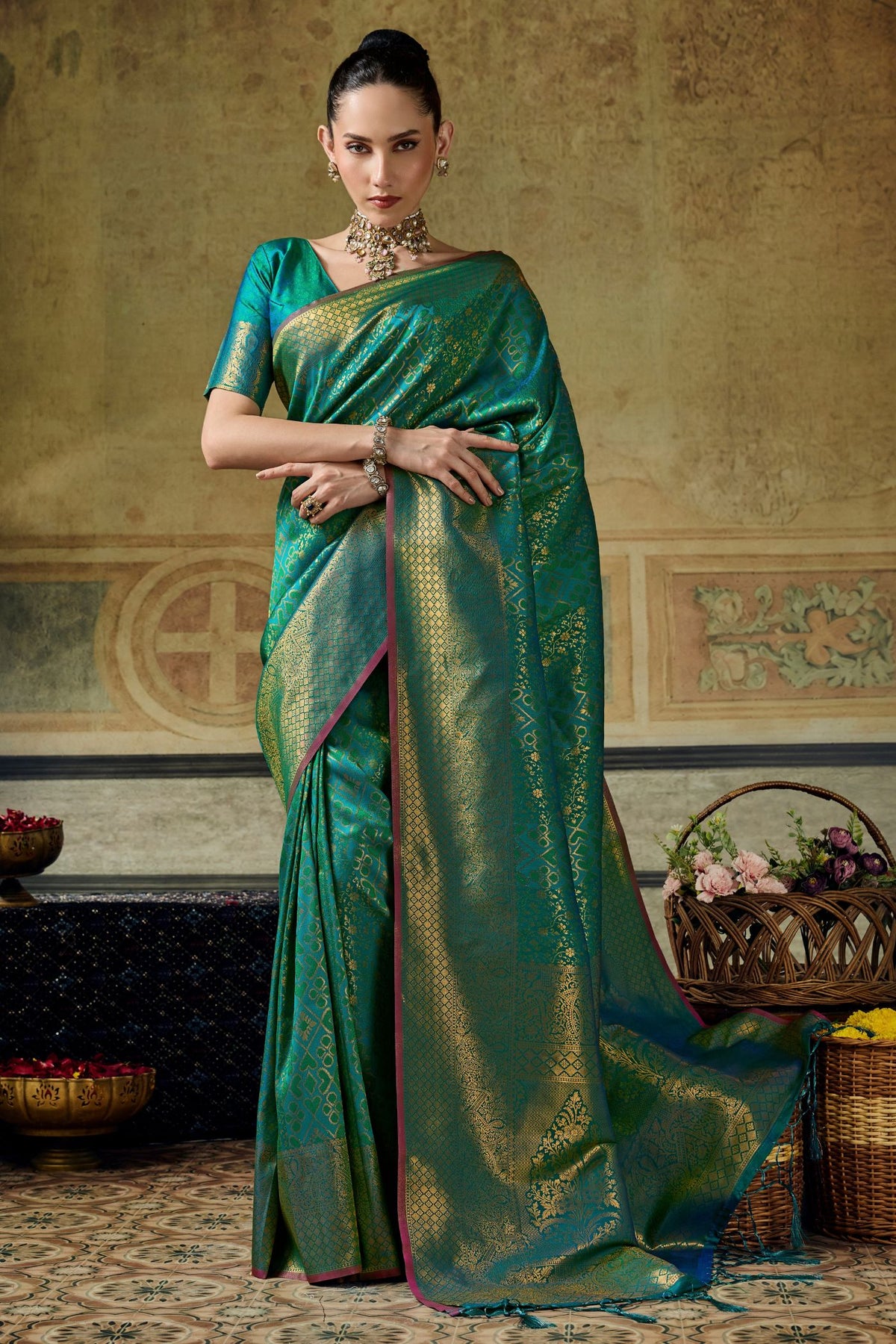
Shop by the tiers in this guide
Each price band above maps to a shelf you can open now. At the entry point, browse printed silk sarees and the hand-drawn Kalamkari saree edit — both rule-built to show only pieces with stock against them, which matters when you are ordering from the other side of the Indian Ocean. For the Banarasi tier named in the table, shop Kashmiri Jamawar Banarasi sarees, the woven-shawl-motif family that sits at the top of that range. And for the soft-silk Banarasi the FAQ recommends as a first order in coastal air, explore soft silk sarees, which drape without the careful handling a heavier weave asks for.


Leave a comment
This site is protected by hCaptcha and the hCaptcha Privacy Policy and Terms of Service apply.