

Ganpati Visarjan 2026 Saree Guide: What to Wear on 25 September

Ganpati Visarjan 2026 falls on Friday, 25 September — Anant Chaturdashi, the tenth and final day of Ganeshotsav. If you are walking with the mandal that day, wear a lightweight drape you can move in and leave the heavy zari at home. If you are doing a home visarjan or a short trip to the ghat, that is where a Paithani earns its place. The two are genuinely different dress briefs, and most people get caught out by treating them as one.
Here is how to plan all ten days — including the Gauri days, which are the real saree occasion of the festival.
Ganpati Visarjan 2026: the dates that actually matter
Not every household immerses on day ten. The visarjan you dress for depends entirely on which tradition your family follows:
- Ganesh Chaturthi (sthapana): Monday, 14 September 2026
- Dedh-din (1.5-day) visarjan: Tuesday, 15 September
- 3-day visarjan: Wednesday, 16 September
- Gauri Avahan: Thursday, 17 September
- Gauri Pujan: Friday, 18 September
- 5-day visarjan & Gauri Visarjan: Friday–Saturday, 18–19 September
- 7-day visarjan: Sunday, 20 September
- Anant Chaturdashi — the main visarjan: Friday, 25 September
If you are buying for the festival, buy once and plan across those dates rather than shopping twice. Our Ganesh Chaturthi saree guide covers installation day; this one picks up from there.

Why the visarjan saree is a different brief entirely
Chaturthi morning is a seated, indoor, controlled occasion — aarti at home, photographs, relatives. Visarjan is none of those things.
Consider what the day actually looks like in Pune. In 2025, the city's immersion procession ran for roughly 34 hours. The manache Ganpati themselves kept reasonable time — Kasba Ganpati was immersed at 3:47 pm, Tambdi Jogeshwari at 4:10, Guruji Talim at 4:34, Tulshibaug at 4:58 and Kesari Wada at 5:38 pm at Panchaleshwar Ghat — but the mandals behind them carried on deep into the following night.
So the honest brief is: several hours on your feet, September humidity, gulal in the air, dhol-tasha crowds pressing in from both sides, and a real chance of rain. That is a fabric problem, not a styling problem.
If you are walking in the procession
Here is the position I will defend: do not wear your best real-zari Paithani to the ghat. Metallic zari and gulal are a genuinely bad pairing — the powder settles into the weave, and the moment it meets sweat or rain you are looking at tarnish along the border that no amount of careful dabbing fixes. A saree you love is worth protecting from one afternoon.
What works instead:
- A nauvari, if you can drape one. The nine-yard kashta exists precisely because Maharashtrian women needed to move. The between-the-legs drape frees your stride in a way a Nivi simply cannot, and there is no loose pleat sweeping the road. Be realistic about the weight, though — nine yards is roughly 800g of fabric before you add the blouse, nath and khopa. You will feel that by hour four. Our step-by-step nauvari kashta guide walks through it.
- Or a lighter silk in a forgiving colour. A soft handloom Gaji or a fluid blend drapes close, dries fast and does not hold gulal the way a stiff zari border does.
- Skip cream, ivory and pastel. Gulal is not negotiable on visarjan day. Deep reds, greens, purples and blues absorb a stray handful and carry on looking intentional.
- Pin the pallu at the shoulder and again at the waist. In a dhol-tasha crowd, an unpinned pallu will be stepped on.
If you have walked the Wari, the logic will feel familiar — we wrote about it in our Ashadhi Ekadashi and Pandharpur Wari guide. Visarjan is the compressed, urban version of the same problem.

If it is a home visarjan or a short ghat visit
Most families immerse a small idol in a drum or a nearby tank in under an hour. That changes everything — you are dressed for the aarti and the photographs, not for a march.
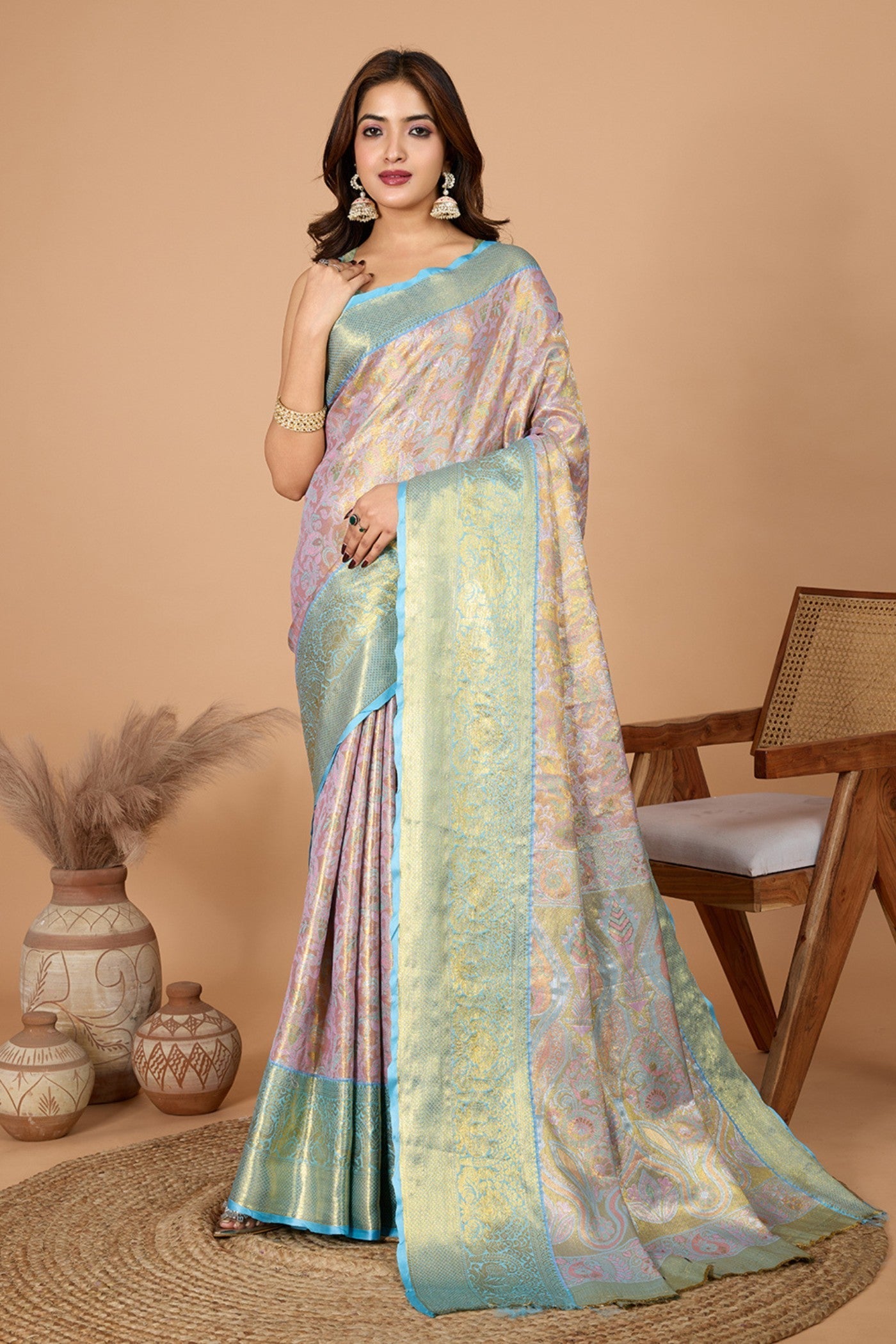
This is where a Paithani belongs. Look for the traditional motifs rather than a generic floral: the titli (butterfly), the peacock, the lotus, and the Vithala–Rukhmani figures that carry real devotional weight in Maharashtra. Green, rose red and aubergine are the classic Ganeshotsav palette, and a contrast border does the work of a necklace.
Gauri Pujan, 17–19 September: the real saree occasion
If you are only going to wear one special saree during Ganeshotsav, wear it for Gauri Pujan on Friday, 18 September. The Gauris arrive as honoured guests, the naivedya is elaborate, the house is full, and everyone is photographed. It is an indoor, seated occasion — the exact conditions a good Paithani is built for, and none of the conditions that ruin one.
Dress the Gauris themselves in a saree too, as tradition holds — many families use a nauvari or a bright Paithani for the murtis.
Shop the Edit
All list prices below; seasonal offers at checkout often bring these lower.
- Rose Red Woven Paithani Saree — ₹5,332. Woven with Vithala and Rukhmani motifs; the most occasion-appropriate piece we stock for Ganeshotsav.
- Sycamore Green Zari Woven Titli Royal Paithani Silk Saree — ₹5,999. The titli (butterfly) motif in the classic festive green.
- Alizarin Red Zari Woven Paithani Saree — ₹4,980. A deep red that photographs beautifully under aarti light.
- Eggplant Purple Zari Woven Paithani Saree — ₹4,980. Aubergine is underused for Ganeshotsav and hides gulal better than most.
- Orient Blue and Pink Handloom Gaji Silk Saree — ₹5,169. Lighter and more fluid — our pick if you are actually walking.
- Pearl Sea Blue Woven Paithani Silk Saree — ₹5,985. A cooler alternative to the usual festive red and green.
Browse the full Paithani sarees collection, or if you want a second, more expendable drape for the procession itself, the ₹3,000–₹5,000 range is the sensible place to look.
For the wider context on Maharashtrian weaves and drapes, our complete Maharashtrian saree guide covers nauvari, Paithani and the traditional styles in depth.

Browse by drape and by shade
If you want the whole Maharashtrian wardrobe in one place — nauvari-ready drapes, Paithani and the traditional festival pieces side by side — start with the Maharashtrian saree collection. To shop the visarjan-day colour rule above, the red saree collection and the purple saree collection hold the deep, gulal-forgiving shades this guide recommends, aubergine included. And if you are walking rather than watching, the soft silk saree collection is where the lighter, faster-drying drapes live — the ones worth risking on the ghat.
Frequently Asked Questions
What colour saree should I wear for Ganpati Visarjan?
Deep, saturated shades work best — red, green, purple, mustard and royal blue. These are the traditional Ganeshotsav colours and, practically, they absorb gulal without looking stained. Avoid cream, ivory and pale pastels on visarjan day; a single handful of colour ruins them for the photographs.
Can I wear a Paithani for Ganpati Visarjan?
For a home visarjan or a short ghat visit, yes — a Paithani is ideal. For a long mandal procession, we would not recommend your best zari piece. Gulal, sweat and rain tarnish metallic zari, and the damage along the border is usually permanent. Wear a lighter silk to walk and save the Paithani for Gauri Pujan.
Is nauvari necessary for Ganeshotsav?
It is not compulsory, but it is the most practical choice if you are walking. The nine-yard kashta drape frees your legs and keeps fabric off the road, which matters over several hours in a crowd. A well-draped five-and-a-half-yard saree, firmly pinned at the shoulder and waist, is a perfectly respectful alternative.

Ganpati Bappa Morya. Whether you are walking to Panchaleshwar Ghat or immersing a small murti in the courtyard, start with the Paithani sarees collection — and order well before 25 September so it reaches you in time for Gauri Pujan.


Leave a comment
This site is protected by hCaptcha and the hCaptcha Privacy Policy and Terms of Service apply.