

Monsoon Saree Colours 2026: The Palette Every Indian Woman Needs Right Now
The five trending saree colours for monsoon 2026 are everglade green, dusty slate blue, turmeric gold, terracotta clay, and cloud ivory. They work across georgette, linen, and chiffon — fabrics that won't betray you when humidity hits 85%. Here's exactly what to wear, why these colours work in the rain, and which fabrics will survive the season looking sharp.
Why Monsoon Demands a Different Colour Strategy
The monsoon has a way of making bright, saturated colours look garish under grey skies — and washing out pastels entirely. The colours that win this season are the ones that play with the light rather than fight it: muted, earthy, deep, and textural. Think less "lit from within" and more "aged silk in a haveli."
There's also a practical reality that nobody talks about: wet weather changes how fabric photographs. If you're at a Rath Yatra celebration this June, or the Jagannath festivities on the 27th, you'll be in natural light — often overcast and diffuse. Dusty, earthy, and jewel tones photograph dramatically better in those conditions than coral or candy pink ever will.
2026 has made this official. Across Indian fashion weeks and bridal showcases, the move away from heavily saturated colours toward complex, slightly muted tones is unmistakable. Here's how to build your monsoon wardrobe around it.

The 5 Colours Defining Monsoon Sarees in 2026
1. Everglade Green — The Colour of the Season
Forest and everglade greens are having an enormous moment in 2026, and it's not hard to see why. Against a monsoon sky — that particular pewter-blue Indian overcast — a deep, muted green reads as grounded, confident, and expensive. It's not the lime green of a few years ago. This is green with depth: the colour of rain-soaked paddy fields, of old temple stone, of Paithani silk that's been woven with enough zari to give it a golden undertone when the light catches it.
For formal occasions, pair everglade green with antique gold jewellery rather than bright yellow gold — the warmth of antique gold brings out the complexity in the colour instead of competing with it. For daywear, a plain green linen or georgette with a minimal blouse is enough.

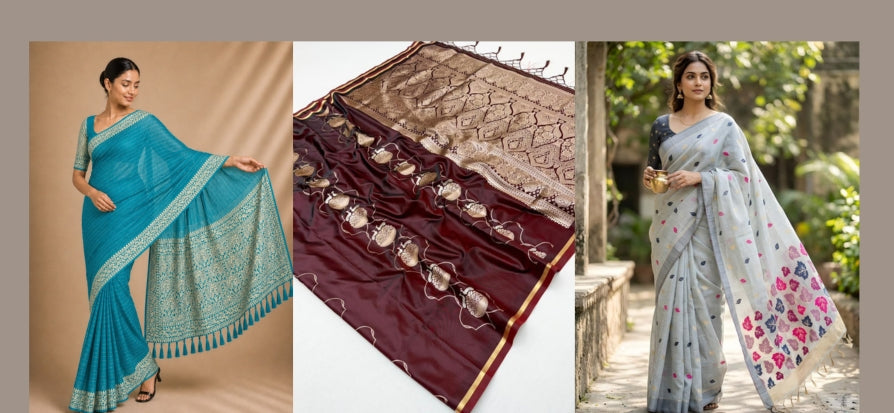
The Everglade Green Zari Woven Paithani Saree at MySilkLove is a near-perfect execution of this trend: the deep green body, the golden zari border, the Paithani weave that catches light differently at every angle. This is a saree that looks better outdoors on an overcast day than it does under a showroom tube light — exactly what you want for monsoon season.
2. Dusty Slate Blue — Modern, Calm, Unstoppable
Not navy. Not royal blue. Dusty slate — a blue with grey in it, like dusk over the Arabian Sea. This shade has been building in popularity since late 2025, and 2026 monsoon is where it peaks. It's the kind of blue that looks effortless on every skin tone, pairs with silver and gold jewellery, and manages to feel both contemporary and classically Indian at the same time.
In silk, dusty blue develops a sheen that makes it look almost iridescent in rain-diffused light. A linen-silk saree in this shade is arguably the single most versatile piece you can own this season — dress it up for a wedding, wear it to a corporate event, take it to a Sunday lunch. It does all three without complaint.

The Gum Leaf Blue Woven Linen Silk Saree hits this shade almost exactly. Linen-silk is also the ideal monsoon fabric — it's breathable, quick-drying, and drapes cleanly even in humidity without clinging. This one is tagged "Summer" in our catalogue, but honestly, it's a monsoon saree through and through.
3. Turmeric Gold — Warmth Against the Grey
Not canary yellow. Not mustard. Turmeric gold — that particular warm, slightly orange-tinged yellow that Indian kitchens and temples have been celebrating for centuries. Against monsoon's cool, grey-green light, turmeric gold creates the kind of contrast that makes you look like you're radiating warmth rather than just wearing a colour.
This is a particularly strong choice for Rath Yatra celebrations and temple visits this June. It's auspicious, it's vibrant without being aggressive, and in a woven silk it picks up every variation of light in a way that photographs like a dream.

4. Terracotta Clay — The Earth Tone That Earned Its Place
Terracotta has been a slow build, and in 2026 it finally arrives as a mainstream choice rather than a "bold" one. There's something deeply right about terracotta in the Indian monsoon — it's the colour of wet clay, of Rajasthani pottery, of temple floors after rain. It's grounded and warm and entirely unapologetic about being Indian.
In chanderi silk or soft cotton-silk blends, terracotta in the monsoon is an inspired choice for office wear and casual occasions. Pair with a cream or ivory blouse to let the earthy warmth breathe.
5. Cloud Ivory — The Quiet Statement
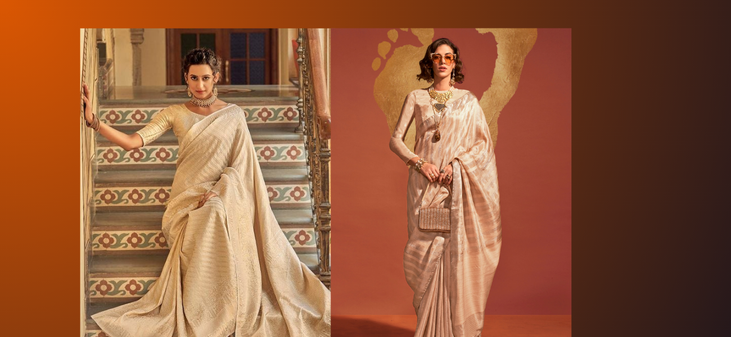
"Off-white" doesn't capture it. Cloud ivory — slightly warm, slightly grey, with a softness that pure white doesn't have — is the quiet statement of 2026. Heavily influenced by the global "Cloud Dancer" colour trend and filtering through Indian fashion in the form of tissue silks, raw Banarasi, and handloom cottons. It's light enough for humidity, elegant enough for weddings, and unlike pure white it doesn't fight with the complexion.

Fabric First: What Actually Works in Monsoon Weather
Colour is half the equation. The other half is what you're wearing it in. Here's the unfiltered truth about saree fabrics in the Indian monsoon:
- Georgette: The undisputed monsoon champion. Lightweight, quick-drying, doesn't stick to skin when damp. A 600g georgette saree will dry in 20 minutes. This is the fabric equivalent of a monsoon umbrella — you want it with you always.
- Linen silk: Breathable, moisture-wicking, and stiffens just enough when humid to hold a clean drape. The slight texture of linen means it doesn't look crumpled the way pure silk can in humidity. First choice for office wear through June–September.
- Chiffon: Beautiful in rain-diffused light, but loses structure in extreme humidity. Best for indoor occasions or early-morning events before the heat builds.
- Heavy Kanjivaram or pure Banarasi silk: We love them — but monsoon is not their season. Heavy silk absorbs moisture, loses drape, and takes days to dry properly. Save them for post-monsoon festive season. If you must wear silk, go for a lighter tissue silk variety.
- Cotton and cotton-silk blends: Underrated. Pure cotton Maheshwari or Chanderi is breathable, washable, and in the right colour — turmeric, terracotta, indigo — looks effortlessly appropriate for monsoon casual and daywear.
For a full breakdown of which silk weights and weaves suit which seasons, read our Silk Saree Buying Guide.

Blouse Pairings That Make These Colours Pop
Colour doesn't exist in isolation — the blouse combination either amplifies a monsoon palette or kills it. A few non-obvious pairings that work well this season:
- Everglade green saree + deep burgundy blouse: More interesting than the expected gold, and it reads as very 2026.
- Dusty slate blue saree + raw silk ivory blouse: Cool meets warm, and the contrast is elegant without trying too hard.
- Turmeric gold saree + forest green blouse: Both colours live in the natural, earthy register — this combination looks like it was designed by someone who actually knows colour theory.
- Terracotta saree + mustard yellow blouse: This is an Indian colour combination with centuries of history (think temple murals, Warli art, Madhubani paintings) and it absolutely holds up in 2026.
Frequently Asked Questions
What are the best saree colours for monsoon 2026?
The top saree colours for monsoon 2026 are everglade green, dusty slate blue, turmeric gold, terracotta clay, and cloud ivory. These muted, earthy, and deep tones photograph beautifully in overcast natural light and complement the grey-green monsoon palette far better than bright or highly saturated colours.
Which saree fabric is best for the monsoon season?
Georgette is the best monsoon saree fabric — it's lightweight, quick-drying, and stays comfortable in humidity. Linen-silk is a close second for office and occasion wear. Avoid heavy Kanjivaram or pure Banarasi silk in peak monsoon months; they absorb moisture and lose drape. Save those for post-monsoon festive season.
Can I wear a silk saree in the monsoon?
Light tissue silk and georgette-based silks are fine for monsoon. Avoid heavy mulberry silk (Kanjivaram, Banarasi) in peak rain months — the fabric absorbs moisture, takes days to dry, and damp storage can damage the zari. If you do wear a heavy silk, stick to indoor venues with reliable AC.

Shop monsoon-ready sarees at MySilkLove → Browse the full Silk Saree Collection — including our everglade greens, dusty blues, and linen-silks that are built for exactly this weather.
Shop monsoon-ready sarees
Build your rainy-season wardrobe from the fabrics this guide recommends: browse quick-drying georgette sarees — the monsoon champion, sortable by price — explore breathable linen silk sarees in dusty slate blue and earthy tones, or find the everglade-green Paithani silk sarees that define the 2026 palette.

Leave a comment
This site is protected by hCaptcha and the hCaptcha Privacy Policy and Terms of Service apply.