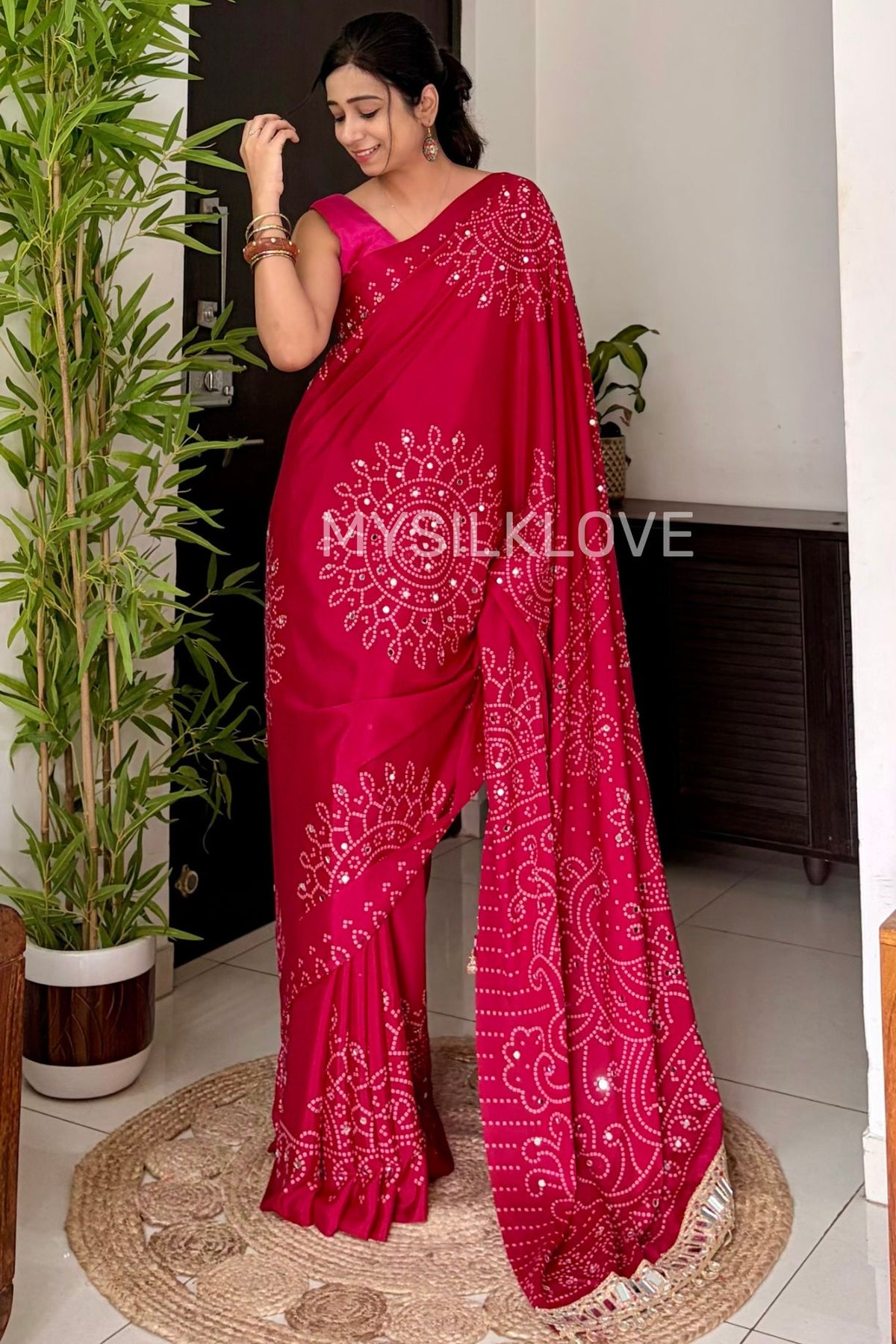
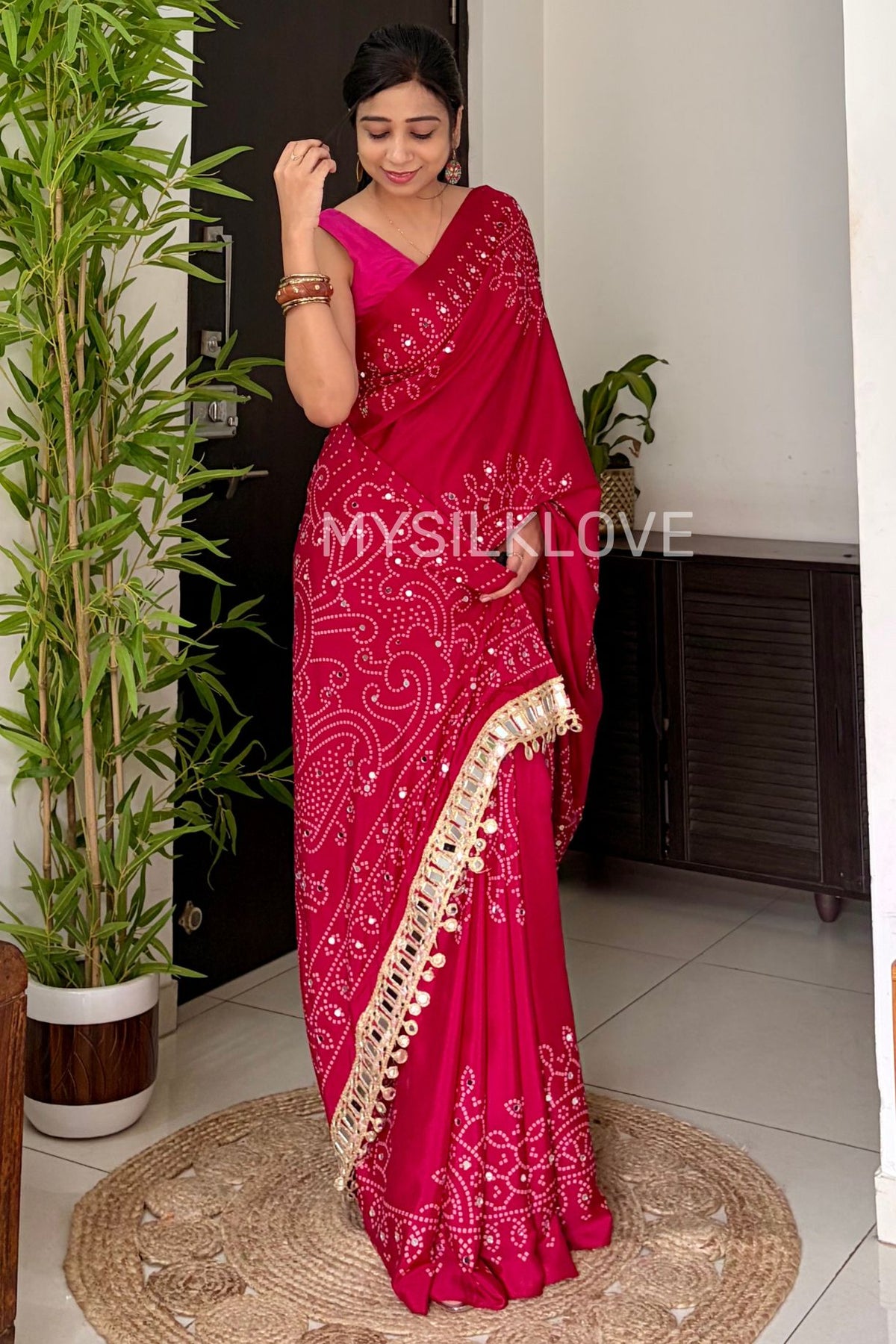
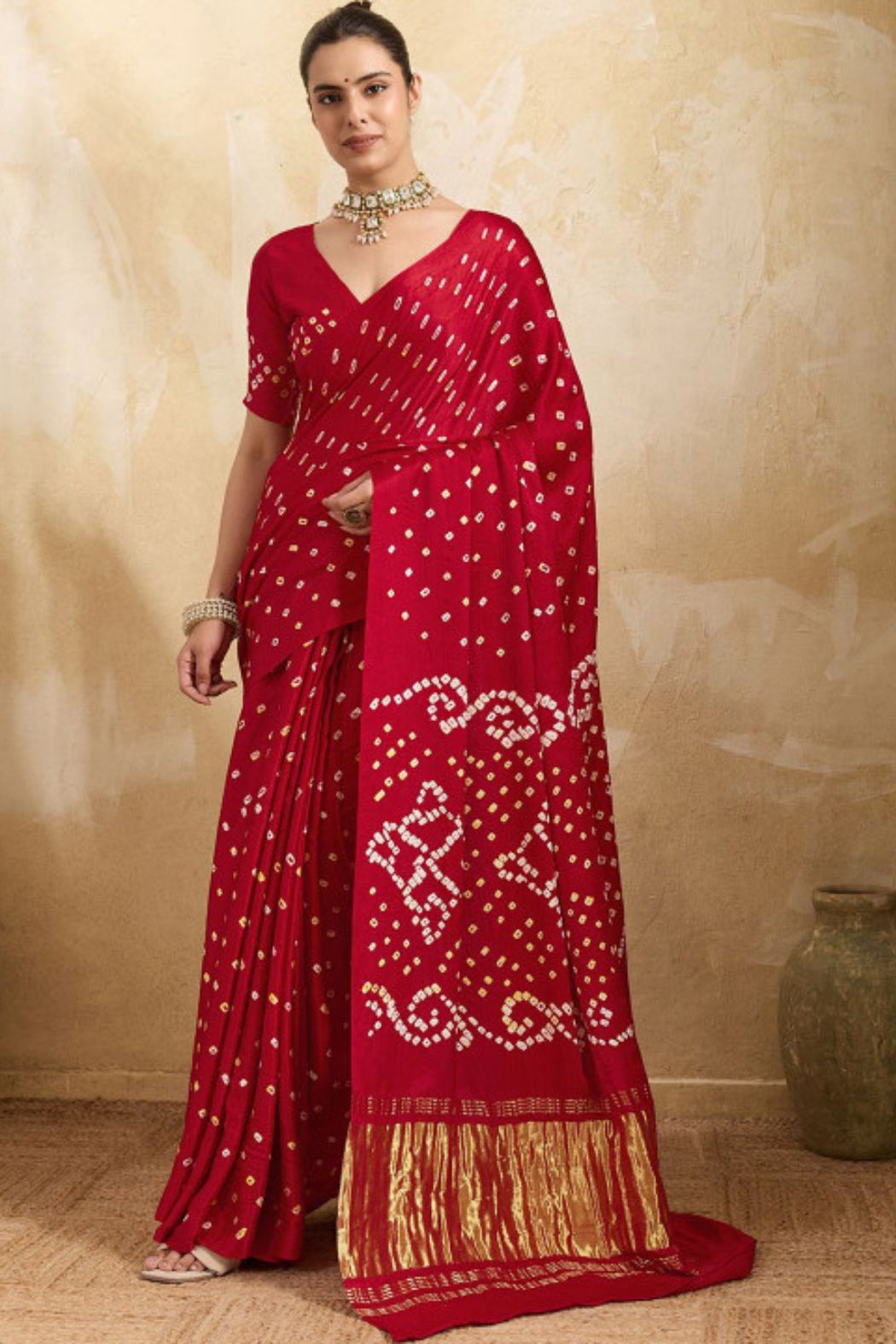
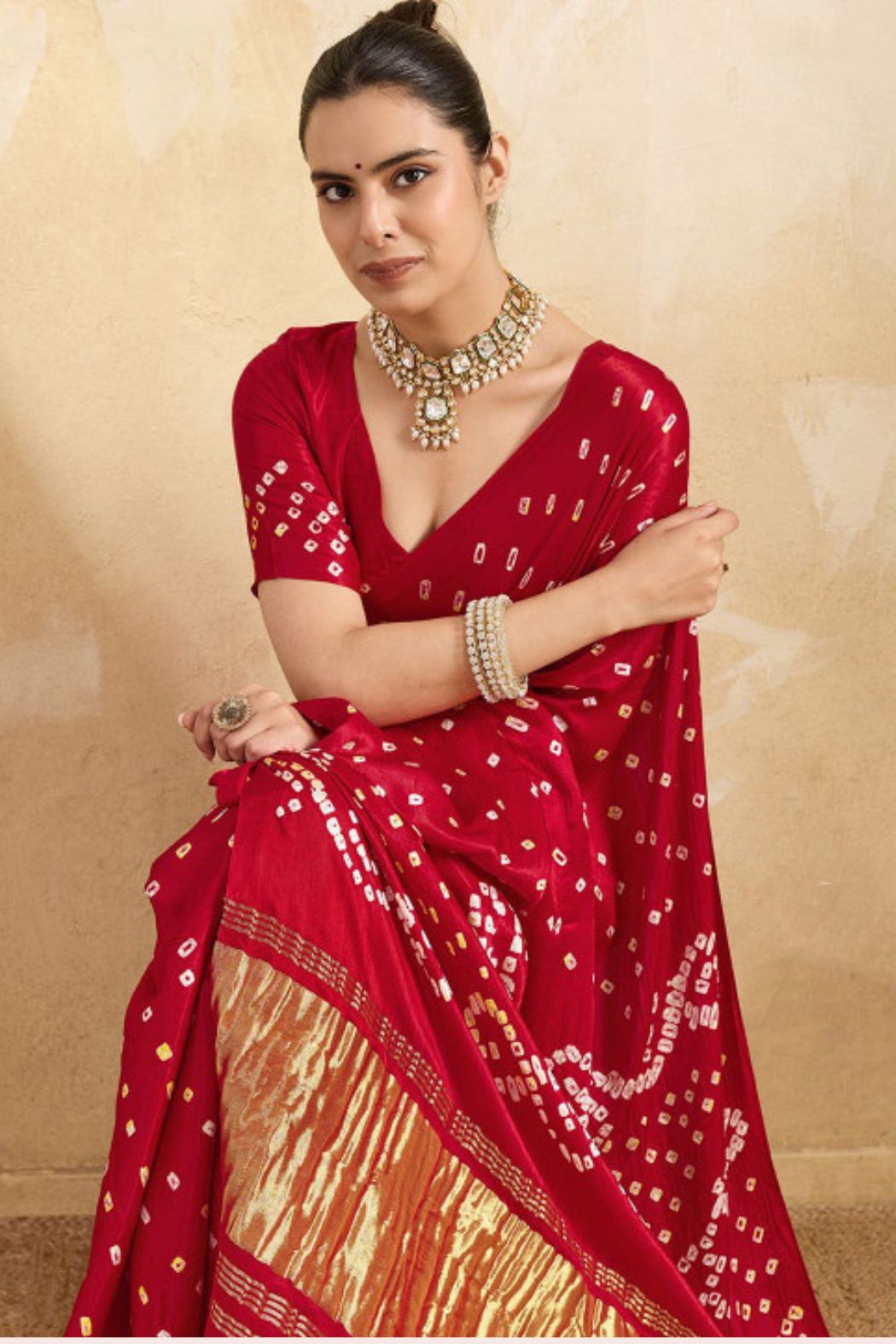
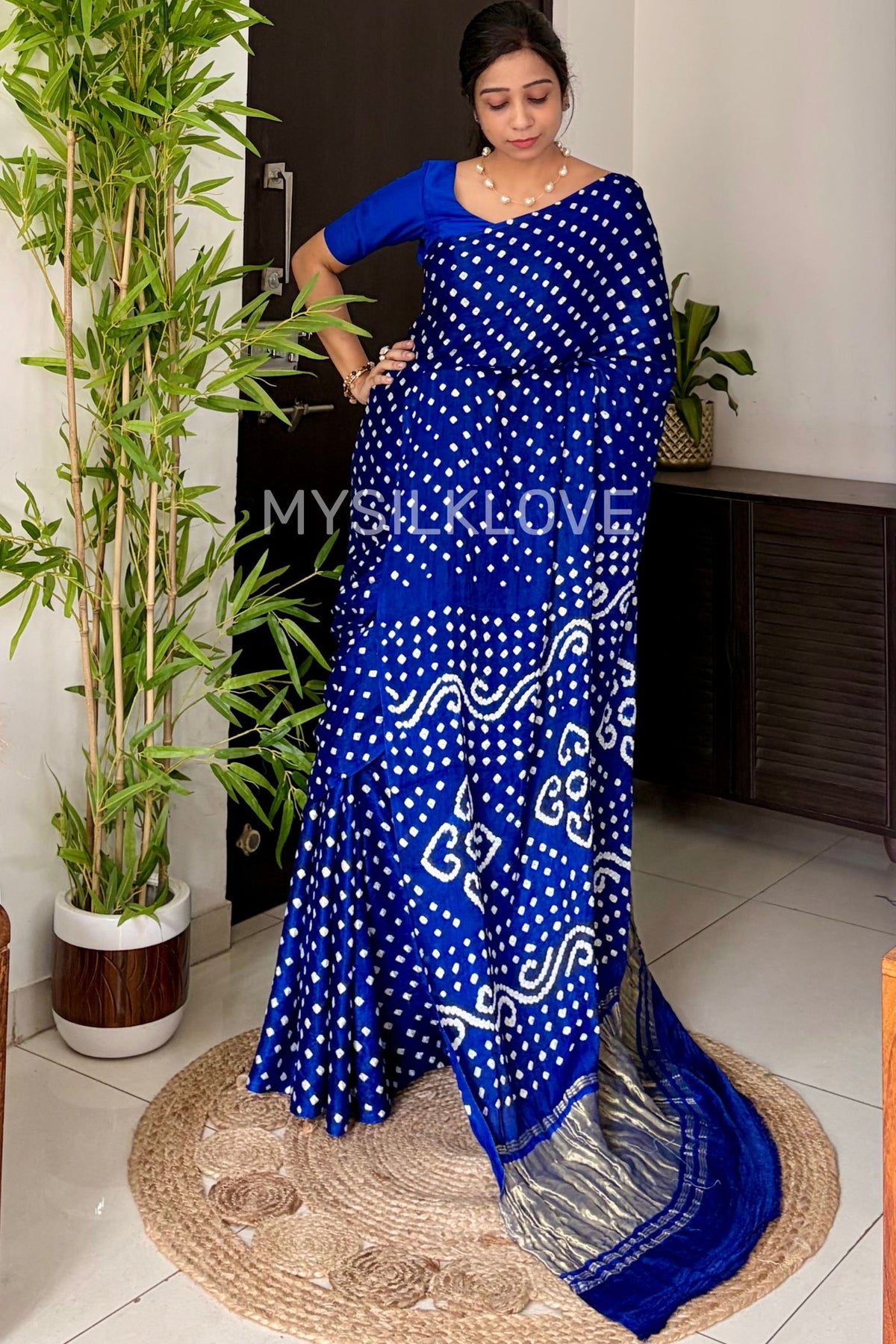
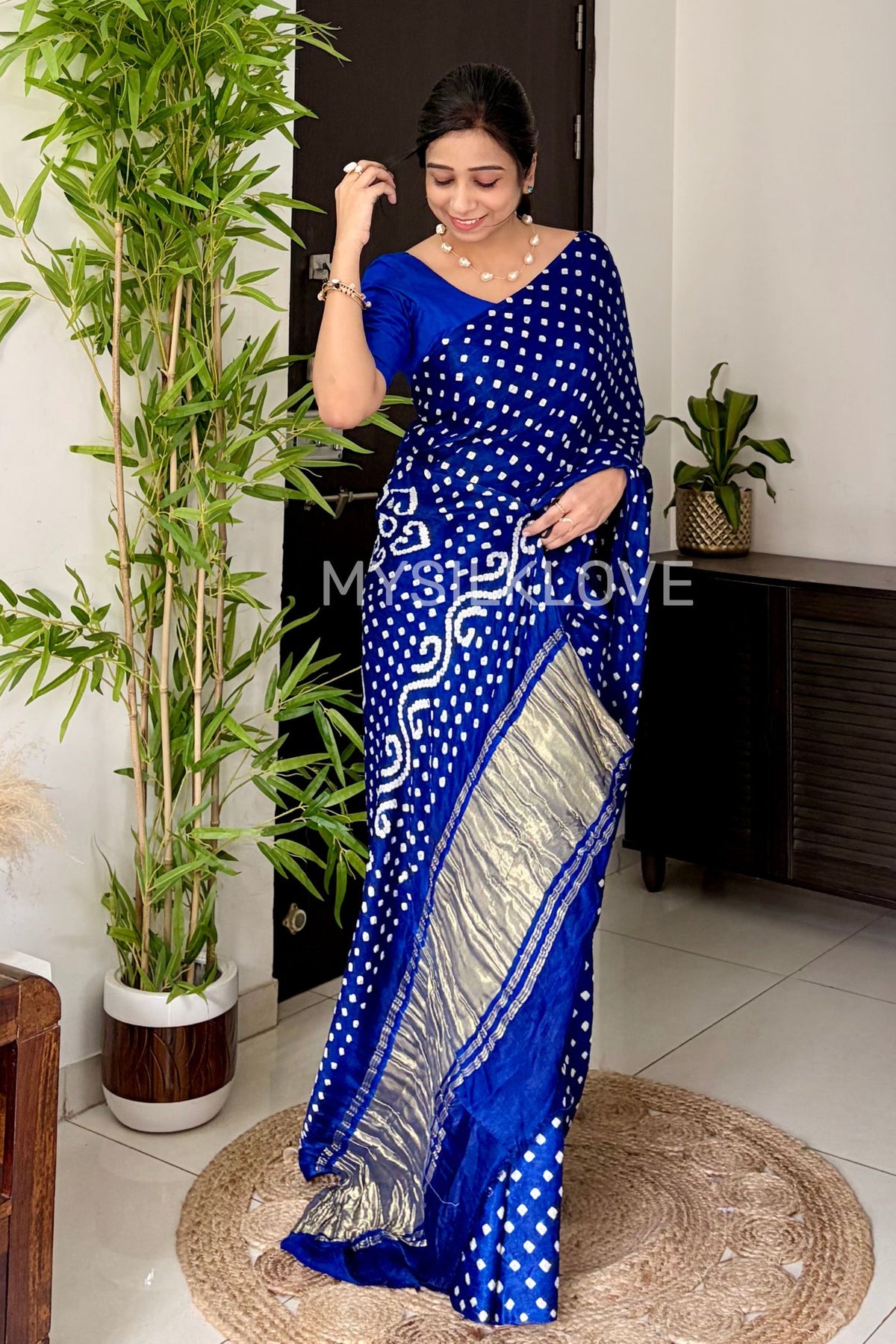
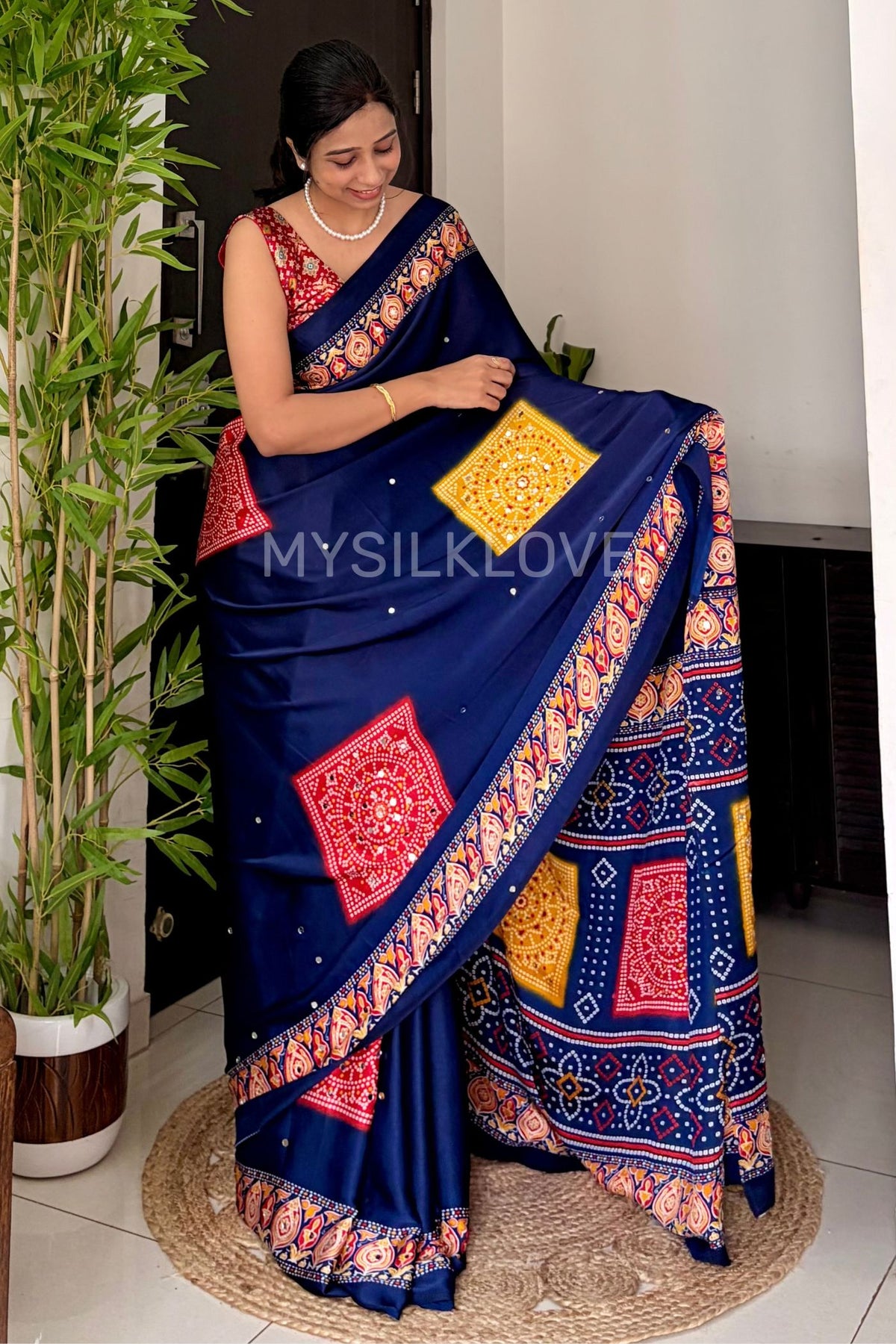
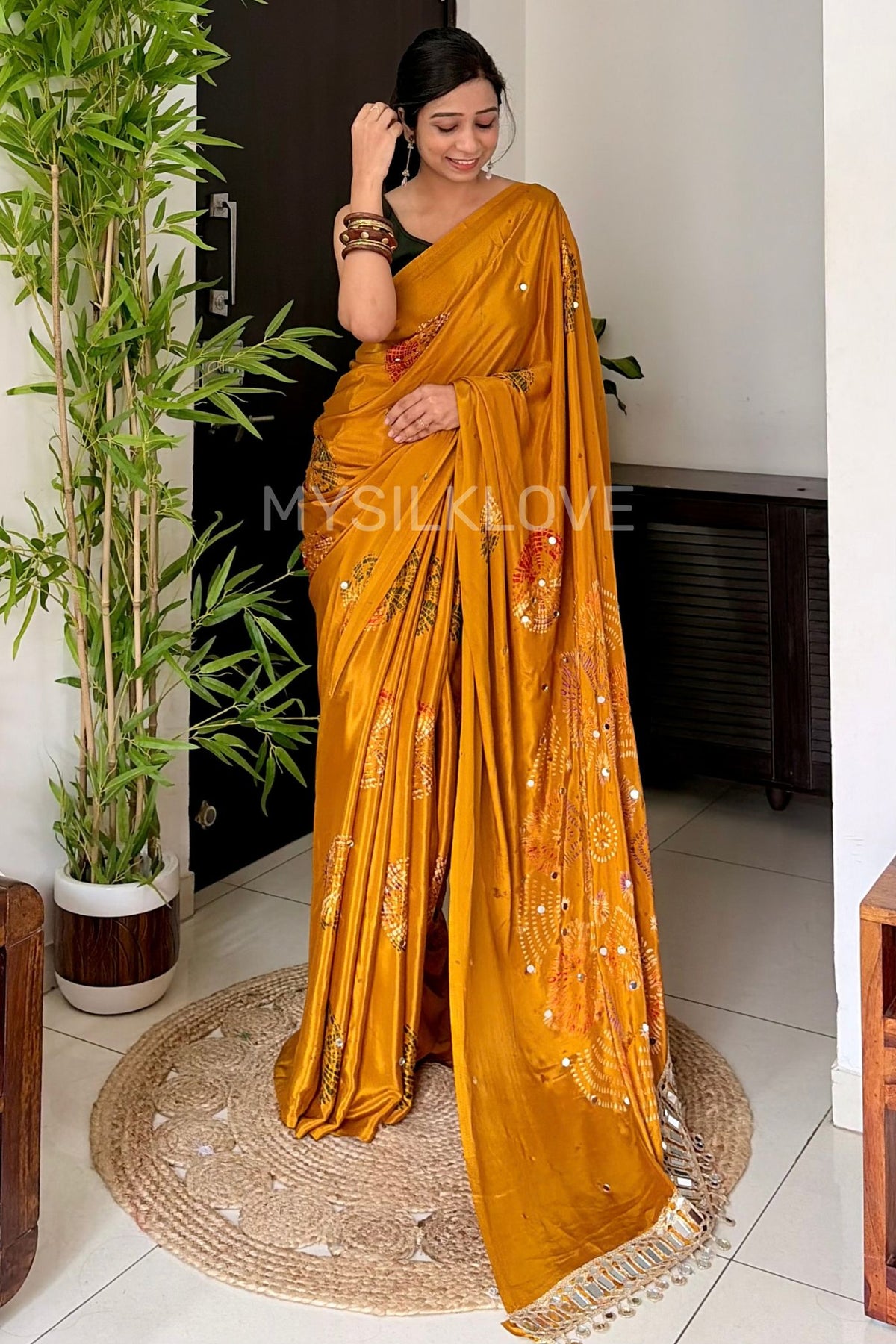
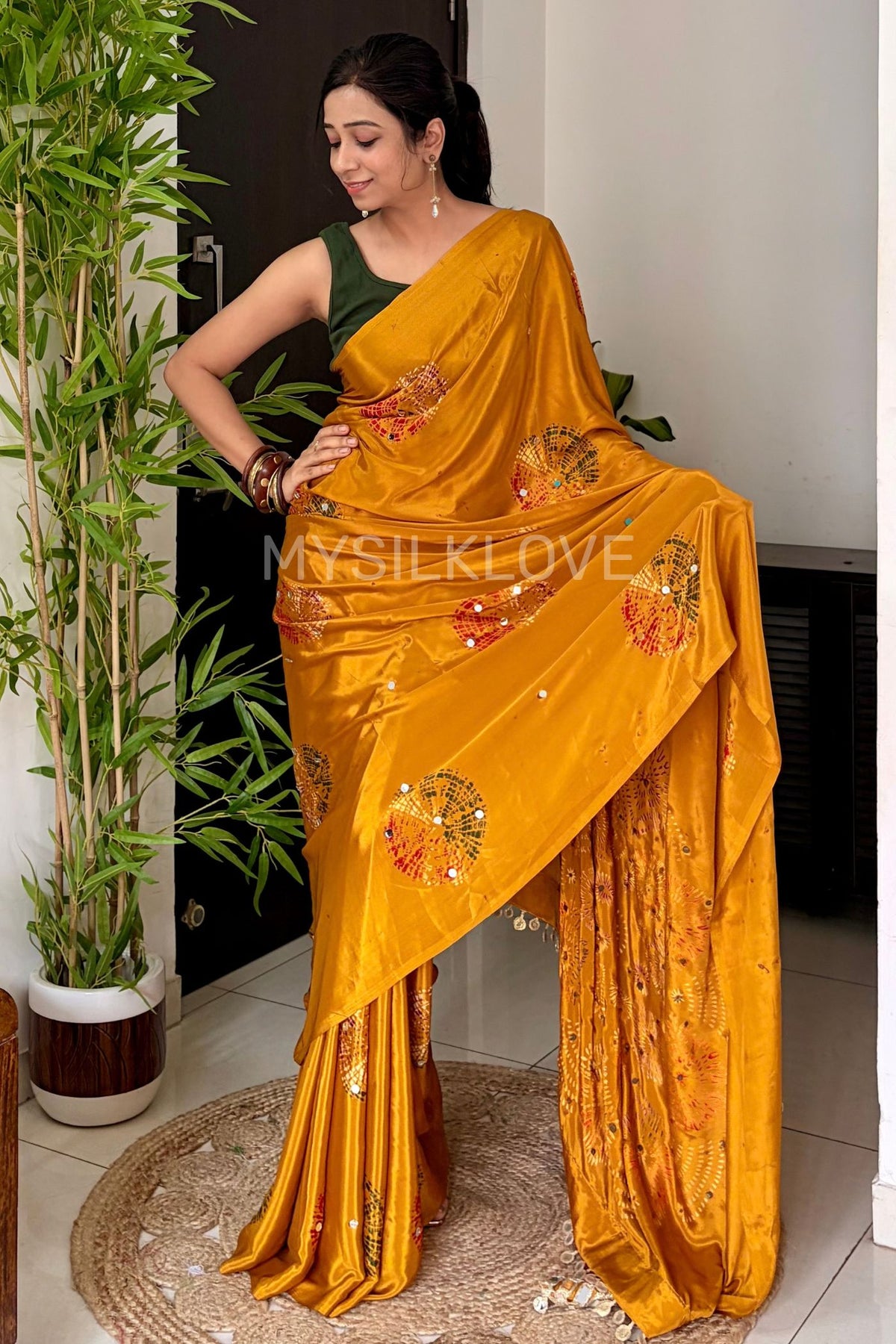
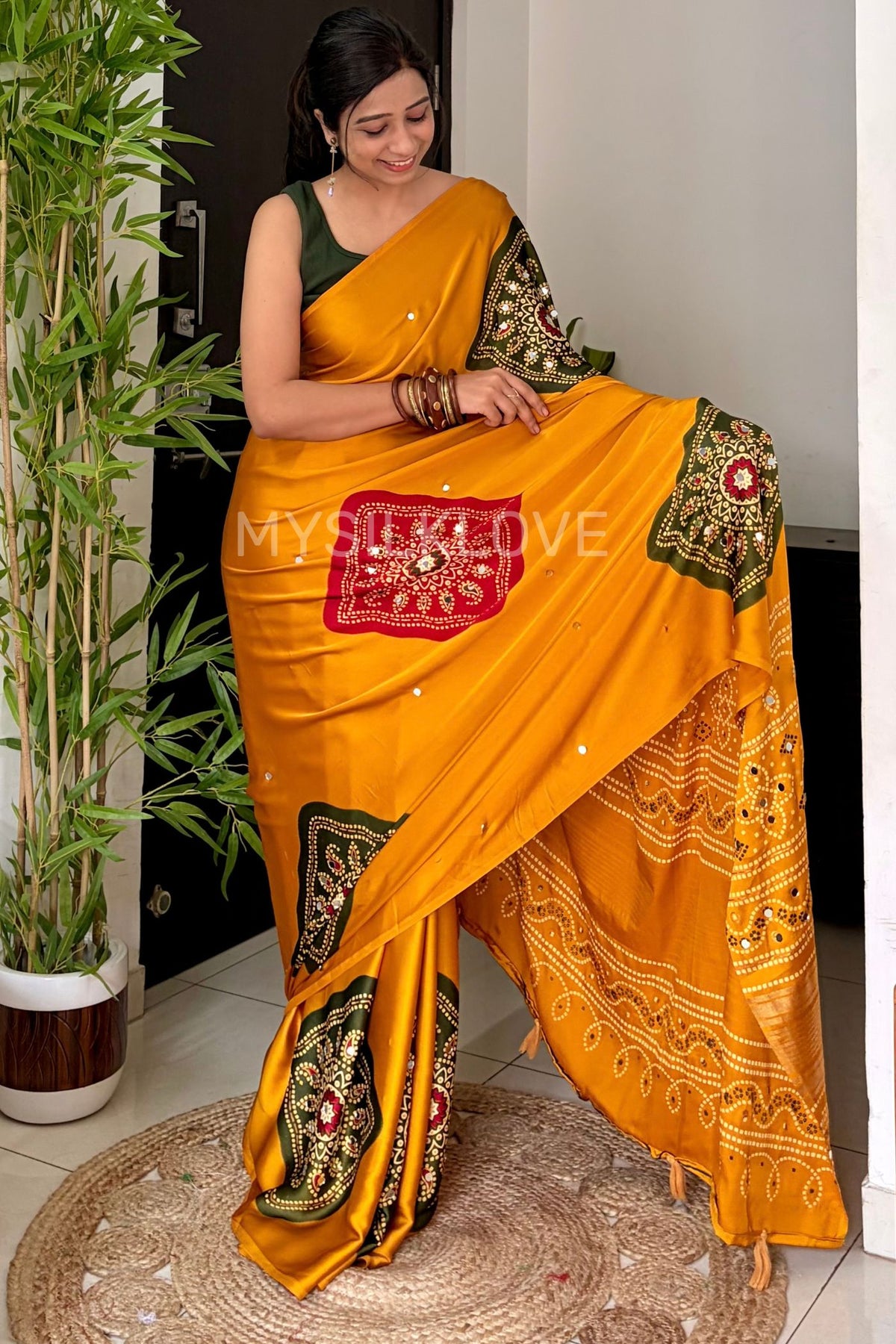
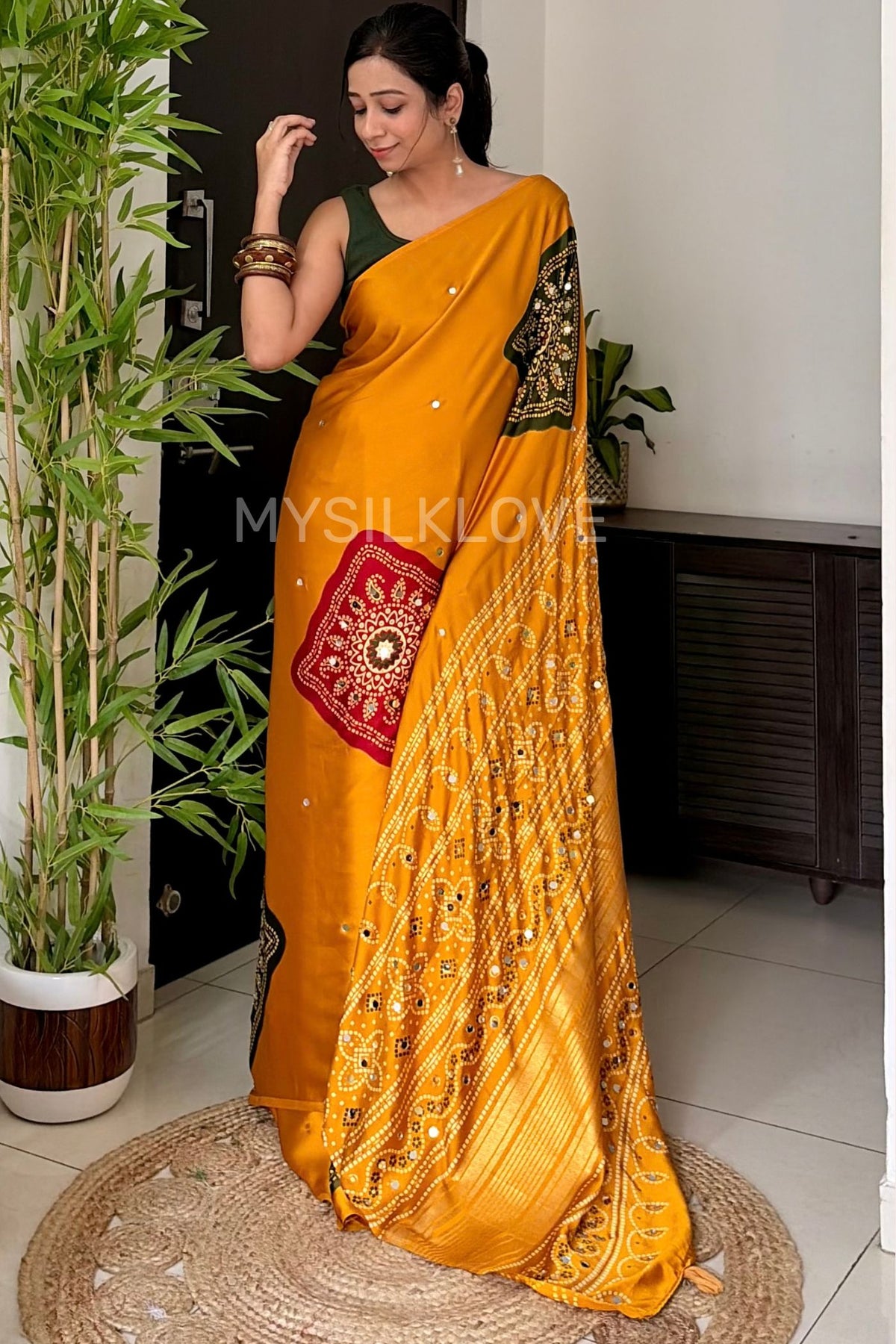
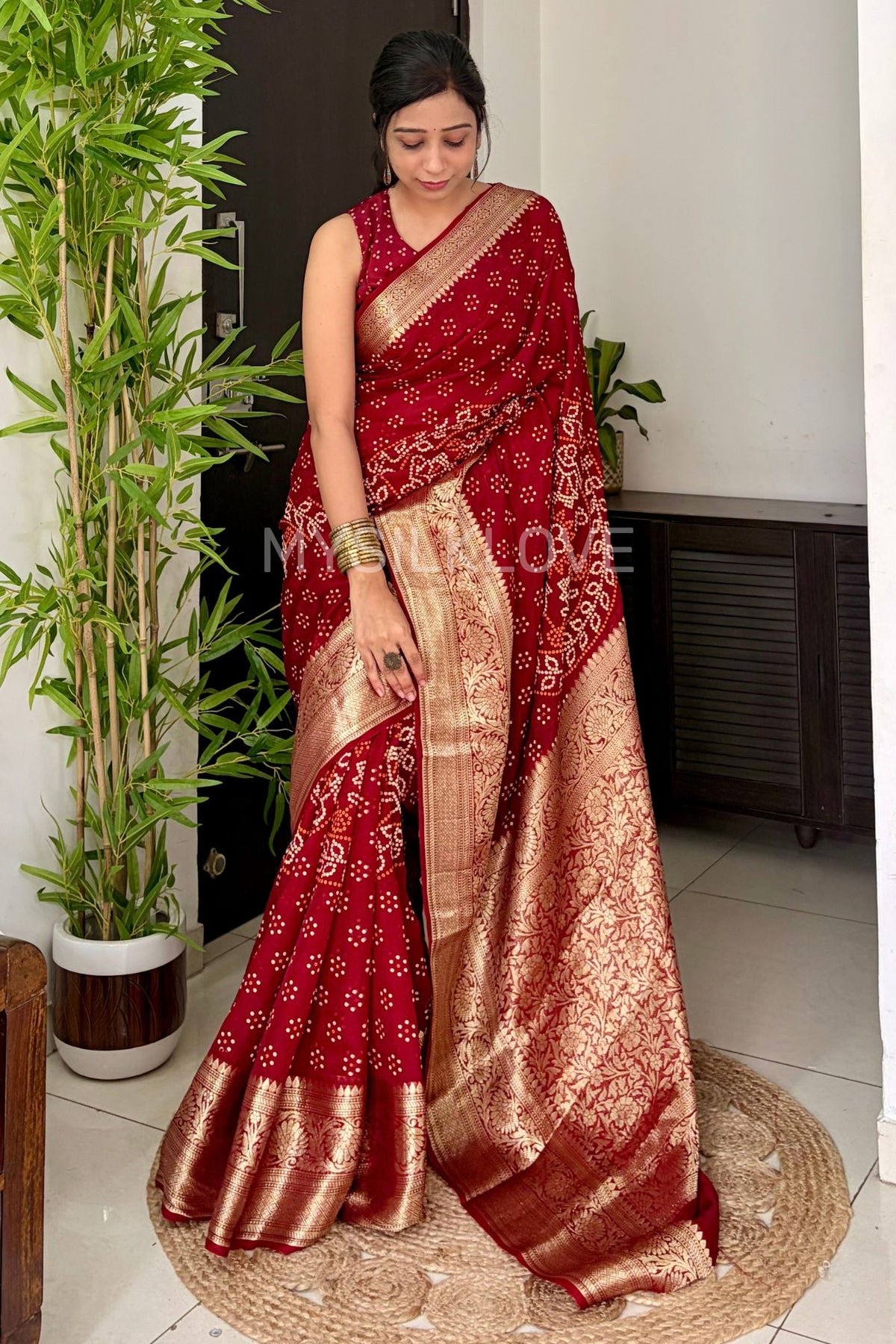
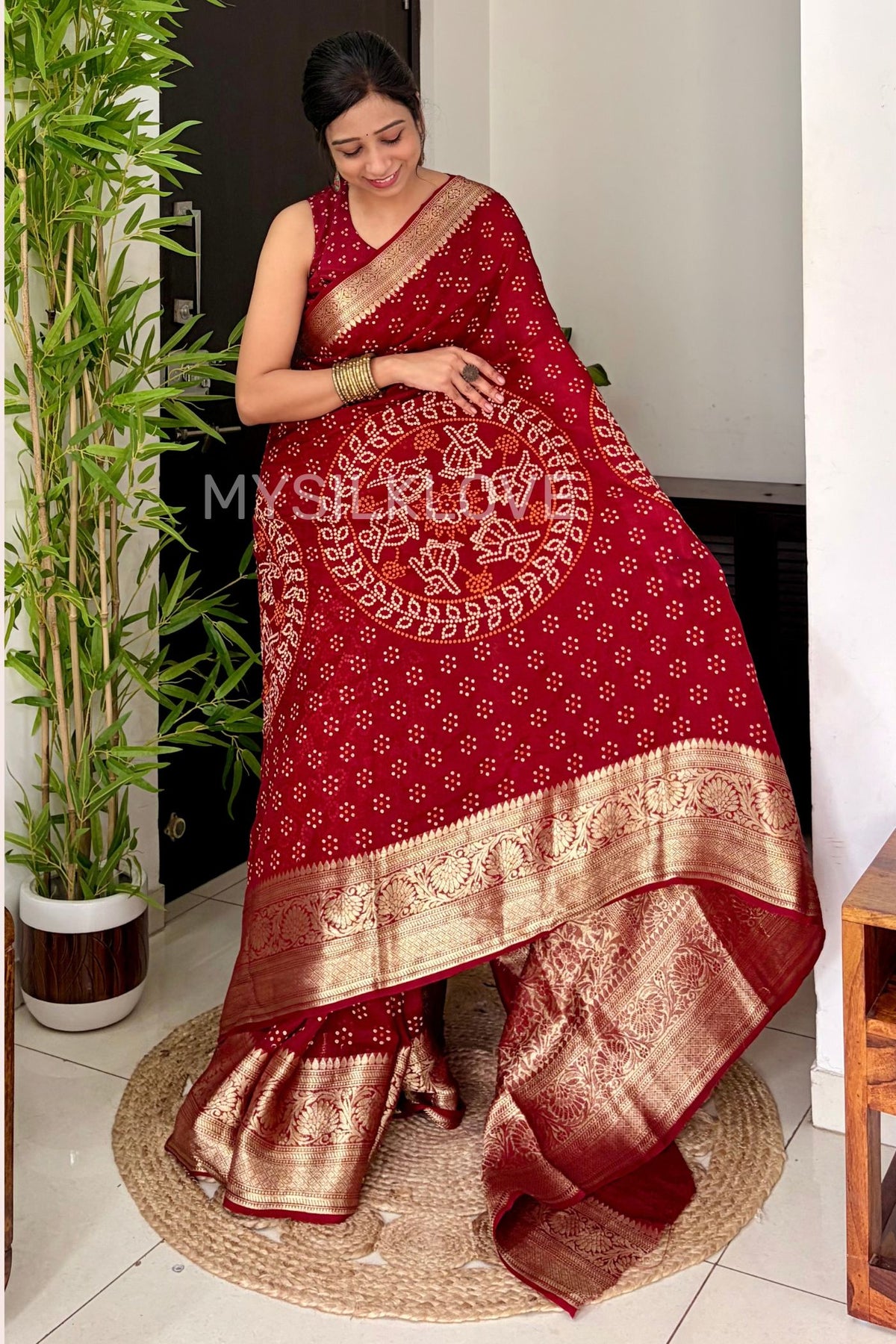
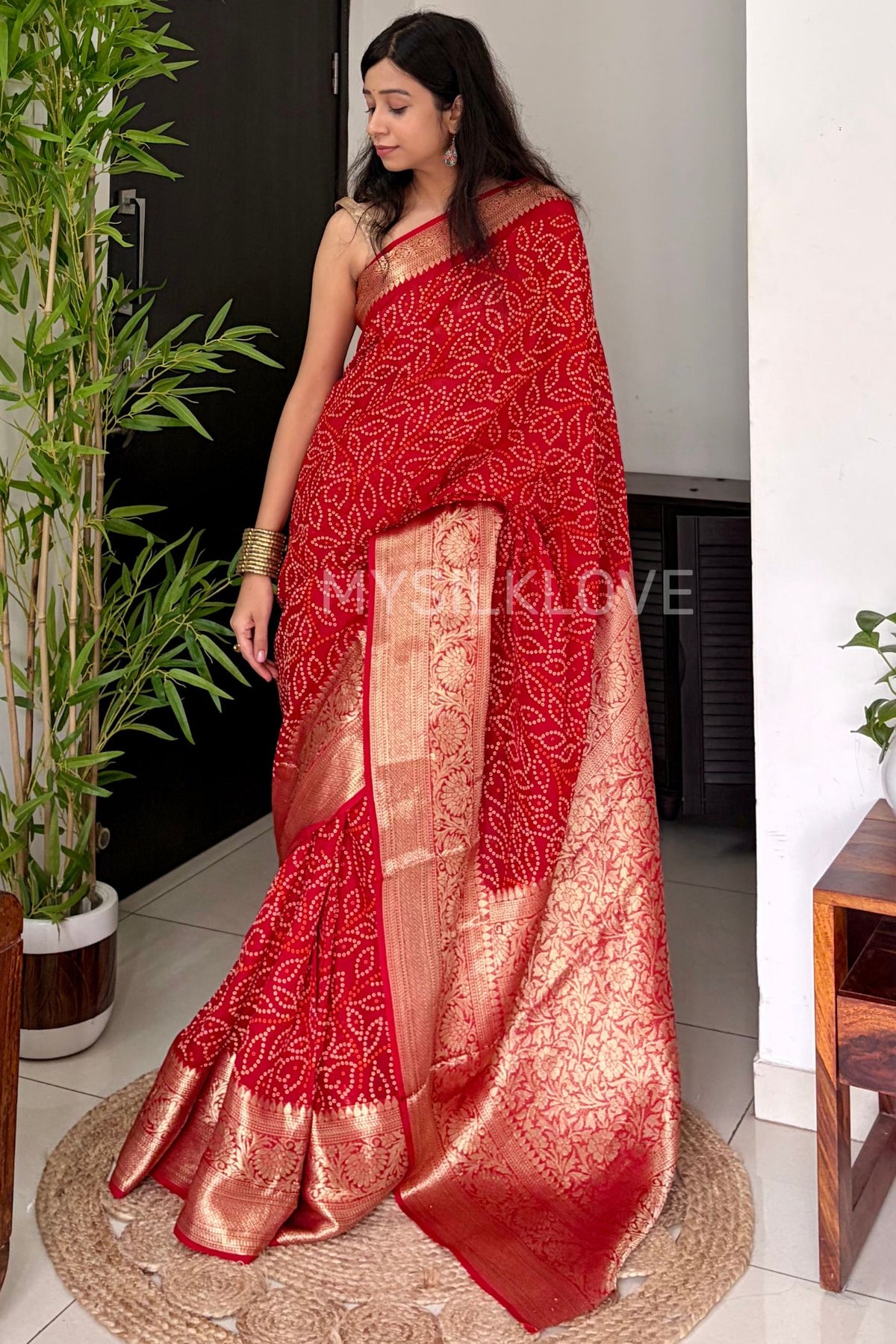
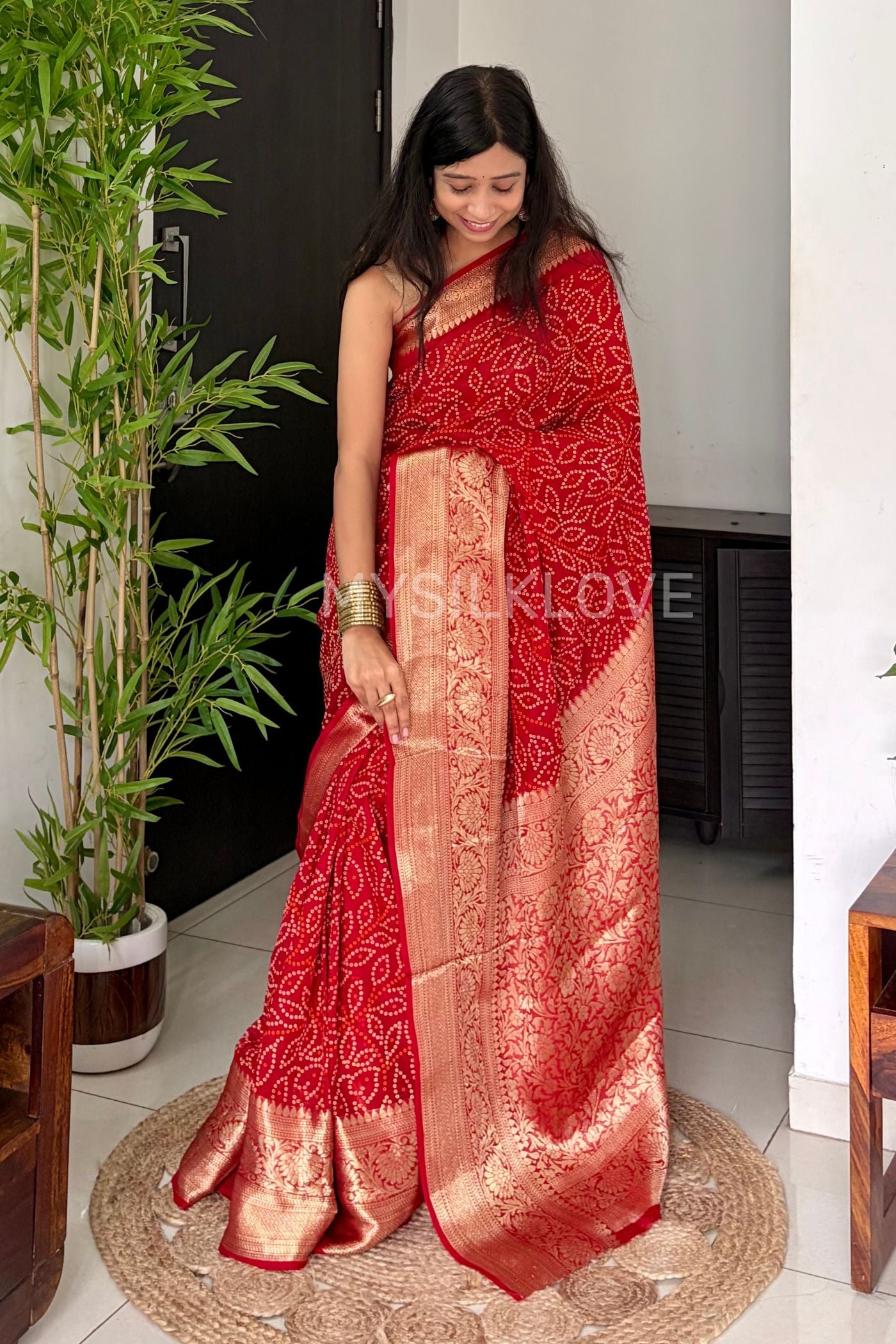
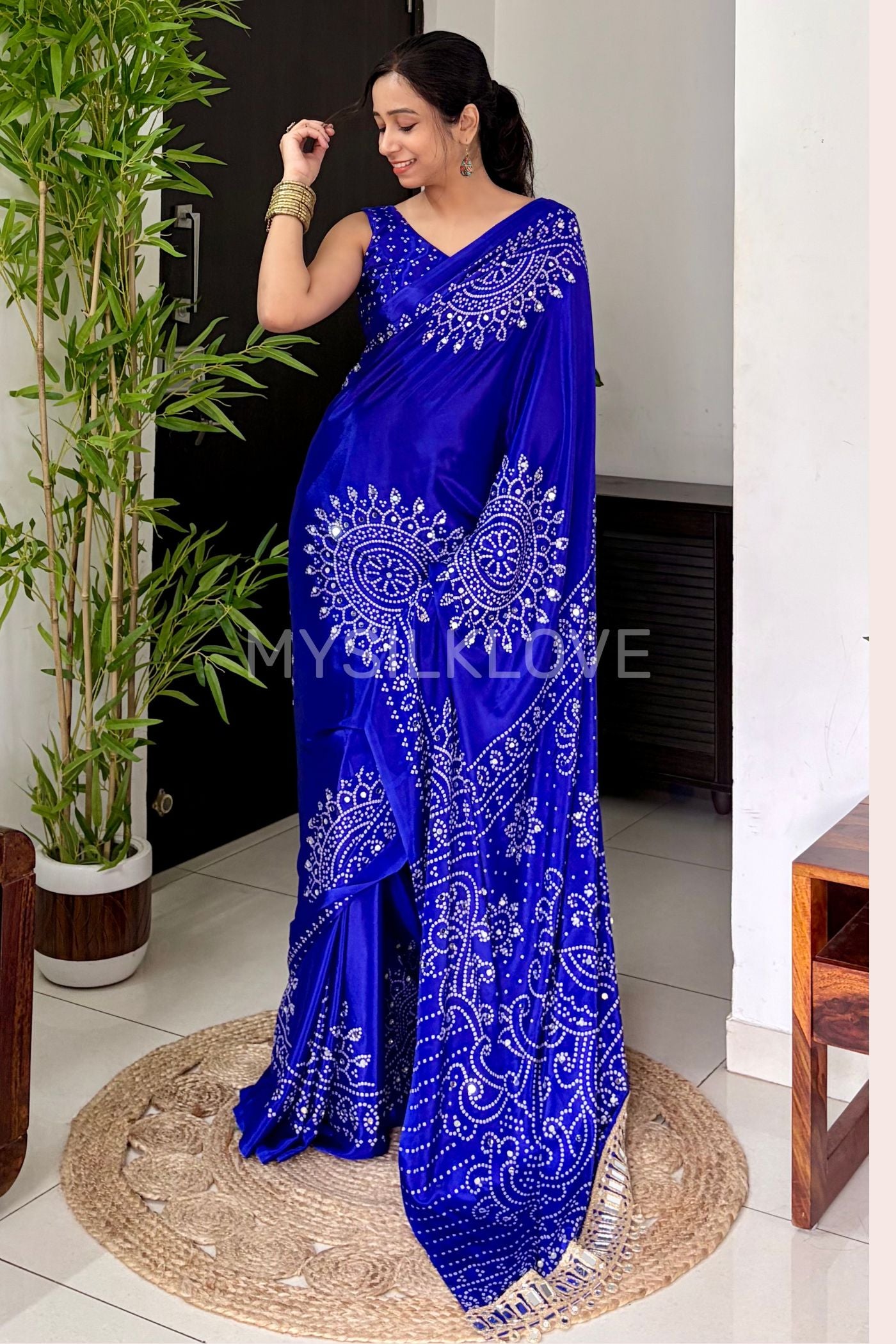
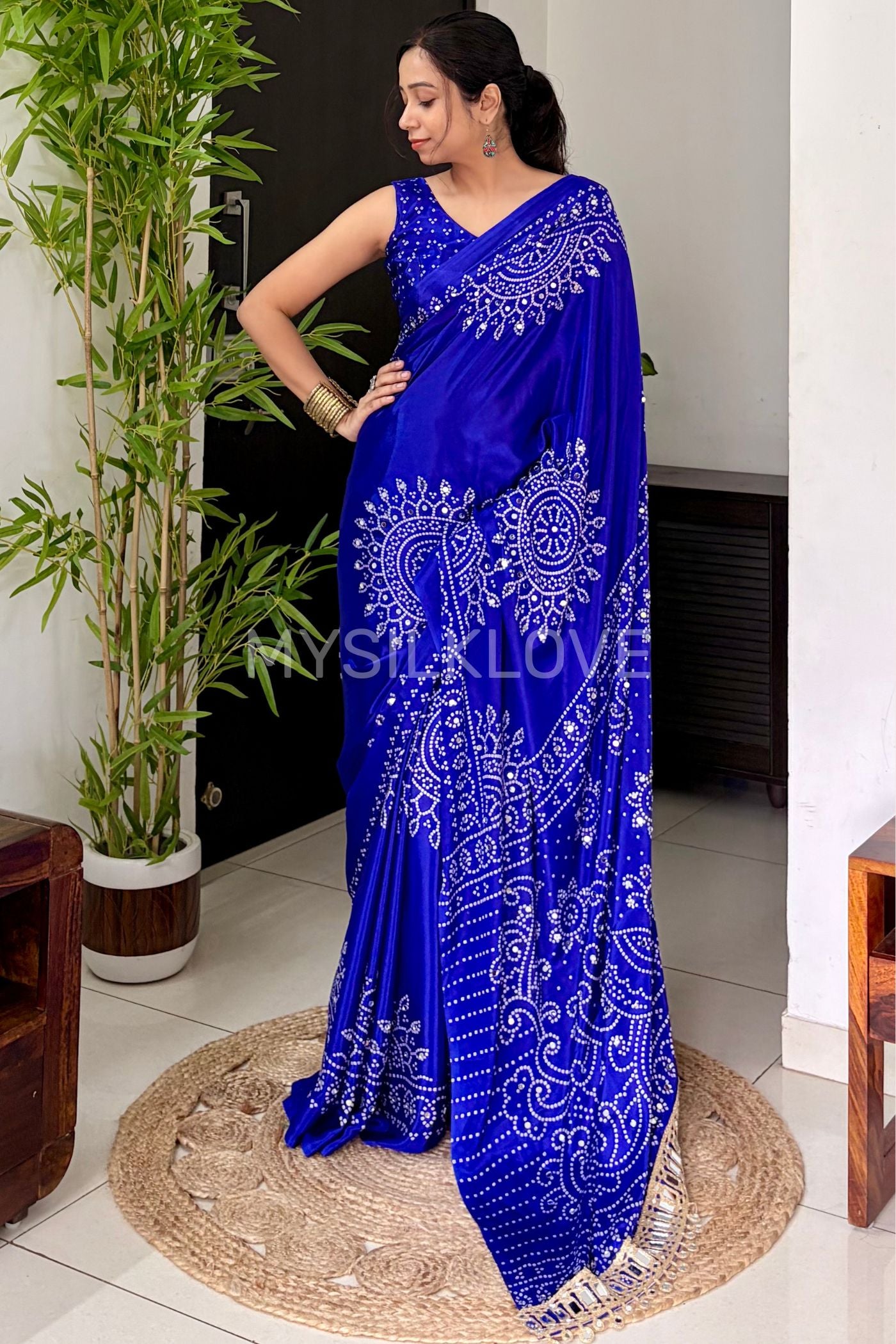
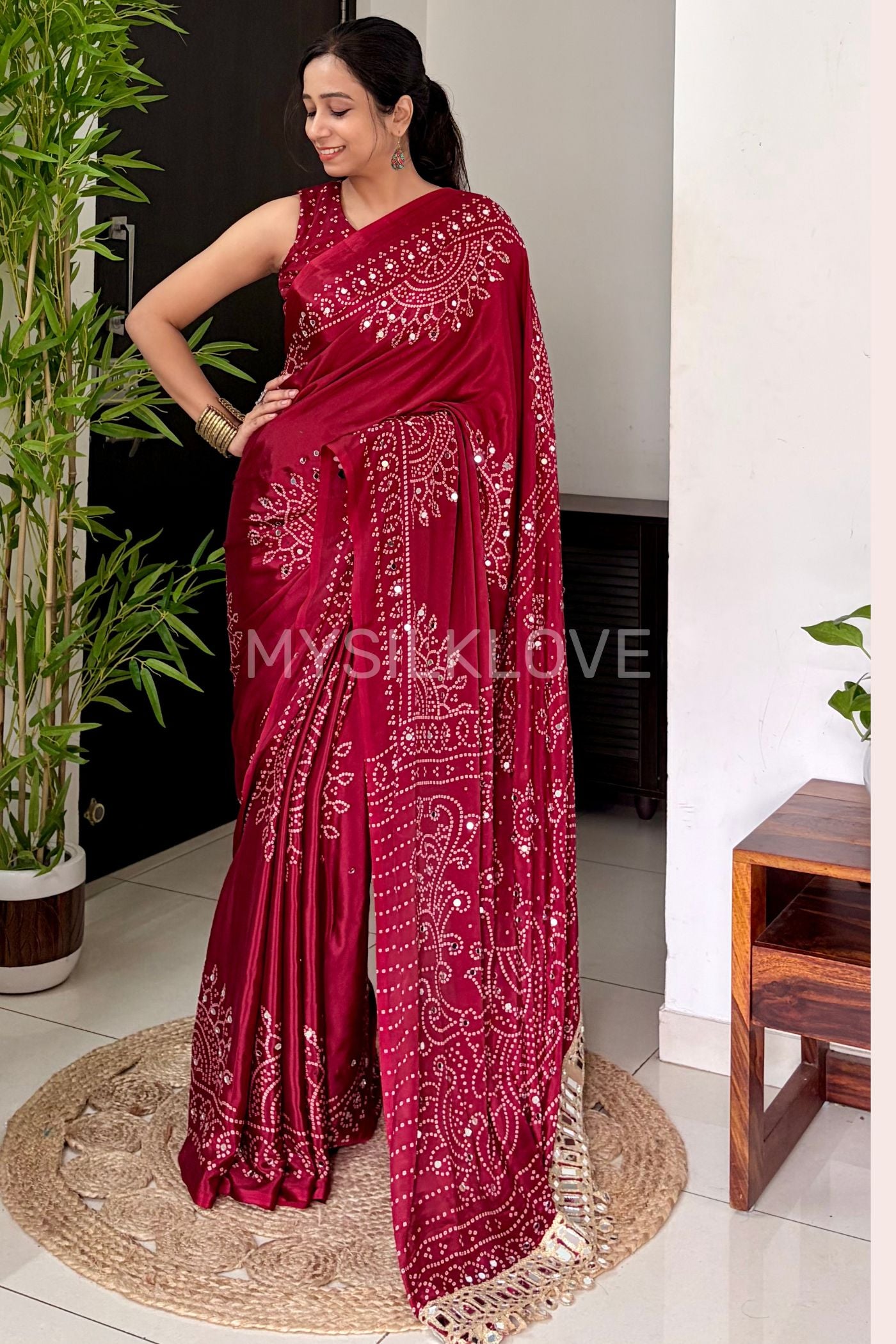
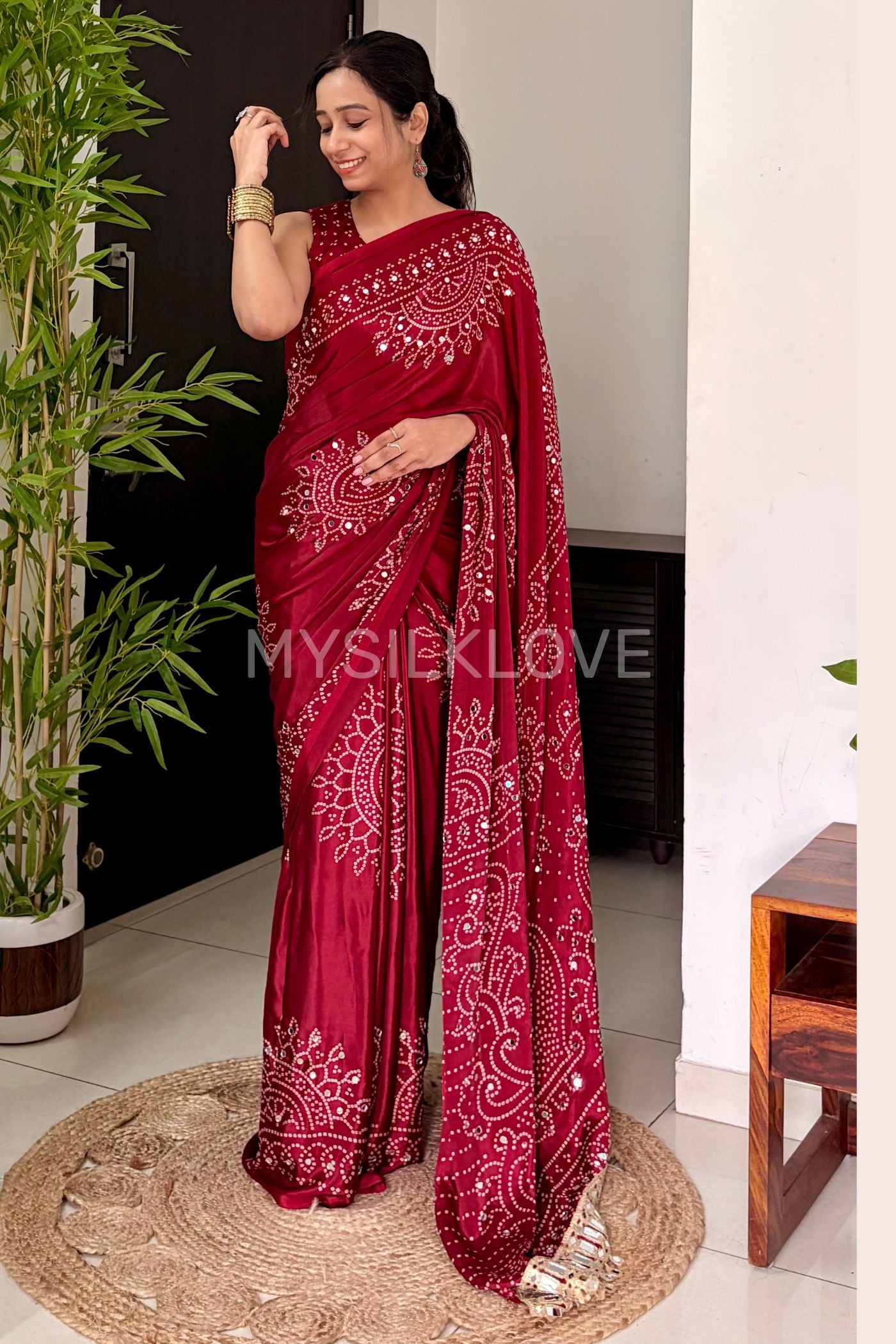
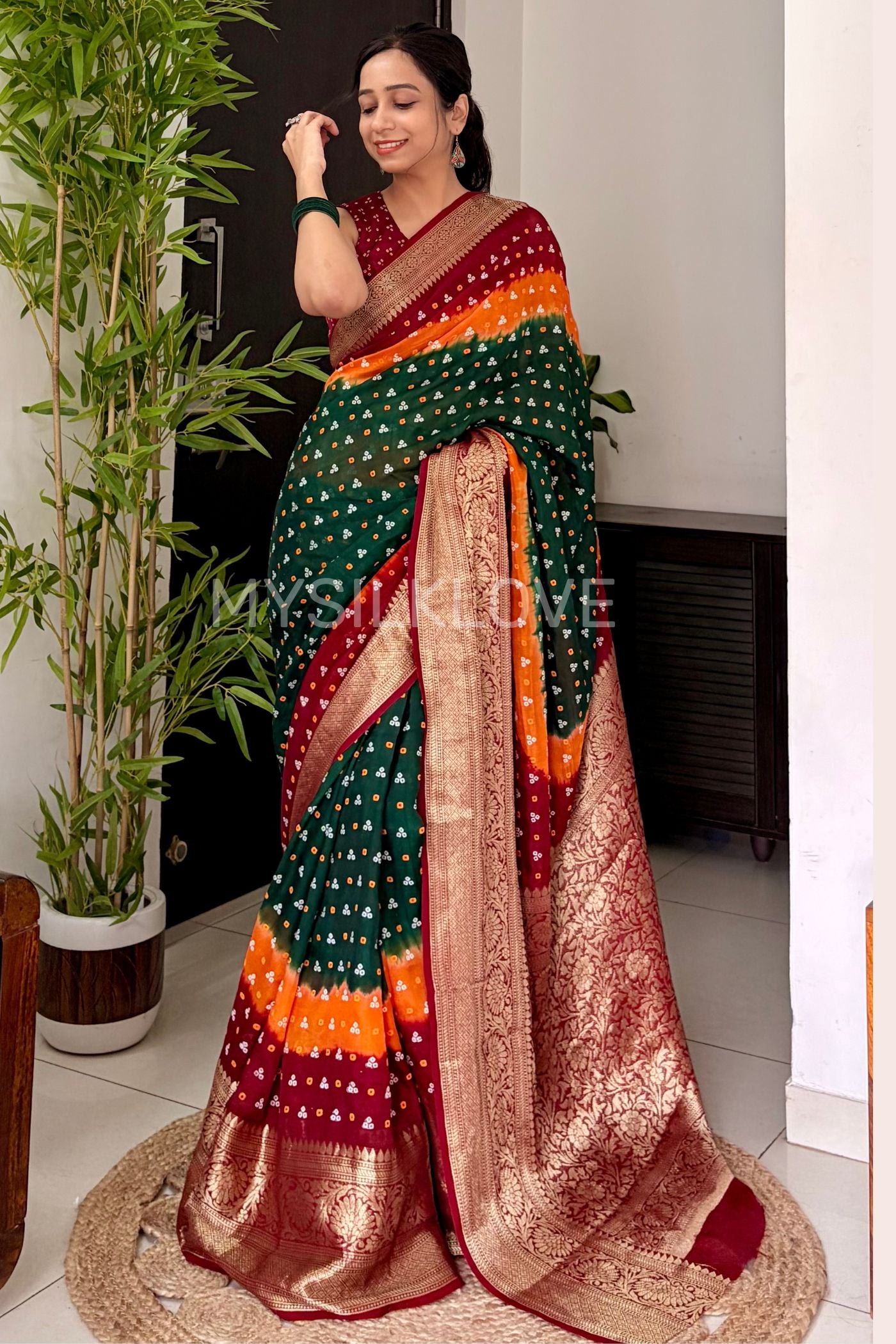
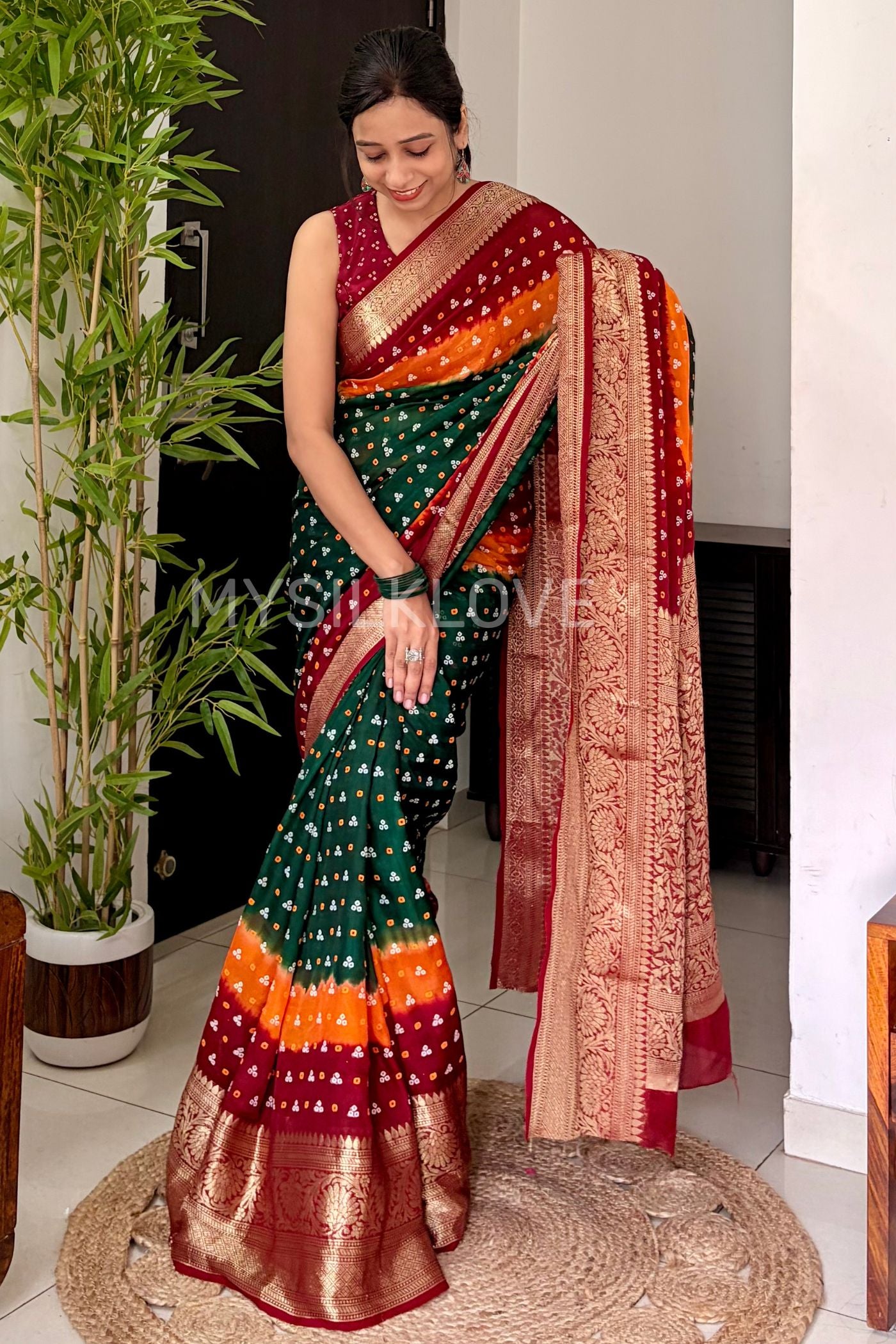
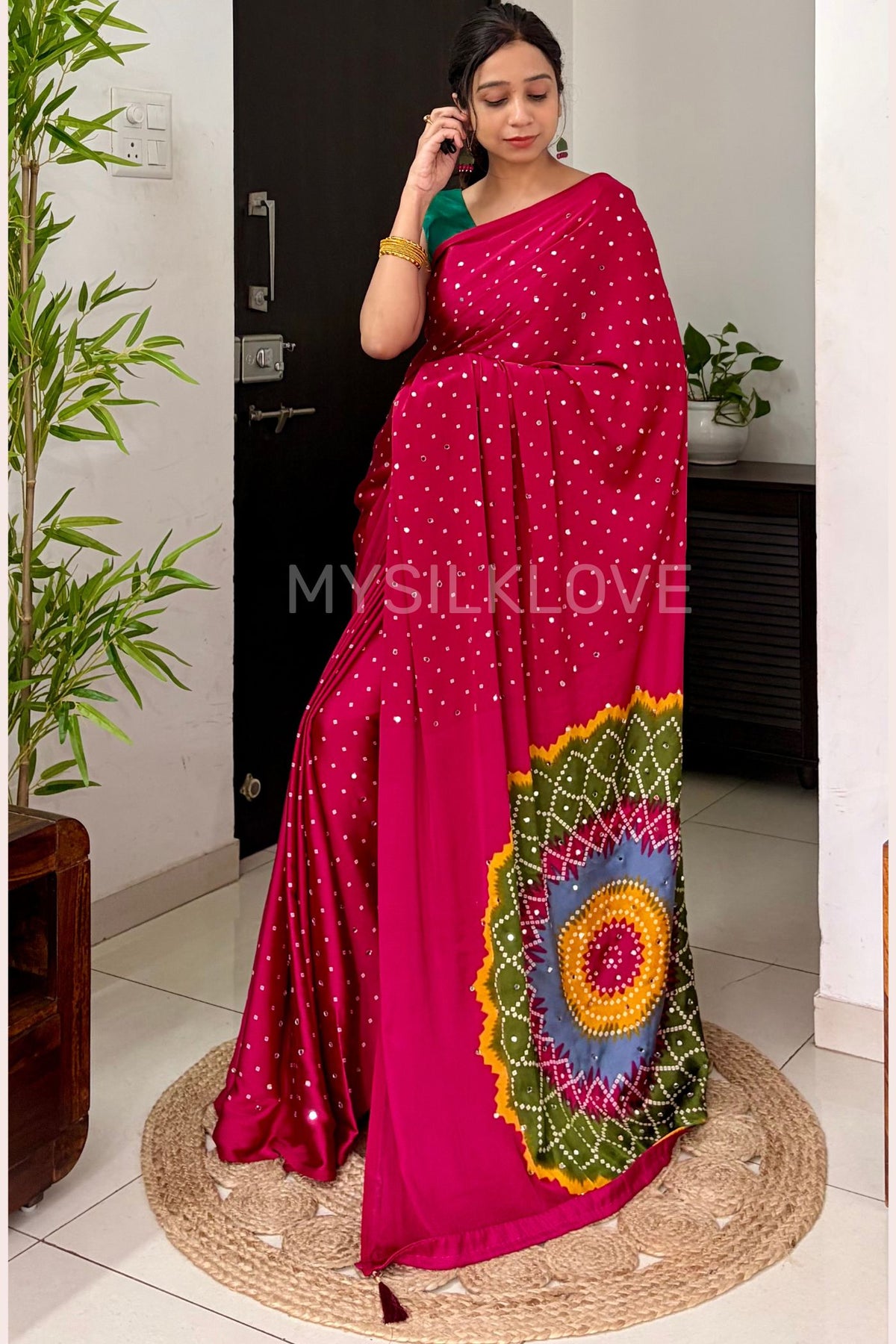
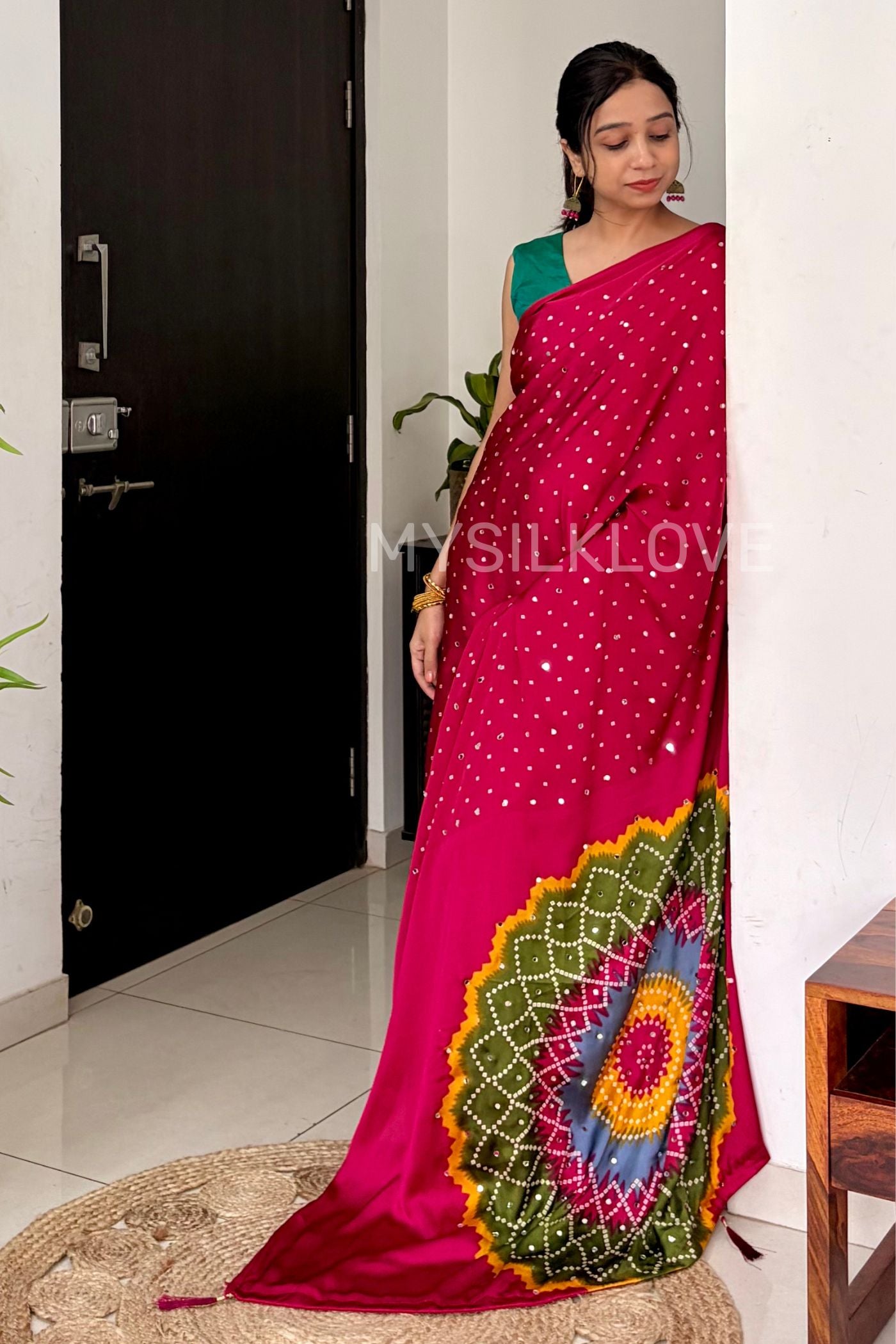
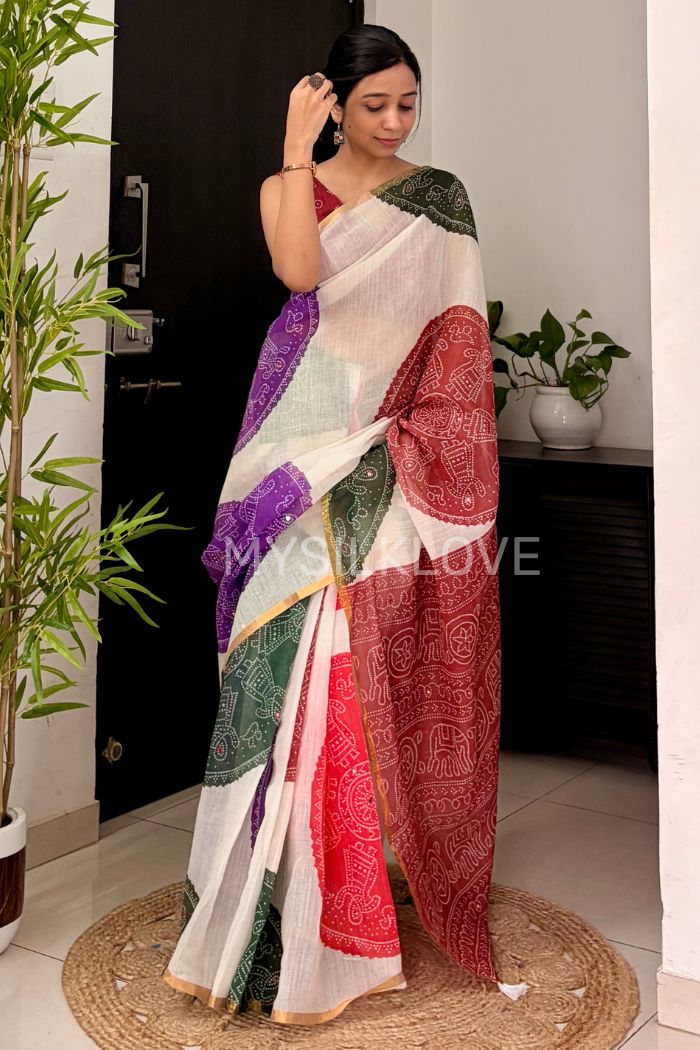
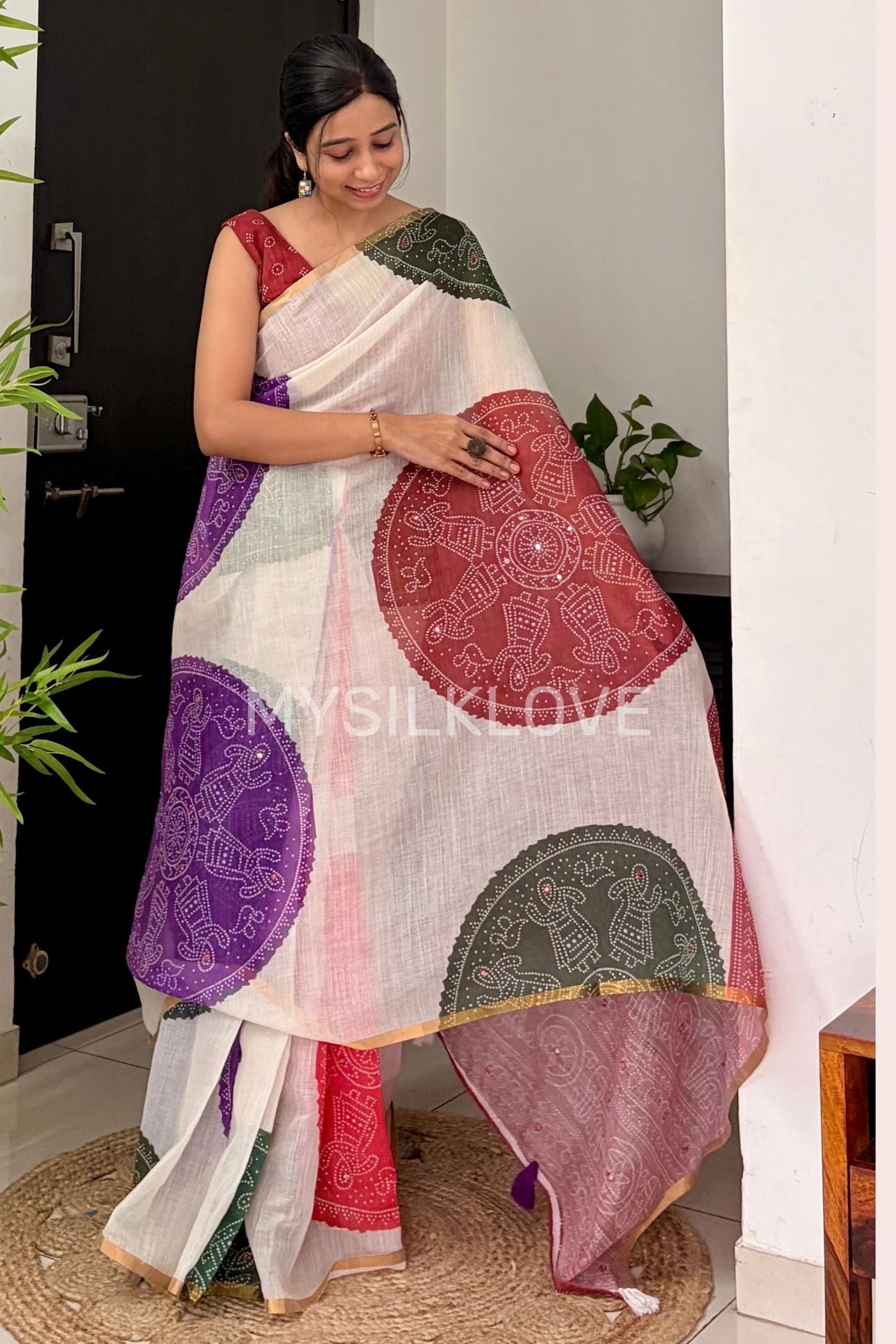
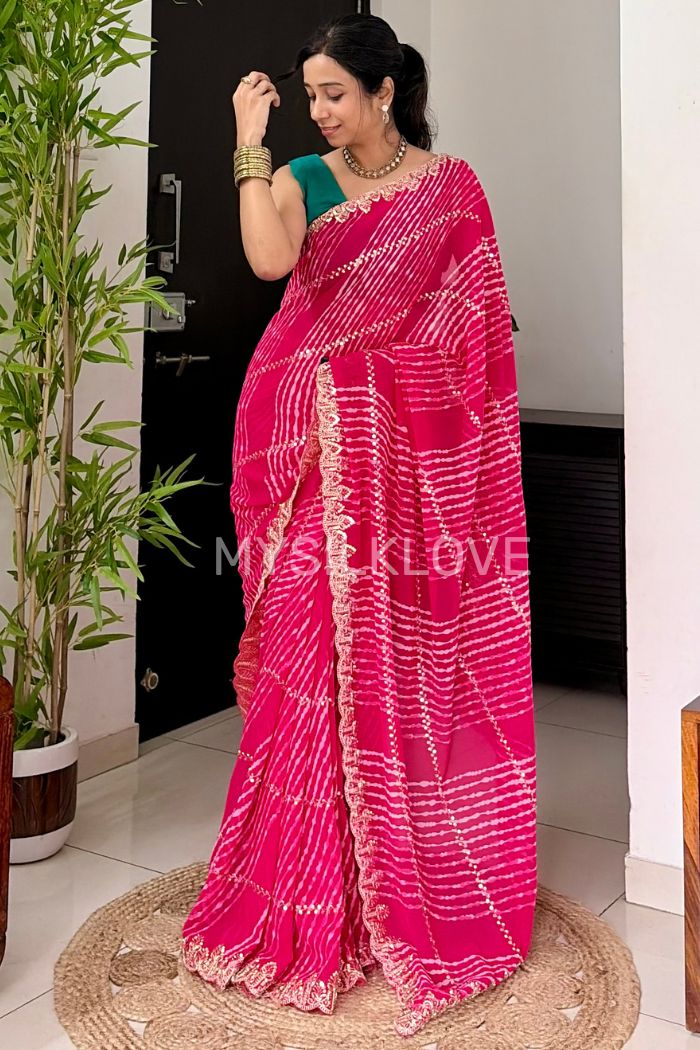
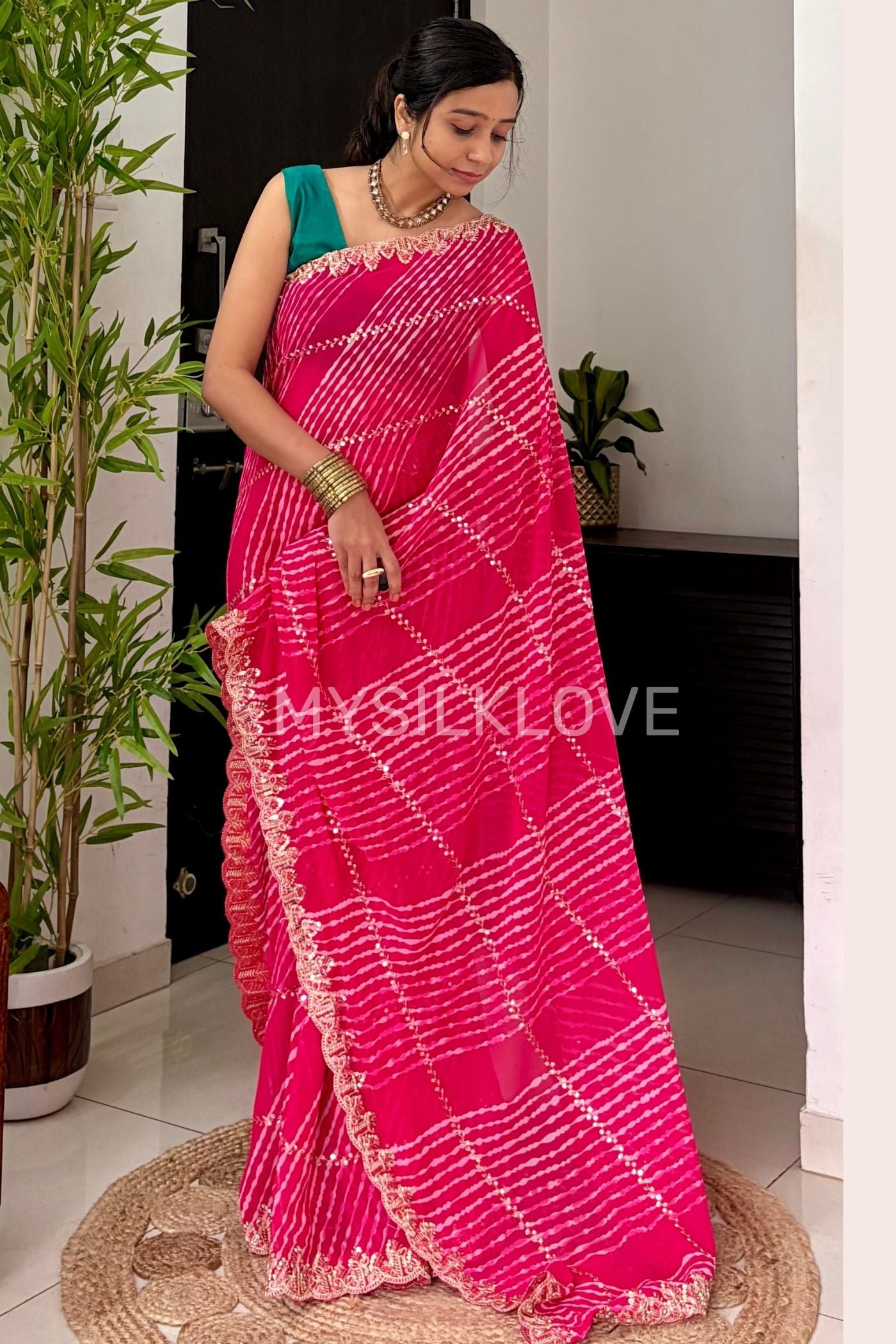
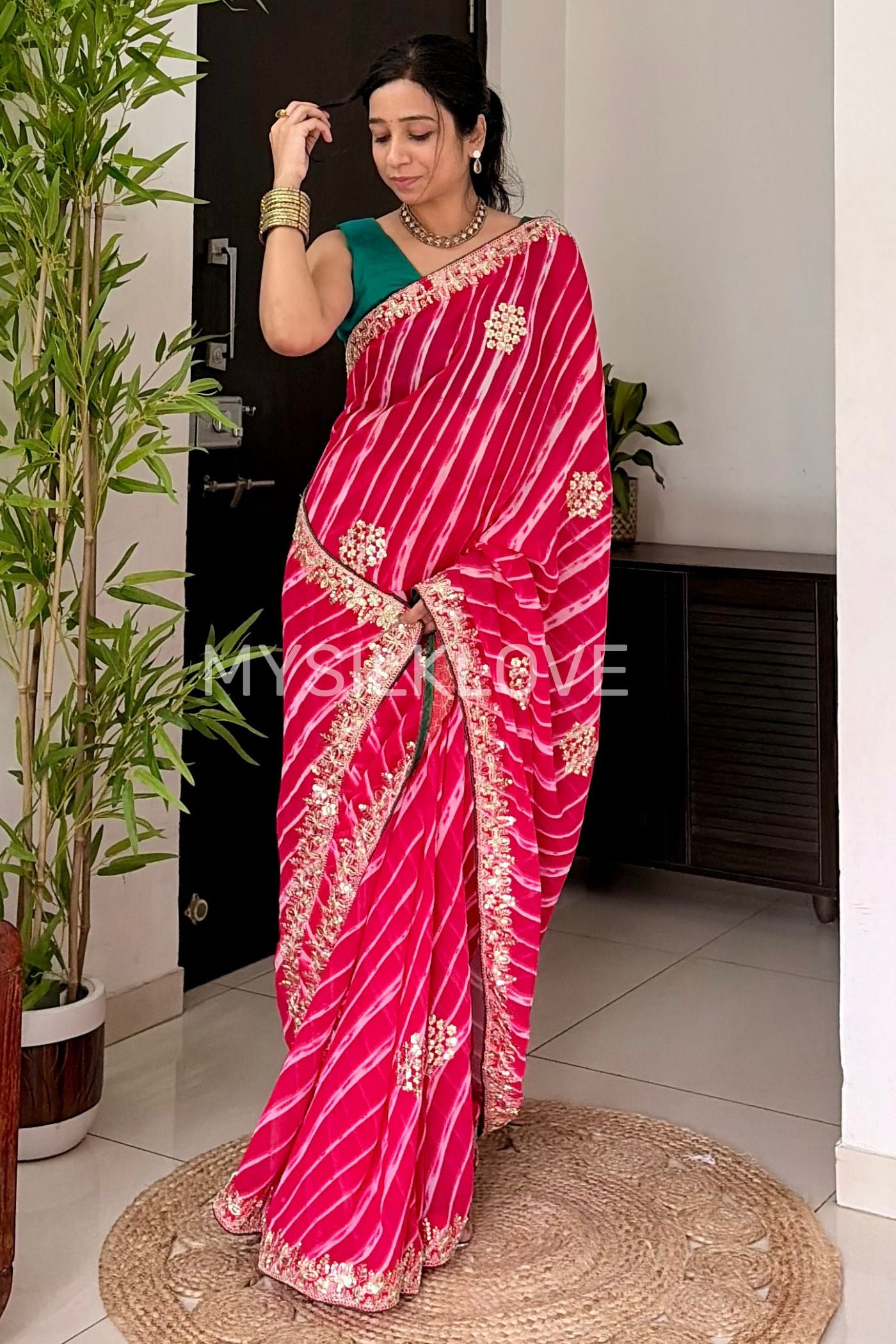
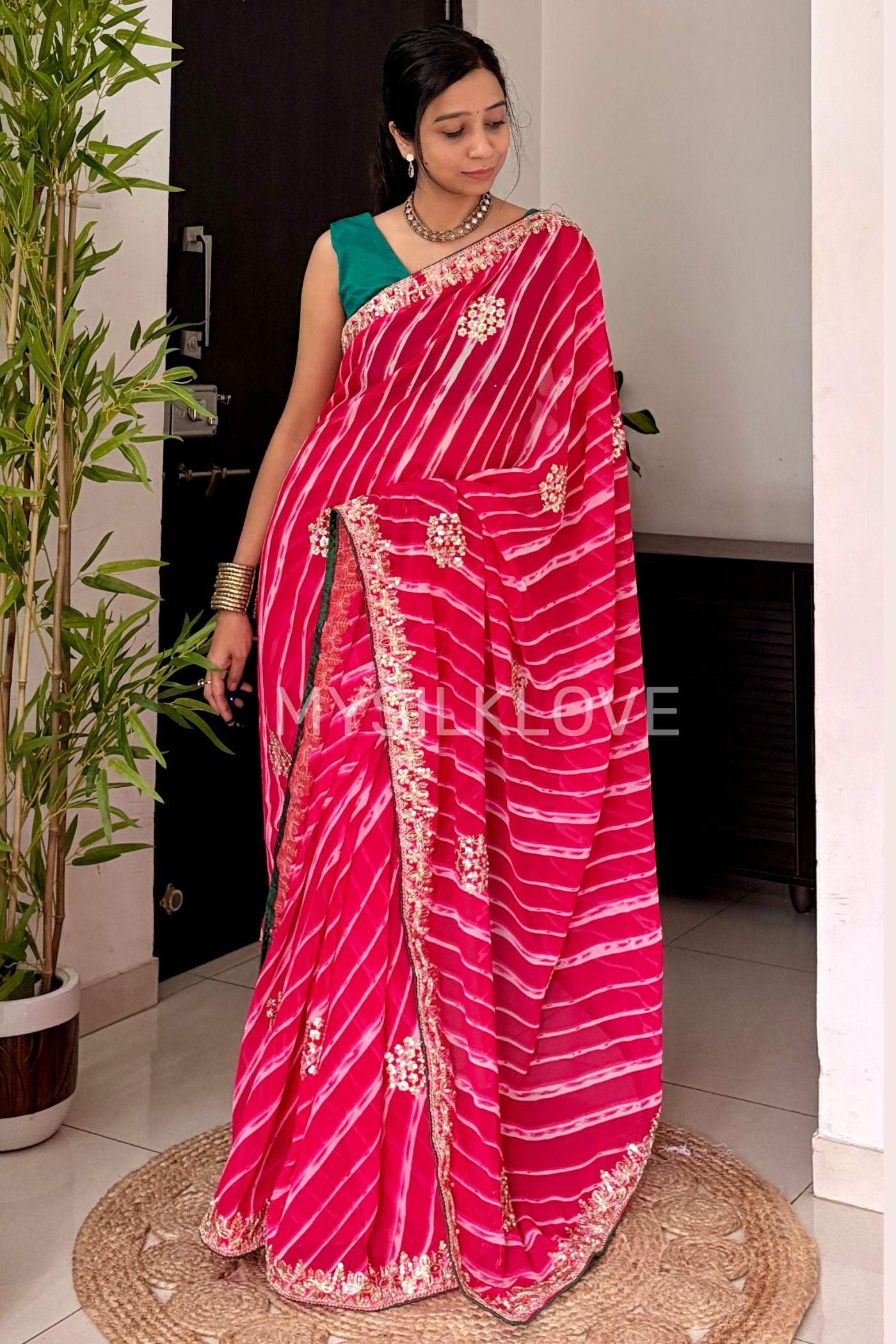
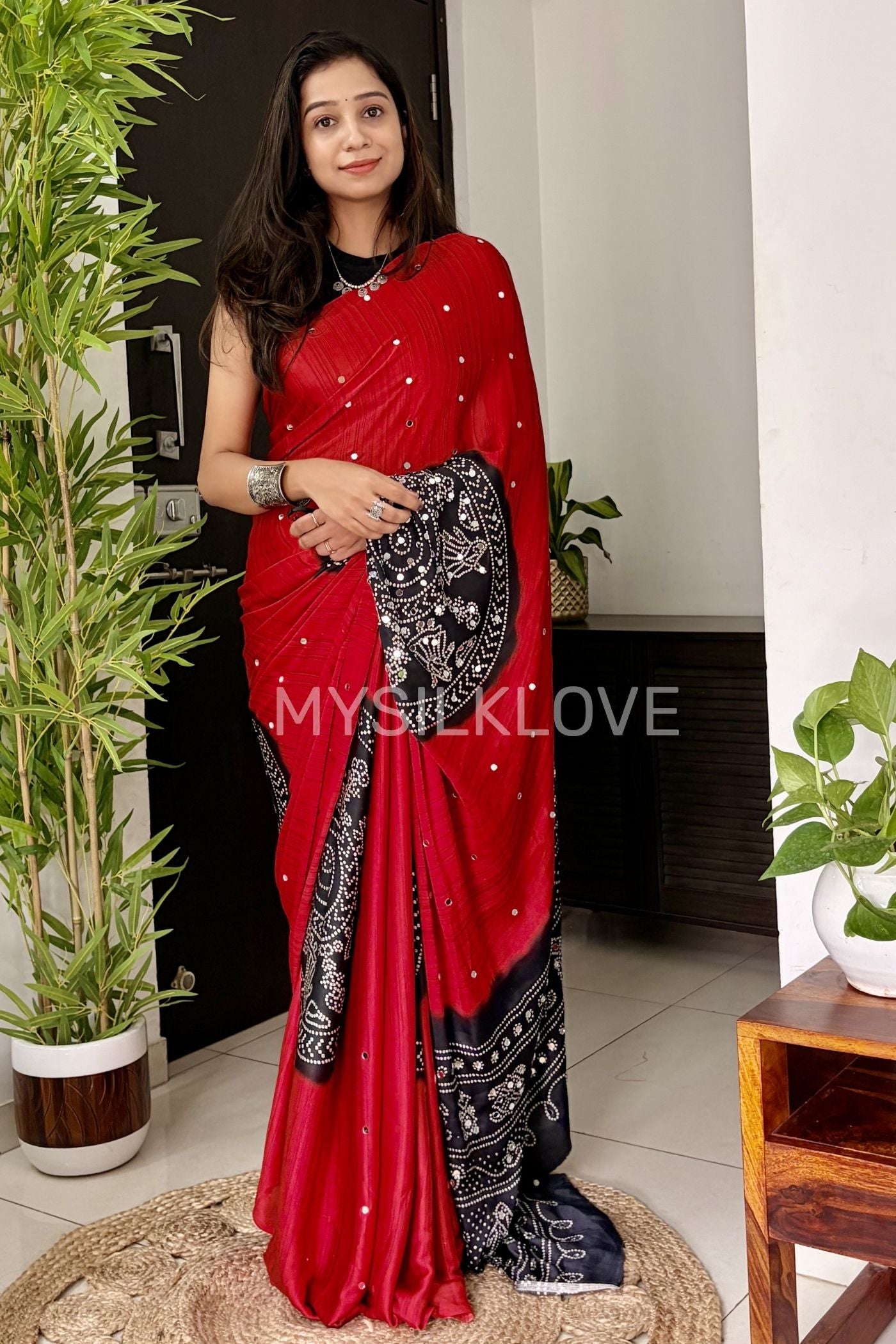
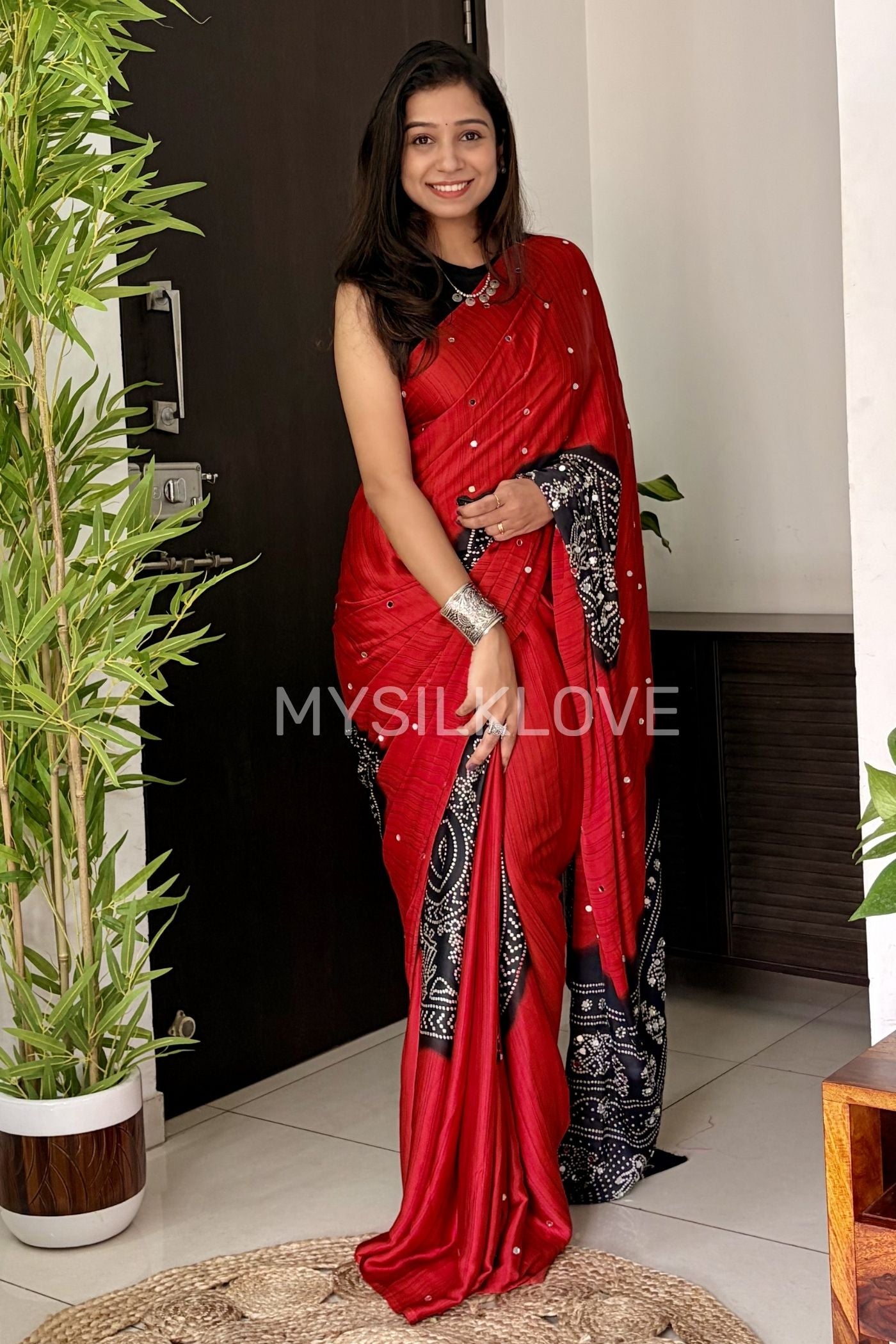
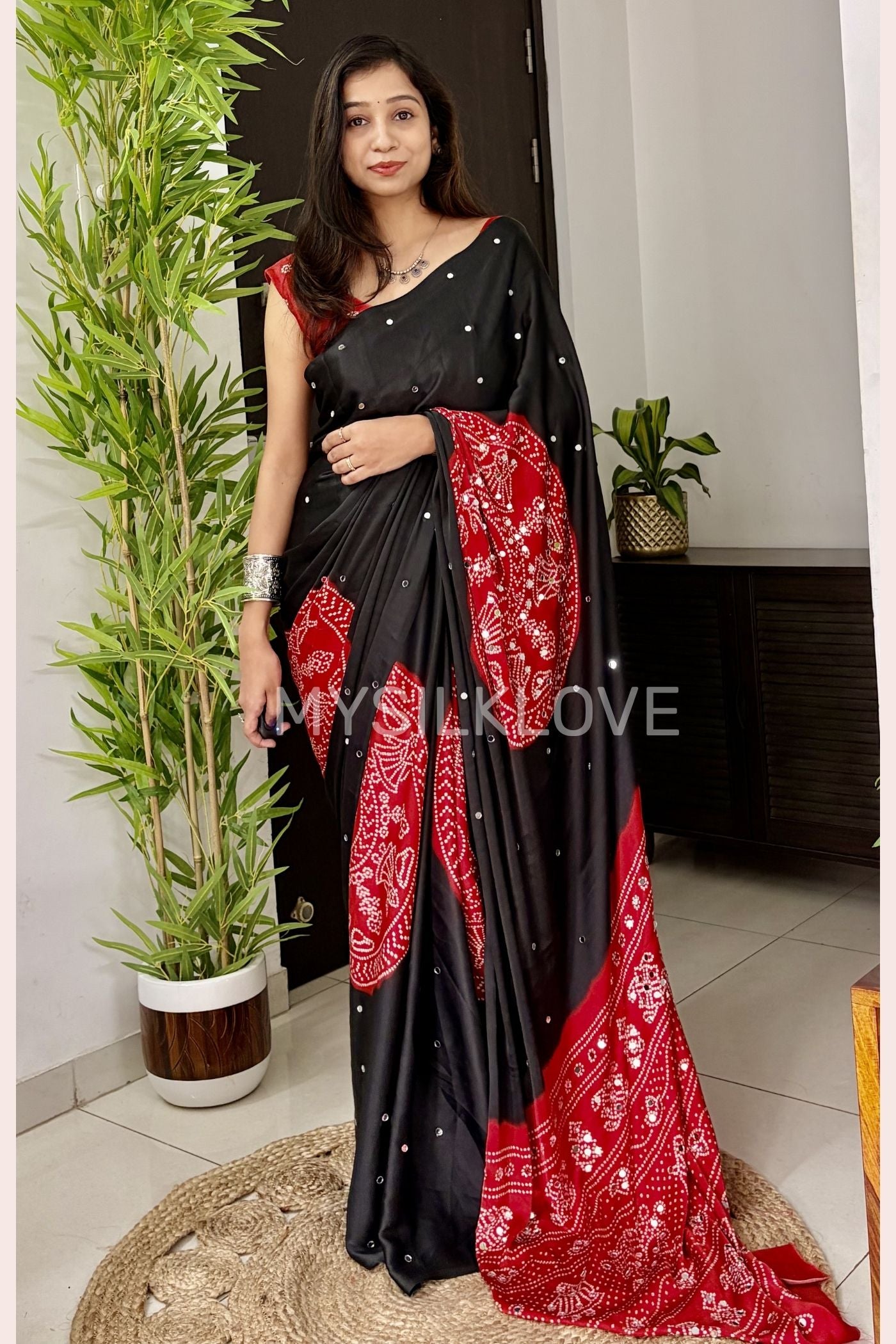
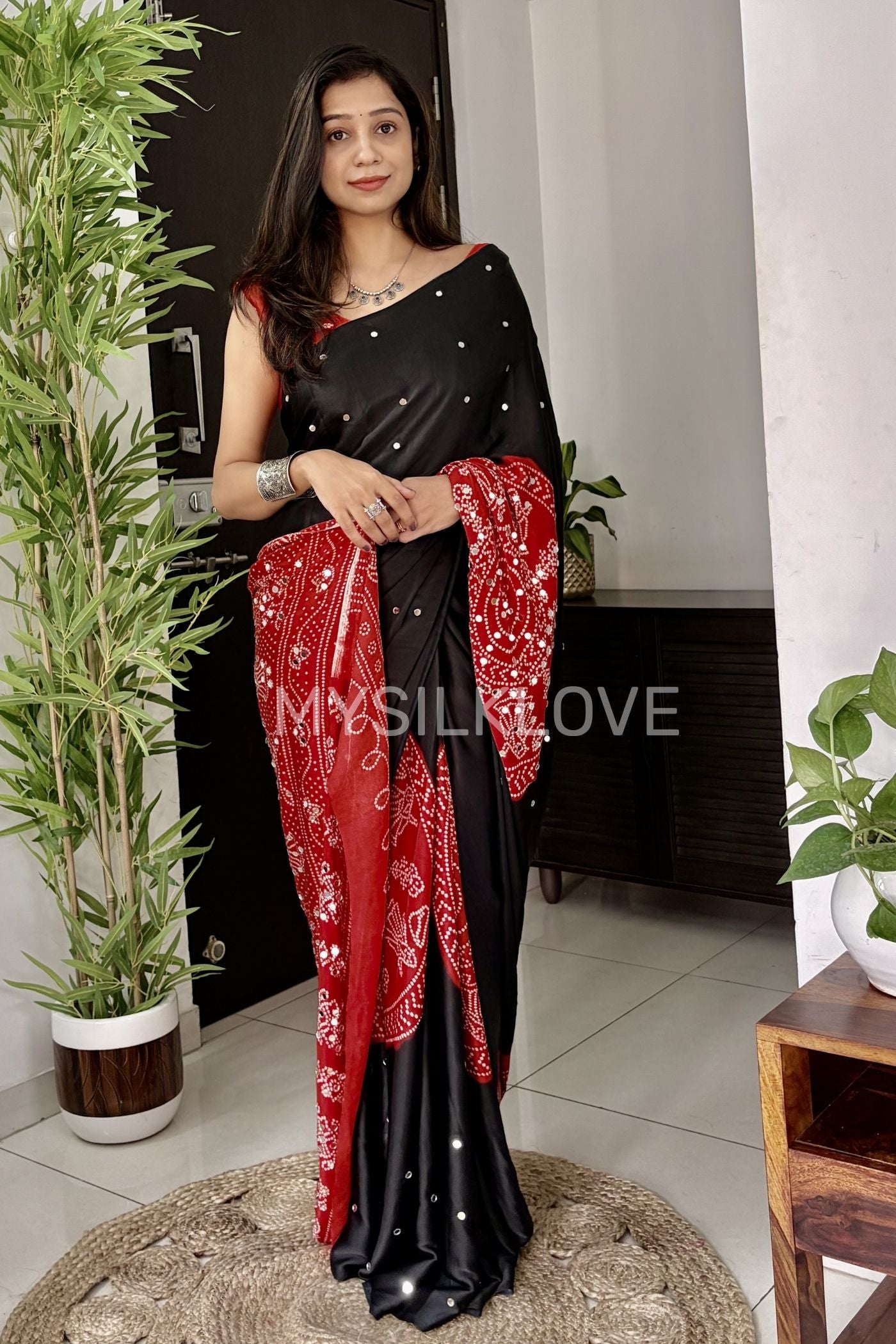
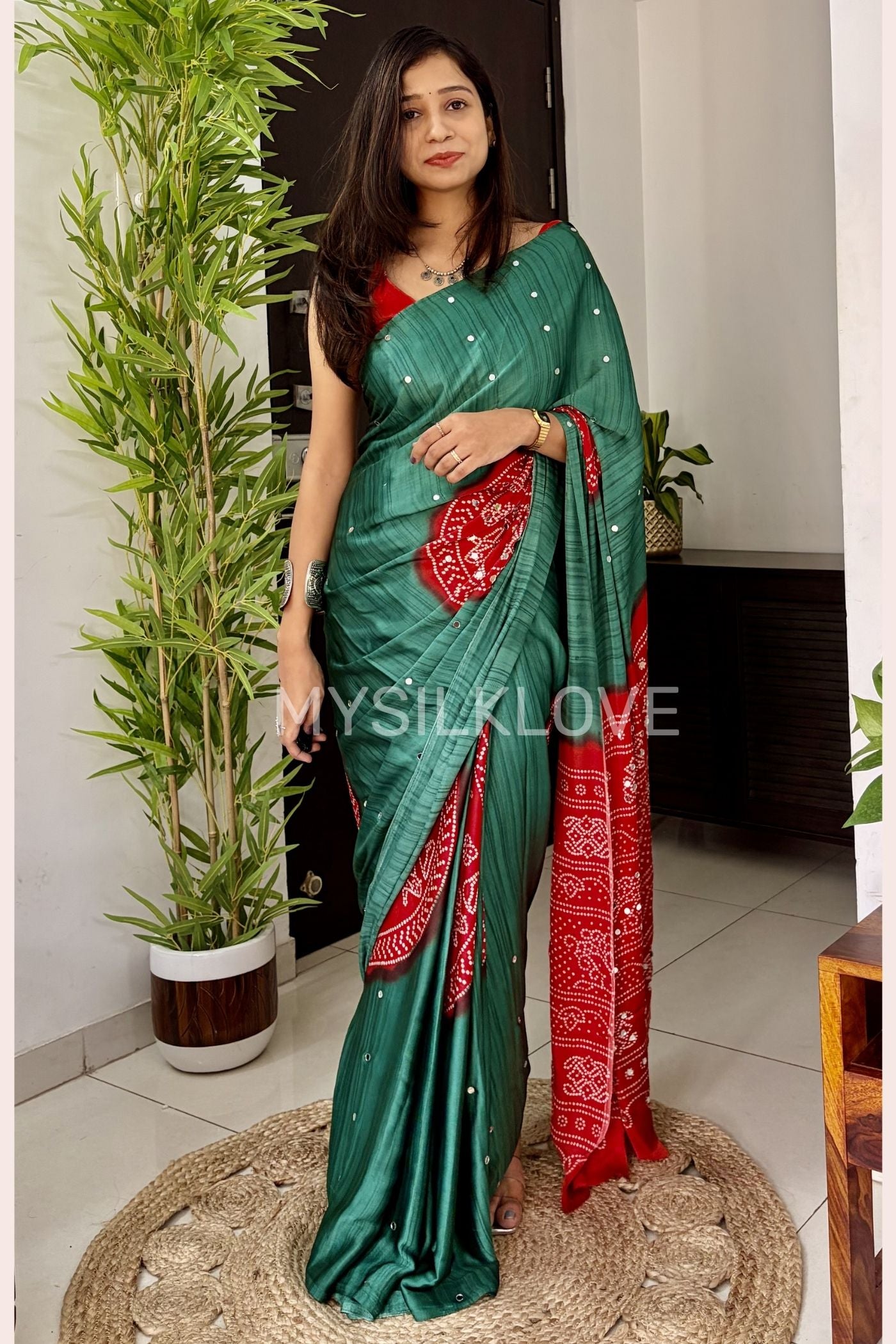
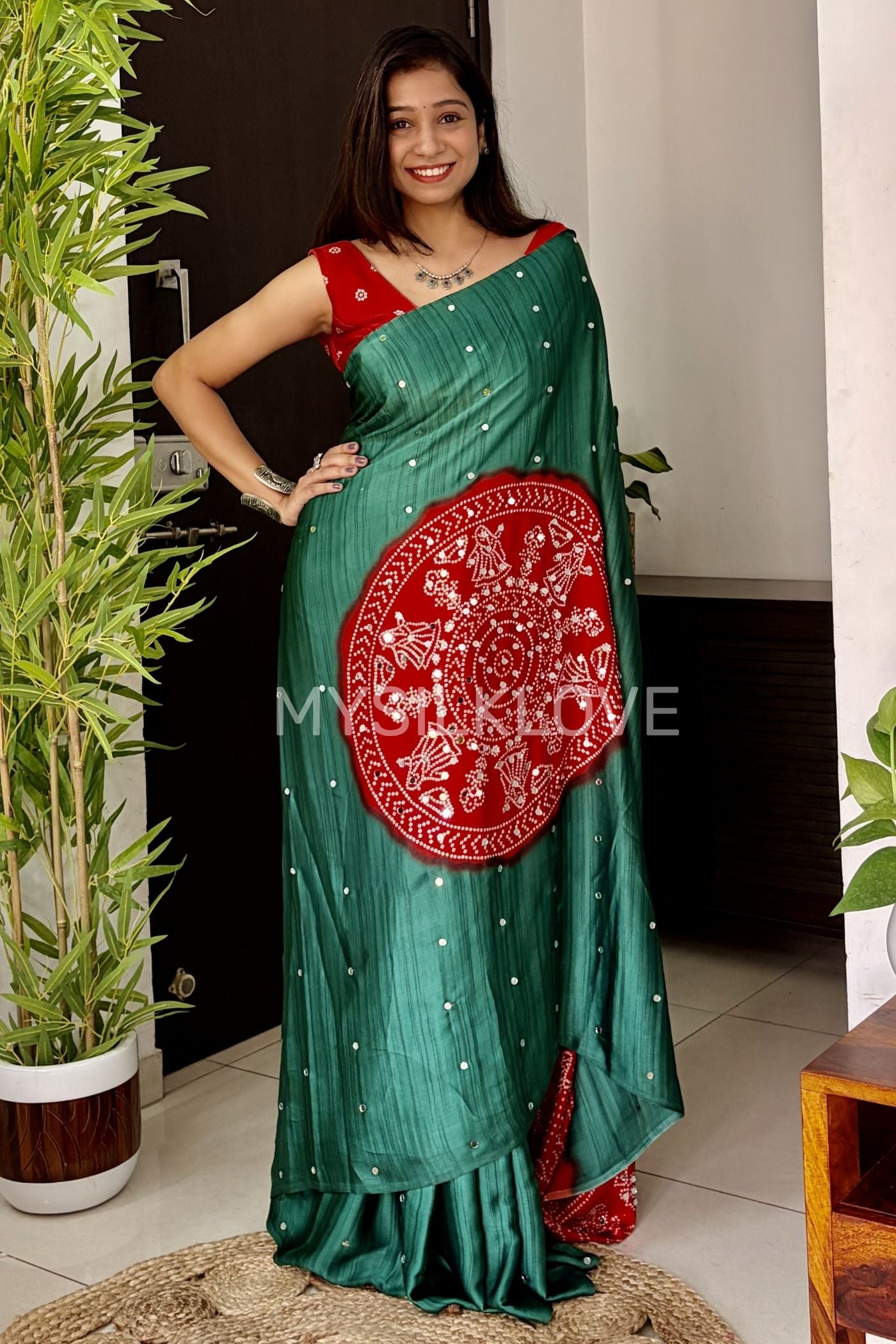
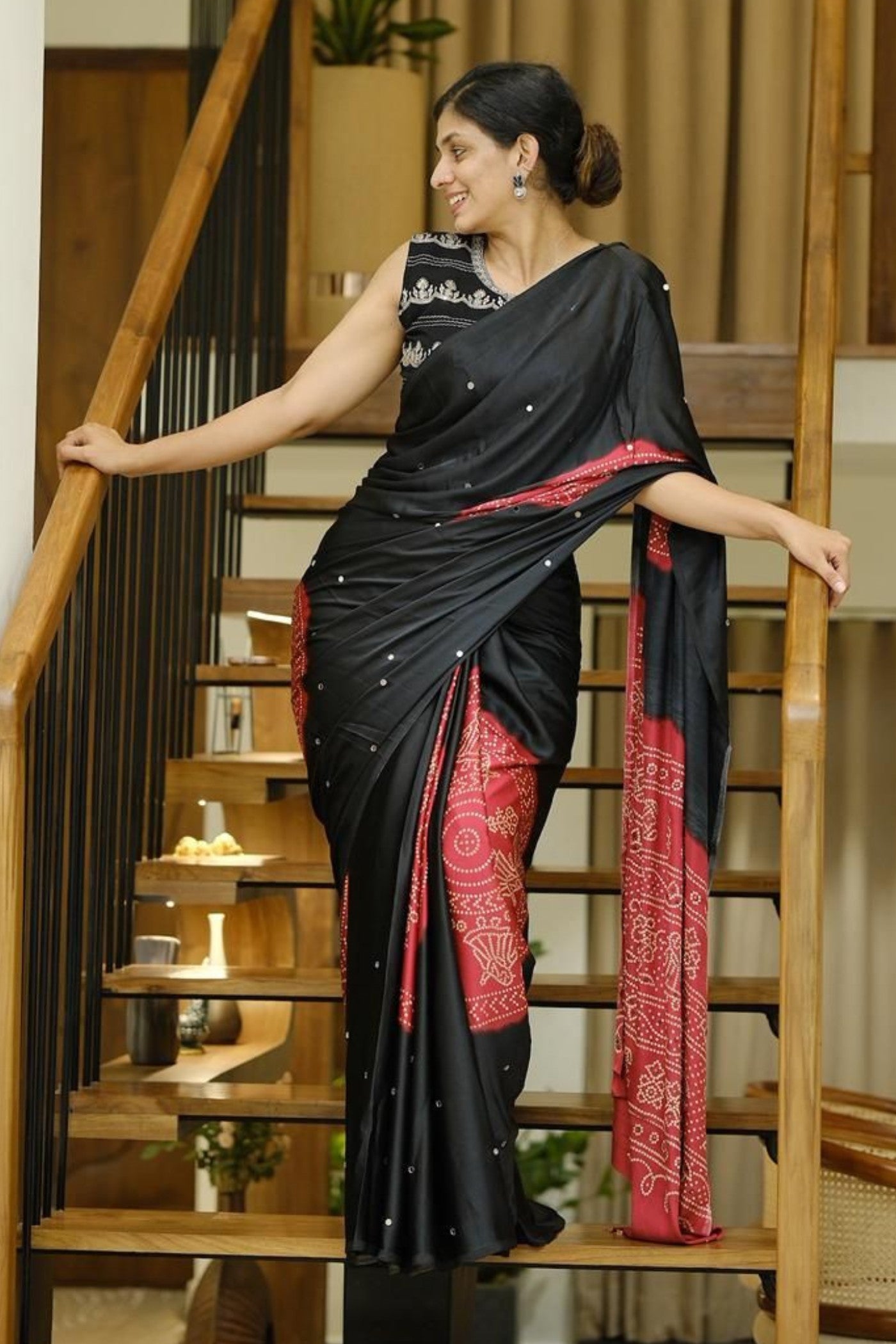
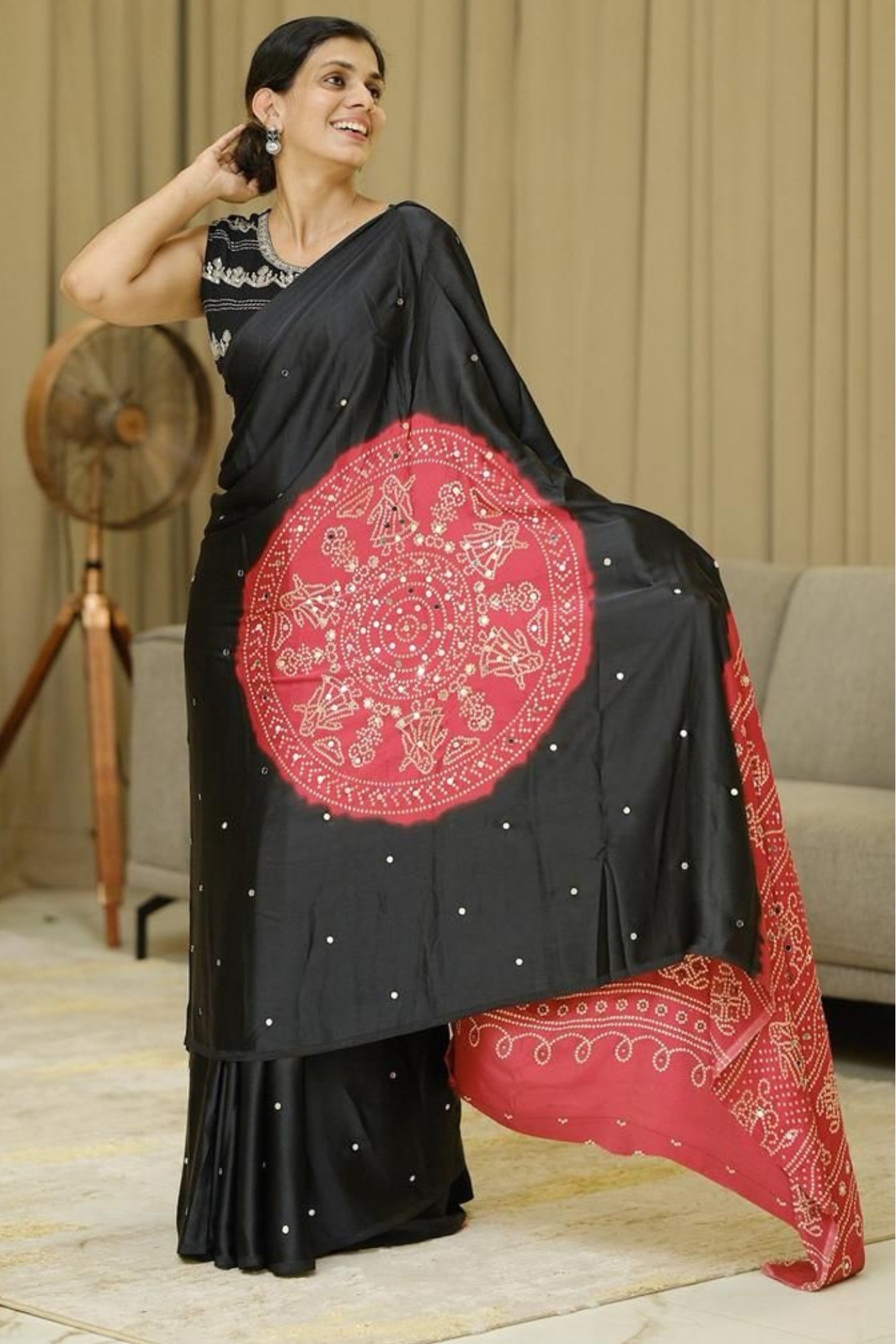
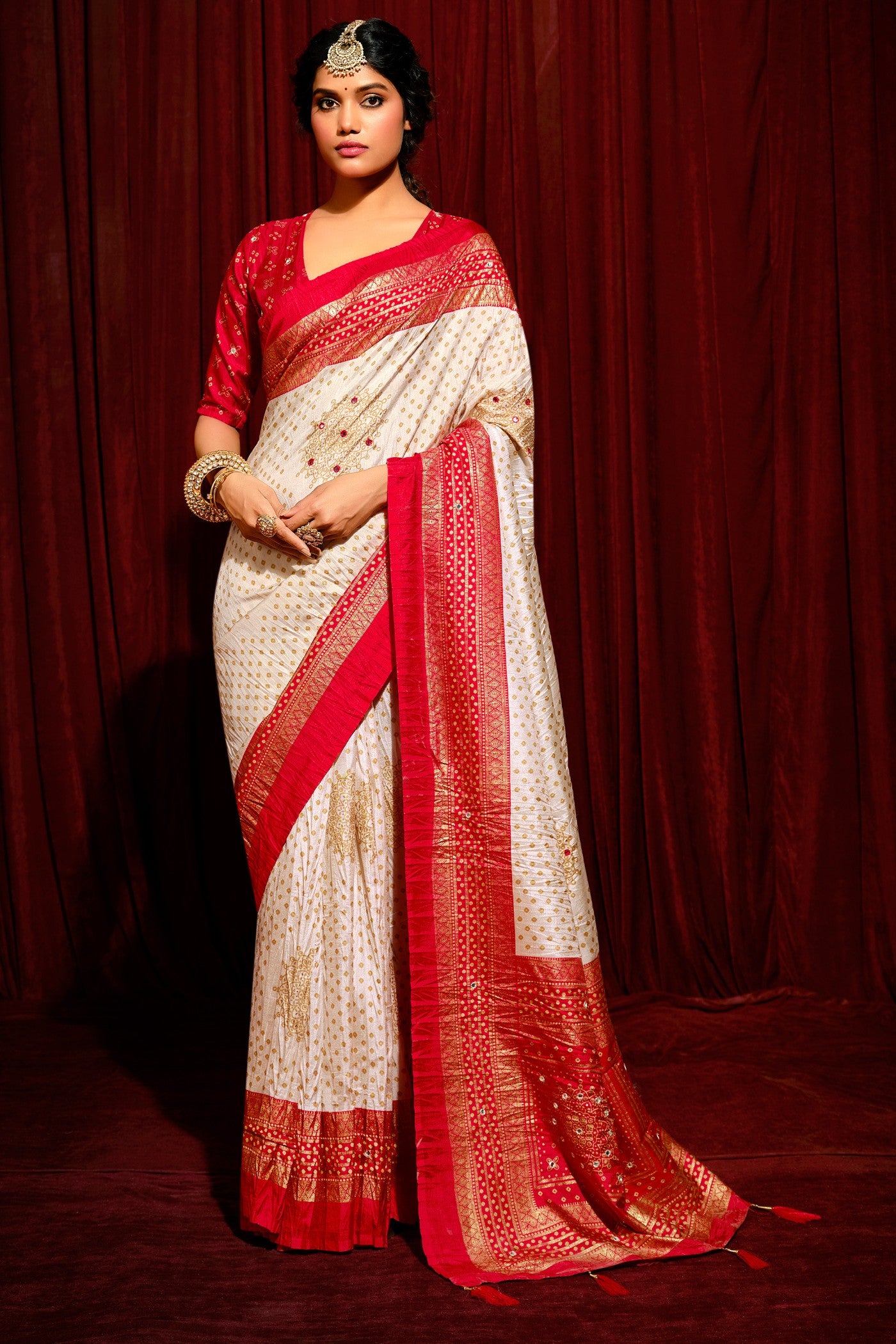
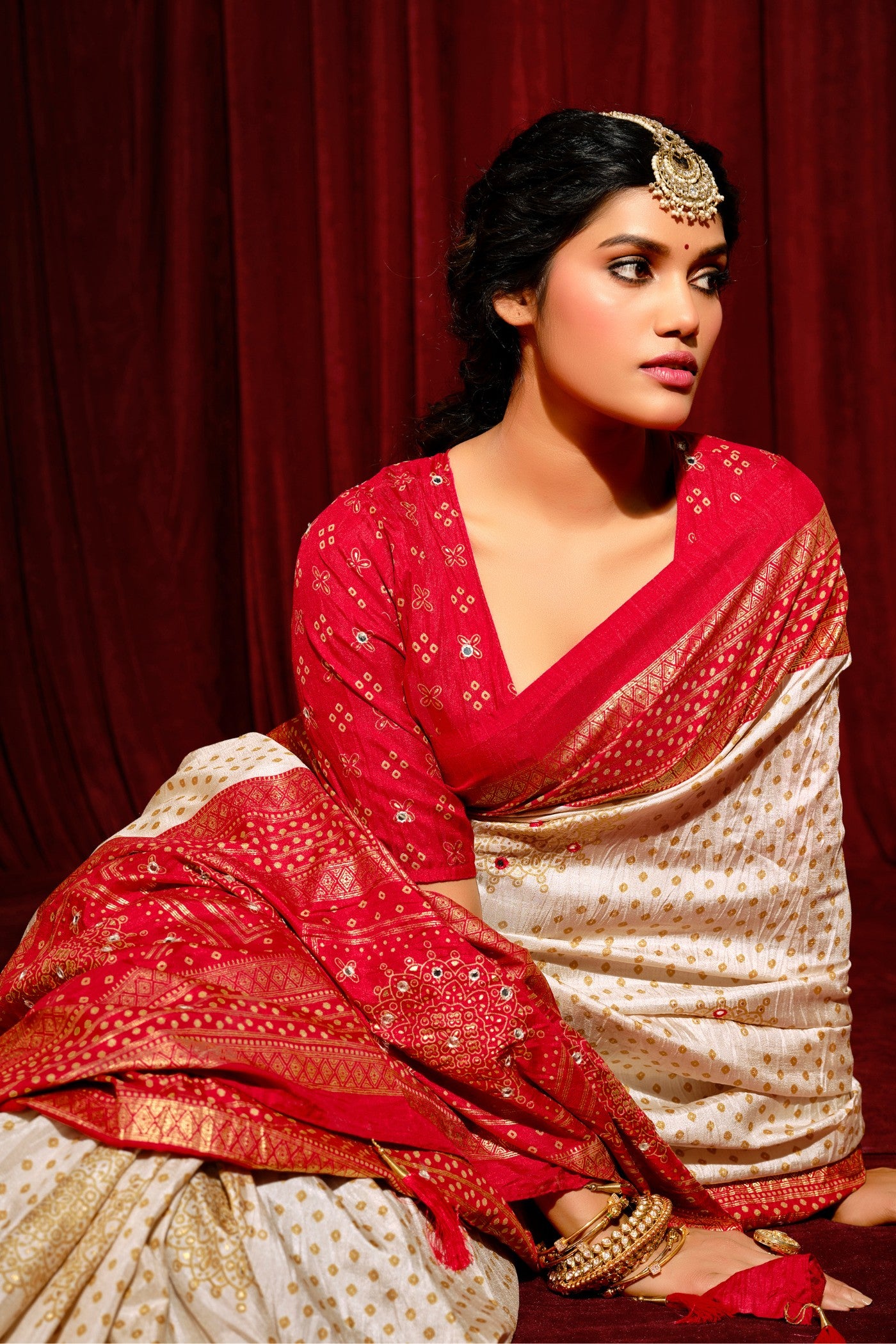
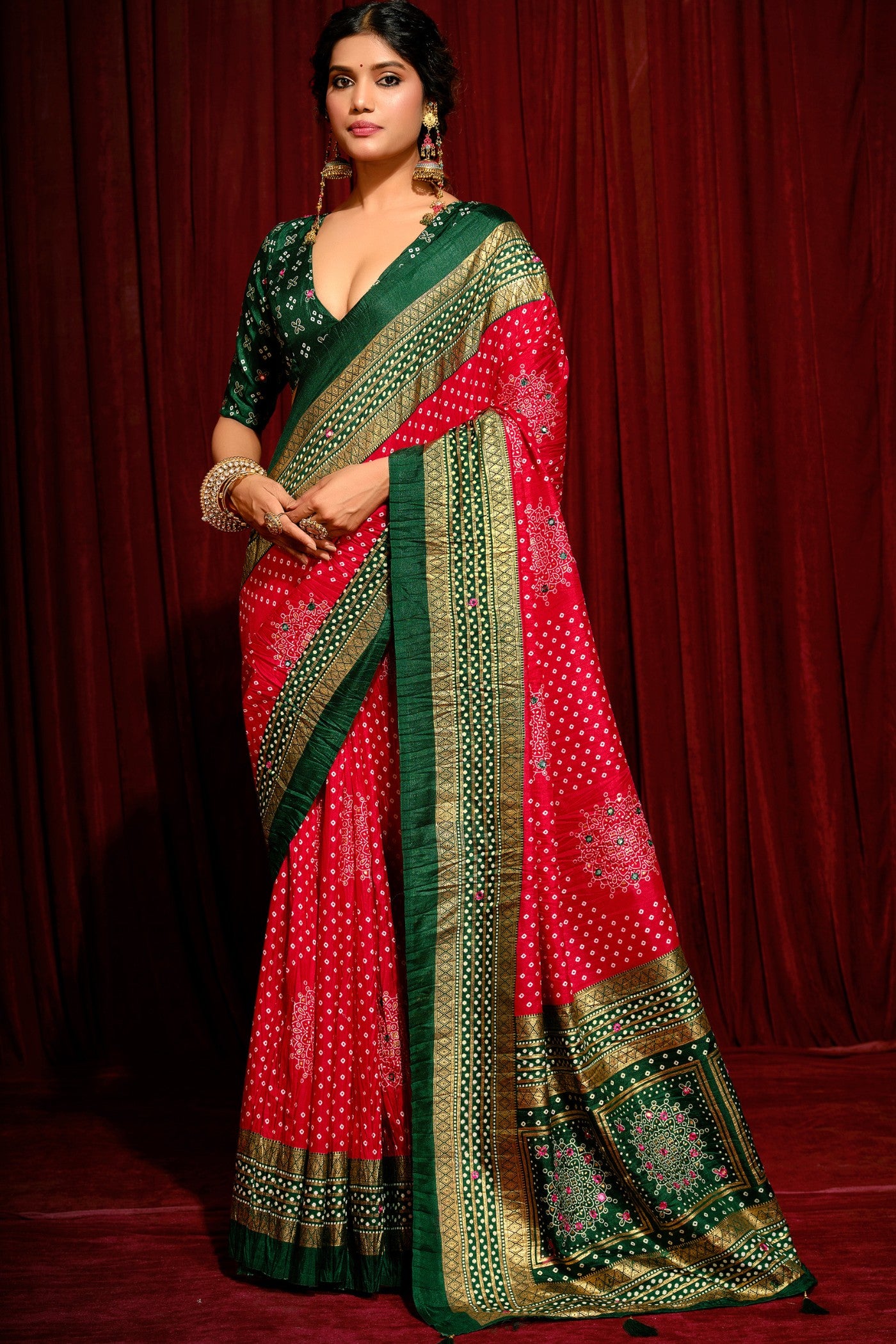
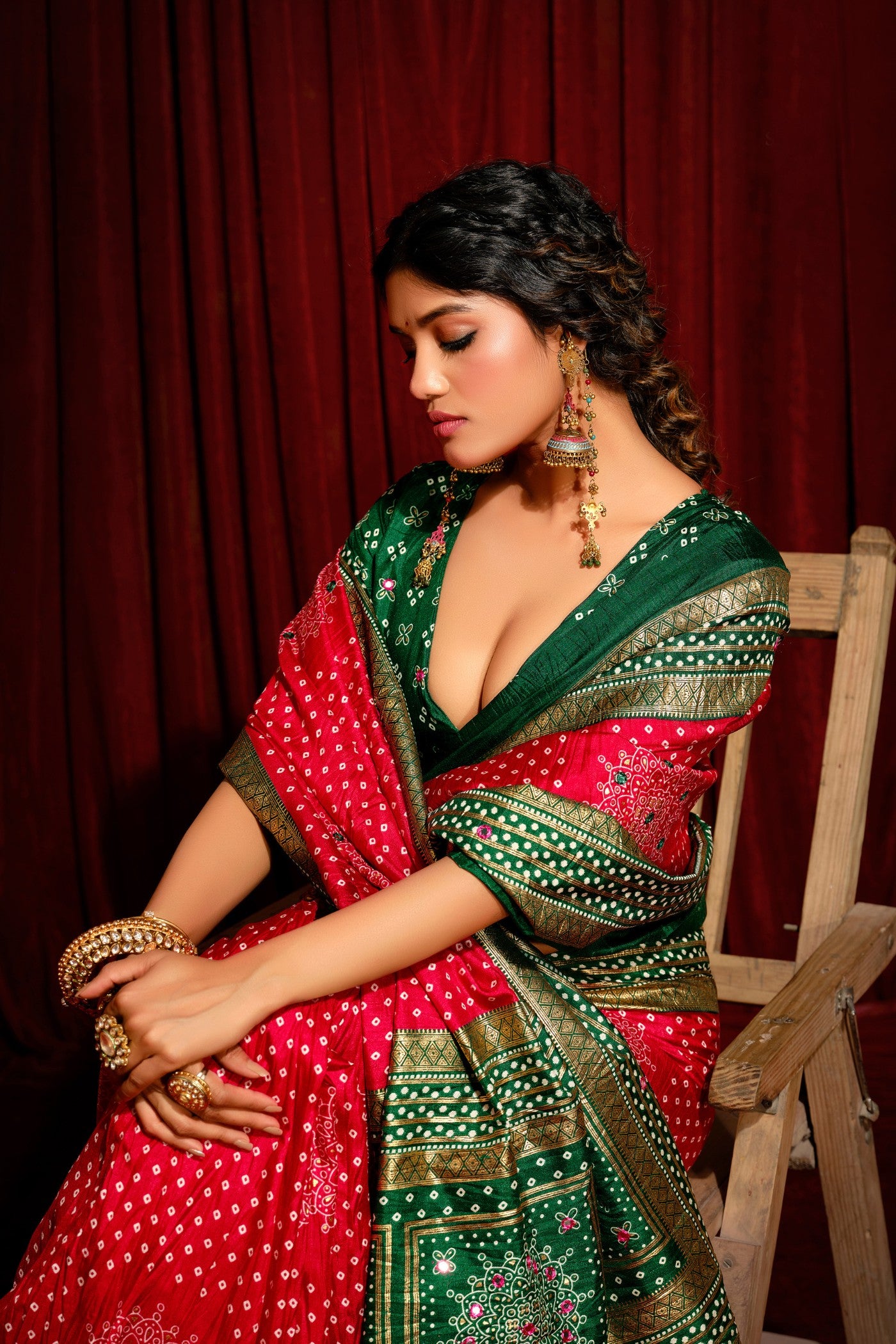
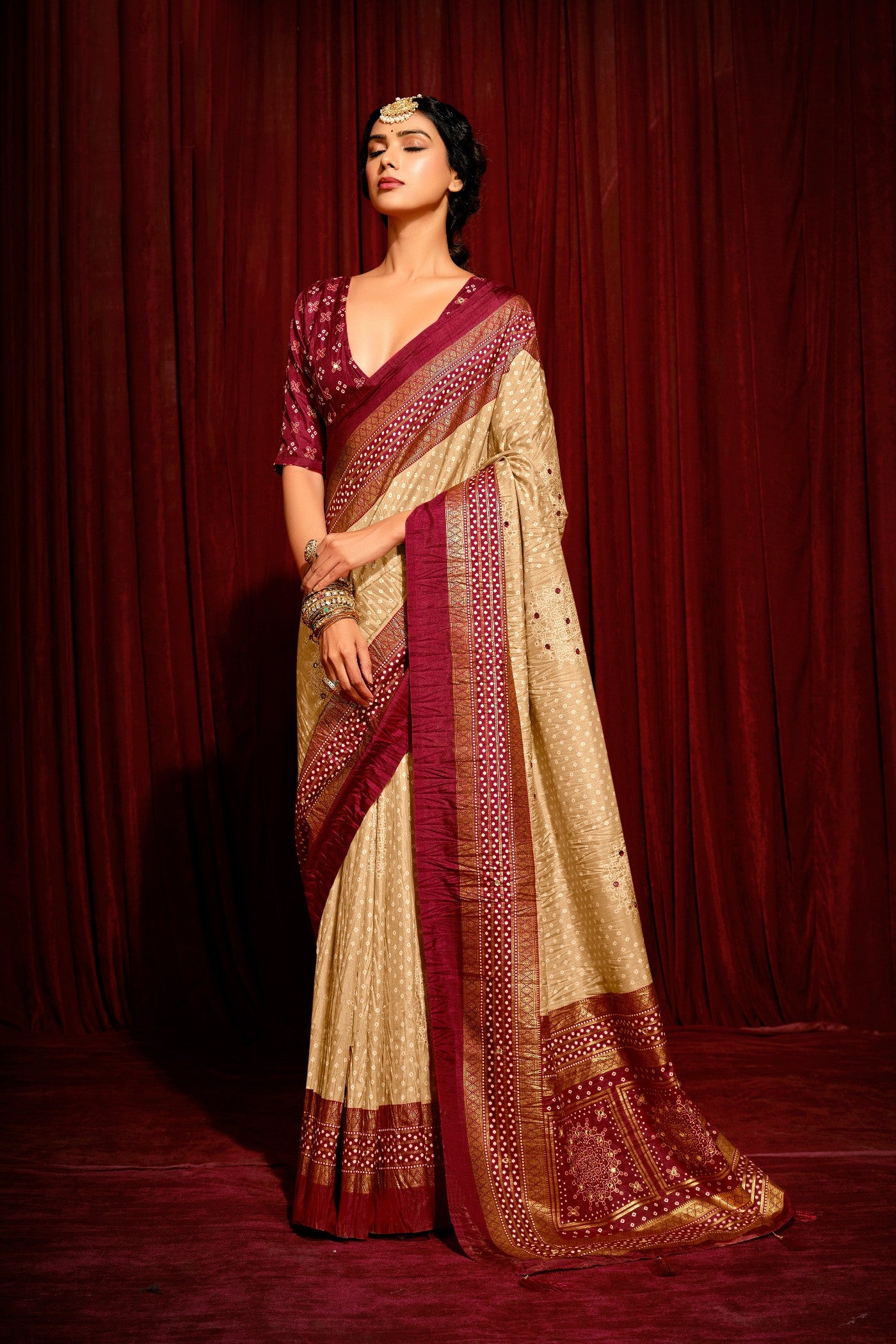
Against Rajasthan's desert browns, its sarees blaze — saffron lehariya waves, red bandhej dots, and airy Kota checks born for the festive calendar.
Rajasthan perfected two great tie-dye crafts. Bandhej covers the cloth in fields of tiny resist-tied dots, while lehariya — a Jaipur and Jodhpur speciality — rolls the fabric diagonally before tying, so the dye breaks into rippling waves named after lehar, the Hindi word for a wave. The state also weaves Kota doria in Kaithun near Kota: a feather-light fabric whose signature square khat checks come from alternating fine yarns on the loom. Together they make up a wardrobe built for heat, colour, and celebration.
Prices here run from about ₹2,800 for linen and printed bandhani drapes to around ₹18,800 for a designer Georgette Patola statement saree. Prices shown are regular list prices — seasonal offers applied automatically at checkout often bring them lower.
How to Choose a Rajasthani Saree
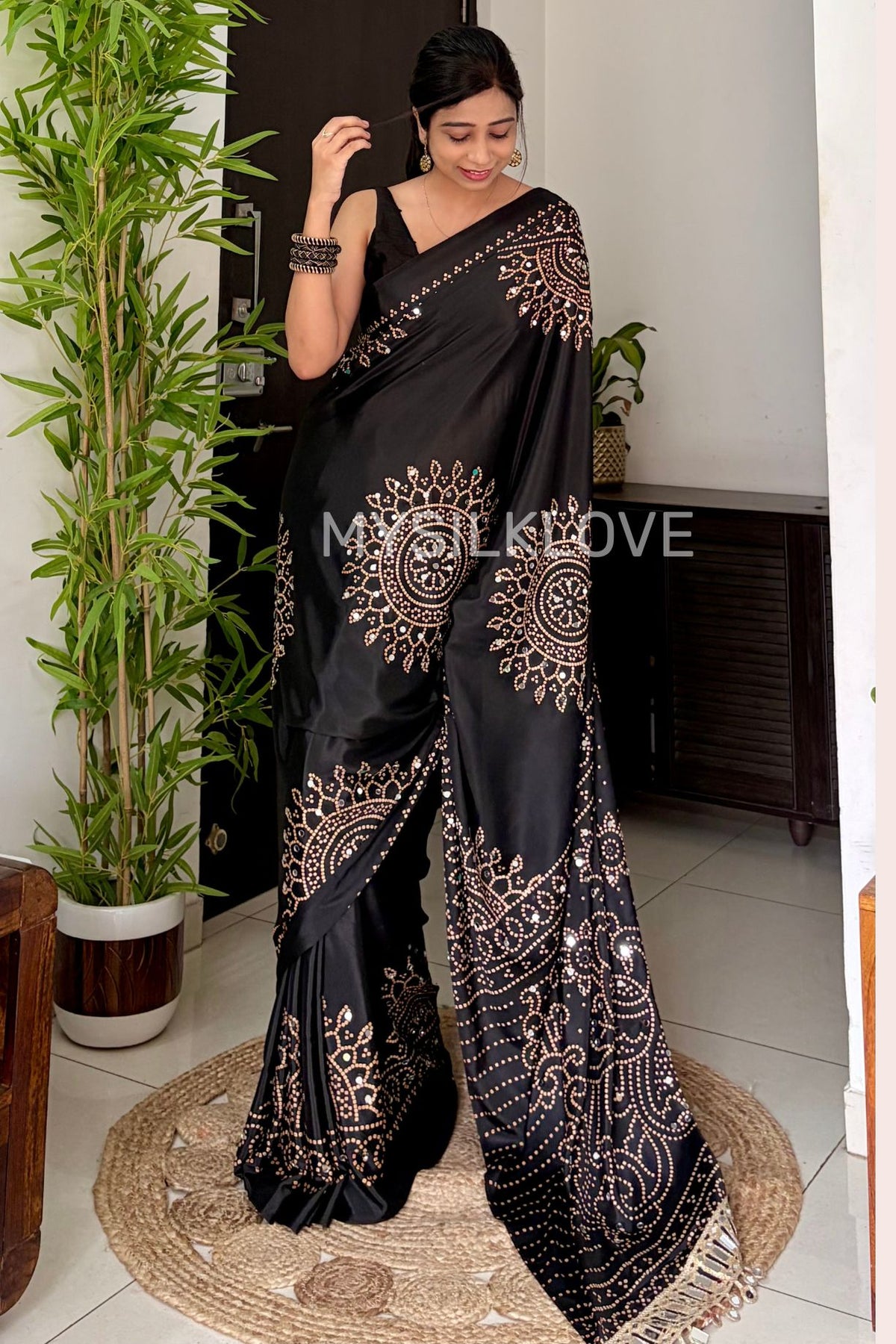
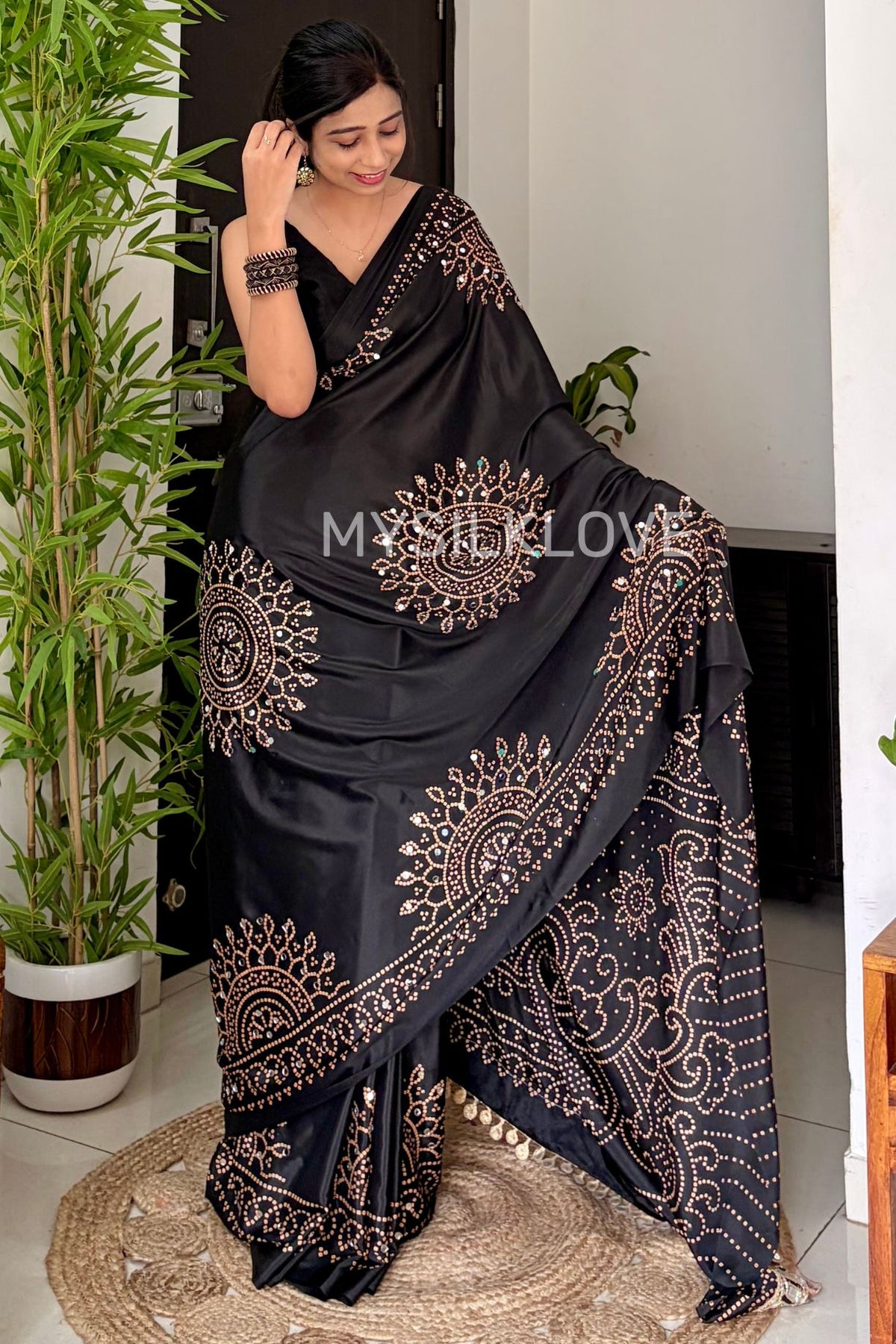
Pick lehariya in bright yellows and greens for Teej and monsoon festivities, bandhej dots in red or maroon for pujas and weddings, and gaji satin soft-silk bandhej when you want a dressier drape with sheen. For daytime events and summer functions, a light Kota-style weave keeps you cool without losing the traditional look.
Occasions and Styling
These sarees are the uniform of Teej, Gangaur, Navratri, and wedding season. Style them Rajasthani way: borla or maang tikka, stacked lac bangles, silver oxidised jewellery, and a contrast blouse. Bright multicolour lehariya also pairs surprisingly well with plain crop-style blouses for festive brunches.
Explore Related Collections
Go deeper into bandhani sarees and lehariya sarees, browse featherweight Kota sarees, or compare the neighbouring tradition in our Gujarati saree collection.
Every saree includes a blouse piece and is quality-checked before dispatch, with fast delivery across India and easy returns at MySilkLove.